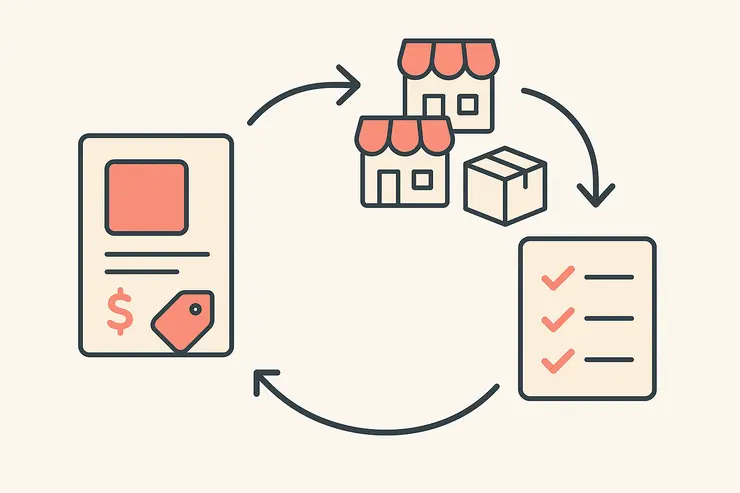
How to Tell If a Dropshipping Product Is Saturated Before You Spend on Ads
 By Ana GelevskaJune 12, 2026
You found a product that looks like a winner. Good reviews, a clean supplier price, a video you could model. The question that decides whether you make or lose money is the one most people skip: is anyone already selling this to death? Spend first and you find out the hard way, when your ad costs run high and your margin disappears.
This guide gives you a way to answer "is a dropshipping product saturated?" before you put a dollar behind it. Below is the quick checklist, the signals that actually matter, and a competitor-research workflow you can run on any store in a few minutes.
Quick answer: the 4-point saturation check
Run a product through these four checks before you build a campaign. If three or more come back "yes," the product is saturated for the obvious angle and you should change the angle or move on.
- How many stores already sell it? A handful is fine. Dozens of active stores running it right now means the buyer has seen it before.
- How long has it been listed? A product that has been live in competitor catalogs for many months has usually already had its viral run.
- Do the ads all repeat the same hook? Open the ads competitors are running. If five different stores use the same video, the same headline, and the same benefit, the angle is burned out.
- Are the product pages near-identical? Same hero image, same copy, same review screenshots means everyone pulled from the same source and nobody has differentiated.
Saturation is not about whether a product is "good." It is about whether the specific way of selling it still has room. Keep reading for how to check each point with real competitor data instead of a guess.
Table of contents
- What "saturated" really means for a product
- The saturation signals that matter
- A competitor-research workflow with Koala Inspector
- Saturated vs still-open: a decision framework
- How to find a fresh angle on a crowded product
- FAQ
What "saturated" really means for a product
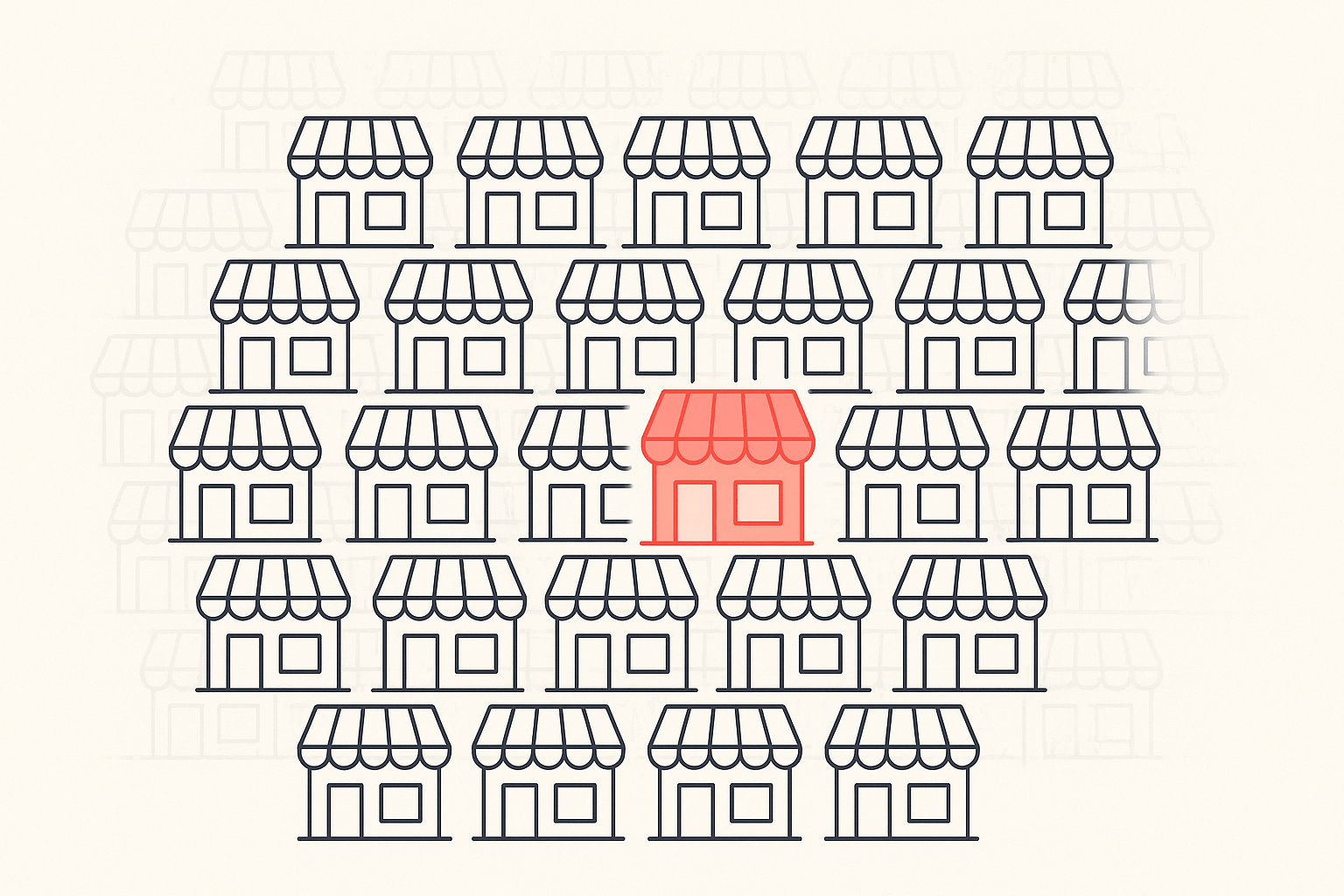
Saturation is an angle problem, not a product problem. A phone gadget, a posture corrector, or a kitchen tool can sell for years. What burns out is the way it is sold: the hook, the creative, and the audience all stop being fresh once enough sellers copy each other.
That distinction matters because it changes what you measure. You are not asking "is this product popular." You are asking "has the obvious angle on this product already been run into the ground." A product can be both proven and saturated at the same time, which is exactly why so many beginners pick a product that clearly works, copy the winning ad, and still lose money.
If you want the wider view on whether the model itself is crowded, we cover that in is dropshipping saturated in 2026. This post stays at the product level: one item, one decision, before you spend.
The saturation signals that matter
Forget vague advice like "check if it's trending." These are the signals that predict whether your ad budget gets eaten alive.
Ad cost climbs when everyone runs the same creative. When several sellers push the same video and hook to the same audience, the auction gets more expensive for all of them. One seller who stopped chasing random products described exactly this: ad costs inflate when multiple dropshippers compete with shared creatives, and you struggle to validate real demand without burning through heavy testing first. Rising cost-per-reach with no improvement in conversion is the clearest tell that a product is past its open window.
The same angle stops being profitable. A high ad cost is survivable if your offer is differentiated. It is not survivable when you are running the identical pitch as ten other stores. As one trader who took three months to figure it out put it, the buyer is not really buying the product, they are buying the angle, and high ad costs make a traditional product ad unprofitable the moment everyone is running the same one. Same product, same angle, rising cost: that math does not work.
Identical product pages. When you click through competitor stores and the product pages are interchangeable, that tells you the market has commoditized. No one has bothered to reposition, which means the price war has already started and your margin is the casualty.
Listing age. A product that competitors have carried for many months has usually had its spike. New stores adding it late are arriving after the easy money left.
None of these need a paid spy subscription to check. They need you to look at what real competitor stores are already doing, which is the workflow below.
A competitor-research workflow with Koala Inspector
Here is the part that turns the checklist into a five-minute routine. Koala Inspector is a free Chrome extension that reads the public signals any visitor's browser can already see on a Shopify store, so you can answer the four checks with real competitor data instead of a hunch. Open a store that sells the product you are considering and work through this.
1. Count how many stores already sell it. From a product, run Find Retailers to surface other stores, marketplaces, and suppliers carrying the same item. If the list is long and full of active Shopify stores, that is your "how many competitors" answer. A short list means there is still room.
2. Check how long it has been listed. Open the store's product catalog. The stats header shows the first-published date and the full product range, so you can see whether this item is a recent add or something the store has carried for months. Old listings on many stores point to a product whose curve has already peaked.
3. Read their sales velocity. Filter the catalog to likely best-sellers to see whether the product is actually moving for that store or just sitting there. To watch velocity over time, add the store to Shop Tracking and Koala records changes such as products added or removed, price changes, and variant changes to a per-shop activity feed. A product that competitors keep restocking and repricing is selling; one that sits untouched is not.
4. Inspect the ads and the angle. This is where saturation hides. Open Ad Campaigns on a competitor store to see the Google and Facebook/Instagram creatives they are running, split by platform, with the headline and offer on each card. Do this across three or four stores selling the same product. If their ads all repeat one hook, you have confirmed the angle is saturated before paying to learn it yourself.
5. Cross-check the stack. The free Shopify app detector shows which apps a competitor runs (upsells, reviews, bundling), which tells you how built-out the operation is. A product surrounded by mature, fully-tooled stores is a tougher fight than one sold by thin, undifferentiated shops.

For ongoing competitor monitoring rather than a one-time look, the same tracking workflow is the core of the Shopify sales tracker use case: pick the stores already winning with a product and watch what they add, drop, and reprice over time.
A note on what these numbers are: they are modeled from public store signals sampled over time, not pulled from anyone's private dashboard. Use them to read direction and scale, who is selling, how long, how widely, not as a store's exact internal revenue.
Saturated vs still-open: a decision framework
Put the checks together into one call. Score each product against these and let the pattern decide.
Treat it as saturated (for the obvious angle) when:
- Many active stores already sell it and Find Retailers returns a long list.
- Competitors have carried it for many months.
- Three or more stores run the same creative and the same hook.
- Product pages are near-identical and someone is already competing on price.
- Ad cost to reach the audience is high with no conversion edge to justify it.
Treat it as still open when:
- Only a few stores sell it, and they look thin or unsophisticated.
- It was listed recently and is gaining, not plateauing.
- The ads you can find are scattered, with no single dominant angle.
- You can see an audience or benefit nobody is targeting yet.
- Your offer (bundle, price, positioning) can beat what is out there.
The honest middle case: a proven product with crowded ads but a gap in angle. That is not a "no." That is a "yes, with a different angle," which is the next section.
How to find a fresh angle on a crowded product
A saturated product is often a validated product, which is half the work done for you. The fix is to sell it differently, not to find something nobody wants.
- Change the audience. A back-support cushion sold to office workers is crowded. Sold to long-haul drivers or new parents, the hook resets.
- Change the benefit. If every competitor leads with one outcome, lead with a second real one. The product is the same; the reason to buy is new.
- Change the offer. Bundle it, add a guarantee, or reposition the price so a side-by-side comparison no longer lands on "same thing, who is cheapest."
- Change the creative. Shared videos are why ad cost inflates. Original creative that frames your new angle pulls you out of the auction everyone else is fighting in.
The research is the same loop as before: use Koala Inspector for dropshipping to read the ad campaigns competitors are already running and see which angles are taken, then deliberately pick one that is not. For deeper product-selection work once you have an angle, see our guide on how to find winning products and the broader product research workflow.
FAQ
How do I know if a product is saturated?
Check three things before you spend: how many stores already sell it, how long they have listed it, and whether their ads repeat the same hook. Lots of active stores, listings that are months old, and one creative copied across competitors all point to saturation. Run those checks with real competitor data so you are reading the market, not guessing.
Can you still sell a saturated product?
Yes, as long as you do not run the same angle as everyone else. A crowded product is usually a validated one. Change the audience, the benefit, the offer, or the creative and a proven product can still convert. What does not work is copying the winning ad into a more expensive auction, which is the trap rising ad costs set.
Why does ad cost go up on a saturated product?
When several sellers push the same creative to the same audience, they bid against each other for the same impressions, so the cost to reach a buyer climbs for all of them. Without a differentiated offer, that higher cost wipes out the margin, which is why the same angle stops being profitable once it is widely copied.
How many competitors is too many for a dropshipping product?
There is no fixed number, but the pattern matters more than the count. A few thin stores is fine. Dozens of active, well-tooled stores running the same hook means the easy demand is gone. Use Find Retailers to see the real spread, then judge whether your angle can stand out against it.
Do I need a paid spy tool to check product saturation?
No. The core checks, how many stores sell a product, how long it has been listed, which apps and ads competitors run, are readable from public store signals with a free Chrome extension. Paid tools add depth, but you can disqualify a saturated product before spending a cent.
October 8, 2026
How to Choose a Print on Demand Supplier: Judge Them on What Live Stores Keep Running
Roundups rank print on demand suppliers by catalogue size. Here is a selection method built on four things you can actually test: turnaround, print quality, catalogue fit, and margin after Shopify's monthly bill.

September 22, 2026
How to Test a Dropshipping Product: 5 Free Checks First
Five free checks that say whether a dropshipping product is worth testing, each with a pass or fail rule, plus the sample size and the number that kills it.

September 18, 2026
Best Selling Products on Shopify Right Now (September 2026)
Ten products actually moving on live Shopify stores in September 2026, the store each was observed on, the five traits they share, and the weekly routine that finds the next one.
September 10, 2026
How to Vet a Dropshipping Supplier Before Your First Order
You have a supplier name and a quote that looks good. Here is the eight-point check that tells you whether the company, the photos and the lead times are real, before any money moves.

July 15, 2026
Beauty Dropshipping Winning Products (How to Copy Proven Winners) in 2026
The beauty and personal-care products that sell, and how to find a winner by copying proven stores' best-sellers, apps, and ad angles with the free Koala Inspector.
July 10, 2026
Footwear Dropshipping Winning Products: How to Spot Shoes That Actually Sell
The footwear sub-niches that sell, the margin and sizing traps unique to shoes, and a step-by-step way to confirm a winning shoe by checking real competitor stores.

July 10, 2026
Jewelry Dropshipping Winning Products (and How to Validate Them) in 2026
The jewelry sub-niches that sell, the margin and quality-control realities, and how to validate a pick by reading competitor stores with Koala Inspector.

June 29, 2026
Skincare Dropshipping Products That Actually Sell in 2026
Find winning skincare dropshipping products with margin, repeat-purchase, and competitor signals. See how to copy proven stores with Koala Inspector.
June 22, 2026
Print on Demand Product Research: Find Proven Winners Before You Design
A step-by-step print on demand product research method: study the stores already selling, read their best-sellers and pricing, and validate demand before you create a single design.
June 16, 2026
How to Spot Fake Shopify Sales and Earnings Screenshots
A buyer's guide to telling whether another store's sales claims and earnings screenshots are real before you trust a course, a winning-product claim, or a store-for-sale listing.
September 26, 2025
ShopHunter Alternatives: The Best Free Pick for Dropshippers
ShopHunter starts at $50/month. Koala Inspector is the best free ShopHunter alternative for Shopify store analysis, product research, and competitor tracking.
August 13, 2025
How To Find Dropshipping Suppliers: Best Methods & Platforms. (And How To Spot A Fake)
Explore our ultimate guide to finding the perfect dropshipping supplier. Get insights on product selection, pricing, and best platforms and how to spot a fake.
August 13, 2025
How to Find a Dropshipping Business For Sale
Compare the top 10 marketplaces to buy a dropshipping store, know what red flags to check, and use Koala Inspector to vet any store before you buy.
July 22, 2025
What is the Best Dropshipping Platform for 2026: Top 11 Platforms Analyzed
Compare the 11 best dropshipping platforms for 2026. Honest look at features, pricing, pros, and cons of Shopify, WooCommerce, Spocket, DSers, and more.
July 22, 2025
USAdrop - Everything You Need To Know
USAdrop review for Shopify dropshippers. US warehouse, 1-5 day shipping, product sourcing from China and the USA, pricing, plans, and honest limitations.
June 23, 2025
Dropshipping vs Reselling: Which Is Better?
Compare dropshipping vs reselling on startup costs, margins, control, and risk so you can pick the right model for where you are right now.
June 16, 2025
Is Dropshipping Saturated in 2026? An In-Depth Market Analysis
Is dropshipping too saturated to be worth starting in 2026? We break down the real data, the niches that are actually crowded, and how to find gaps.
June 13, 2025
Mastering Automated Dropshipping: The Complete Guide to Streamlining Your E-Commerce Store
Learn how to automate your dropshipping store, from order fulfillment to inventory syncing. Cut manual work, reduce errors, and scale without hiring extra staff.
June 6, 2025
Dropshipping Budget: What 90 Days of a Shopify Store Actually Costs
A worked dropshipping budget for your first ninety days, every fixed figure carrying a link to the company that charges it, plus Koala's own data on the app stack that quietly becomes the biggest line.
June 6, 2025
Dropshipping Success Rate (How To Improve Yours)
Only 10-20% of dropshipping stores reach consistent profit. See why most fail and the 7 concrete steps that move you into the successful minority.
May 30, 2025
How to Start Dropshipping in 2026
A practical guide to starting a dropshipping business in 2026: niche research, real costs, supplier vetting, and how Koala Inspector helps you find winning products.
May 23, 2025
Is Dropshipping Dead? A 2026 Market Analysis
Is dropshipping dead in 2026? We dig into real market data, actual failure rates, and what separates stores still growing from ones that flopped.
May 23, 2025
How To Use Google Trends For Dropshipping: Expert & Advanced Tips
Learn how to use Google Trends for dropshipping product research, niche validation, and keyword timing. Practical tips with real examples.
May 23, 2025
Dropshipping Side Hustle: Turn Your Free Time Into Profit
Is dropshipping a good side hustle? Real numbers on startup costs, time investment, income potential, and what separates stores that stick from ones that fold.
May 23, 2025
Understanding Dropshipping Profit Margins: Tips & Profit Hacks
Essential tips and hacks to increase your dropshipping profit margins, including negotiation with suppliers, pricing strategies, and automation.
May 23, 2025
Dropshipping vs Wholesale: Choosing the Right Model for Your Online Business
Dropshipping and wholesale both have real tradeoffs. Here is a clear breakdown of startup costs, margins, inventory, and which model fits your situation.
May 23, 2025
Reverse Dropshipping Complete Guide & Market Analysis
A complete guide to reverse dropshipping: how it works, the best products to sell, how to find suppliers, and the real pros and cons of targeting emerging markets.
May 23, 2025
How To Make Passive Income With Dropshipping
How to turn a dropshipping store into passive income: automate order fulfillment, build SEO traffic, and reduce daily hands-on work.
May 23, 2025
7 Reasons Why Dropshipping is Hard in 2026
Is dropshipping hard? An honest yes, plus the real hard parts in 2026 (winners, ads, margins) and how to shortcut each one.
May 23, 2025
How to Fulfill Dropshipping Orders on Shopify
Learn how dropshipping fulfillment works on Shopify, compare manual vs automatic vs third-party methods, and find the best apps for 2026.
May 23, 2025
Are Pre-Built Dropshipping Stores Worth It
Pre-built dropshipping stores cost $50 to $5,000+. We break down what you actually get, the hidden costs, and the 10 best places to buy one in 2026.
May 14, 2025
Dropshipping Vs Ecommerce: What's The Difference?
Dropshipping vs traditional ecommerce compared on startup costs, margins, inventory, branding, and risk. Find out which model fits your goals.
May 14, 2025
How to Start Dropshipping for Free
Can you start dropshipping with no money? Yes. Here's a practical 9-step guide to free platforms, free tools, and zero-cost marketing that actually works.
May 14, 2025
13 Common Risks of Dropshipping & How to Avoid Them (2026)
The real dropshipping risks that kill stores in 2026, from unreliable suppliers and thin margins to legal and chargeback exposure, plus how to de-risk each one.
May 14, 2025
Digital Dropshipping: Is It Worth It In 2026?
Learn what digital dropshipping is, how to start, the best products to sell, and which platforms to use. A practical 2026 guide with real pros and cons.
May 9, 2025
Guide to High-Ticket Dropshipping: A Market Analysis & How To Get Started in 2026
How to start high-ticket dropshipping in 2026: best niches, supplier vetting, profit math, and 6 steps to your first premium sale.
April 11, 2025
5 Best Dropship.io Alternatives
Compare the 5 best Dropship.io alternatives for 2026. Koala Inspector is the free way to research winning products and competitor stores. See pricing and best fit.
March 21, 2025
What Is Dropshipping & How Does It Work: The Ultimate Guide (2026)
A plain-English guide to how dropshipping works: the order flow, business models, real profit ranges, and what you actually need to start in 2026.
January 13, 2025
Shopify Product Research: How to Do It + 8 Best Tools (2026)
How to do product research for Shopify dropshipping, step by step, plus the 8 best product research tools for 2026 compared and a quick FAQ.
January 13, 2025
Guide to Finding Profitable Dropshipping Niches in 2026
The 20 most profitable dropshipping niches in 2026, methods to identify them, niches to steer clear of, and strategies to analyze your competition.
January 13, 2025
How to Find Winning Products for Dropshipping in 2026
Learn how to find winning dropshipping products using competitor research, trend signals, and tools like Koala Inspector. Real methods, no guesswork.
January 13, 2025
How To Find Dropshipping Products: 11 Tried & Tested Methods
11 proven methods to find winning dropshipping products in 2026: spy tools, trend research, supplier directories, and real validation tactics.
January 13, 2025
What Is The Cost To Start a Dropshipping Business (2026 Guide)
Real numbers on what dropshipping costs to start in 2026. Breakdown of store setup, legal, marketing, apps, and hidden fees with a full cost table.
April 25, 2024
AI Dropshipping in 2026: How AI Finds Winning Products (and How to Validate Them)
What AI dropshipping actually means in 2026, how AI finds winning products, where it still needs a human, and how to validate an AI pick against real competitor signals.
March 20, 2024
Dropshipping Marketing: 12 Strategies to Market Your Dropshipping Store
12 real dropshipping marketing strategies that drive traffic and sales: paid ads, SEO, email, influencers, retargeting, and more. Practical steps for each.
January 19, 2024
Dropshipping on Facebook: How to Use the Facebook Marketplace
Learn how to start dropshipping on Facebook Marketplace. Covers setup, fees, product research, listing tips, and what to avoid so you don't get banned.

September 19, 2023
Speedee Delivery - Everything You Need To Know
Speedee Delivery is a Midwest regional carrier handling 70,000+ orders daily. Learn what it costs, how long shipping takes, and how to connect it to Shopify.
September 12, 2023
Printify POD
Printify POD explained: how print-on-demand works, what products you can sell, how to connect to Etsy and Shopify, and what to watch for on margins.
July 25, 2023
Dropshipping Reddit for E-commerce Success
How to use Reddit for dropshipping: best subreddits, practical tips, and real marketing tactics that work without getting banned.
June 6, 2023
The Ultimate Guide To Dropshipping On TikTok
A practical guide to TikTok dropshipping: finding winning products, organic vs. paid strategy, dos and don'ts, and how to use competitor research tools.
May 9, 2023
Que es Dropshipping?
¿Qué es dropshipping? Cómo funciona, ventajas, desventajas y cómo crear tu tienda en Shopify. Guía práctica para empezar desde cero.
March 21, 2023
How To Find Best Pet Dropshipping Suppliers
A practical guide to the top US pet dropshipping suppliers, what products to focus on, and how to pick a niche that actually sells.
Written by
Ana Gelevska
eCommerce Content Writer
Ana Gelevska is a content writer with more than five years of experience creating content for eCommerce brands and global clients. She digs into each topic and the people it is for, then turns it into clear, useful articles that Shopify sellers and dropshippers can act on.
Connect on LinkedIn