Digital Dropshipping: Is It Worth It In 2026?
 By Ana GelevskaMay 14, 2025 · Updated June 11, 2026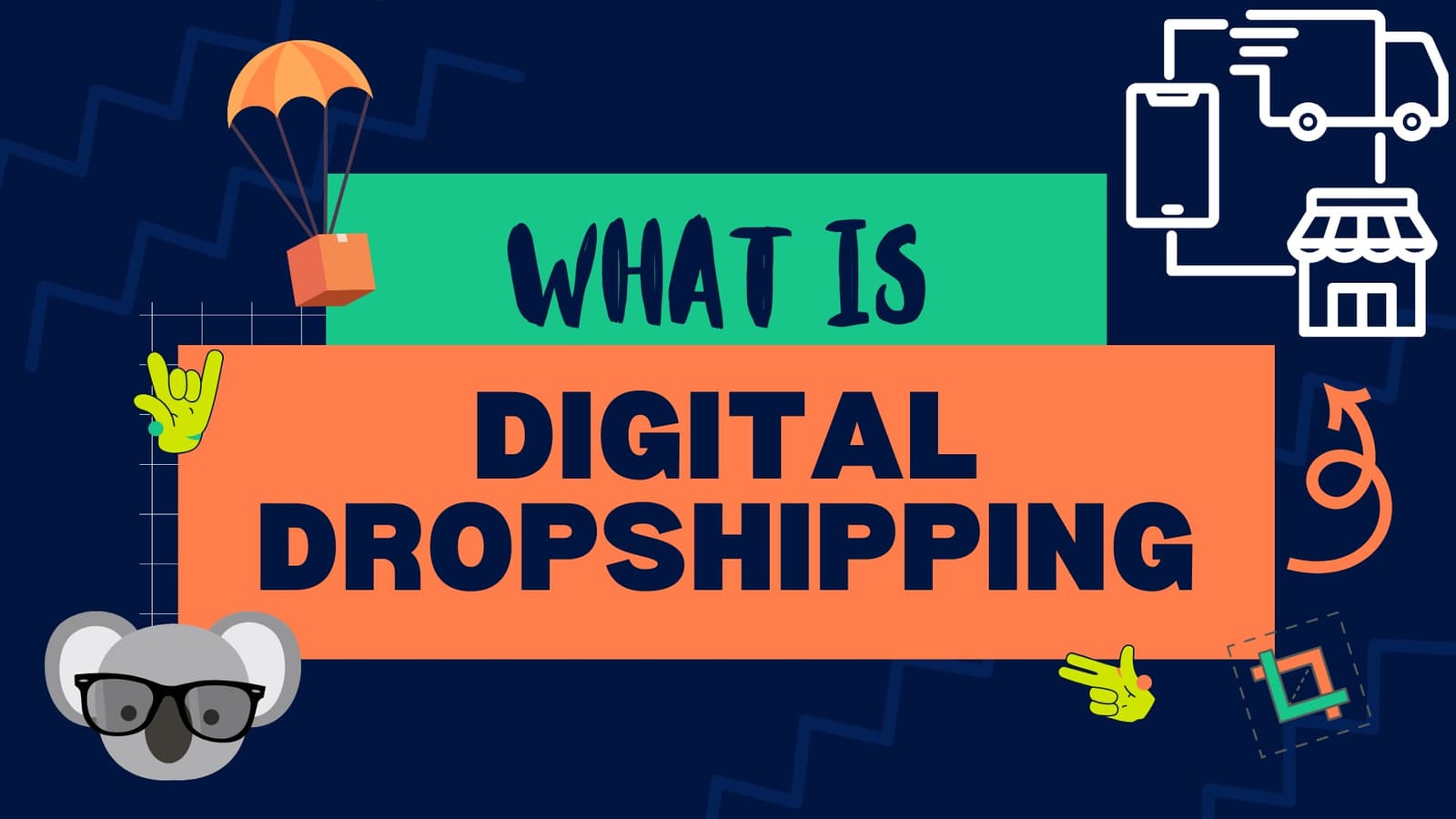
Digital dropshipping has real advantages over physical dropshipping, but it also has genuine trade-offs most guides skip over. Here is a clear-eyed look at how the model works, where it makes sense, and how to get started without the usual hype.
With 24% of retail purchases expected to happen online by 2026, demand for digital products is part of a broader shift, not a niche curiosity. But the model still requires work to execute well.
What is Digital Product Dropshipping?
Digital dropshipping is a business model where you sell digital products (ebooks, software, courses, templates, and similar items) without creating or storing them yourself. When a customer buys, delivery is automatic. A third-party provider either supplies the file or the delivery infrastructure, so there is no physical inventory to manage.
The distinction from regular dropshipping: the product does not exist in the physical world. There is no warehouse, no carrier, no customs delay. That changes the economics considerably.
Physical vs. Digital Dropshipping
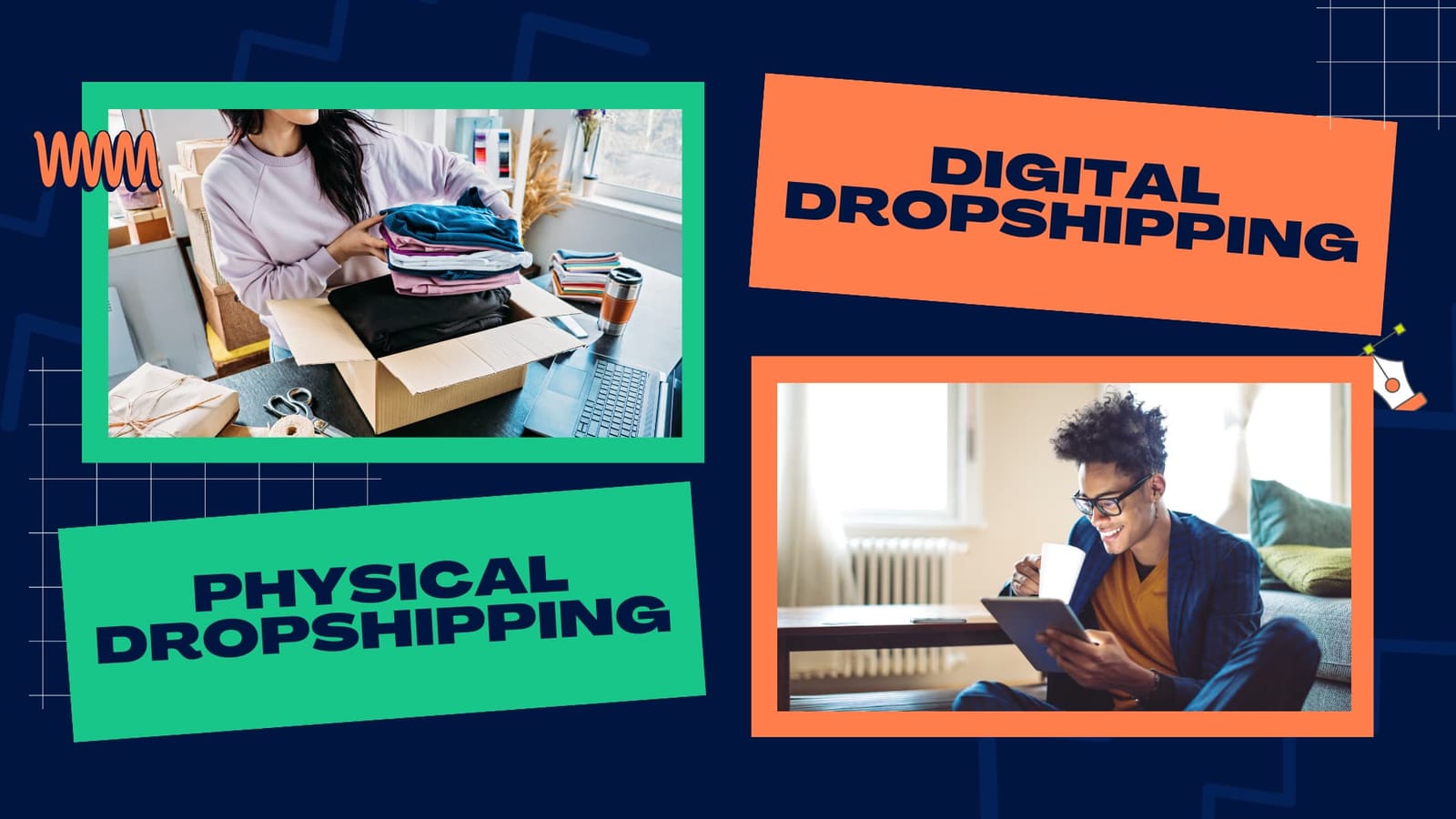
In physical dropshipping, a supplier holds stock and ships directly to your customer. You absorb the risk of shipping delays, damaged goods, and supplier reliability. Margins are often thin after ad spend.
With digital dropshipping, the "product" is a file or access credential. Once it exists, it can be sold indefinitely at near-zero marginal cost. No packing, no carrier fees, no returns based on shipping damage. However, you trade one set of problems for another: licensing rights need to be clear, piracy protection matters, and the market for many digital product categories is crowded.
The practical upside of digital: one seller described writing a simple digital guide once and then selling it on repeat, with no shipping, no inventory, and no refund drama, pulling in several hundred dollars of pure profit without running a single ad. The numbers are modest, but they show the ceiling on your time-per-sale ratio for a well-positioned digital product: the work is front-loaded, and each later sale costs you almost nothing.
Advantages of Digital Dropshipping
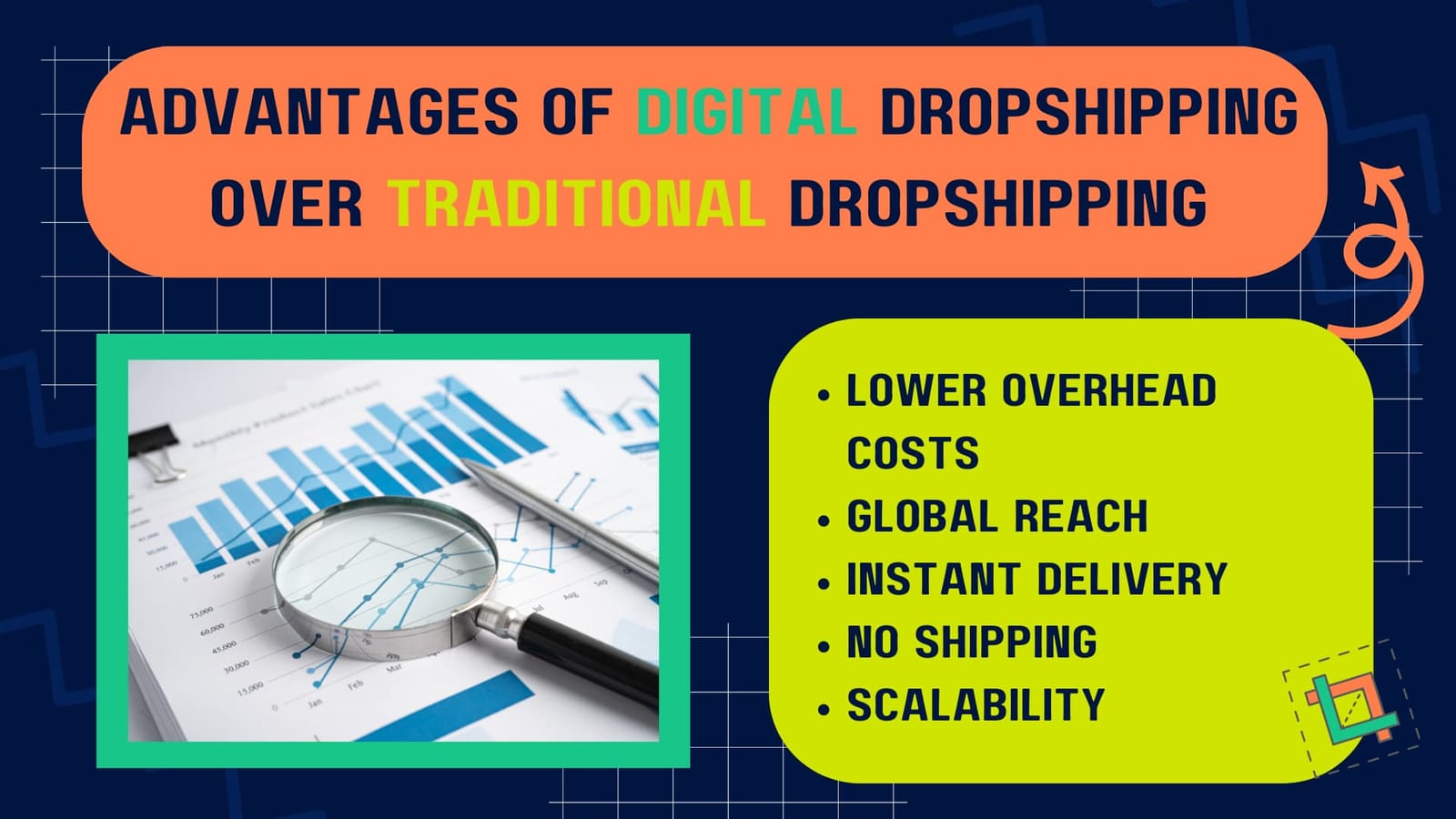
Lower overhead costs
Physical products require storage, whether that is a warehouse fee or a supplier holding cost baked into your unit price. They also carry per-unit production cost: if demand jumps, costs scale with it. A digital product, once made, costs almost nothing to deliver again. An ebook sold once and an ebook sold ten thousand times cost the same to produce.
No shipping friction
Electronic delivery skips packing, carrier selection, tracking, and the customer service load that follows when packages arrive late or damaged. That simplifies operations considerably, especially when you are just starting out.
Sell globally from day one
Digital products have no geographic limits on delivery. A customer in Germany buys and downloads the same way a customer in California does. You do need to account for VAT and local digital-goods tax rules (the EU's OSS scheme, for instance), but you are not limited by shipping zones or customs complexity.
Scalability without proportional cost
Adding more sales does not require more warehouse space, more staff packing boxes, or more supplier negotiations. Your delivery infrastructure handles it. This makes digital dropshipping genuinely scalable in a way that physical dropshipping is not, though your marketing costs still scale with volume.
Instant delivery for customers
Customers who buy digital products get them immediately. For information products, tools, and templates, that immediacy is part of what they are paying for.
Is Digital Dropshipping Profitable?
It can be, but the honest answer depends heavily on your product category and marketing execution.
Margins on digital products are high once the product exists. There are no per-unit costs eating into revenue. But the competition is real. Markets like ebook resale, generic template packs, and stock photo subscriptions are saturated. Where digital dropshipping tends to work is in specific, well-defined niches where the buyer has a clear problem and is willing to pay for a direct solution.
The key variables: product quality (or the quality of whatever you are licensing), how well your store is positioned, and whether your marketing is specific enough to reach buyers with intent, not just browsers.
How to Start a Digital Dropshipping Business
Step 1: Pick a niche and verify demand
Start narrower than feels comfortable. "Online courses" is too broad. "Notion templates for freelance designers" is a workable niche. Use search data and competitor analysis to confirm people are actually looking for what you plan to sell. The Koala Inspector can help you analyze what is already working in a given category before you commit to a direction.
Step 2: Source or create products with clear licensing
This is where digital dropshipping diverges from physical dropshipping in an important way. You need explicit rights to resell any product you did not create. That means either a resell license from the creator or a master resell rights (MRR) agreement. Read the terms carefully. Selling a product you do not have rights to can get your store shut down and expose you to legal risk.
If you create the product yourself (write an ebook, build a template pack, record a course), you own it outright, which simplifies everything. Freelancers on platforms like Upwork can help produce products in areas where you have the idea but not the time or skill.
Step 3: Set up your store
Shopify is the most common choice for digital dropshipping stores, with a range of apps (SendOwl, SkyPilot, Digital Downloads by Shopify) that handle automatic file delivery after purchase. Gumroad is a simpler option if you want to launch quickly without platform complexity. Etsy is worth considering for certain product types like printables and templates, where buyers already look there.
Your store needs a clear landing page, straightforward product descriptions, and a fast, frictionless checkout. Speed and trust signals matter.
Step 4: Automate delivery
Do not handle file delivery manually. Apps like SendOwl, FetchApp, and SkyPilot automate this: when a customer pays, they get a secure download link or access credentials automatically. Most also handle download limits, license key delivery, and expiry settings. Set this up before you launch.
Step 5: Build a marketing plan you will actually execute
Digital products do not market themselves. The options are: organic search (takes time, pays off long-term), social media (TikTok and YouTube work well for demonstrations and tutorials), email marketing (effective once you have a list), and paid ads (fast, but costs money and requires margin to absorb).
Pick one primary channel and focus on it before spreading to others. Trying to do everything at once at low quality is worse than doing one channel well.
Marketing Strategies for Digital Dropshipping
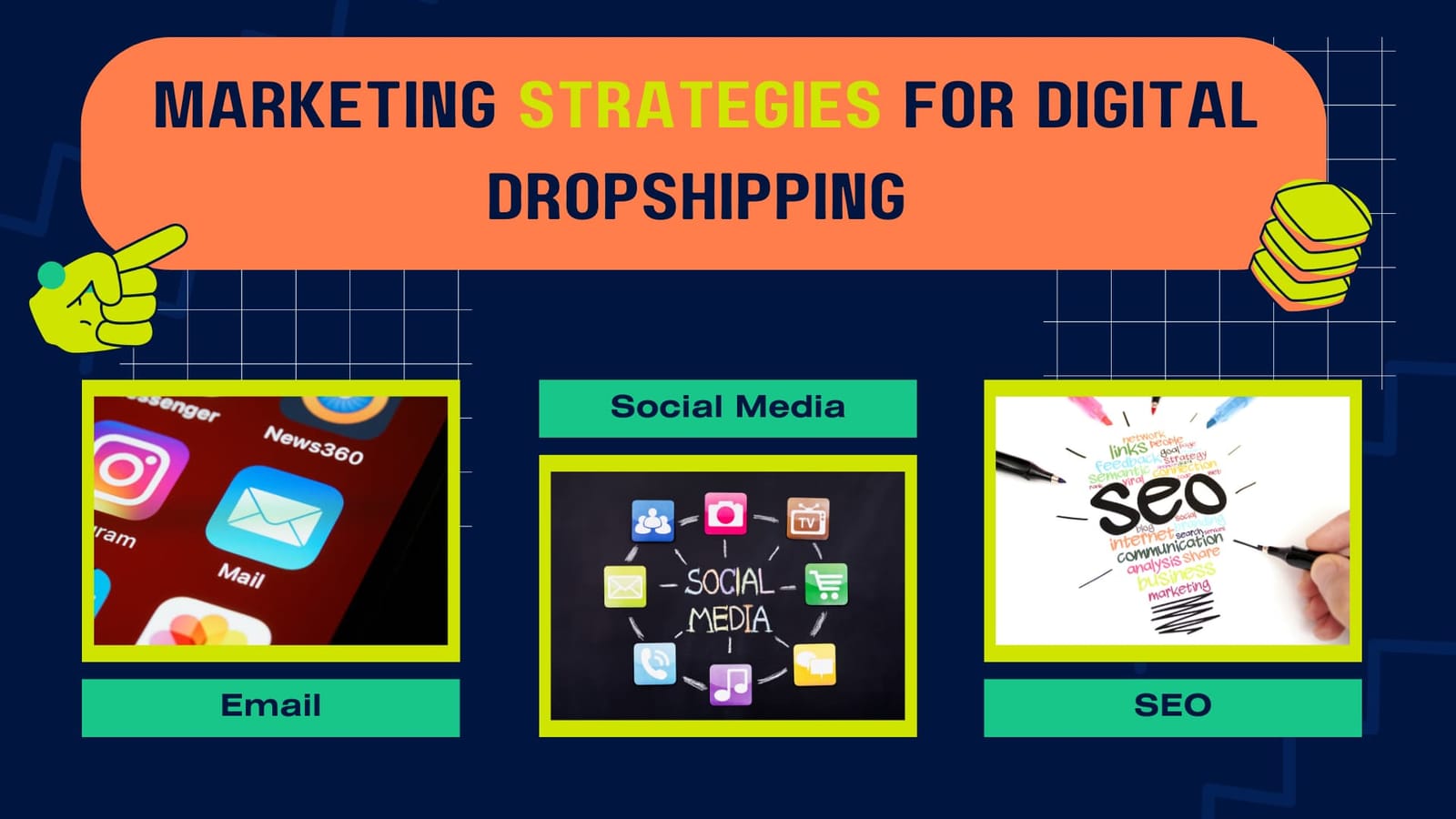
Email marketing
Email works well for digital products because buyers of information products are often repeat customers. Build your list through a lead magnet (a free sample, a related free resource) and send campaigns that are genuinely useful, not just promotional. A sequence of helpful emails builds enough trust to convert subscribers into buyers.
Social media
TikTok, Instagram, and YouTube are the strongest platforms for product demonstrations and niche-specific content. For digital products, that means showing the product in use: a Notion template being filled in, a digital planner displayed on an iPad, a course module previewed. Short-form video that shows the practical value of the product does more than generic promotional posts. Posting consistently on one platform beats half-hearted effort across three.
SEO
Search traffic converts well for digital products because searchers have specific intent. Someone searching "canva social media template pack" is closer to buying than someone who scrolled past an ad. Optimize your product pages and any supporting blog content for the specific queries your buyers use. The investment takes months to pay off, but the traffic it generates costs nothing per click once it arrives.
Best Products for Digital Dropshipping
Ebooks and guides
Information products in specific niches still sell well when the content is genuinely useful and not available free everywhere. Think practical guides: how to set up a specific software workflow, a diet plan for a specific health condition, a business document template pack. Generic "make money online" ebooks are a race to the bottom.
Online courses
The online learning market continues to grow. Courses that teach a concrete, testable skill (a software tool, a technical process, a craft) tend to hold their value. Vague personal development courses are oversaturated.
Apps and software
Selling software as a digital product usually means licensing a white-label or SaaS tool and reselling access. This can be profitable but requires more diligence about what you are actually selling and what support the customer will expect.
Digital templates and tools
Notion templates, Canva templates, Excel spreadsheets for specific workflows, and similar tools have a consistent buyer base among freelancers and small business owners. They are practical, cheap to produce, and solve a specific problem. This category tends to have less competition than courses or ebooks when the template serves a narrow use case.
Printable products
Planners, worksheets, educational materials, and wall art in printable format. Buyers download and print them at home. Low production cost, good margins, and Etsy has a large existing buyer base for this category.
Digital artwork
Digital art for commercial or personal use. Selling digital artwork requires clear licensing terms for the buyer (personal use only vs. commercial use), but it is a well-established market.
Media subscriptions
Premium content subscriptions (newsletters, podcast memberships, video libraries) can generate recurring revenue, which is more valuable than one-time sales. They require more ongoing content production to retain subscribers.
Best Platforms for Digital Dropshipping
1. Shopify
Shopify is the most flexible platform for digital dropshipping if you want full control over your store design, pricing strategy, and customer experience. It does not natively handle digital delivery well out of the box, but apps like SkyPilot, SendOwl, and the official Digital Downloads app fill that gap. Shopify's transaction fees apply unless you use Shopify Payments. Plans start at $29 per month.
The main reason to choose Shopify over the alternatives: you own the relationship with your customers. Your email list, your data, your brand.
2. Etsy
Etsy has an existing audience that actively searches for printables, templates, and digital art. The marketplace brings potential buyers to you in a way a standalone Shopify store does not. The trade-off is that you are one seller among many and have limited control over how your products are presented. Etsy charges a $0.20 listing fee per item, a 6.5% transaction fee, and a payment processing fee. It is a good starting point for template and printable sellers who want to validate demand before building their own store.
3. Gumroad
Gumroad is the simplest option for getting a digital product online fast. No monthly fee (it takes a percentage of each sale instead). The platform handles delivery, file hosting, and basic page design. Suitable for individuals selling one or a few products, but the fees become meaningful at higher volume, and you have less control over the store experience than with Shopify.
4. WooCommerce
WooCommerce on WordPress gives you full control and no platform transaction fees, but setup requires more technical knowledge than the other options. If you are comfortable with WordPress and want to minimize per-sale fees at scale, it is worth considering. Otherwise, the setup overhead is a real barrier early on.
Is Digital Dropshipping Worth It In 2026?
For the right product and the right niche, yes. The model has genuine advantages: no inventory, instant delivery, high margins, global reach. It suits people who can either create quality digital products themselves or source them with legitimate resale rights.
It is not passive income with no work required. You still need to build a store that converts, market the products to the right audience, and handle customer service when things go wrong (downloads fail, customers have questions, refund requests come in). The business is real; it just looks different from physical commerce.
Where it is least likely to work: generic products in saturated categories, low-quality resell-rights bundles, or any approach that tries to compete on price alone in a category where price has already been driven to zero.
Where it is most likely to work: a specific niche, a product that solves a concrete problem, and a marketing channel you understand well enough to use consistently.
Written by
Ana Gelevska
eCommerce Content Writer
Ana Gelevska is a content writer with more than five years of experience creating content for eCommerce brands and global clients. She digs into each topic and the people it is for, then turns it into clear, useful articles that Shopify sellers and dropshippers can act on.
Connect on LinkedIn