
Beauty Dropshipping Winning Products (How to Copy Proven Winners) in 2026
 By Ana GelevskaJuly 15, 2026
Beauty and personal care is one of the most competitive niches in dropshipping, and that is exactly why it is worth being in. A crowded niche is a niche with proven demand. Beauty and personal care is tracked as a standing dropshipping category with dedicated, refreshed demand coverage (Sell The Trend), which means buyers are already there and already spending. The hard part is not finding demand. It is standing out against sellers who have done the work before you.
So do not fight that. Copy it. The fastest way to find a winning beauty product is to study a beauty store that is already scaling one, read its best-sellers, apps, traffic, and live ads in your browser, and build your own version of the moves that are already working. This guide front-loads that method, then covers how to spot a rising beauty product early, validate real demand, and read a competitor's playbook with the free Koala Inspector Chrome extension.
The Direct Method: Copy a Proven Winner
Here is the whole approach in one move. You do not guess which beauty product will sell. You find a beauty store that is clearly selling, then reverse-engineer what makes it work. A scaling store has already spent real ad money proving the product, the angle, and the app stack for you. Your job is to read that homework, not repeat it.
Open a live beauty Shopify store and use the free Koala Inspector extension to read what is normally hidden:
- Read the best-sellers first. Koala Inspector surfaces the store's full catalog and flags its likely best-sellers with prices and details. This tells you what is actually moving, not what the homepage banner is pushing. If three skincare leaders all feature the same style of serum or wand up top, that is your signal.
- Copy the app stack. The free app detector lists every Shopify app the store runs, grouped by type. Beauty stores lean hard on reviews and email, and reviews carry more weight here than in almost any other category because buyers will not put an unknown product on their face without social proof. Across the stores Koala tracks, the two apps that show up most often are a product-reviews app and an email and SMS marketing tool. If the leaders all run the same review app and the same email tool, copy that stack.
- Check the traffic profile. The Site Traffic view shows a store's average monthly traffic, where visitors come from, the top keywords, and the audience. That tells you whether a beauty store is built on paid social, search, or repeat buyers, so you know which channel actually drives sales in this category.
- See the ads they are running. Ad Campaigns shows the store's live Google and Facebook/Instagram creatives. You read the exact angle a winning beauty store uses, the offer, and the hook, before you spend a cent testing your own.
That is the loop. Find a proven store, read its winners and its stack, and run your own version to a smaller audience. Everything below makes each step sharper.
The Beauty Sub-Niches That Sell
Beauty is not one niche, it is a shelf of them. Each sub-niche has a different buyer, a different angle, and a different reason to convert. Pick one and go deep instead of listing everything. These are the product types that keep showing up as trending across the beauty stores Koala tracks.
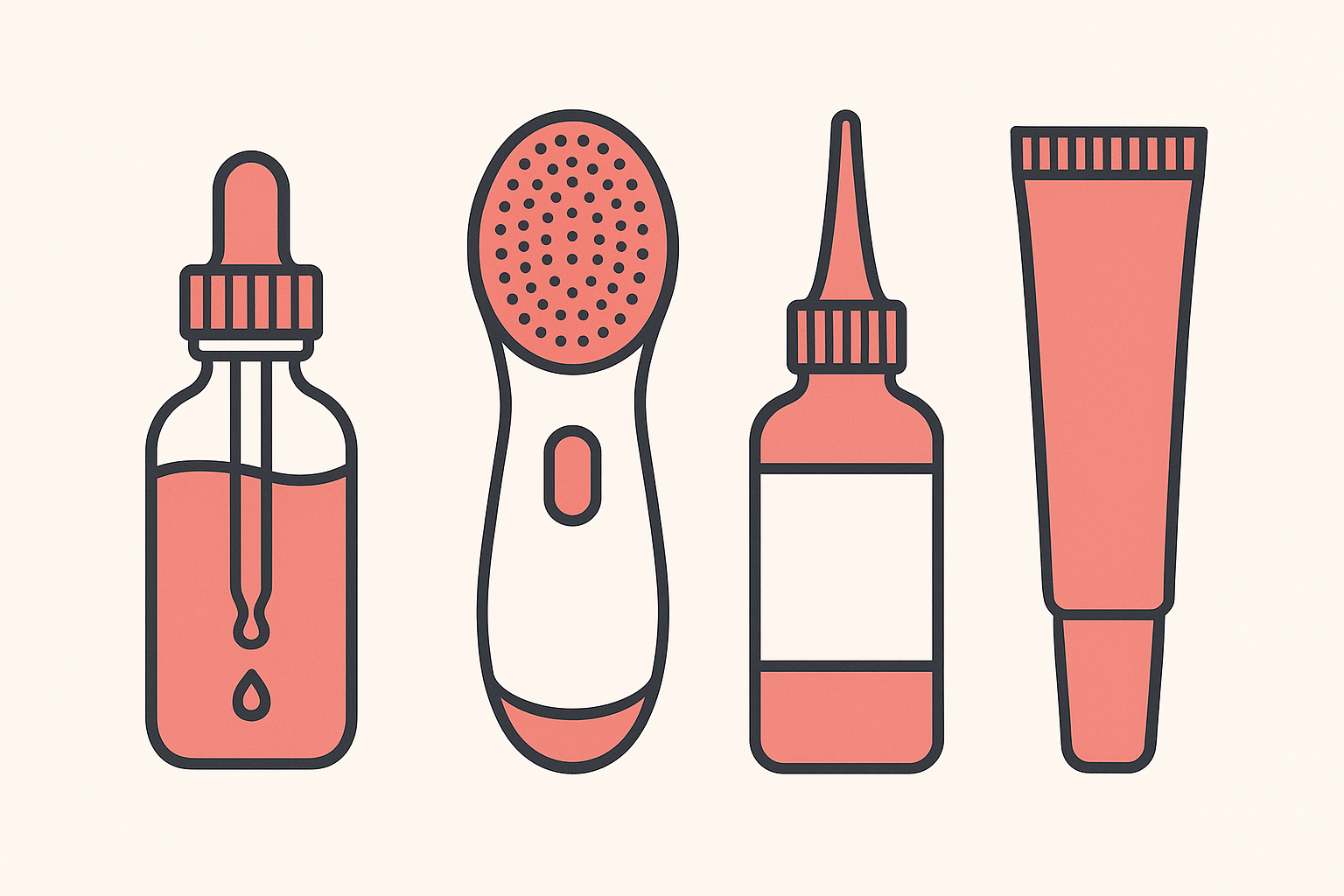
Skincare with a visible result. Serums, glow kits, rice-extract cleansers, and treatment creams that promise a change the buyer can see. This is the biggest and most durable slice of beauty because the product sells a before-and-after, not a mood. Rice-extract glow kits and radiance creams both surface as trending skincare products in Koala's data. The catch is trust: skincare needs strong reviews and honest claims, because a serum that overpromises gets returned and rated one star.
Beauty tools and devices. LED face masks, 5-in-1 beauty wands, ice rollers, and skincare wands. Tools win because they are demonstrable. A short video of a device gliding across a face is a perfect social ad, and the higher price point of a device gives you more margin to spend acquiring the customer. Multi-in-one beauty wands and LED masks are recurring trending devices in Koala's store data.
Hair growth and hair care. Rosemary and lavender growth oils, peptide-powered growth serums, scalp treatments, and detangling brushes. Hair care sells on a specific, emotional problem: thinning, breakage, or slow growth. The buyer is not browsing, they are searching for a fix, which makes the ad angle write itself. Hair-growth serums and rosemary growth oils are among the trending hair products Koala observes.
Lips and color cosmetics. Peel-off lip tints, long-wear stains, and color products with a gimmick or a lasting-power claim. These win on impulse and repeat purchase at a low price, and they photograph and film beautifully for short-form video. Peel-off lip stains and magic lip tints keep appearing as trending color products in Koala's data. Color has one real hurdle worth naming: buyers worry about shade matching online, a recurring question in the ecommerce communities beauty sellers hang out in. Clear swatches and a generous return policy solve most of it.
How to Spot a Rising Beauty Product Early
The best time to run a beauty product is on the way up, before every store is selling it and the ad auction gets brutal. A few signals tell you a product is rising rather than peaking:
- It is showing up in more than one store's best-sellers, but not everywhere yet. When you inspect three or four beauty stores and the same product type appears near the top of two of them, that is early momentum. When it is on every store you check, the window is closing.
- The leaders are actively advertising it. A product a scaling store is putting fresh ad spend behind is a product that store believes still has room to grow. You can see those live creatives directly in Ad Campaigns.
- The angle is new, not just the product. Often the product is not new, but the hook is. "Peel-off lip stain that lasts all day" is the old product with a sharper promise. A rising winner usually has a rising angle, and reading a competitor's live ads shows you the angle before it saturates.

To watch this over time instead of catching it once, Koala Inspector can track a store and log when it adds products, swaps apps, or changes prices. That turns "I checked a store once" into "I get notified when a proven seller makes its next move," so you spot the next rising product while your competitors are still reacting to the last one.
Validate Demand Before You Spend on Ads
Spotting a product is not the same as proving it will sell for you. Validation is the step that saves your ad budget. Run any beauty pick through this check before you launch:
- Confirm it is a real best-seller, not a homepage feature. Open the store and read its actual best-sellers with Koala Inspector. A product that ranks as a best-seller in a store with real traffic and live ad campaigns is proven demand, not a guess.
- Check the traffic behind it. A best-seller in a store pulling meaningful monthly traffic is a very different signal from a best-seller in a store nobody visits. The Site Traffic view tells you which one you are looking at.
- See who else sells it. Find Suppliers lists the suppliers selling the same product, split into exact matches and similar products, with ratings where available, delivery time, your landed cost and your estimated profit per unit at your selling price (before ad spend, fees and returns, which step 4 covers). That tells you both where to source and how saturated the product already is. If exact matches are everywhere at near-identical delivered prices, the margin is gone.
- Do the margin math honestly. Subtract every cost before you call anything a winner: product cost, shipping, transaction fees, your ad cost per sale, and a realistic return rate. Product research and niche selection are the two most-discussed levers among sellers precisely because getting them right is what makes the margin real (AutoDS).
The Two Realities That Sink New Beauty Stores
Beauty margins can be excellent, but two things quietly kill new stores in this niche. Name them up front and you sidestep both.
Quality and safety, not just price. Beauty goes on skin, hair, and lips, so a bad product is not a bad review, it is a refund and sometimes a real complaint. The single most common frustration sellers report is unreliable suppliers, and beauty is one of the categories where that hurts most (Dropship.io). Order samples before you scale, check the product against its own claims, and favor suppliers whose quality stays consistent. A supplier who quietly swaps a formula can tank your reviews without warning, so reorder samples periodically and treat consistency as a feature.
Rules and claims. Cosmetics and personal-care products carry more compliance weight than a phone case. Depending on where you sell and ship, there are labeling and registration expectations, and "miracle cure" claims are a fast way to get an ad account banned. Keep your claims to what the product actually does, sell the visible result rather than a medical promise, and check the requirements for your market before you launch. This is not a reason to avoid beauty. It is a reason to be the seller who does it properly while sloppy competitors get shut down.
If you want the deeper version of this, our guides to finding reliable suppliers and to judging whether a product is saturated both apply directly to beauty.
Read a Competitor's Playbook With Koala Inspector
Everything above runs on one habit: reading the stores that already win. Here is the full playbook you run on any live beauty Shopify store with the free extension.
- Best-sellers tell you what is actually moving in that store.
- App detector tells you the proven tech stack, especially the review and email tools beauty runs on.
- Theme detector tells you which theme the leaders trust, with a link to use it yourself.
- Site Traffic tells you the volume and the channel driving it.
- Ad Campaigns tells you the live angle, offer, and hook.
- Find Suppliers tells you the sourcing options with your landed cost per unit, and how saturated the product is.
The free plan gives you 15 tokens a month with no credit card, which is enough to analyze stores, detect apps and themes, and browse best-sellers without paying anything. Shop analysis, the app detector, the theme detector, and best-seller browsing are always free and never cost a token, so your core research runs for nothing. Premium adds 220 renewing tokens a month and lets you track up to 50 stores if you want to monitor competitors continuously.
Demand Is Deep Enough for New Sellers
Beauty demand is not thin, even though the niche is crowded. Across the beauty and personal-care stores Koala tracks, the leaders pull serious modeled monthly traffic, which means there is room for a new seller to take a slice without fighting for scraps. Here is what that looks like for a handful of leading beauty stores in Koala's data, anonymized, by modeled monthly visits:
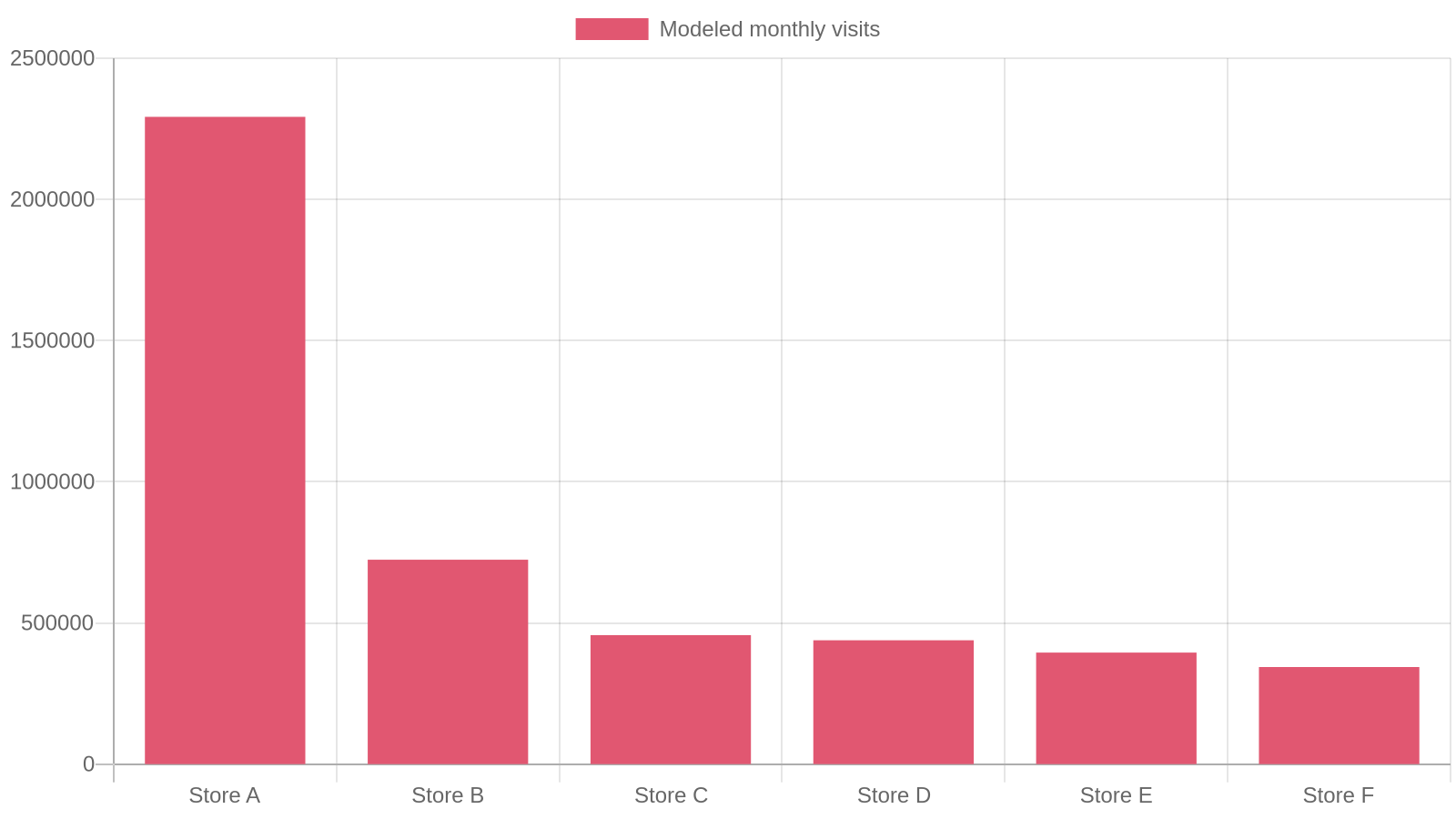
Read this as a floor, not a ceiling, and remember it covers the stores Koala tracks rather than all of Shopify. These are stores that have already proven the category converts at volume. Your job is not to outrank the leader on day one. It is to find one proven product, one proven angle, and one proven app stack, and run your own version to a smaller audience profitably. For the full method across any niche, read our guide to finding winning products.
A Word on Ad Angles
The best beauty ad angles rarely come from the ingredient list. They come from the visible result or the problem. A serum ad sells the clearer skin in the after shot, not the peptide. A hair-growth oil ad sells the specific fear of thinning, not the rosemary. A beauty wand ad sells the satisfying glide across a face, because beauty is one of the most watchable categories in short-form video. When you read a competitor's live ads with Koala Inspector, pay attention to the hook they lead with, not just the product. That hook is what you are really competing on.
One product can carry three completely different ads. A vitamin C serum can be "fade dark spots," "morning glow," or "the serum that sold out twice." Test the angle, not just the product, and read the winning store's ads to see which promise is already converting before you write your own.
Frequently Asked Questions
Is beauty good for dropshipping? Yes, with eyes open. Beauty and personal care has huge, proven demand and wide margins on tools and treatments, and it is one of the most watchable categories for short-form video ads. The trade-offs are real competition, higher quality and safety expectations because the product goes on skin, and compliance rules on labeling and claims. Copy proven stores, order samples, and keep your claims honest and you sidestep most of the risk.
What are the best beauty products to dropship? The strongest sub-niches are skincare with a visible result (serums, glow kits, treatment creams), beauty tools and devices (LED masks, beauty wands, ice rollers), hair growth and hair care (growth oils and serums, scalp treatments), and lips and color cosmetics (peel-off tints and long-wear stains). Validate any specific product against a live, scaling competitor before you test it.
How do I know a beauty product is actually selling? Open a live beauty Shopify store and read its best-sellers, installed apps, traffic, and live ads with Koala Inspector. A product that shows up as a best-seller in a store with real traffic and active ad campaigns is proven demand, not a guess.
How do I avoid quality problems with beauty products? Order samples before you scale and check the product against its own claims, then reorder periodically so a silent formula change does not tank your reviews. Favor suppliers with consistent quality, and keep your marketing claims to what the product actually does so you stay on the right side of ad-platform rules.
Is the beauty niche too saturated to start now? Saturation is proof of demand, not a wall. The niche is crowded, but the leaders still pull heavy traffic, which leaves room for a focused new seller. Pick one sub-niche, copy a proven store's product, angle, and app stack, and target a smaller audience profitably instead of trying to beat the leader everywhere at once.
Start by Reading a Proven Beauty Store
You do not need to invent a winning beauty product. You need to find one that is already winning and build your own version of it. Pick a beauty store that is clearly selling, open the free Koala Inspector extension, and read its best-sellers, apps, traffic, and live ads in a few minutes. That is your whole validation toolkit, free, and it is the difference between guessing and copying proven winners in the most competitive niche in dropshipping.
Written by
Ana Gelevska
eCommerce Content Writer
Ana Gelevska is a content writer with more than five years of experience creating content for eCommerce brands and global clients. She digs into each topic and the people it is for, then turns it into clear, useful articles that Shopify sellers and dropshippers can act on.
Connect on LinkedIn