
Skincare Dropshipping Products That Actually Sell in 2026
 By Ana GelevskaJune 29, 2026
Skincare is one of the few dropshipping niches where the math works in your favor before you spend a dollar on ads. People run out of a serum and reorder. A cream that fixes a visible problem sells on the strength of the problem, not the brand. And demand is huge: in Koala's own store data, a single skin and nail care store pulls roughly 2.3 million modeled monthly visits. That is a beginner-friendly, high-volume niche where a small store can carve out real revenue.
This guide shows you which skincare and personal-care products actually sell, how to validate demand by studying real competitor stores instead of guessing, and the red flags that sink most new sellers. The whole workflow centers on one move: open a proven skincare store, read its best-sellers, apps, and traffic in your browser, and copy what already works.
What Makes a Skincare Product Sell
Three things separate a skincare product that prints money from one that drains your ad budget. Get all three and you have a candidate worth testing.
Margin that survives shipping and ads. Skincare is small, light, and cheap to source, so the spread between cost and retail price is wide. A serum or cream can carry a healthy markup and still feel like a fair price to the buyer. That margin is what pays for your ads, your returns, and your profit. Beauty and personal care is the single most-discussed margin niche in our research corpus, ahead of every other category, which tells you sellers keep coming back to it for a reason (Sell The Trend).
Repeat purchase built into the product. This is the part most dropshippers miss. A phone case sells once. A face cream gets used up and reordered every four to six weeks. When a customer comes back on their own, your second sale costs you nothing in ad spend, and your lifetime value climbs without you lifting a finger. Consumables like serums, cleansers, oils, and masks are the engine of a skincare store's profit.
A specific, visible problem. The products that convert solve something the customer can see in the mirror: dark spots, dryness, fine lines, acne, dull skin. A "glow kit" sells the glow. A skin-tag patch sells the removal. When the product names the problem, your ad writes itself and the buyer doesn't need to be educated. Vague "anti-aging" promises convert worse than a SKU that fixes one thing.
How to Validate Demand the Smart Way
Most guides tell you to scroll TikTok for hours. That works, slowly. The faster method is to study stores that already sell skincare at scale and reverse-engineer what makes them work. A proven store has done your testing for you, with real money.
Here is the workflow. Open a live skincare Shopify store and use the free Koala Inspector Chrome extension to read what is normally hidden:
- Best-sellers first. Koala Inspector surfaces the store's full catalog and flags likely best-sellers, with prices and product details. This is the fastest read on what is actually moving, not what the homepage banner is pushing.
- The apps they run. The free app detector lists every Shopify app the store has installed, grouped by type. If three skincare leaders all run the same review app, the same upsell app, and the same email tool, that stack is the proven setup for the niche. Copy it.
- Traffic and sources. The Site Traffic view shows the store's average monthly traffic, where visitors come from, top keywords, and demographics. That tells you whether a store is built on paid ads, search, or social, so you know which channel actually drives skincare buyers.
- The ads they are running. Ad Campaigns shows the store's live Google and Facebook/Instagram creatives. You see the exact angles and offers a winning skincare store uses before you spend on your own.

You don't have to guess which store to study. Skincare runs deep, so leading stores cover everything from clinical serums to viral beauty devices. The point is to pick one that is clearly selling, then read its winners and its stack in minutes. To go further, Koala Inspector can track a store over time and log when it adds products, swaps apps, or changes prices, so you watch a proven seller's next move instead of reacting late.
The free plan gives you 15 tokens a month with no credit card, which is enough to analyze stores, detect apps and themes, and browse best-sellers without paying anything. That is your whole validation toolkit, free.
10 Skincare Product Angles That Win
These are real product categories and formats selling in skincare stores right now, with the reason each one works. Use them as starting points, then validate each against a live competitor before you commit.
-
Vitamin C and brightening serums. Treats a visible problem (dull skin, dark spots), consumable, premium price point. The repeat-purchase backbone of most skincare stores.
-
Retinol and anti-aging night creams. Older buyers, higher willingness to pay, used nightly so they reorder fast. A clear problem-solver that doesn't need much education.
-
Hydrating face masks and sheet masks. Low cost, high perceived value, and they photograph well for social ads. Buyers grab them in multipacks, which lifts average order value.
-
Facial cleansing and "glow" kits. Bundling a wash, scrub, and mask into one kit raises the order value and frames a full routine. Multi-step kits are showing up across skincare stores Koala tracks.
-
Skincare devices and beauty wands. Higher-ticket items like LED wands and multi-in-one tools carry strong margins and a wow factor that ad creatives love. Device buyers also come back for the gels and serums that go with them.
-
Eye creams and dark-circle treatments. A narrow, visible problem with a dedicated buyer. Small, cheap to ship, and an easy upsell beside a serum.
-
Targeted patches (acne, skin tag, under-eye). Tiny, ultra-cheap to source, and they solve one annoyance fast. Patches sell on impulse and reorder once the pack runs out.
-
Lip care and lip masks. Low price, frequent reorder, and an easy add-on at checkout. Great for lifting average order value rather than carrying a store alone.
-
Body and massage oils. Personal care extends past the face. Anti-cellulite and massage oils are consumable, problem-led, and light to ship.
-
SPF and tinted day creams. Daily-use products with built-in reorder and a clear functional benefit. They pair naturally with the rest of a routine.
A useful rule when you study a competitor: the best ad angles often come from the complaints about a product, not the praise. One seller who analyzed thousands of competitor reviews found that two and three star reviews, the ones that name a real frustration, made far better creative material than glowing five star reviews (r/dropshipping). Read the reviews on a proven product, find the recurring complaint, and sell the product that fixes it.
Skincare Is a High-Volume Niche
Demand in skincare is not thin. Across the beauty and personal-care stores Koala tracks, the leaders pull serious modeled monthly traffic, which means there is room for new sellers to take a slice without fighting for scraps. Here is what that looks like for a handful of leading stores in Koala's data, by modeled monthly visits:
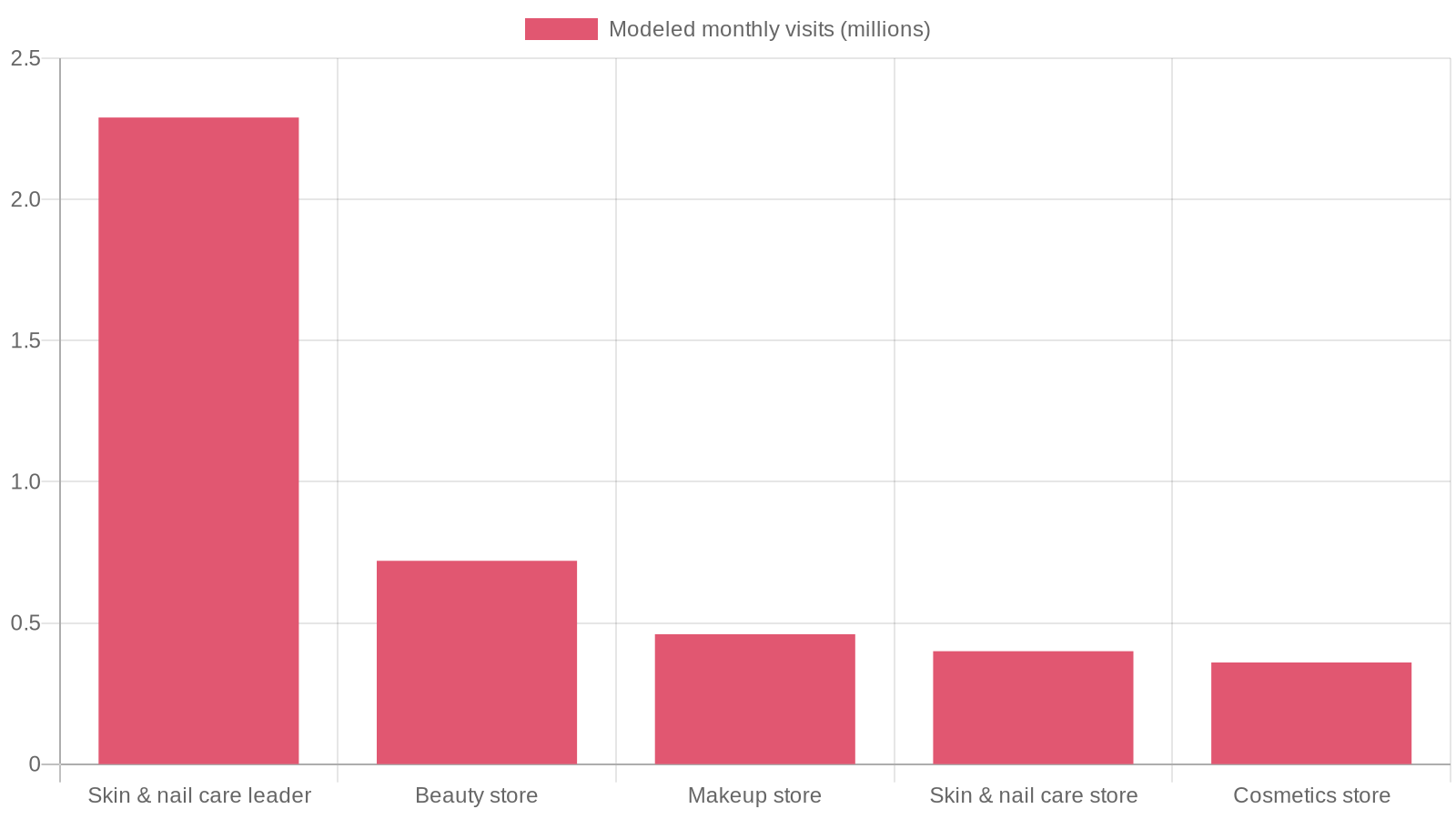
Read this as a floor, not a ceiling. These are the stores that have already proven the niche converts at volume. Your job is not to outrank the 2.3 million-visit leader on day one. It is to find one proven product, one proven angle, and one proven app stack, and run your own version to a smaller audience profitably.
Red Flags That Sink Skincare Stores
Skincare is forgiving on margin and repeat purchase, but it punishes three mistakes hard.
Saturation on the exact same hero product. If every store in your feed is running the identical viral serum with the same video, the angle is burned and ad costs are already climbing. Oversaturated niches are one of the most-cited reasons new stores stall (Printify). Use a competitor read to confirm a product is selling, then differentiate the angle, the bundle, or the audience instead of copying the ad frame for frame. Niche selection and product research are the two biggest demand themes among sellers for exactly this reason (AutoDS).
Compliance and claims. Skincare touches the body, so the rules are stricter than for gadgets. Avoid medical or "cures" language, check that your supplier's products meet your market's cosmetic regulations, and never promise a clinical result you can't back up. A product that fixes a visible problem sells fine inside honest, descriptive copy.
Shipping fragility and leakage. Liquids, glass droppers, and pressurized devices break and leak in transit. A cracked serum bottle is a refund and a one-star review. Favor suppliers with protective packaging, lean toward tubes and sturdy formats over fragile glass where you can, and factor breakage into your margin before you launch.
A budget is not the barrier people think it is. One skincare brand ran a full spring campaign for under 100 dollars by leaning on authentic, low-production content instead of expensive shoots (Modern Retail). The product and the angle do the heavy lifting, not the ad budget.
Frequently Asked Questions
Is skincare a good dropshipping product? Yes, for three reasons: wide margins on small light items, built-in repeat purchase on consumables like serums and creams, and demand deep enough that leading stores pull millions of modeled monthly visits in Koala's data. The catch is compliance and saturation, both of which a competitor read helps you sidestep.
What skincare products are best for dropshipping? Consumable problem-solvers reorder best: brightening serums, retinol night creams, masks, eye creams, targeted patches, and "glow" kits. Higher-ticket beauty devices carry strong margins and pull device-plus-refill repeat sales. Validate each against a live, selling competitor before you test it.
How do I know a skincare product is actually selling? Open a live skincare store and read its best-sellers, installed apps, traffic, and live ads with Koala Inspector. A product that shows up as a best-seller in a store with real traffic and active ad campaigns is proven, not a guess.
Do I need a big budget to start? No. The Koala Inspector free plan costs nothing and is enough to research stores and validate products, and skincare brands have run full campaigns for under 100 dollars using authentic content over expensive production.
Start by Reading a Proven Store
The shortcut in skincare is not a secret product. It is a proven store you can read in your browser. Open a skincare Shopify store, see its best-sellers, its app stack, its traffic, and its live ads, then build your own version of what already works.
Install Koala Inspector free and start reading skincare winners today. No credit card, 15 tokens a month, and every store you open turns into a product-research playbook. For the full method across any niche, read our guide to finding winning products.
Written by
Ana Gelevska
eCommerce Content Writer
Ana Gelevska is a content writer with more than five years of experience creating content for eCommerce brands and global clients. She digs into each topic and the people it is for, then turns it into clear, useful articles that Shopify sellers and dropshippers can act on.
Connect on LinkedIn