Reverse Dropshipping Complete Guide & Market Analysis
 By Ana GelevskaMay 23, 2025 · Updated June 4, 2026
Most dropshipping advice starts from the same premise: find cheap products in China and sell them at a markup in the US or Europe. Reverse dropshipping does the opposite. You source high-quality goods from developed countries and sell them to buyers in emerging markets where those products are scarce, trusted, or simply not available locally. The model is less crowded than traditional dropshipping, margins tend to be higher, and advertising costs in target markets like India, Indonesia, and Brazil are a fraction of what you'd pay for the same click in the US.
This guide covers the full picture: how reverse dropshipping actually works, the real pros and cons, how to find products and suppliers, and which markets are worth targeting.
What Is Reverse Dropshipping?
Reverse dropshipping is a business model where sellers source products from developed countries (typically the US, UK, France, or Germany) and fulfill orders to customers in emerging markets. The appeal is straightforward: buyers in countries like Indonesia, India, and China have growing purchasing power but limited access to premium Western goods, and they're willing to pay for them.
The scale of the opportunity is real. China alone accounts for over 28% of global manufacturing output by added value, yet there's consistent demand among Chinese consumers for imported goods they associate with higher quality standards. US exports to China exceeded $153 billion in 2022, and China's total e-commerce market revenue reached $1.3 trillion in 2023. That's an established trade relationship you can tap into at the retail level.
The critical difference from traditional dropshipping is the product quality and the direction of the supply chain. You're not competing on price with hundreds of other sellers offering the same AliExpress item. You're competing on access and authenticity, which is a much more defensible position.
Before committing, you need to understand the cultural nuances of your target market, how international shipping and customs work in practice, and where your products fit within local demand. This guide walks through all of it.
Reverse Dropshipping: Advantages and Disadvantages
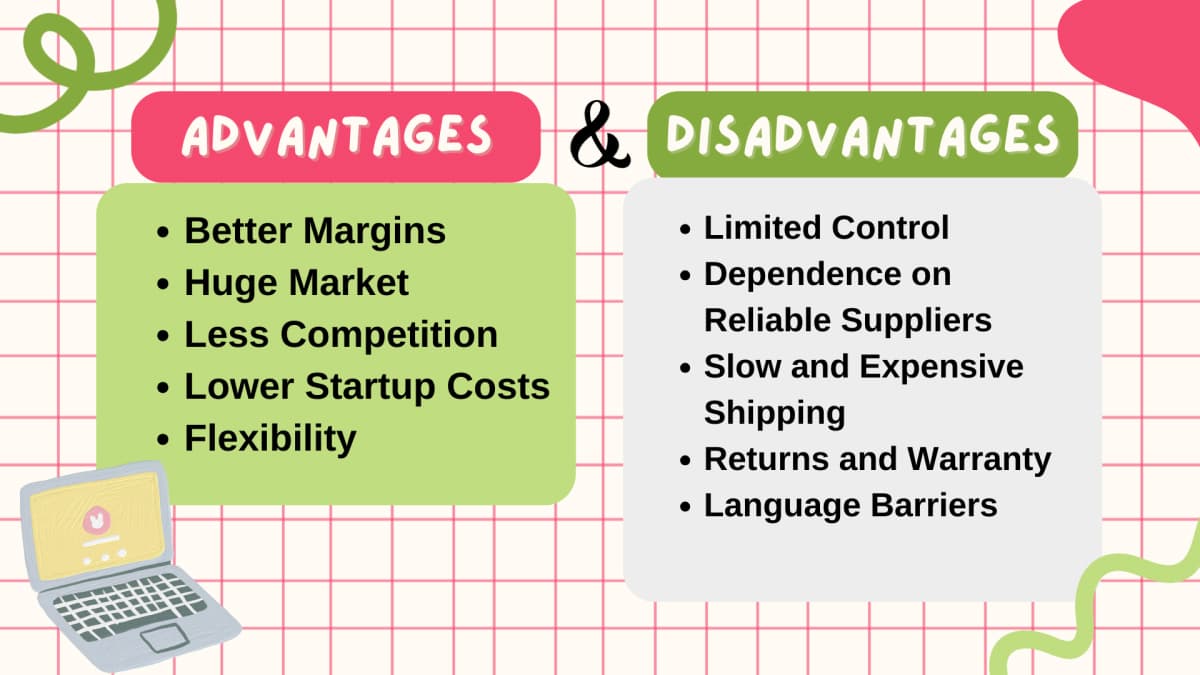
The core advantage of reverse dropshipping is the combination of higher margins, lower ad costs, and less competition in target markets. The core challenge is that international logistics are genuinely more complex than domestic shipping, and your supplier network will be smaller and harder to vet than the broad AliExpress ecosystem.
Here's a honest breakdown of both sides.
Reverse Dropshipping Advantages
Better Margins
High-ticket products carry better margins by default, and in reverse dropshipping, you can often charge more than you'd get for the same product in a Western market. Chinese and Indonesian consumers who buy imported goods have already decided to pay a premium. They factor in duties and shipping because they expect it. That means your pricing doesn't have to fight downward pressure the way it does in saturated Western markets.
Huge Market
China's population of around 1.41 billion and its e-commerce retail share of over 52% make it one of the most significant digital commerce markets on earth. Indonesia, with over 277 million people and 5.31% GDP growth in 2022, is the wealthiest country in Southeast Asia by total GDP. Both have growing middle classes actively buying imported goods online.
Global cross-border B2C e-commerce is projected to surpass $7.9 trillion by 2030 (Statista), and much of that growth is concentrated in these exact markets.
Less Competition
Traditional dropshipping is saturated in most Western product categories. Reverse dropshipping is newer and less understood, which means fewer sellers competing for the same buyers. Most dropshippers haven't explored it because they assume it's too complicated or that saturated markets are the only option. That gap creates real opportunity.
Lower Advertising Costs
Digital advertising costs in India, Indonesia, the Philippines, and Mexico are substantially lower than in the US or UK. Google does not operate in mainland China, so Baidu is the relevant platform there. Baidu's cost-per-click is lower than Google's for comparable product categories, which means your ad budget stretches further. The caveat: Baidu requires upfront payment and some Chinese-language capability, so factor that in before targeting China specifically.
No Inventory Holding Risk
Like traditional dropshipping, reverse dropshipping doesn't require you to buy stock upfront. You pass orders to your supplier for fulfillment. This keeps startup costs down and lets you test product-market fit before committing to volume.
Reverse Dropshipping Disadvantages
Limited Control Over Shipping
You won't be packing the box or managing the courier handoff. If a shipment is delayed, damaged, or stuck in customs, you're the one fielding the complaint even though you didn't cause the problem. The fix is vetting suppliers thoroughly before going live, not after your first problem customer.
Supplier Dependence
Your business performance is directly tied to how reliably your supplier ships. One consistent way to manage this: start with small test orders across a few suppliers before committing to one. Test delivery times, packaging quality, and how they handle a problem order.
Import Regulations and Customs Complexity
Each target market has its own import rules, and they change. Indonesia has specific restrictions on certain categories. China has its own customs declaration processes. These aren't impossible to navigate, but they require research. For high-value products, consider consulting a customs broker or freight forwarder who knows your target country before you start selling.
Slower and More Expensive Shipping
Products traveling from the US to Southeast Asia take longer than domestic shipments. Customers may be fine with that if you set expectations clearly, but international shipping cost is real and eats into margins on lower-priced items. This is one reason reverse dropshipping works better with higher-value products where shipping is a smaller percentage of the sale price.
Returns Are Complicated
A return from Indonesia or China back to a US supplier is logistically awkward and often expensive relative to the product's value. Work with suppliers who have clear warranty policies and consider how you'll handle returns before your first sale, not after.
Language Barriers
Many buyers in your target markets will want product descriptions in their language. An English-only store will limit your conversion rate. Tools like Weglot can handle translation, but you should also localize product names, size guides, and customer support wherever possible.
How to Start Reverse Dropshipping
Find Your Niche and Target Market
Start with the market, not the product. Pick a country where you have some basis for understanding local demand, then research what imported products are consistently popular there. Google Trends (available in most target markets) and Baidu Index (for China) show search demand patterns. Reddit communities and Facebook groups for expats in target countries often surface real purchasing behavior and frustrations with local product availability.
Source with Reputable Suppliers
Your supplier is the backbone of the business. Start with one supplier while you're learning, and test with real orders before promoting at scale. Confirm their catalog matches what buyers in your target market actually want, that they can ship internationally, and that their return process is workable.
Good platforms for finding Western suppliers who ship globally include Spocket, US Direct, and Easyship.
Set Up Your Online Store
Asian consumers don't typically browse American retail websites the way US buyers do. Shopify works, but you'll need to think carefully about localization: local-language product descriptions, payment methods that are actually used in your target market (Alipay and WeChat Pay in China; GoPay or OVO in Indonesia), and trust signals that resonate locally.
A domain that doesn't look obviously foreign can help. Consider whether you want to list on local marketplaces (like Tokopedia in Indonesia) alongside your own store.
Legal and Regulatory Compliance
Import laws and consumer protection regulations vary by country and change periodically. What you read in a blog post from two years ago may be inaccurate. For any country where you're doing meaningful volume, get at least one consultation with a local customs or trade specialist before you start.
Check Your Competition
Before you commit to a product and market, research who else is already selling it there. Look at local marketplaces in your target country to see what's available, at what price, and from whom. Use the Koala Inspector to analyze competitor Shopify stores in your niche, including their top-selling products, themes, and traffic patterns.
Marketing and Customer Service
Paid advertising on Baidu (China), Google (India, Indonesia, Brazil), or social media platforms popular in your target market are the main acquisition channels. In China specifically, WeChat and Douyin (TikTok's Chinese version) have strong product discovery ecosystems. Celebrity and influencer endorsements carry significant weight in many Asian markets, sometimes more than standard ad campaigns.
Plan your customer service process in advance. Having a support workflow in the buyer's language, even if handled through translation tools, reduces refund rates.
What Kind of Products Sell Well in Reverse Dropshipping?
Products that sell well have a few things in common: they're from brands with strong Western reputations, they're difficult to source locally in the target market, and the price point is high enough that international shipping doesn't kill the economics.
High-end skincare (especially from French or Korean brands), organic supplements, premium electronics accessories, and specialty wellness products consistently perform. Branded items do better than generics because the brand itself is part of what buyers are paying for.
Top 10 Reverse Dropshipping Products in 2026
Smart Home Devices
Demand for smart home technology is growing steadily in Asia's urban centers. Products like smart lighting systems, security cameras, and connected locks from brands like Philips Hue sell on the strength of name recognition and product reliability.
Fitness Trackers
Health and fitness tracking is mainstream in China, Indonesia, and India. Garmin and Fitbit have strong brand recognition in these markets, and buyers specifically seek out the authentic versions rather than local alternatives.
High-end Fashion
Branded sunglasses, watches, and jewelry have durable demand from aspirational buyers in emerging markets. Brands with global recognition:
- Ray-Ban
- Rolex
- Tiffany & Co
Organic Beauty Products
Growing awareness of synthetic ingredients in mass-market skincare has created consistent demand for certified organic products from US and European brands. This niche works especially well in India and Indonesia, where natural and organic positioning resonates strongly.
Designer Shoes
Premium footwear brands hold their value in resale and carry status signaling that's well understood in target markets. Brands that travel well:
- Gucci
- Prada
- Louis Vuitton
Gaming Consoles
China had around 550 million online gamers as of recent reports, and the country's video game industry revenue grew 14% from 2022 to 2023. PlayStation, Xbox, and Nintendo Switch hardware are in consistent demand, particularly in markets where access to official retail channels is limited.
Drones
Professional-grade camera drones from US and European manufacturers are sought after by photography studios and media companies in markets where local alternatives don't match the quality. DJI is Chinese-made, so the reverse dropshipping angle here is specifically non-DJI professional equipment.
Kitchen Appliances
High-performance blenders, stand mixers, and smart ovens from Western brands have a clear audience among food-focused consumers who know the product names. Brands that sell on reputation:
- Vitamix
- KitchenAid
- Bosch
3D Printers
China's 3D printing consumer market revenue is projected to reach $2.3 billion. Buyers in this space often specifically want non-Chinese brands for perceived hardware quality and software support:
- Prusa
- Anycubic
- Elegoo
Luxury Bedding Sets
Premium bedding from brands used in high-end hotels is a consistent niche. Buyers in this category already know what they want and are comparing on brand and materials, not just price:
- Matouk
- Frette
- Saatva
How Do I Pick a Good Supplier for Reverse Dropshipping?
Finding suppliers for reverse dropshipping is harder than for standard dropshipping because your supplier pool is smaller. You need manufacturers or distributors based in developed countries who can ship internationally, handle customs documentation, and maintain quality standards.
Start by calculating total landed cost (product price + shipping + duties) for your target market before deciding whether a supplier is viable. A supplier who seems cheap but doesn't know how to handle international customs documentation will cost you more in delays and customer service than one who charges a bit more but ships cleanly.
Platforms worth checking:
- Spocket (US and EU suppliers, international shipping)
- US Direct (US-based fulfillment)
- Easyship (multi-carrier international logistics)
Can I Work With Different Suppliers in My Dropshipping Business?
Working with one supplier at a time is easier to manage, especially early on. When a single supplier's catalog doesn't cover everything you want to sell, adding a second supplier is straightforward in practice: you route each order to the relevant supplier rather than combining them.
The main complication is split orders. If a customer buys two items that ship from different suppliers, they may arrive at different times, and you'll likely pay separate shipping fees. This affects your economics on bundled or multi-item orders. Set your store up to handle this clearly, or keep your product catalog scoped to what a single supplier can fulfill until you have the operational capacity to manage multiple relationships.
Written by
Ana Gelevska
eCommerce Content Writer
Ana Gelevska is a content writer with more than five years of experience creating content for eCommerce brands and global clients. She digs into each topic and the people it is for, then turns it into clear, useful articles that Shopify sellers and dropshippers can act on.
Connect on LinkedIn