What Is Dropshipping & How Does It Work: The Ultimate Guide (2026)
 By Ana GelevskaMarch 21, 2025 · Updated June 4, 2026
Online stores sell thousands of products without touching a single one. The mechanism behind that is dropshipping. You list a product, a customer buys it, and the supplier ships it directly to them. Your job is marketing, pricing, and customer service. That's the entire model.
This guide walks through how it actually works, the different ways you can run a dropshipping business, what it pays, and what you need to get started.
What is Dropshipping?
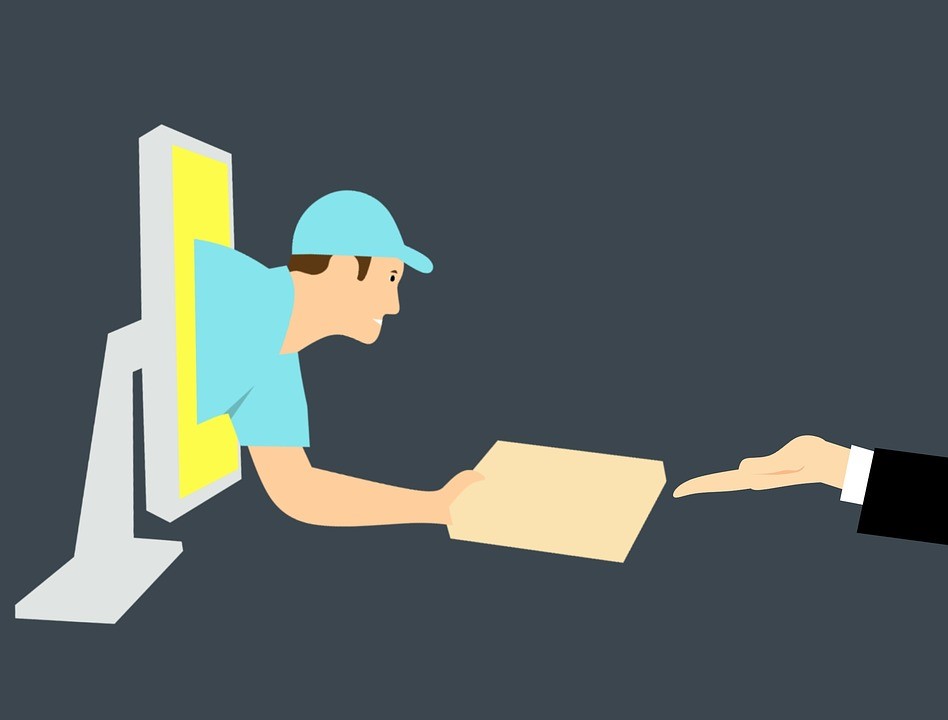
Dropshipping is a retail model where you sell products without holding any stock. When a customer orders from your store, you purchase the item from a supplier and the supplier ships it directly to the customer. You never handle the product.
The practical result: you can open a store with a laptop and an internet connection, start selling on day one, and only pay for products after you've already collected the customer's money. That's why the global dropshipping market was valued at $365.67 billion in 2024 and is projected to reach $1.25 trillion by 2030 at roughly 22% annual growth.
What it doesn't mean is passive income or easy money. Success rates sit at around 10-20% -- most dropshippers who fail quit before they've had time to find a working product-market fit, optimize their ads, or build a supplier relationship worth trusting. The model removes inventory friction; it doesn't remove the work of building a real business.
How Does Dropshipping Work
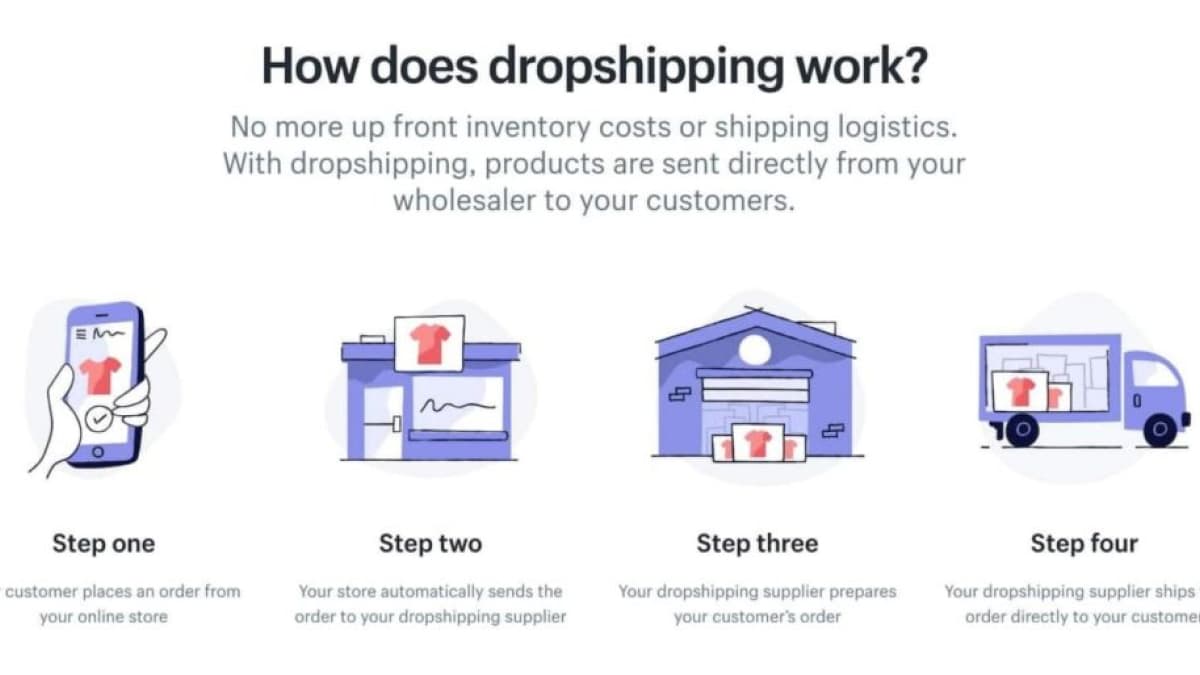
The order flow has four steps. Here's what happens at each one.
Step One: Customer Places an Order
A customer visits your store, picks a product, and completes checkout. From their perspective, they're buying from you. They don't see the supplier at all.
- Good product pages and store design are what drive that first order.
- A smooth checkout experience turns a browser into a buyer. A rough one sends them elsewhere.
Step Two: Order Forwarding to the Supplier
Once the order is placed, you (or your order management tool) forward it to the supplier with the customer's shipping details. Most dropshipping apps automate this step entirely -- the order lands in the supplier's system without any manual input from you.
- Automation here eliminates copy-paste errors and cuts fulfillment lag to minutes.
- This is also where price margins get locked in: the difference between what you charged the customer and what you pay the supplier.
Step Three: Order Preparation by the Supplier
The supplier picks the product from their warehouse, packages it, and prepares it for shipping. You have no physical involvement. This is also the step where your supplier's quality and reliability matter most -- you won't see the package before the customer does.
- The right supplier can make or break your reputation. Vetting them before you list their products is not optional.
- Finding reliable suppliers is the challenge ecommerce retailers cite most often -- take that seriously.
Step Four: Direct Shipping to the Customer
The supplier ships the product directly to your customer using blind shipping: no supplier name or branding on the packaging. Your customer receives an order that appears to come from your store. The supplier typically generates a tracking number, which you can pass along through your store's order emails.
- Blind shipping preserves your brand. The customer has no reason to search for the supplier directly.
- Tracking info matters more than most new dropshippers expect. Shipping questions are the most common customer service ticket.
Types of Dropshipping Business Models
Dropshipping isn't one thing. The approach you use shapes your margins, your competition level, and how much differentiation you can build.
Standard Marketplace Dropshipping
The most common starting point. You source products from established marketplaces like AliExpress, set your markup, and fulfill orders through the marketplace's network. Getting started requires almost no upfront investment.
The tradeoff: these products are available to every other store too. You're competing on price and marketing rather than on what you sell. Profit margins here typically run 10-25%, and they compress quickly in saturated niches.
Print-on-Demand Dropshipping
You create designs; suppliers print them onto products (t-shirts, mugs, phone cases, posters) only when orders come in. Nothing is produced until a customer buys.
Your designs are your competitive advantage -- they can't be copied exactly. This model works well for brand-first businesses and passionate communities. Margins vary by product type but the uniqueness supports higher prices than generic catalogue items.
Domestic Dropshipping
You partner with suppliers in the same country as your customers. Shipping times drop from weeks to days, which matters a lot in markets where customers have been trained by Amazon.
Domestic suppliers charge more than overseas alternatives, but higher customer satisfaction and fewer complaints often justify the cost, especially for premium or time-sensitive products.
High-Ticket Dropshipping
Some dropshippers focus on expensive items -- furniture, specialty equipment, professional tools -- where a single sale can generate hundreds or thousands in profit. You trade transaction volume for margin.
High-ticket buyers research more before purchasing. They need confidence and detailed information. Your pre-sale work is heavier, but customer service volume is lower and each sale counts for more.
Digital Dropshipping
Instead of physical products, you sell downloadable files -- software, templates, ebooks, music, graphics. The customer receives it instantly. There's no shipping, no inventory, and no per-unit fulfillment cost once you've set it up.
This model pairs well with automation. Your store can deliver products around the clock with no manual work. The challenge is finding licensable content or building supplier relationships with digital creators.
Dropshipping Pros and Cons
Pros
Low Overhead Costs
No inventory purchase, no warehouse, no packing and shipping staff. Your main costs are your store platform, your domain, and your marketing. That's it. For a business just starting out, the difference between needing $500 and needing $50,000 upfront is the entire reason dropshipping exists.
Low Barriers to Entry
You can have a live store selling real products in a day. If you're not sure whether dropshipping fits you, you can test it without much financial risk before committing to it full-time.
Sell Across Multiple Channels
You're not locked into one platform. A dropshipping business can sell on Shopify, Amazon, and social commerce simultaneously. More channels means more potential customers without proportionally more infrastructure.
Scalable
When your order volume doubles, you don't need twice the warehouse staff or twice the storage. Your supplier handles that. You invest more in marketing and your supplier scales the fulfillment. Multiple supplier relationships also mean you can expand your catalog without limits on what you can carry.
Cons
High Competition
Low barriers to entry cut both ways. Every product you consider listing is probably already available from dozens of other stores at similar prices. Standing out requires real effort: a sharper niche, better content, faster shipping, or a stronger brand. Dropshipping is a legitimate side hustle -- but not one that runs itself.
Less Control Over Quality and Shipping
When a supplier has a bad week, your customers notice. You didn't pack the order, but you're responsible for it. Managing expectations clearly -- honest shipping timelines, responsive support -- reduces the damage. But you'll never fully eliminate it.
Lower Margins
Suppliers absorb your storage and logistics costs, and they price accordingly. Typical gross margins run 10-25% depending on the category. Understanding your full costs before you start -- platform fees, payment processing (usually around 2.9% + $0.30 per transaction), ad spend -- is what separates profitable stores from ones that look profitable until the accounting happens.
Hard to Differentiate
When you're selling the same product as fifty other stores, you can't differentiate on the product. Branding, packaging inserts, and personalized touches are difficult when the supplier ships for you. Print-on-demand and private labeling are paths around this, but standard catalogue dropshipping requires marketing creativity to stand out.
Why Get Into Dropshipping?
Low Cost, Real Entry Point
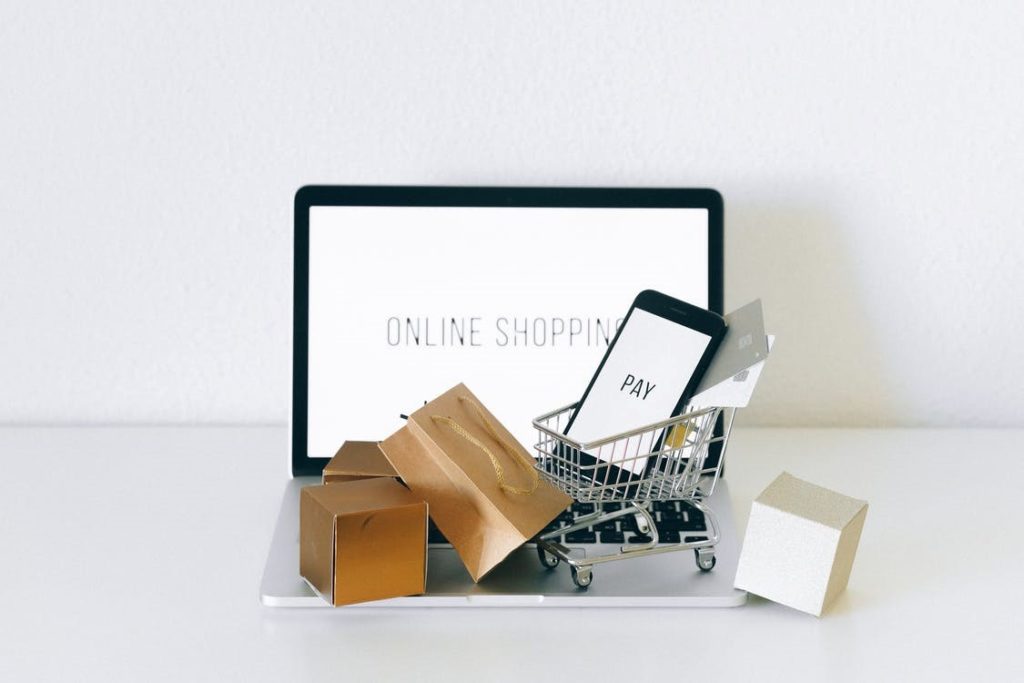
Traditional retail required capital: inventory, a lease, staff, logistics. Dropshipping removes most of that. You can start with a Shopify trial, a domain, and a few hours of product research. There's no other legitimate business model where the startup cost is this low relative to the potential upside.
Fast to Pivot
Inventory is a prison. If a product stops selling, traditional retailers are stuck with stock. With dropshipping, you swap products in minutes. A trend dies? Remove it. A new category picks up? Add it tomorrow. Stores with an active social media account tend to generate more revenue than those without, and the speed to test new products makes staying current much easier.
Work From Anywhere
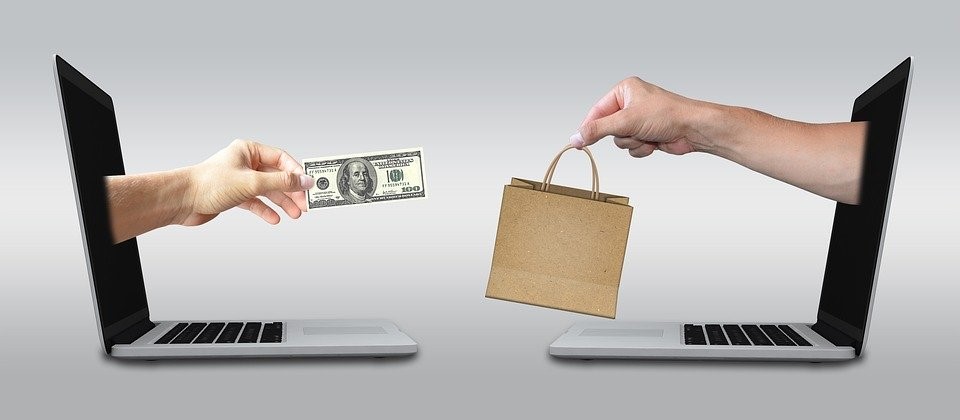
This is a real advantage, not just marketing copy. You need a laptop and internet. That means you can run the business from home, while traveling, or during hours that fit your schedule. Once a store gains momentum, many operators reduce it to a few hours a week while keeping revenue stable.
How Much Do Dropshippers Make?
Real numbers vary widely. A beginner testing their first products might generate $200-$500 a month in profit. Someone with a working ad strategy and a validated niche can hit $2,000-$5,000. Experienced operators with proven stores report over $10,000 a month -- and high-ticket dropshippers who focus on expensive items can clear well above that.
| Dropshipper Type | Average Monthly Profit |
|---|---|
| Beginner | Under $500 |
| Established | $2,500+ |
| Successful | Over $5,000 |
| High performer | Over $10,000 |
These are profit ranges after costs, not revenue. Factor in platform fees, payment processing, advertising (which can run 30-50% of revenue in competitive niches), and the cost of goods. A store doing $10,000 a month in sales may net $1,500 or $4,000 depending on how efficiently it's run.
What Do You Need to Start Dropshipping?
Not much, practically speaking. Here's what actually matters.
A Business Plan
A plan doesn't have to be a formal document. At minimum, know: who you're selling to, what category of product, how you'll reach customers, and how you'll differentiate from the competition. A clear answer to each of those questions before you spend money on ads saves months of wasted budget.
- Target market: who are your customers and what do they care about?
- Product niche: specific beats general at every stage of dropshipping.
- Differentiation: why would someone buy from you instead of the next store?
- Marketing channel: organic search, paid social, TikTok, email -- pick one and go deep before spreading thin.
A Supplier You Can Trust
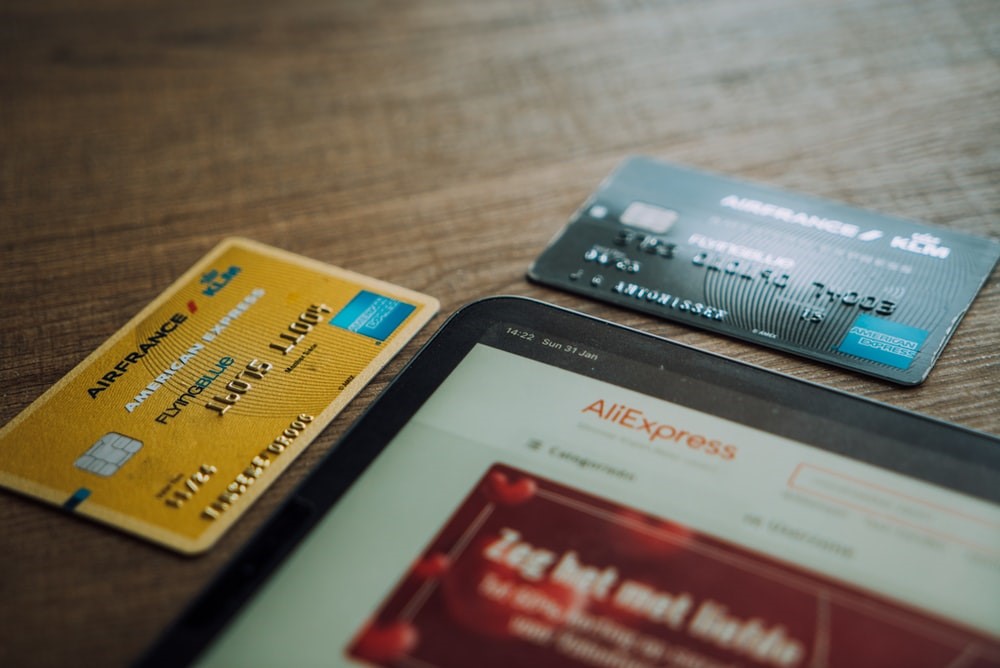
There are millions of products on AliExpress and other supplier marketplaces. The hard part isn't finding products -- it's finding a supplier who ships on time, sends the right item, and handles problems professionally. Order samples before you list anything. Read reviews, check response times, and look for suppliers with verified business registration.
Most ecommerce retailers name finding reliable suppliers as their top challenge. Don't treat this step as routine.
A Shopify Inspector Tool: Koala Inspector
If you're starting on Shopify and want to understand what's actually working for your competitors, a store inspector tool gives you real visibility. Koala Inspector shows you which products competitors are selling, what apps they're running, what themes they use, and how their store is structured. You can build a product list and export it as a CSV.
It's free to use and it runs as a Chrome extension -- no subscription required. For a new dropshipper trying to figure out why a competitor is growing while your store isn't, it answers that question directly.
Compared to tools like Wappalyzer and BuiltWith, Koala Inspector is purpose-built for Shopify intelligence, which makes it more useful for dropshipping specifically.
Common Misconceptions About Dropshipping
"Dropshipping is easy"
Easy to start, yes. Easy to succeed at, no. Competition is real, margins are thin, and finding a supplier you can trust takes work. People who treat it like passive income typically quit inside 90 days. The ones who stick around and actually test and iterate find a much different experience.
Is Dropshipping Legal?
Yes. Dropshipping is legal in the United States, Canada, the UK, Australia, and most other markets. You're responsible for consumer protection compliance, accurate product descriptions, tax obligations, and not infringing intellectual property. Problems arise when sellers misrepresent products or ignore their legal obligations as the seller of record -- not from the business model itself.
"Dropshipping is dead in 2026"
The market was valued at $365.67 billion in 2024 and is growing at about 22% per year. That's not a dead business model. What has changed: generic stores with no differentiation are harder to run profitably than they were five years ago. Niche focus, brand building, and thoughtful supplier selection matter more now. That's true of any maturing market.
"It's a get-rich-quick scheme"
It isn't, and treating it like one is the fastest way to waste your startup budget. Most successful dropshippers spent months testing products, running small ad experiments, and refining their store before they found something that worked consistently. The upside is real -- it just requires the same kind of persistence any business does.
"Dropshipping only works locally"
Dropshipping is inherently global. Your supplier ships wherever the customer is. A US customer, a UK customer, a Canadian customer -- same supplier, same process. Domestic suppliers give you faster shipping, and international suppliers give you lower costs. You choose based on what your specific market values most.
"Dropshipping is fraudulent"
This misconception comes from confusing the business model with bad operators. Dropshipping itself is legitimate and widespread -- roughly 27% of online retailers use it. You've almost certainly ordered from a dropshipping store without knowing it. The model is the same as any retail business; the supplier fulfills from their warehouse instead of yours.
The Future of Dropshipping
The trend that matters most going into the second half of this decade is niche specificity. General stores stocking hundreds of unrelated products face brutal competition on every product page. Stores built around a specific audience -- pet owners, home office workers, outdoor enthusiasts -- can build real brand equity and customer loyalty that a general store can't.
Sustainability is becoming a real purchasing factor, not just a talking point. Suppliers who can document their environmental practices, and stores that communicate honestly about them, are already differentiating in categories where the customer base cares.
AI is changing product research and customer service. Automated tools can now surface trending products faster than manual browsing, and chatbots handle tier-one support tickets without human time. This makes operational efficiency easier to achieve for lean teams.
Reverse dropshipping is an emerging model worth understanding: instead of sourcing from lower-cost markets to sell in high-income ones, you source premium products from developed markets and sell into growing demand in emerging economies. The margin structure is different but the core mechanics are the same.
The fundamentals haven't changed: find a product people want, work with a supplier who ships it reliably, and market it to the right audience. What's changed is how much effort it takes to stand out, and how much the tools available can help you do that faster.
Final Thoughts
Dropshipping is a real business model with real potential and real challenges. The low startup cost makes it one of the most accessible ways to learn how ecommerce actually works, and the scalability means there's no ceiling if you find something that works.
If you're ready to explore what's working in your niche, start with Koala Inspector -- the Shopify competitor intelligence tool built specifically for dropshippers. It shows you what your competitors are selling, how their stores are structured, and what's driving their traffic -- all without leaving your browser.
Written by
Ana Gelevska
eCommerce Content Writer
Ana Gelevska is a content writer with more than five years of experience creating content for eCommerce brands and global clients. She digs into each topic and the people it is for, then turns it into clear, useful articles that Shopify sellers and dropshippers can act on.
Connect on LinkedIn