Dropshipping Budget: What 90 Days of a Shopify Store Actually Costs
 By Ana GelevskaJune 6, 2025 · Updated August 15, 2026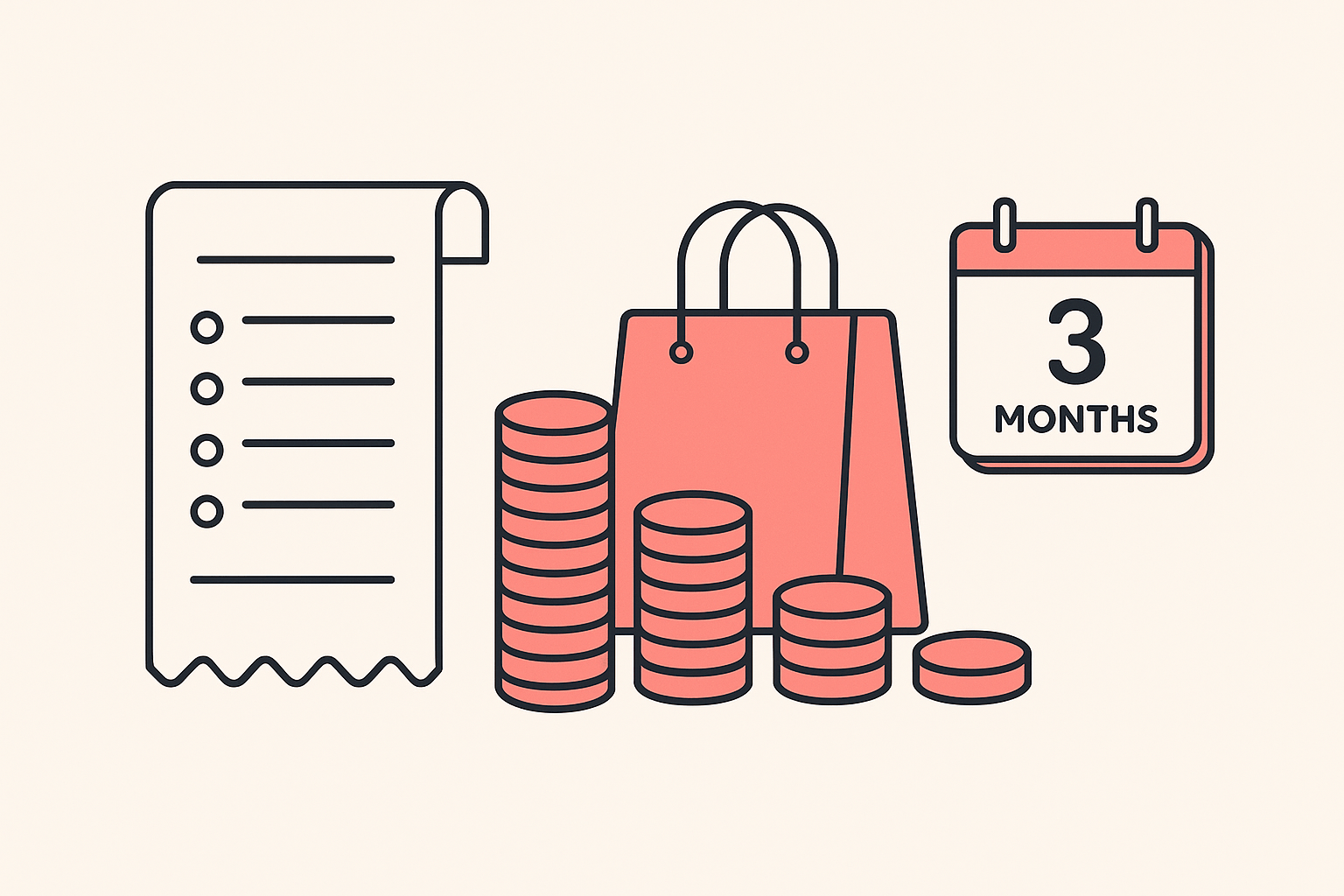
A ninety-day budget is the only budget worth writing, because ninety days is roughly how long it takes to learn whether anyone wants what you are selling. Here is what that period actually costs, with every fixed figure carrying a link to the company that charges it.
What a dropshipping store costs in the first 90 days
Ninety days of software and a domain can cost as little as $12. Shopify's Basic plan runs 3 days free and then $1 a month for 3 months, and a domain starts at $9 a year. Everything above that floor is variable: product samples, ad spend, and the 2.9% plus 30 cents Shopify takes on every online card payment.
That $12 figure surprises people who have read that dropshipping needs $500 to start. The software genuinely is nearly free for a quarter. The money goes somewhere else, and knowing where changes how you allocate it.
The line items, one by one
All figures below are US-market list prices in USD, read on 15 August 2026. Prices move, so check each link before you commit.
| Line item | First 90 days | Source |
|---|---|---|
| Shopify Basic | $3 (3 days free, then $1/month for 3 months, checked 15 August 2026) | shopify.com/pricing |
| Domain | from $9/year | shopify.com/domains |
| Supplier app (DSers Basic) | $0, up to 3,000 products and 3 stores | dsers.com/pricing |
| Reviews app (Judge.me Forever Free) | $0, unlimited reviews including photo and video | apps.shopify.com/judgeme |
| Email (Klaviyo free tier) | $0, up to 250 active profiles and 500 sends/month | klaviyo.com/pricing |
| Competitor research (Koala Inspector Free) | $0, 15 tokens a month | Koala pricing |
| Card processing on Basic | 2.9% + 30¢ per online transaction | shopify.com/pricing |
| Product samples | supplier price plus shipping, order two | not quotable in advance |
| Paid ad testing | see below | not quotable in advance |
Six of those nine lines are zero. Every free tier in that table is a real published plan rather than a trial, so nothing on it expires and forces a decision in week two.
The two lines with no number are the two that will consume your budget, and no honest article can quote them for you.
The costs nobody can price for you
Samples. Order the product from two shortlisted suppliers before you sell it. What that costs depends entirely on the product and the shipping lane, so treat it as the first real expense and pay it willingly. A supplier whose sample arrives crushed has just saved you a season of refund emails. Our guide to finding suppliers you can trust covers what to look for once the box arrives.
Ad spend. Beginners want a dollar figure and platforms refuse to give one, for a defensible reason. TikTok's own advertising guidance tells you to size the budget against your own economics: "Ensure your ad group budget covers at least 5* target CPA," per TikTok's campaign budget documentation. So the answer depends on your target cost per acquisition, which depends on your margin, which is why working out your profit margin comes before you open an ad account.
This is the single most common question new sellers ask each other. One recent r/dropshipping thread is literally titled "How much to spend on ads?", asking what to spend per day with zero revenue so far. The useful reframe: decide what you can lose across ninety days without changing your life, divide it into test-sized chunks, and stop the ones that produce nothing.
The line beginners underestimate: the app stack
Software looks free at the start and becomes the largest recurring bill in the business. Every app charges monthly, every charge renews quietly, and nothing in the Shopify admin adds them up next to your revenue.
Koala's own store intelligence shows how far this runs. Across the Shopify stores Koala tracks, the apps installed on the most stores are exactly the ones a growing shop reaches for:
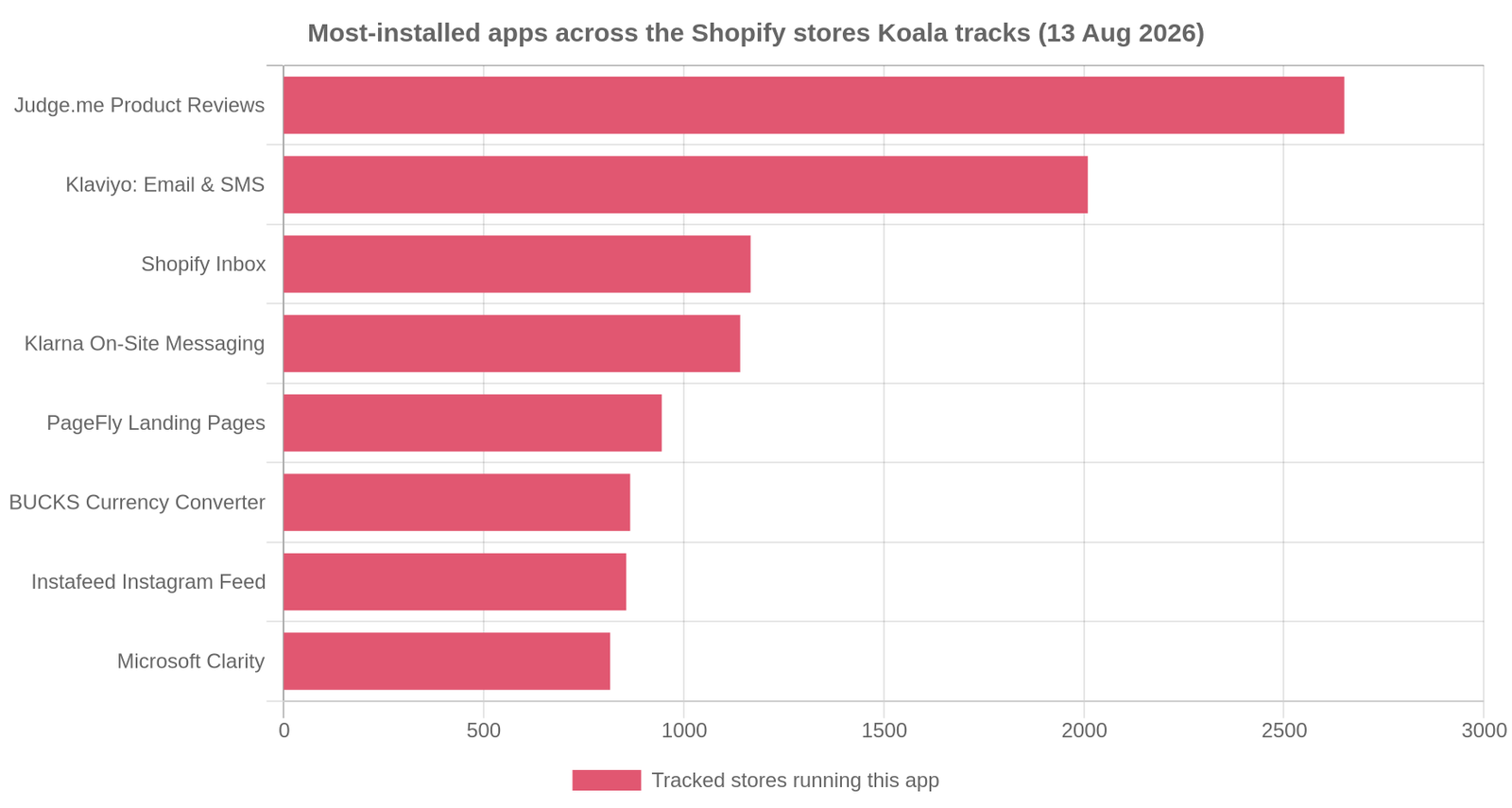
Judge.me appears on 2,651 tracked stores and Klaviyo on 2,010. Shopify Inbox (1,167), Klarna's on-site messaging (1,141), PageFly (945), BUCKS currency conversion (866), Instafeed (856) and Microsoft Clarity (816) follow. Reviews and email marketing together account for more tracked installs than any other category, which tells you which two jobs busy stores refuse to leave undone.
Now the volume. Among the 300 busiest stores in Koala's data, the middle of the range runs 11 apps:
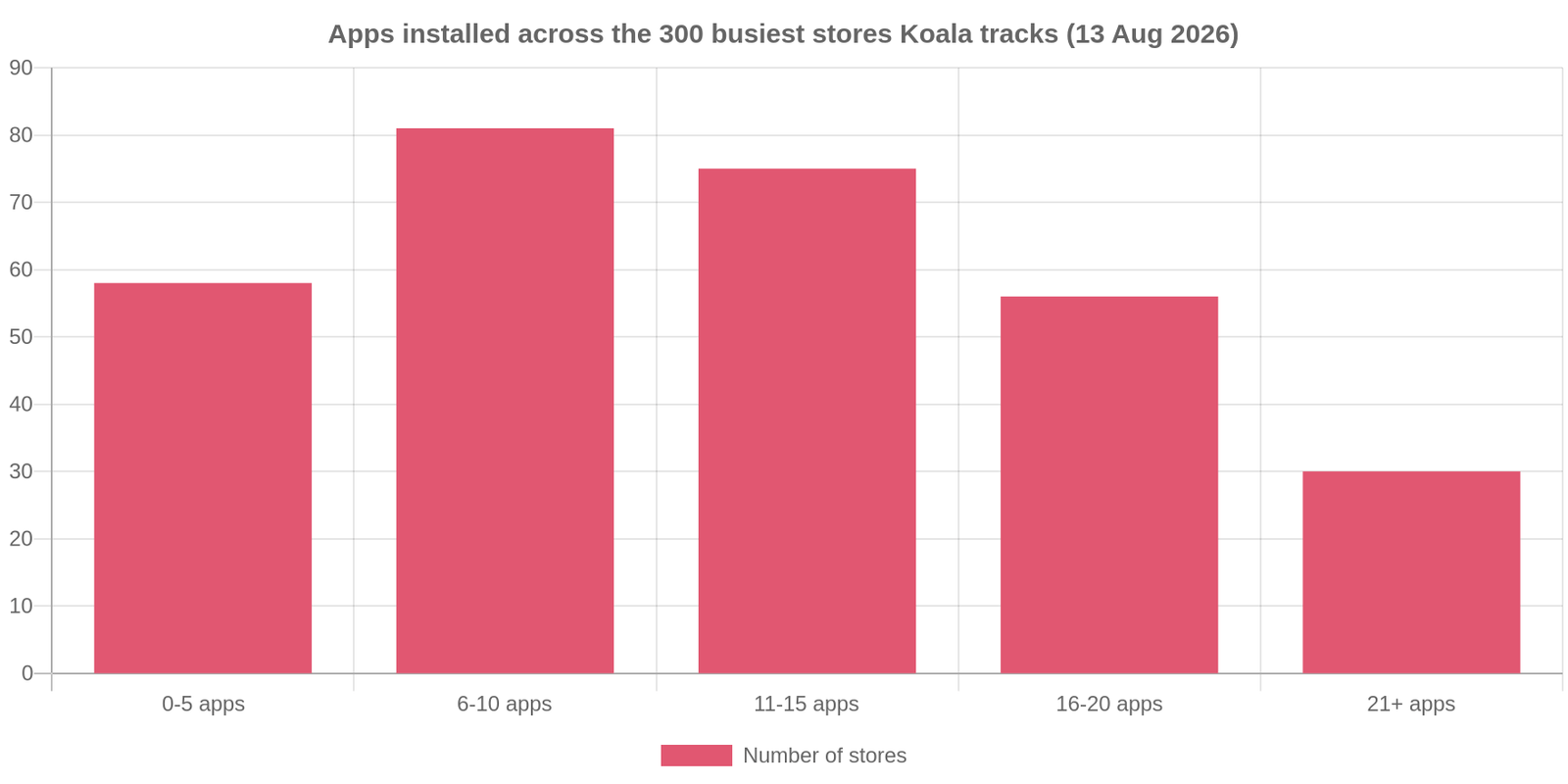
Fifty-eight of those 300 stores run five apps or fewer, and thirty run twenty-one or more, with the heaviest carrying 44. Where monthly app spend is modeled for these stores, the bottom of the range sits at about $100 a month and the top end runs into the thousands. These figures cover the stores Koala tracks rather than all of Shopify, and the spend is a modeled estimate rather than an invoice, so read it as the shape of the market instead of a price list.
Merchants confirm the direction from the inside. An r/shopify thread on running a European store puts third-party app fees at "$4-6k per month" for a store operating since 2021. That is what an app stack becomes when each individual decision looked reasonable.
Two rules keep this line under control. Add an app only when you can name the specific number it should move, and put a reminder in your calendar to open your Shopify billing page on the first of every month and read it out loud. The apps that survive that reading are the ones earning their keep. The rest are a habit.
Copy the stack instead of guessing at it
Before you budget an app stack, look at what stores already winning in your niche actually run. Koala Inspector's app detector is free and untimed: open the extension on any Shopify store and it lists every app installed there, grouped by what each one does. The theme detector names the store's active theme in the same panel, which answers the other expensive question beginners get wrong.
That turns app budgeting into observation. If four established stores in your category all run a reviews app and an email tool and nothing else, the twelve-app stack you were planning was ambition rather than strategy. If they all run something you had never heard of, that is a gap in your plan you found for nothing. The app detector also runs as a web tool, and our Shopify store benchmarks put the same dataset into full percentiles.
What researchers say about Koala Inspector
Verified reviews from the Chrome Web Store.
“Very easy to use and install. Helps with identifying Shopify stores quickly and saves time by listing best sellers. Also has handy feature of the traffic which I found very valuable.”
 Ali Baloch
“I was a bit skeptical about all the hype but gave Koala Inspector a shot. It's user-friendly and provides useful data on what's working for others. The support team is also there when you need them.”
 Martin René
“Great tool for competitor research and customer support is really quick!”
 Aiswarya S
Day 91: what the budget looks like after the promo
The $1 introductory rate covers three months. On day 91 Shopify Basic costs $39 a month billed monthly, or $29 a month billed annually, per Shopify's US pricing page as of 15 August 2026. Plan for that date before you reach it, because it usually lands in the same week you decide your first paid app is worth having.
A realistic month four, if the store is working:
- Shopify Basic: $29 to $39
- Domain renewal, amortised: about $1
- One paid app you can justify, such as Judge.me's Awesome tier at $15 a month
- Card processing at 2.9% plus 30 cents on whatever you actually sell
Under $60 of fixed cost, plus processing. That is a business with a floor low enough to survive a bad month, which is the whole point of budgeting this way. Upgrading Shopify's plan reduces the card rate to 2.7% on Grow and 2.5% on Advanced, so the higher plans start paying for themselves only at volumes where those fractions of a percent exceed the price difference. Run that sum with your own numbers before you upgrade.
Where the money should actually go
Your ninety-day budget has one job: buy information. The $12 of software buys you a place to sell. The samples buy you certainty about the product. The ad spend buys you an answer about demand. Anything that does not buy information is a cost you deferred without noticing, and a premium theme is the classic example.
If you want the fuller startup picture, our breakdown of the cost to start dropshipping covers the one-off items around this budget, and how to start dropshipping walks the sequence in order. If you are working with almost nothing, starting for free is the tighter version of this plan.
Dropshipping budget questions people actually ask
Straight answers to the questions that come up alongside a first store's budget.
Can I make $10,000 per month dropshipping?+
Yes, and among established Shopify stores it is a modest month rather than a milestone. What matters more than the revenue figure is what survives it. On Shopify's US Basic plan every online card payment costs 2.9% plus 30 cents as of 15 August 2026, so $10,000 of sales across roughly 200 orders gives up about $350 before product cost, shipping, refunds or ad spend come out. Work out your margin per order first and the revenue target sets itself.
Do you think traditional dropshipping is declining, or is it simply evolving into branded e-commerce?+
The buying model is alive and the generic version of it is dying. Koala's own store data shows where the money now goes: the apps that appear on the most tracked stores are review collection, email and SMS, on-site chat and payment messaging, all of which exist to make a shop feel like a brand rather than a catalogue. Judge.me alone shows up on 2,651 of the stores Koala tracks. A store that ships fast, answers messages and carries real reviews still works. A store that reposts a supplier listing does not.
How do I start dropshipping?+
Pick a niche you can describe a buyer for, find a supplier and order samples from two of them, open a Shopify trial, connect a supplier app such as the free DSers Basic plan, publish five to ten products with copy you wrote yourself, then send traffic. Shopify's Basic plan runs 3 days free and then $1 a month for 3 months, so the store itself is close to free while you test. Spend the real money on samples and on finding out whether anyone will buy.
How do I find trusted UK-focused dropshipping mentors or partners?+
Judge a mentor by a store you can open and inspect, not by a course sales page. Ask for the URL of a UK store they run, then check it yourself: the theme, the app stack, the product range and whether the shop looks maintained. Koala Inspector's free app and theme detectors do that on any Shopify store in a couple of clicks. Someone who will not name a live store is selling teaching rather than trading, and UK trade bodies and supplier directories are a safer starting point than a paid group.
How do you fulfill an order on Shopify dropshipping?+
The order arrives in Shopify, a supplier app forwards it to your supplier, and the supplier ships direct to your customer while you pass the tracking number back. Shopify does not stock or ship anything for you. DSers covers this on its free Basic plan for up to 3,000 products across 3 stores, which is far beyond what a first store needs. Check the shipping address is complete before you submit, because a returned parcel is your cost.
Is dropshipping on Amazon a good idea?+
Amazon states that you can generally use a dropshipping service to sell products as long as you are the seller of record, and it keeps a separate drop shipping policy you should read in full before listing anything. Two things hold either way: Amazon owns the customer relationship and takes its referral fee, while on your own Shopify store the cost is published and predictable at 2.9% plus 30 cents per online card payment on Basic and the email list belongs to you. Amazon works best as a second channel once your margins already survive its fees.
The Amazon answer above quotes Amazon's own explainer, which says you can generally use a dropshipping service "as long as you're the seller of record" and points to its separate drop shipping policy. Full fulfilment mechanics live in our guide to fulfilling Shopify dropshipping orders, and if the wider question behind your budget is whether the model still pays, we answered that in is dropshipping dead.
Budget discipline is the skill this business actually rewards. A tight ninety days forces you to kill a failing product in week three instead of week twelve, and the sellers who struggle are usually the ones with enough runway to postpone that call. Start by looking at what the winners in your niche already run: install Koala Inspector free and read their app stack before you pay for yours.
Written by
Ana Gelevska
eCommerce Content Writer
Ana Gelevska is a content writer with more than five years of experience creating content for eCommerce brands and global clients. She digs into each topic and the people it is for, then turns it into clear, useful articles that Shopify sellers and dropshippers can act on.
Connect on LinkedIn