The Ultimate Guide To Dropshipping On TikTok
 By Ana GelevskaJune 6, 2023 · Updated June 4, 2026
TikTok dropshipping is a real channel now, not a novelty. A large share of consumers discover new products through short-form video on TikTok, Instagram Reels, and YouTube Shorts, and TikTok's own data shows 55% of users have bought something after watching it on the platform. That kind of conversion behavior is hard to find on a cold traffic channel.
In the dropshipping model you never hold stock. When a customer orders, you forward the details to your supplier and they ship directly. TikTok fits that model well because the platform's algorithm can put a product video in front of millions of people without any ad spend, and the impulse-to-purchase window is short.
This guide covers how TikTok dropshipping actually works, how to find products that sell on the platform, when to go organic versus paid, and the mistakes that waste time and money.
I. What Is TikTok Dropshipping?
TikTok dropshipping means using TikTok as the primary traffic source for a store that uses the dropshipping fulfillment model. You create short product videos, post them to your account, and direct viewers to your store. When someone places an order, your supplier handles the shipping. You never touch the product.
There are two routes: organic (free, but slow) and paid ads (faster reach, costs money). Most successful sellers use both, starting with organic to learn what content converts before committing ad budget.
Three things shape your approach before you even record a video:
TikTok's user base. Around 36.7% of US TikTok users are aged 18-24, but 30% of users are 40 or older, which surprises most first-time sellers. Knowing the age and income profile of your target audience determines which price points are realistic.
Product categories. TikTok Shop data shows beauty accounts for roughly 33% of US GMV. Kitchen gadgets have pulled $15M in under a month for specific products. But the platform works for physical goods across categories, as long as you can demonstrate the product on video in under 60 seconds.
Trend velocity. TikTok trends move fast. One case study tracked a seller who went from trend identification to a live store in 72 hours. That speed requires good supplier relationships and a store that can turn on quickly.
II. How Does TikTok Dropshipping Actually Work?
The sequence is straightforward. You find a product with strong demand signals, set up a Shopify or similar store, create a short video showing the product in use, and post it. The video links back to your store. When viewers buy, your store passes the order to your supplier.
Where people get the mechanics wrong:
- They focus on making the video aesthetic rather than making it stop people from scrolling. The first 1-2 seconds determine whether someone keeps watching.
- They skip the product link, or bury it. Without a clear path to purchase, traffic is wasted.
- They launch on TikTok before the store is ready. If the video hits and the store is slow or confusing, conversions drop hard.
The algorithm surfaces content based on watch time, rewatches, likes, comments, shares, and saves. That is why a product that physically demonstrates well (peeling, cleaning, transforming, measuring) tends to outperform one that just sits there.
III. How To Find Winning Products For TikTok Dropshipping?
Product research is where most beginners lose time. A few approaches that actually work:
TikTok's own data. The Creative Center shows trending products, top-performing ads, and popular hashtags. This is first-party data, not guesswork. Look for products with a clear visual hook and impulse-buy pricing (roughly $15-$60 works for most categories; higher prices require more trust-building than a short video can provide).
Watch the hashtags. The hashtag #TikTokMadeMeBuyIt has over 60 billion views. Search it by subcategory (kitchen, beauty, fitness, pets) and look for products with strong comment engagement, not just views. Comments like "where can I buy this?" and "I need this" are buying signals. When one product keeps surfacing, trace it back to the store selling it and check whether that store actually sells before you commit to the product.
Competitor research tools. Tools like Koala Inspector let you examine other Shopify stores, including what apps they use and which products they push. If a competitor is actively advertising a product on TikTok, that is evidence of demand. You can look at what they're doing and figure out where to position differently.
Check audience purchasing power. This matters more on TikTok than on other platforms. A product at $400 won't sell to a teen audience no matter how good the video is. Match price to your segment.
One common mistake is chasing trends without checking supplier availability. If you can't get the product shipped within a reasonable window, you'll take orders you can't fulfill, which destroys your store's reputation.
IV. Organic TikTok Dropshipping vs. TikTok Ads
Both approaches have a place. The choice comes down to your budget, how much you know about your audience, and how fast you need results.
Organic TikTok dropshipping
No ad spend. You post videos and let the algorithm distribute them. The upside is free reach and genuine audience feedback. The downside is that growth is slow, and you need consistent output to stay visible.
Organic is where most sellers should start. It forces you to understand what content resonates with your audience before you spend money amplifying it. Posting 3-4 videos per week over 2-3 months gives the algorithm enough data to work with.
TikTok ads
TikTok's ad minimum sits at roughly $50 per day for campaign-level budgets, which is lower than Meta but not free. In-Feed Ads appear in the For You feed and look like organic content. Spark Ads let you boost an existing organic video, which means you can test organic first and then put budget behind the winners.
The differences in practice:
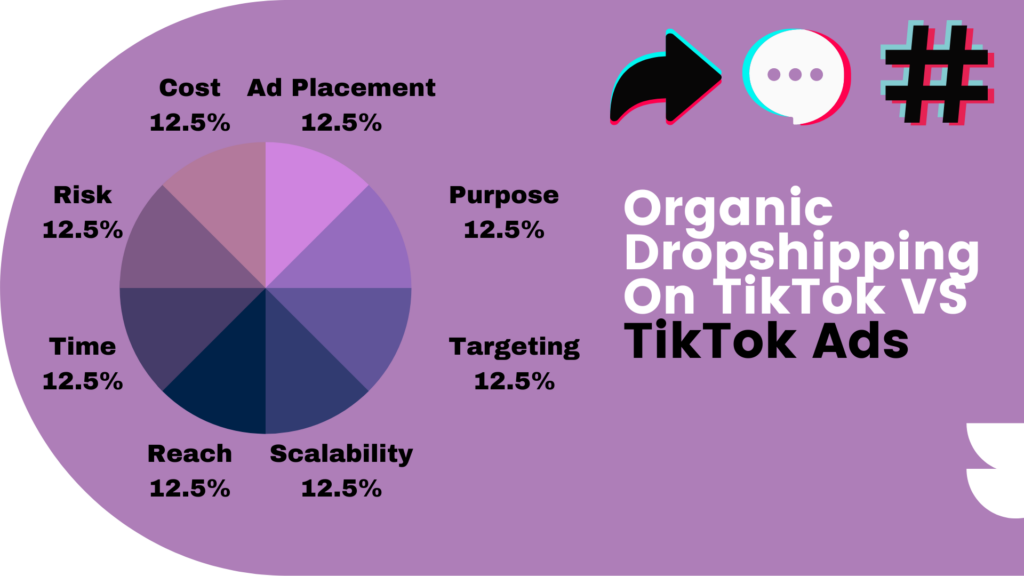
- Reach: Organic reaches people who are genuinely engaged with your content type. Ads reach who you target.
- Targeting: Organic has no direct targeting. Ads let you filter by age, interest, device, geography, and custom audiences.
- Time to results: A strong organic video can go viral in 24 hours or never get traction at all. Ads deliver predictable traffic from day one.
- Scalability: Organic followers become a long-term asset. Ad reach disappears when you stop spending.
- Risk: Ad spend can produce no return if the creative is wrong. Organic costs time, not money.
The most reliable pattern is using organic to validate that a product and video style actually convert, then running Spark Ads to scale the posts that performed. That sequence avoids spending ad budget on guesswork.
V. The Dos and Don'ts Of TikTok Dropshipping
What to do
- Test the product yourself before launching a campaign. If you can't describe it accurately, your content will be vague and viewers won't convert.
- Start with organic. Learn what your audience responds to before putting money into ads.
- Use captions that add context the video can't convey. TikTok's own research shows captions improve completion rates.
- Respond to comments quickly. Questions in comments ("does this work for X?") are conversion opportunities, not noise.
- Use the TikTok Creative Center to research which ad hooks and formats are currently performing in your niche before you shoot anything.
- Use competitor research tools to understand what products and stores in your niche are doing. Koala Inspector can show you what apps and suppliers competing stores are using.
- Track your data. Sales, video views, and link clicks all tell you something different. If views are high but sales are low, the problem is the store or the offer. If views are low, the problem is the content.
What not to do
- Don't list products without confirming with your supplier that they're available and that shipping times are acceptable. Overselling and then failing to fulfill is how stores get bad reviews early.
- Don't exaggerate product features. If your video overpromises and the product underdelivers, returns and chargebacks follow.
- Don't skip the price. TikTok users expect to see pricing quickly. Hiding it creates friction.
- Don't post videos without audio. TikTok is an audio-first platform. Silent videos are penalized in the algorithm and feel off to viewers.
- Don't spend heavily on ads before your store converts organically. Ads amplify what's already working, not what's broken.
- Don't ignore negative comments or complaints. A single unaddressed complaint thread can undermine an otherwise strong video.
VI. Final Thoughts
TikTok is a real acquisition channel for dropshipping stores. The data backs it up: 55% of TikTok users have bought something after seeing it on the platform, and short-form video has become a primary way people discover products. That won't reverse.
The mechanics aren't complicated, but the execution is unforgiving. Slow suppliers, weak store conversion, and content that doesn't stop the scroll are the three things that kill TikTok dropshipping businesses before they get traction.
Tools matter here. Koala Inspector gives you visibility into what competing Shopify stores are selling and which apps they rely on. When you're trying to move fast on a TikTok trend, knowing your competitors' setup in advance cuts research time significantly.
VII. Frequently Asked Questions
What is TikTok dropshipping?
TikTok dropshipping is using TikTok as the primary traffic channel for a dropshipping store. You post product videos, direct viewers to your store, and when orders come in, a supplier handles fulfillment and shipping. You don't hold or manage inventory.
How do you find winning products for TikTok dropshipping?
Start with TikTok's Creative Center, which shows trending products and top-performing ads in real time. Check the #TikTokMadeMeBuyIt hashtag to see what people are already buying. Use competitor research tools like Koala Inspector to see which products other Shopify stores are promoting. Look for products with a strong visual demonstration, an impulse-buy price point (roughly $15-$60), and a supplier who can ship quickly.
Why is customer support important in TikTok dropshipping?
TikTok is a public platform. Every complaint in a comment section is visible to potential buyers. Handling issues promptly and honestly converts fence-sitters and limits damage from bad reviews. First-time buyers who have a good experience are also far more likely to return and share the product with their own followers.
Written by
Ana Gelevska
eCommerce Content Writer
Ana Gelevska is a content writer with more than five years of experience creating content for eCommerce brands and global clients. She digs into each topic and the people it is for, then turns it into clear, useful articles that Shopify sellers and dropshippers can act on.
Connect on LinkedIn