Print on Demand Product Research: Find Proven Winners Before You Design
 By Ana GelevskaJune 22, 2026
Most people start a print-on-demand store backwards. They open a design tool, make ten t-shirts they personally like, list them, and wait. Then nothing sells. Print on demand product research flips that order: before you create anything, you study the stores already winning in your niche, read which products and designs they push hardest, and only then design something you have evidence people will buy.
The logic is simple. A store that has been live for two years and still stocks a particular hoodie is telling you that hoodie pays its rent. You do not have to guess what works when successful sellers are quietly publishing the answer in their own catalogs.
This guide walks the full method: find the right stores, read their best-sellers and pricing, validate demand, and only then commit a design to production.
Why study existing stores instead of guessing
"How do I find winning products?" is one of the most repeated questions across print-on-demand and dropshipping communities, and for good reason. The cost of guessing wrong is real time spent designing, writing listings, and running ads for an item nobody wants.
There is a second reason to lean on research. Sellers increasingly report that winning products burn out faster than they used to, with a design saturating and dying within weeks rather than months. When the window is short, you cannot afford to spend the first month of it on a hunch. Studying stores that are actively selling gets you to a validated idea faster and tells you when a trend is already on its way down.
Researching the field first does not mean copying a design. Cloning someone's exact artwork invites a copyright takedown, and Printify's own guidance walks through how easily that happens. The goal is to read the demand a store proves, the product type, the angle, the price point, and then create your own original take on it.
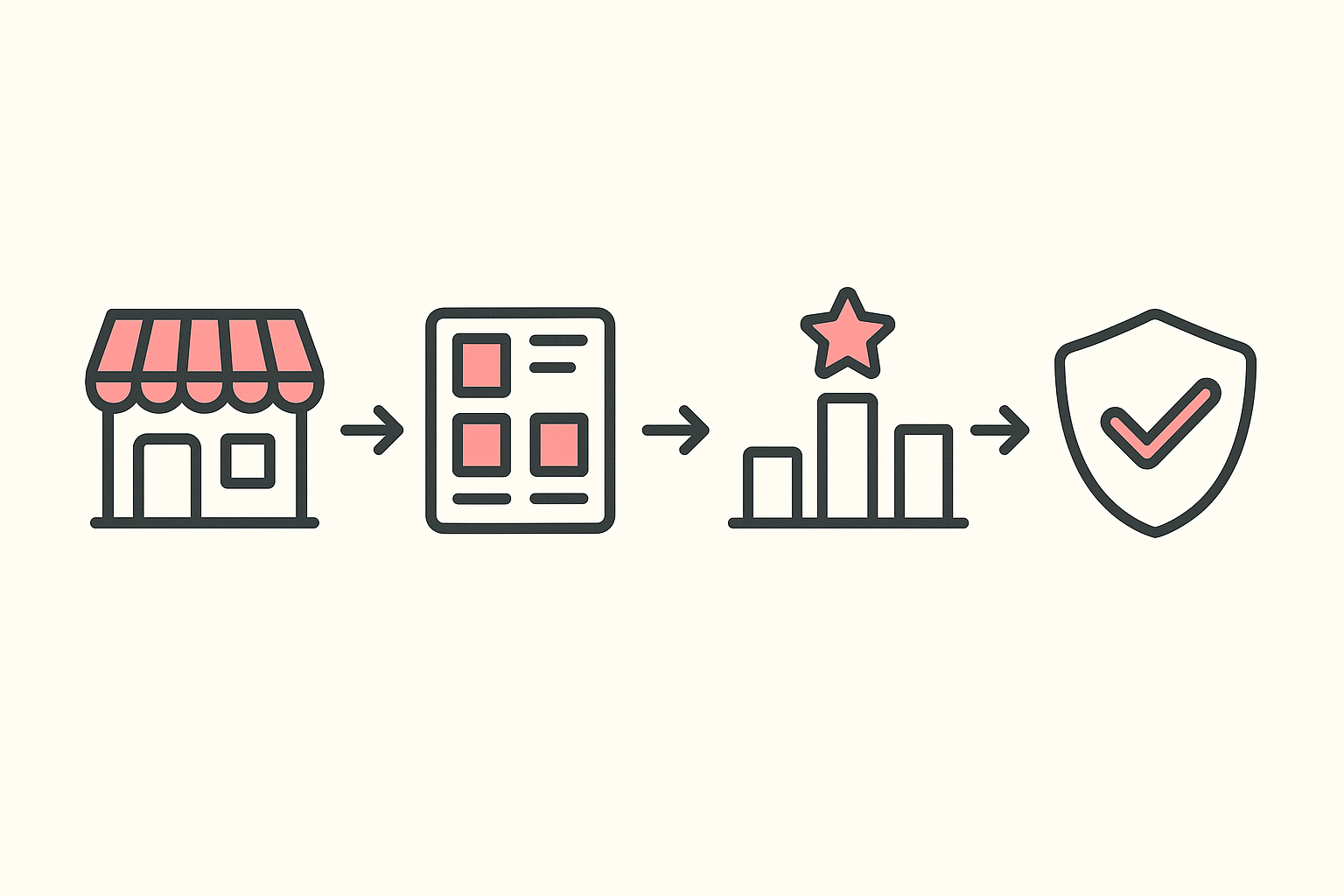
The four-step product research method
Step 1: Identify print-on-demand stores in your niche
Start by building a short list of stores that sell in your category, whether that is pet apparel, gym wear, niche hobby merch, or seasonal designs. The fastest way to find them is to search the way a buyer would: the product plus a descriptor, on Google and on the platforms where POD sellers concentrate, like Etsy and independent Shopify stores.
A large share of custom apparel runs on Shopify, so a niche search will surface independent storefronts quickly. Save five to ten that look established, have real product photography, and clearly run on a print-on-demand model rather than holding stock.
Step 2: Read which products and designs they actually push
Once you have your list, look at what each store leads with. The products on the homepage, in the main collection, and in "featured" slots are the ones the owner is betting on. Note the recurring themes: are the winners typography-based, illustration-based, or photo prints? Which product blanks show up again and again, tees, hoodies, mugs, tote bags, posters?
This is where a store's catalog becomes a research document. You are not looking at one product, you are looking at the pattern across a dozen stores that pay their bills selling to the same buyer you want.
Step 3: Spot best-sellers and pricing patterns
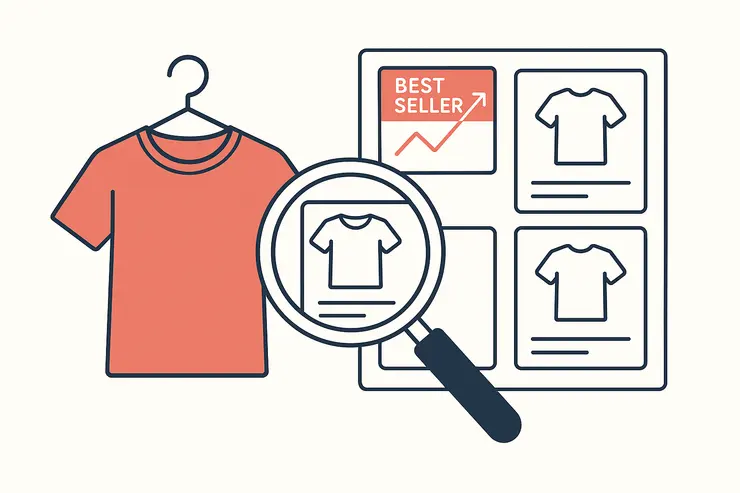
A full catalog is noise until you can tell which items move. Best-sellers are the signal. When the same product shape keeps appearing near the top of multiple stores in your niche, that is demand you can trust more than any trend list.
Pricing tells its own story. Read the price range across a store's catalog and where the best-sellers sit inside it. If proven sellers cluster at a $28 to $34 tee, that is the price the market accepts, and pricing well under it usually signals a margin problem, not a clever edge. Print-on-demand profit lives or dies on the gap between your retail price and your landed cost, so knowing the going rate before you design protects your margin.

This is the part of research that used to mean opening dozens of tabs and eyeballing each storefront. Koala Inspector, a free Chrome extension, collapses it into a few clicks. Open any public Shopify store, click the icon, and it loads that store's full product catalog with a filter for its likely best-sellers, each product's price and variations, and a stats header showing the store's total product count, high-to-low price range, and first-published date. You can sort by date added, price, or name, and favorite products to compare them across stores in one place. When you want to know whether a "winner" is widely resold, the Find Suppliers button on each product lists suppliers selling the same item, split into exact matches and similar products, with each one's landed cost.
For a researcher, that turns a vague "this store seems to be doing well" into concrete numbers you can compare side by side. Koala's product and best-seller view is free to use, and the same panel shows the store's installed apps and active theme if you want to see how a top seller builds its funnel. If you want to go deeper on a single proven seller, our walkthrough on how to reverse-engineer a winning product pairs well with this step.
Step 4: Validate demand before you create a single design
Reading catalogs gives you candidates. Validation tells you whether the demand is broad, growing, or already fading. Three quick checks before you commit:
- Cross-store repetition. If a product type appears as a best-seller in several independent stores, not just one, the demand is real and not a fluke of one store's ad budget.
- Search and trend direction. Check whether interest in the design's theme is climbing or sliding. A theme that peaked six months ago is a saturation trap, exactly the burnout sellers keep flagging.
- Originality room. Make sure you can bring an angle the proven sellers have not, a sharper line, a fresh sub-niche, a better fit or fabric, so you are entering a validated market with something to win on rather than the hundredth identical design.
Only after a candidate clears those checks is it worth opening your design tool. That single reordering, research before design, is what separates sellers who launch into demand from those who launch into silence. Our broader guide on finding winning products for dropshipping applies the same evidence-first logic across product types.
Know your numbers before you design
Validated demand still has to clear your costs. Print-on-demand margins typically land in a modest range once production, shipping, and platform fees come out, which is why the going retail price you read in Step 3 matters so much. Here is a representative breakdown for a $30 custom t-shirt, using typical print-on-demand cost components:
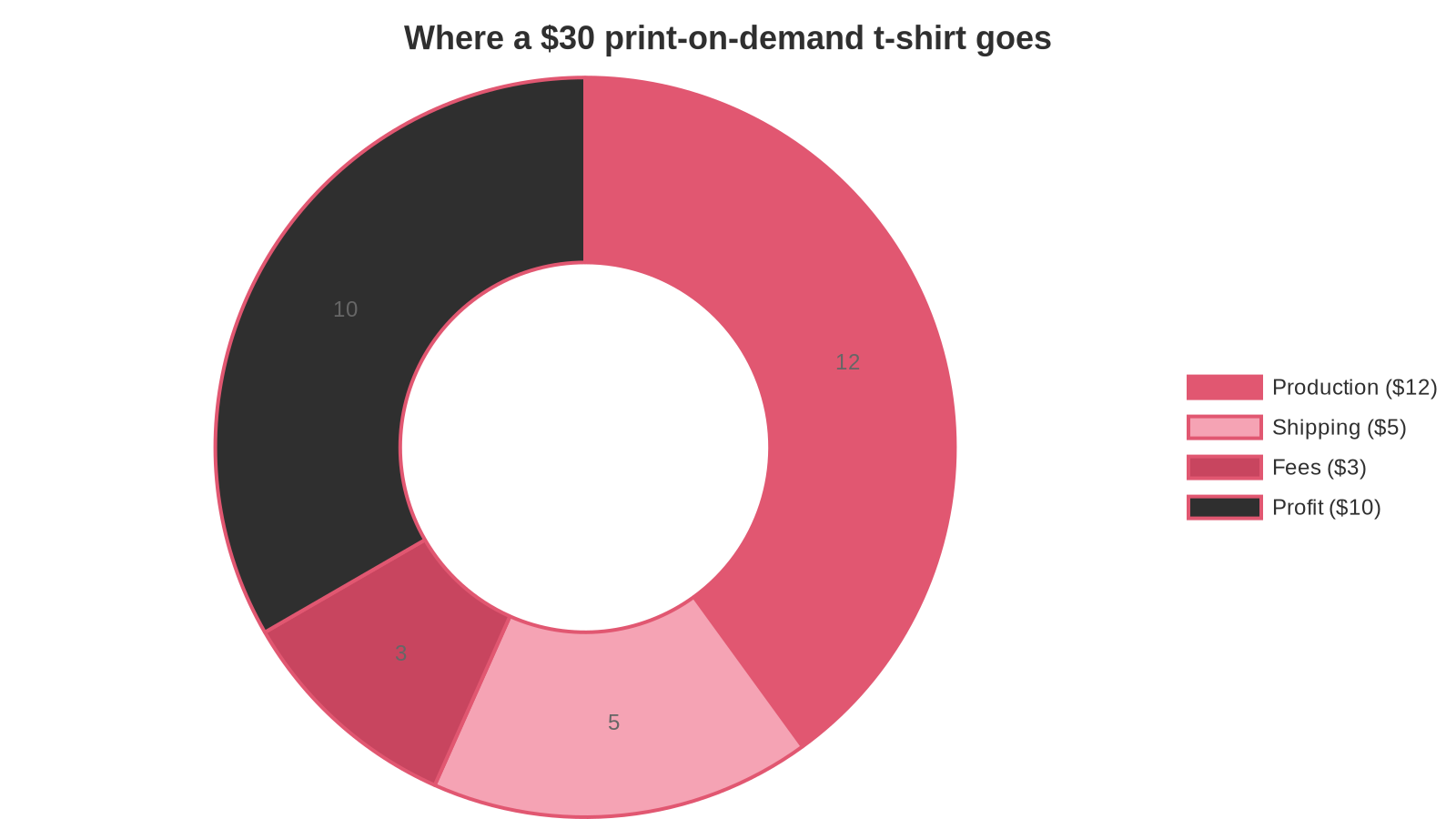
- Production: about $12, the base cost a print supplier charges per shirt.
- Shipping: about $5, varying by supplier and destination.
- Platform and payment fees: about $3 across marketplace and processing costs.
- Profit: roughly $10, a margin near 33% before any ad spend.
Those figures are illustrative, not fixed, base costs and shipping vary by supplier and region, and Printful's guide to print-on-demand profit margins is a useful reference for setting your own targets. The takeaway: build your price from real landed costs, and validate that the market already accepts that price before you design for it. Printify's t-shirt pricing breakdown is a good sanity check on the production side.
How Koala Inspector fits the research workflow
Print on demand product research is mostly reading other people's stores well. Koala Inspector is built for exactly that: it reveals a public Shopify store's products, likely best-sellers, prices, installed apps, active theme, and estimated traffic, all from the storefront any shopper can already see. The numbers it shows are modeled estimates for comparing stores and spotting trends, not a store's private accounting, which is precisely what you need when you are sizing up demand rather than auditing a business.
It is free to install, with a free-forever tier and no credit card, and it works on any public Shopify store. For a researcher building a niche shortlist, that means you can inspect ten stores in the time it used to take to dig through one. If you sell or plan to sell through Printify, our Printify POD guide covers the supplier side once your research points you at a product.
Frequently asked questions
Where can I sell my custom t-shirts?
The two most common homes are your own Shopify store and an Etsy shop. Shopify gives you full control of branding, pricing, and customer data, which is why so much print-on-demand apparel runs on it. Etsy gives you built-in marketplace traffic but more competition and a lower price ceiling. Many sellers test designs on Etsy, then move proven winners to a Shopify store they own. Printify keeps a current rundown of the best places to sell t-shirts online if you want to compare, and Shopify's own custom t-shirt page covers the store side.
Which print-on-demand platform is best?
There is no single best platform, only the best fit for your products and buyers. Printify's multi-supplier network gives wide product choice and competitive base costs but needs supplier vetting. Printful owns its production for more consistent quality at higher base prices. Gelato leans on local printing across a global network. Choose by the products you sell, where your buyers are, and the print quality your niche expects, then order samples before you commit.
What is the most profitable print-on-demand product?
Apparel, mainly t-shirts and hoodies, is the highest-volume category, but volume is not the same as profit. Items with low base costs and high perceived design value, like mugs, posters, and tote bags, often carry healthier margins per unit. Printful's roundup of print-on-demand niches to watch and Printify's trending products list are good starting points, but your own store research in the steps above beats any generic list.
Is print on demand still profitable in 2026?
Yes, but margins are tighter and winning products cycle faster than they did a few years ago, which is exactly why research-first beats design-first. Sellers who validate demand before they create, and who price from real landed costs, still build profitable catalogs. Those who design on instinct and hope are the ones who report that print on demand "does not work."
Start your research the smart way
The sellers who win at print on demand are not the ones with the best taste in designs. They are the ones who read the market before they create. Identify the stores already winning in your niche, read their best-sellers and pricing, validate that the demand is real and original room exists, and only then design.
Install Koala Inspector free and turn any public Shopify store into a research document, its products, best-sellers, prices, and the tools behind it, in a few clicks. Do the research first, and your next design launches into demand instead of silence.
Written by
Ana Gelevska
eCommerce Content Writer
Ana Gelevska is a content writer with more than five years of experience creating content for eCommerce brands and global clients. She digs into each topic and the people it is for, then turns it into clear, useful articles that Shopify sellers and dropshippers can act on.
Connect on LinkedIn