How to Find Winning T-Shirt Products on Shopify (Without Guessing)
 By Ana GelevskaJune 25, 2026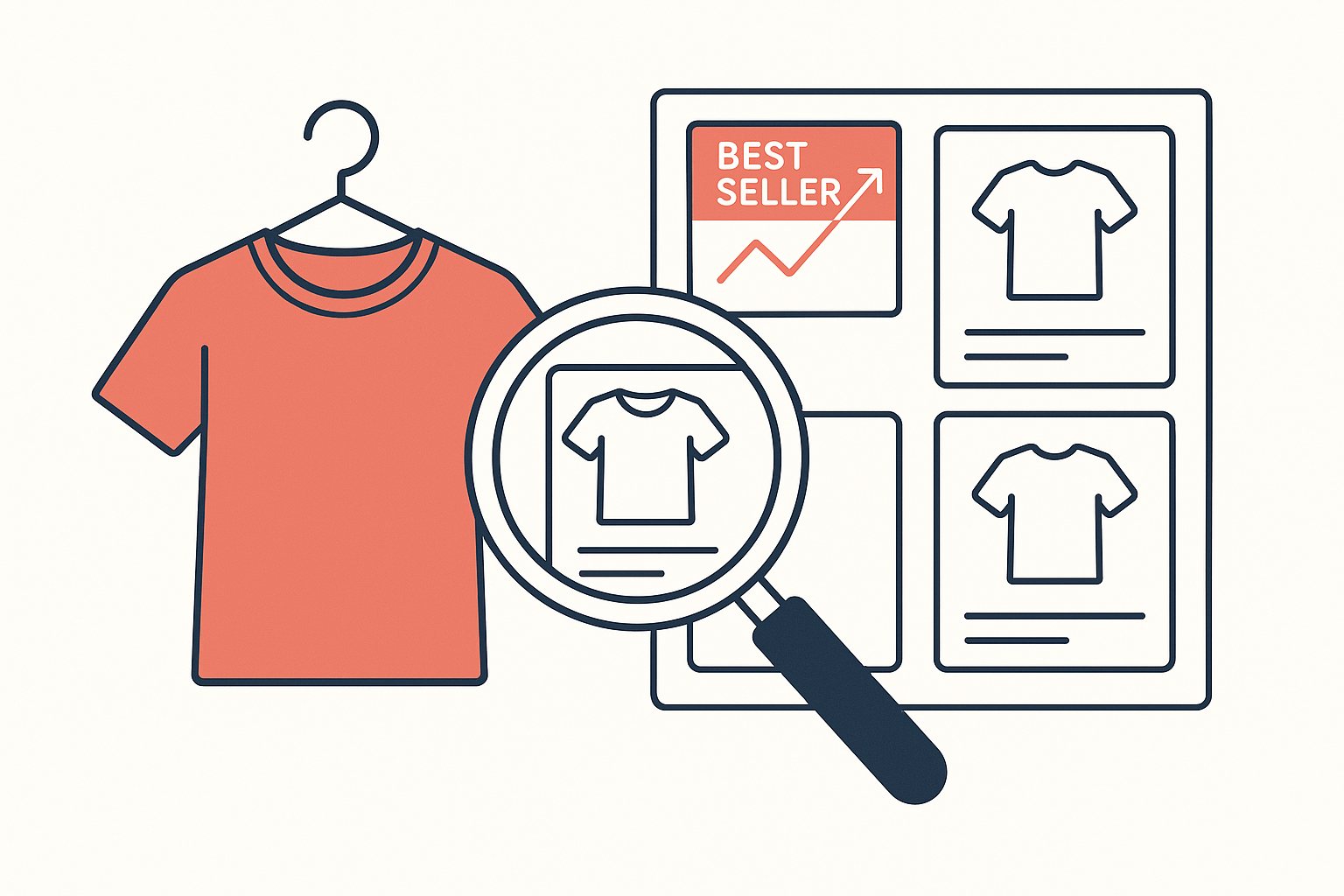
A t-shirt is the easiest product in ecommerce to make and the hardest to sell. Anyone can upload a design to a print-on-demand supplier in an afternoon, which is exactly why the market is crowded with near-identical shops competing on the same blanks. The shops that win are not the ones with the best printer. They are the ones that picked a niche people already buy, a design angle that already resonates, and a price the market already pays. All three of those are knowable before you spend a cent on printing, because other stores have already tested them for you.
This guide shows how to find winning t-shirt products by reading what top-selling Shopify and POD stores are actually doing, then validating a design before you commit. You will use the Koala Inspector Chrome extension to inspect a store's catalog and likely best sellers, so your research starts from real demand instead of a hunch.
Table of contents
- What "winning" actually means for a t-shirt
- Study the stores that already sell shirts
- Read a store's best sellers with Koala Inspector
- Niches, designs, and price points that move
- Validate before you print
- FAQ
What "winning" actually means for a t-shirt
A winning shirt is not a clever design you love. It is a design that sells to a defined group at a price that leaves margin. Three things have to line up: the niche (who is buying and why they care), the design angle (the joke, the identity, the cause, the fandom that makes someone tap "add to cart"), and the price point (what that audience pays without flinching). Get the niche right and a plain text design outsells a beautiful illustration aimed at no one.
This is also why so many new shops stall. Sellers who studied failed POD shops keep finding the same pattern: generic, me-too products launched into saturated niches with no clear audience, then abandoned after slow sales. The fix is not more designs. It is picking a niche with proven demand and a point of view, which is the part you can validate against real stores before you print anything.

Study the stores that already sell shirts
The fastest way to learn what sells is to read stores that already sell it. A working shop is a finished experiment: it picked a niche, ran ads, set prices, and the products still on the shelf are the ones that earned their place. Your job is to read that result instead of repeating the test from scratch.
Start by building a short list of stores in your target lane, then study each one the same way. Our roundup of top t-shirt Shopify stores is a good starting set, and the broader clothing and apparel store list widens it when you want adjacent niches. For each store, you are looking for the same handful of signals: which products it keeps front and center, what its catalog is heaviest in, where its prices sit, and which designs repeat across its best sellers.
The catch is that a storefront is built to sell, not to inform. Featured products are a merchandising choice, the "best sellers" collection is often hand-picked or stale, and the homepage shows you what the owner wants you to see. To get past the display and read the real catalog, you need to look at the store the way the store sees itself.
Read a store's best sellers with Koala Inspector
Koala Inspector is a free Chrome extension that turns any Shopify storefront into a research surface. Open it on a store and the product research view loads the store's full catalog and filters to its likely best sellers, with each product's image, price, and variants. A stats header shows the total product count, the high and low of the price range, and the date the store first published, so you can read how broad the catalog is and where it sits on price at a glance. You can sort by date added to see what the store launched most recently, and favorite the designs worth coming back to. All of that is free, with no card.
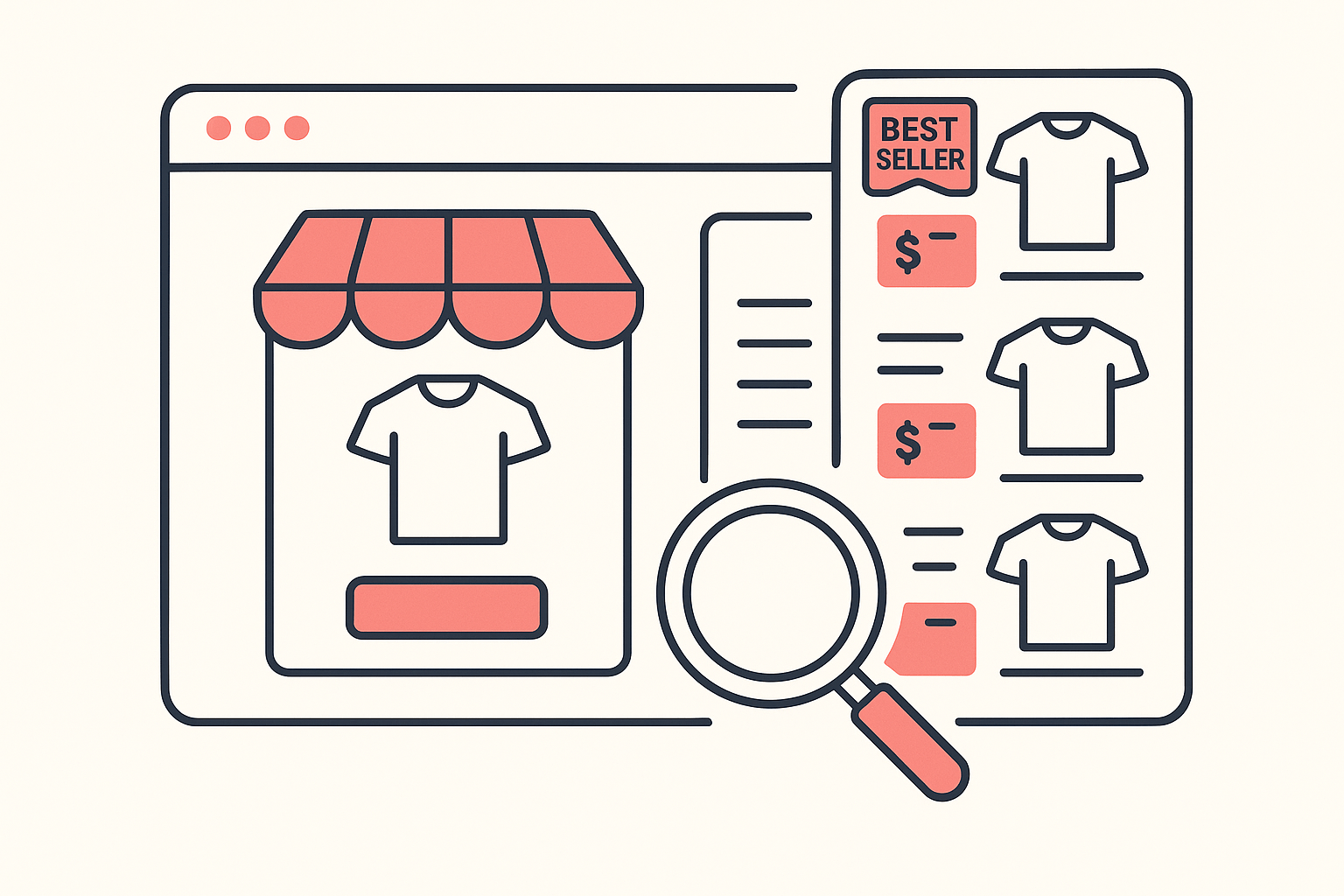
That single view answers the questions a t-shirt seller cares about. Sorting by date added separates the catalog into proven sellers and fresh tests, so you can see whether a store is riding old winners or actively launching new angles. The price range tells you the band that niche actually pays. And because the best-seller filter reads the store's own signals rather than its featured shelf, you are looking at what carries the shop, not what the owner chose to spotlight. For a deeper walk-through of this exact workflow, see our guide on finding any Shopify store's best sellers in seconds.
From there, Koala Inspector goes wider than the catalog. Find Suppliers takes any product and lists the suppliers selling the same item, split into exact matches and similar products, with your landed cost and estimated profit per unit on each. That is the quickest way to see whether a "winning" shirt is already sold everywhere or still has room, and what it would earn you at your price. Product Trends surfaces live trending products so you can spot a design angle while it is climbing instead of after it peaks. Ad Campaigns shows the Google and Facebook/Instagram ads a store is running, so you can read the exact creative and offer behind its sales. And Site Traffic gives you the store's monthly visits, sources, and top keywords, which tells you whether a shop's best sellers are backed by real demand or a thin trickle. Each of those goes beyond the free catalog view and runs on Koala's token system, with the free plan including 15 tokens a month to try them.
Niches, designs, and price points that move
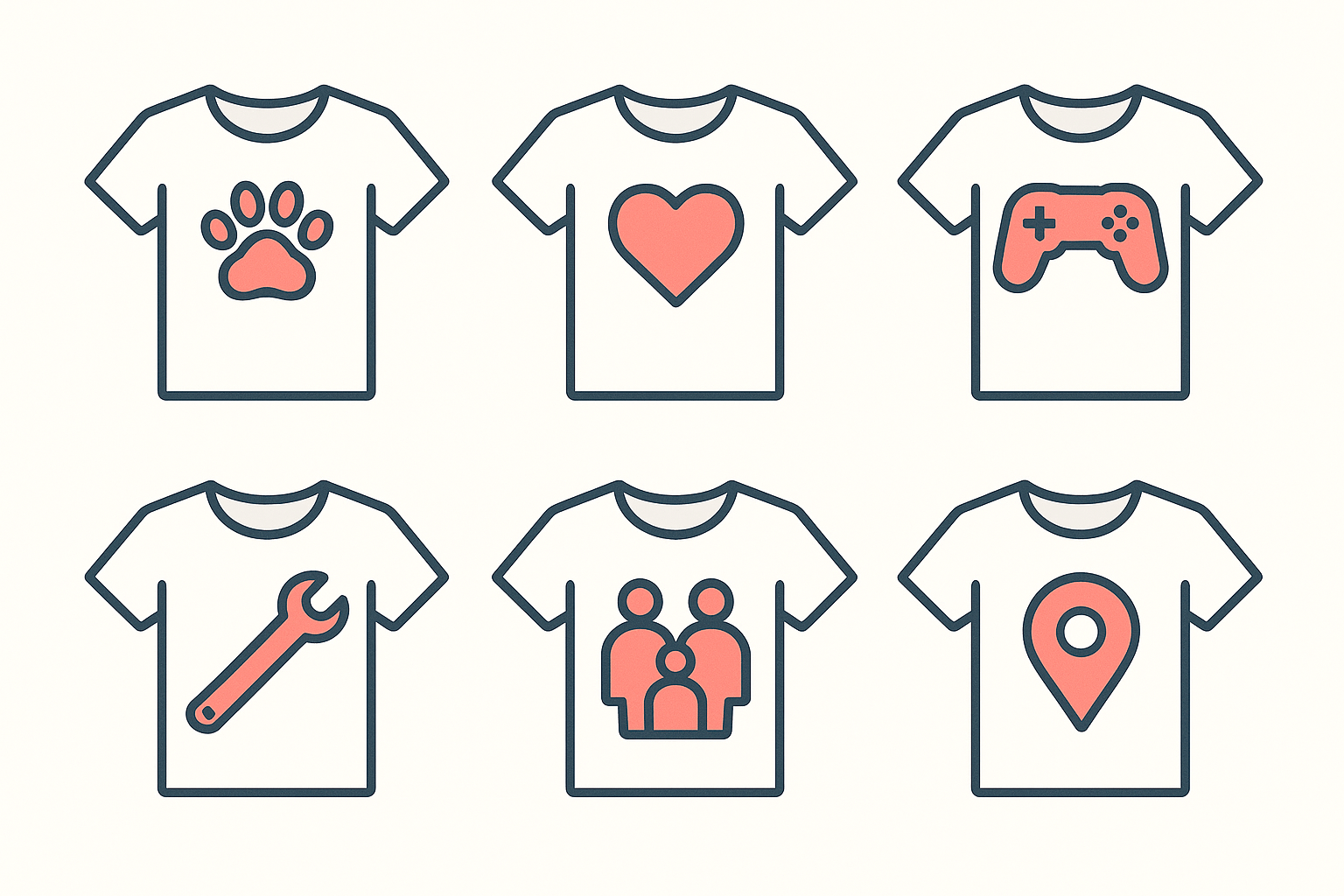
Reading enough stores teaches you the same lesson the data does: shirts sell on identity, not on aesthetics. The niches that hold up are the ones tied to something a person already feels part of. Hobbies and professions, pets, family roles, faith and causes, fandoms, and regional or community pride all convert because the shirt says something the buyer already wants to say. Printify's breakdown of profitable t-shirt niches lands in the same place: the winners are specific audiences with a clear reason to wear the design, not broad "funny shirt" catch-alls.
Design angle matters more than design polish. Across best-seller lists, the repeat winners are usually a sharp piece of text, an in-joke only the niche understands, or a simple graphic with an unmistakable message. The point is recognition: a shopper should know within a second whether the shirt is "for them." That is also why studying a store's actual best sellers beats trend lists. The list tells you a niche is hot; the store's catalog tells you which exact angle inside that niche is moving.
Price points cluster more tightly than new sellers expect. When you read price ranges across working shirt stores, most everyday graphic tees sit in a familiar band, with premium blanks, heavyweight cotton, and all-over prints commanding more. Koala Inspector's price-range header makes this easy to read store by store, so you can price into the band your niche already pays rather than guessing high and stalling or guessing low and killing your margin.
Validate before you print
Studying stores tells you what is plausible. Validation tells you what is real for your audience. Before you order samples or scale a design, run it through a few cheap checks:
- Confirm the niche has buyers, not just browsers. Use Koala Inspector's best-seller view on three or four stores in the niche. If the same kind of design keeps showing up in their top products, the demand is real and repeatable.
- Check saturation honestly. Run Find Suppliers on a design close to yours. If it comes back with a long list of exact matches at near-identical prices, you need a sharper angle or a different niche, not the same shirt with your logo. Our piece on whether a product is saturated walks through how to read that signal.
- Read the demand behind a store's sales. Use Site Traffic to see whether a store's best sellers ride real, growing visits, or Product Trends to catch an angle on the way up rather than the way down.
- Test the design before you commit to inventory. Print-on-demand exists precisely so you can list a shirt with no upfront stock and let real orders decide. Sellers routinely run a tiny paid test or a few sample listings before scaling, because only a small share of designs become winners and you want the market to tell you which.
Validation is the step that separates a hobby from a business. The stores you admire did not guess their way to a winning shirt. They tested, read the result, and doubled down on what worked, and now their catalogs hand you that read for free.
FAQ
Where can I sell my custom t-shirts?
You have several routes, and the best sellers usually run more than one. Your own Shopify store gives you the most control over branding, pricing, and customer data, and it is where serious shirt brands build. Marketplaces like Etsy bring you built-in traffic but take a cut and bury you among competitors. Print-on-demand marketplaces such as Redbubble handle production and listing for you in exchange for thinner margins; Printify's Printify vs Redbubble breakdown lays out the trade-off between owning your store and renting a marketplace's audience. Many sellers also push shirts through social channels like TikTok Shop and Instagram. A common path is to start on a marketplace to test demand, then move proven winners onto your own Shopify store where the margins are yours to keep.
How do I know if a t-shirt niche is profitable before I print?
Read working stores in that niche with Koala Inspector. If several stores' best-seller lists keep surfacing the same kind of design, demand is proven. Check the price range those stores hold to confirm the niche pays enough for margin, and run Find Suppliers on a sample design to gauge how saturated it already is.
Can Koala Inspector show me what a store's best-selling shirts are?
Yes. Open Koala Inspector on any Shopify store and the product research view loads the full catalog and filters to the store's likely best sellers, with prices, variants, and a price-range header. That part is free, and it is the fastest way to see what actually carries a shirt store instead of what its homepage spotlights.
Do I need a paid plan to research t-shirt stores?
No. The catalog, best-seller view, app detector, and theme detector are free. Deeper features like Find Suppliers, Product Trends, Ad Campaigns, and Site Traffic run on tokens, and the free plan includes 15 tokens a month with no card required, so you can try them before deciding to upgrade.
Start reading the stores that already win
The shirts in your niche that sell are not a secret. They are sitting in other stores' catalogs right now, and you can read them in seconds. Install Koala Inspector free, open it on the stores you admire, and let their best sellers, prices, and ads show you exactly which niche, design, and price point to print next. Stop guessing which shirt will win, and start from the ones that already do.
Written by
Ana Gelevska
eCommerce Content Writer
Ana Gelevska is a content writer with more than five years of experience creating content for eCommerce brands and global clients. She digs into each topic and the people it is for, then turns it into clear, useful articles that Shopify sellers and dropshippers can act on.
Connect on LinkedIn