How to Validate a Product Before Buying Inventory
 By Ana GelevskaOctober 6, 2026
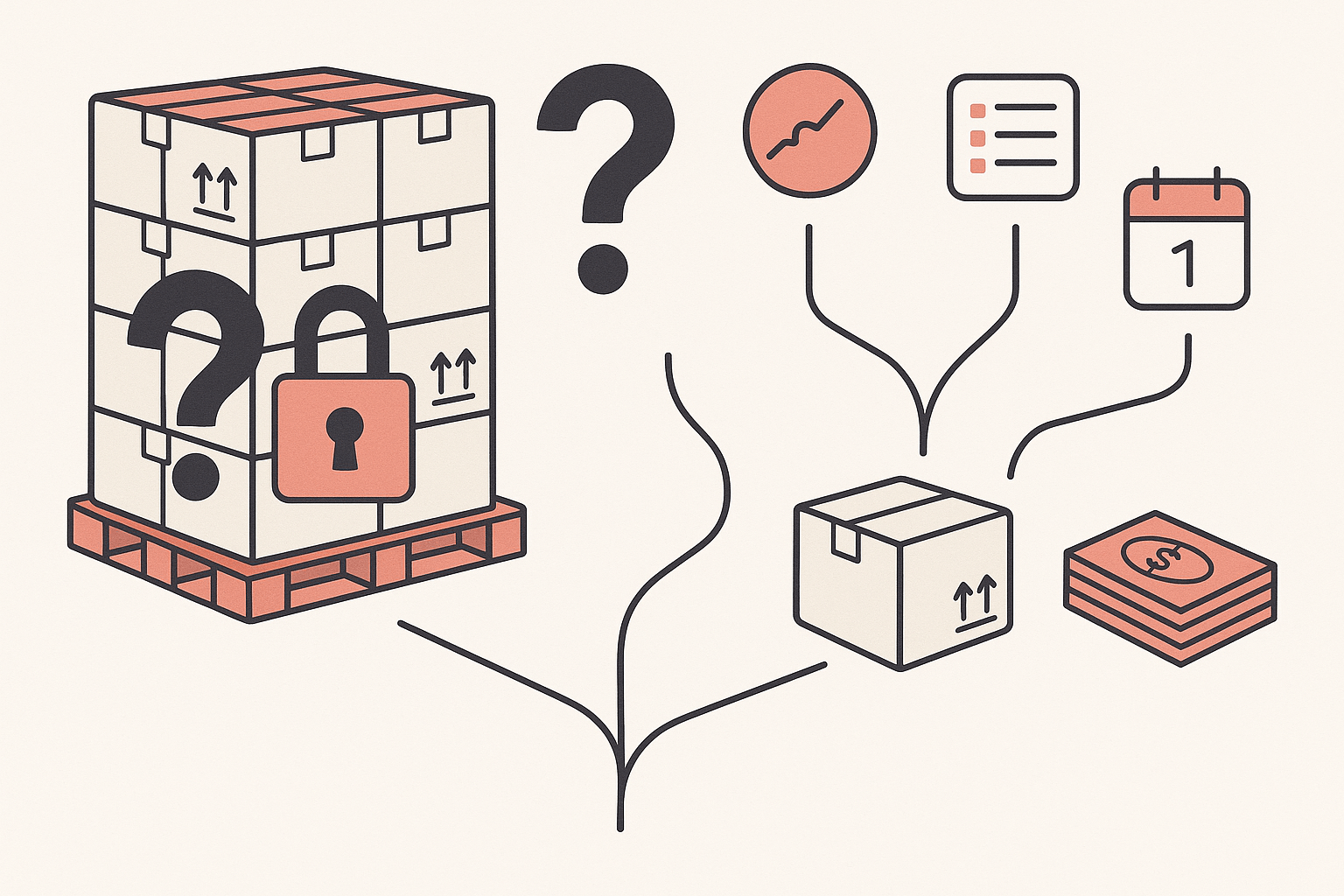
Every inventory order is the same bet placed twice. You are betting the product sells, and you are betting you knew that before the money left your account.
There are two ways to settle it. Buy the stock and find out. Or find out, and then buy the stock. The second path takes longer, costs close to nothing, and is the one almost nobody runs properly because it has never been written down as a sequence. That is what this guide is.
It is about the decision made before money is spent. Once you have stock and you are paying for traffic, the question changes to how fast you can read a result, and our guide to testing a dropshipping product covers that half.
What validation can prove, and what it cannot
Validation before an order answers one question honestly: is there an existing, repeating, priced market for this thing. It can show you that other sellers keep it near the front of their catalogues, that interest is building rather than fading, that the price the market already accepts leaves room for your costs, and that a store is adding stock instead of quietly dropping it.
It cannot promise that your version sells. Your photography, your price, your delivery window and your audience are all still unproven. What it does is move you from a coin flip to a bet with a reason, and it changes the size of the first order from a guess into a number you can defend.
The fear behind the question is specific, and it shows up constantly. One seller putting together a first product line wrote plainly: "I don't want to get too deep in expenses, not knowing if there will be any return at all." Another, launching a brand whose suppliers all insisted on minimum order quantities, asked for a way to validate demand on a custom product before accepting the MOQ. A third wanted to improve shipping and quality control without buying huge inventory upfront. All three are asking the same thing in different words.
Step 1: Find the stores already selling it
The cheapest validation available is looking at stores that already sell the thing. Somebody has done your test, paid for it, and left the result on a public storefront.
Search the exact product name in quotes, then the descriptive phrase a buyer would type. Count independent Shopify storefronts and ignore marketplaces and the supplier's own listing. Then open three or four of them properly.
Zero sellers is a warning rather than an opening. Ecommerce is crowded enough that an item with real margin and real demand gets found, so an empty result usually means somebody tried it, the shipping was unworkable, or the audience was too small to buy at a price that covered acquisition. A handful of serious sellers is the shape you want.
Koala Inspector is a free Chrome extension that reads the store you already have open. On any Shopify storefront, with no card and no tokens, it gives you the full catalogue with a best-seller filter, every price and variation, the store's category and product count, the creation date and the date of its last update. That is the raw material for the next three steps, and it takes about a minute per store.
Step 2: Read where it sits in their catalogue, then read it again
Finding a store that sells your product proves almost nothing on its own. Stores carry items that never move. Position is the signal: whether the seller pushes this item, or lists it alongside two hundred others.
Sort the catalogue to best-sellers and note where your candidate lands. Then write down the date and come back in two weeks and do it again. One reading tells you where a product sits. Two readings a fortnight apart tell you which direction it is going, and direction is the thing you are actually buying.

Our walkthrough of how to read a Shopify store's best sellers covers the mechanics in detail. Treat best-seller ordering as a strong estimate rather than a published sales report, which is exactly how it is useful: for comparing products inside one store and for watching one product move over time.
Step 3: Check whether demand is building or fading
A product near the top of one catalogue today might be on its way up or on its way out. Product Trends in Koala Inspector gives you a live read of what is gaining momentum across the stores Koala tracks, with sales signals and trend indicators, so you start from movement rather than from a static list.
The reason to read momentum rather than a snapshot is visible in the data itself. Across fourteen readings of Koala's trending products between 1 September and 5 October 2026, 452 distinct products passed through a list that holds roughly 296 at a time. Only eight of them were present in every single reading.
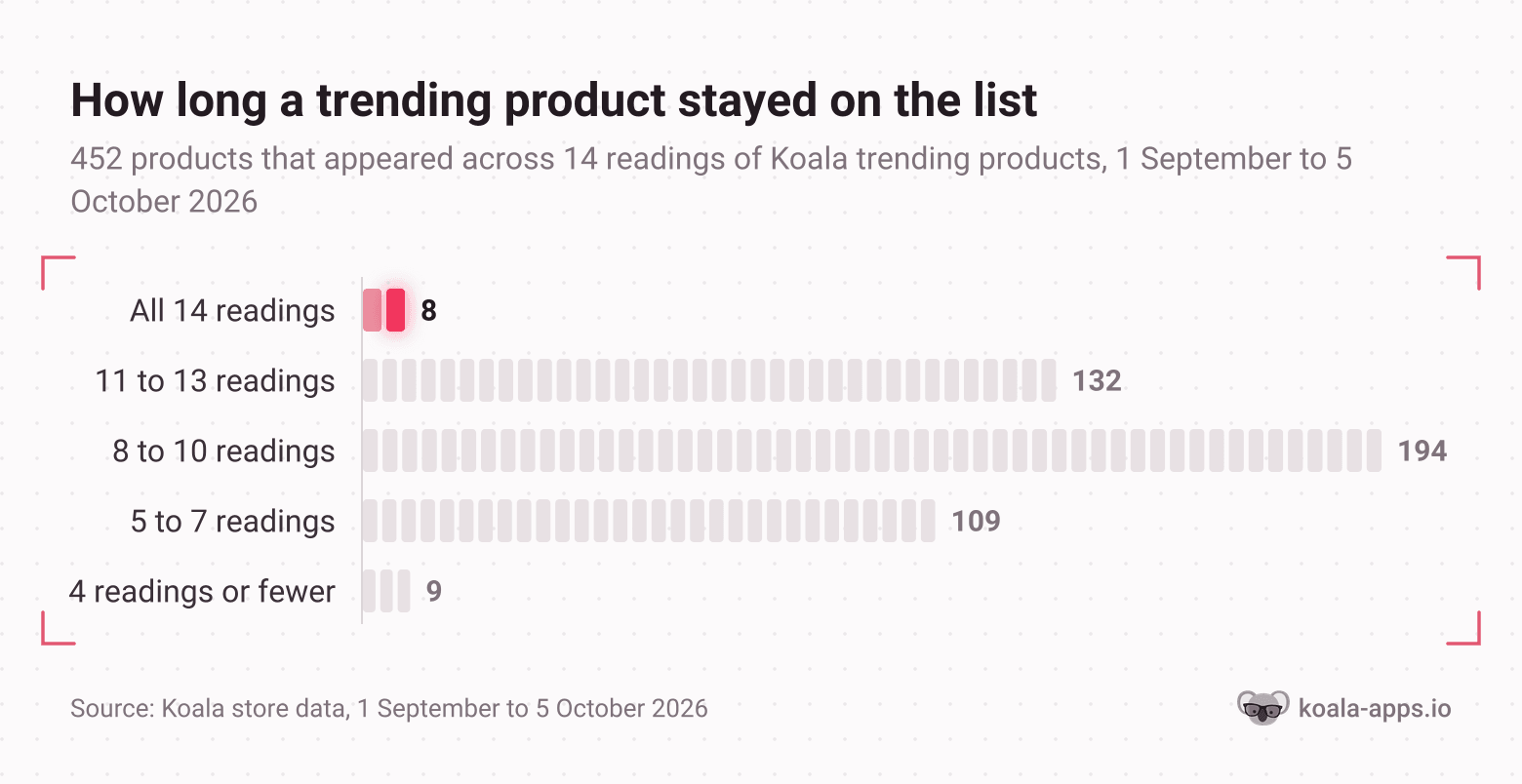
Put the ten-day view next to it and the churn is obvious: of the 295 products on the list on 25 September, 195 were still there on 5 October. Roughly a third of the list had rotated off inside ten days. Any one of those departures would have looked like a confirmed winner to somebody who checked once.
Pair the trending read with the generic search term in Google Trends, set to twelve months and then five years in the country you plan to sell in. You are reading direction, not volume. Our Google Trends guide covers how to judge a seasonal curve against the same month in previous years, which is a different question from a trend.
These figures cover the stores Koala tracks rather than all of Shopify, and the sales and traffic numbers are estimates modelled from public signals any visitor's browser can already see, sampled over time. Read them as direction and scale. They are not a store's private accounting, and nothing in this guide needs them to be.
Step 4: Watch one store across weeks before you order
When a single competitor is the closest match to what you want to sell, stop sampling them and start watching them. Shop Tracking adds a store to ongoing monitoring and records what changes: products added or removed, price changes, variant changes, apps added or dropped, a theme swap. Over three or four weeks that becomes a log of the tests they are paying to run, and you get the results for free.
What you are looking for before an inventory order is simple. Does your candidate stay in their catalogue, or quietly vanish. Does its price hold, or start sliding toward clearance. Do they add more variants, which is what a seller does when something works. Tracking is the one feature switched off on the free plan, and it costs 15 tokens per store on a paid plan, which buys you the single most reliable pre-order signal there is: a competitor's own behaviour over time.
Three weeks is a reasonable wait when the alternative is a minimum order quantity you cannot return. It is also a far better use of the wait than more research on the same snapshot.
Step 5: Price it against what the market already charges
Write down the highest retail price you can find among the stores selling it, not the lowest. The top of the range shows what the market bears when the offer is good. The bottom shows what a price-cutter will accept.
Then subtract, in this order: your landed unit cost including shipping and duty, payment processing, and your expected cost to acquire one buyer. What is left is the number that decides your first order size. If the gap is thin at the best price in the market, a bad fortnight of acquisition costs puts the product underwater and the stock is already paid for.
This is also where minimum order quantities get decided honestly. A supplier's MOQ is a fixed bet. Divide the total by the margin you just calculated and you have the number of units you must sell to break even, which is a far more useful figure than the unit price on the quote.
The three ways this goes wrong
Validating on a single snapshot
One reading is a photograph of a moving thing. The churn figures above are the argument: a third of a trending list turning over in ten days means a single check has a real chance of catching a product on its way down. Two readings two weeks apart cost nothing extra and answer a different, better question.
Reading a store's traffic as one product's demand
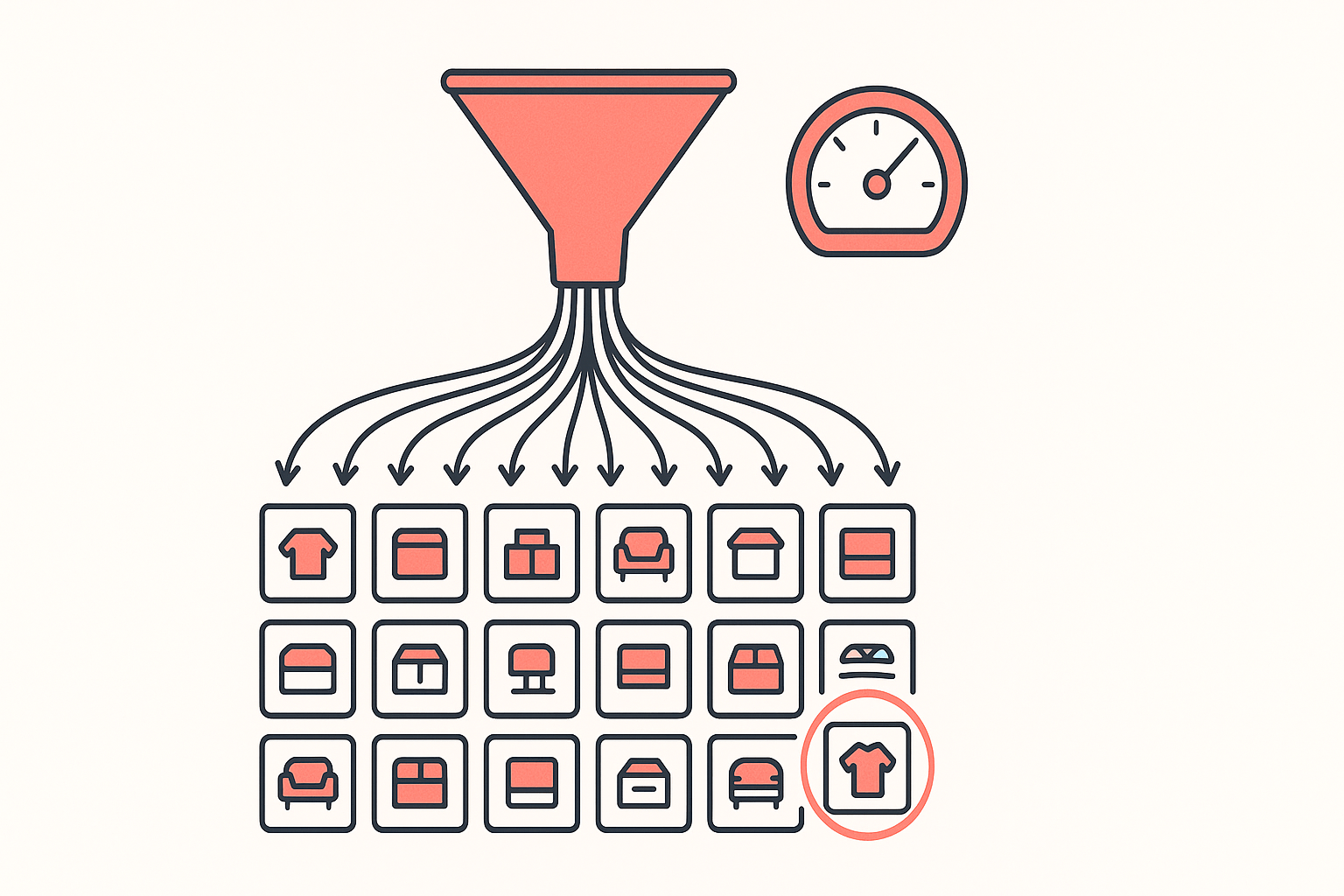
A traffic estimate describes the store. It does not describe the product you are looking at. A storefront with healthy visitor numbers is sending those people across its entire catalogue, its brand searches, its blog and its returning customers, and your candidate may be receiving a sliver of it.
The spread in the tracked-store data makes the point. Across the 300 stores in Koala's leaderboard on 5 October 2026, covering 110 product categories, the median store showed around 12,900 estimated monthly visits while the one at the top showed around 1.6 million. Those are store-level figures in both cases. Use traffic to judge whether a competitor is worth studying at all, and use best-seller position to judge the product.
Treating a crowded product as proof of demand
A product on every storefront you recognise is evidence that a lot of sellers believe in it. The cheap acquisition has already been bought, the best creative angles are taken, and the sellers who got there first negotiated a better unit cost months ago. That is a competition reading, and it should lower your first order rather than raise it.
The window you want sits between the two extremes: enough sellers to prove the market exists, few enough that there is still room to be the one a buyer picks. Our guide to spotting a saturated product sets out the signals for telling the two apart.
Testing without inventory at all: the print-on-demand route
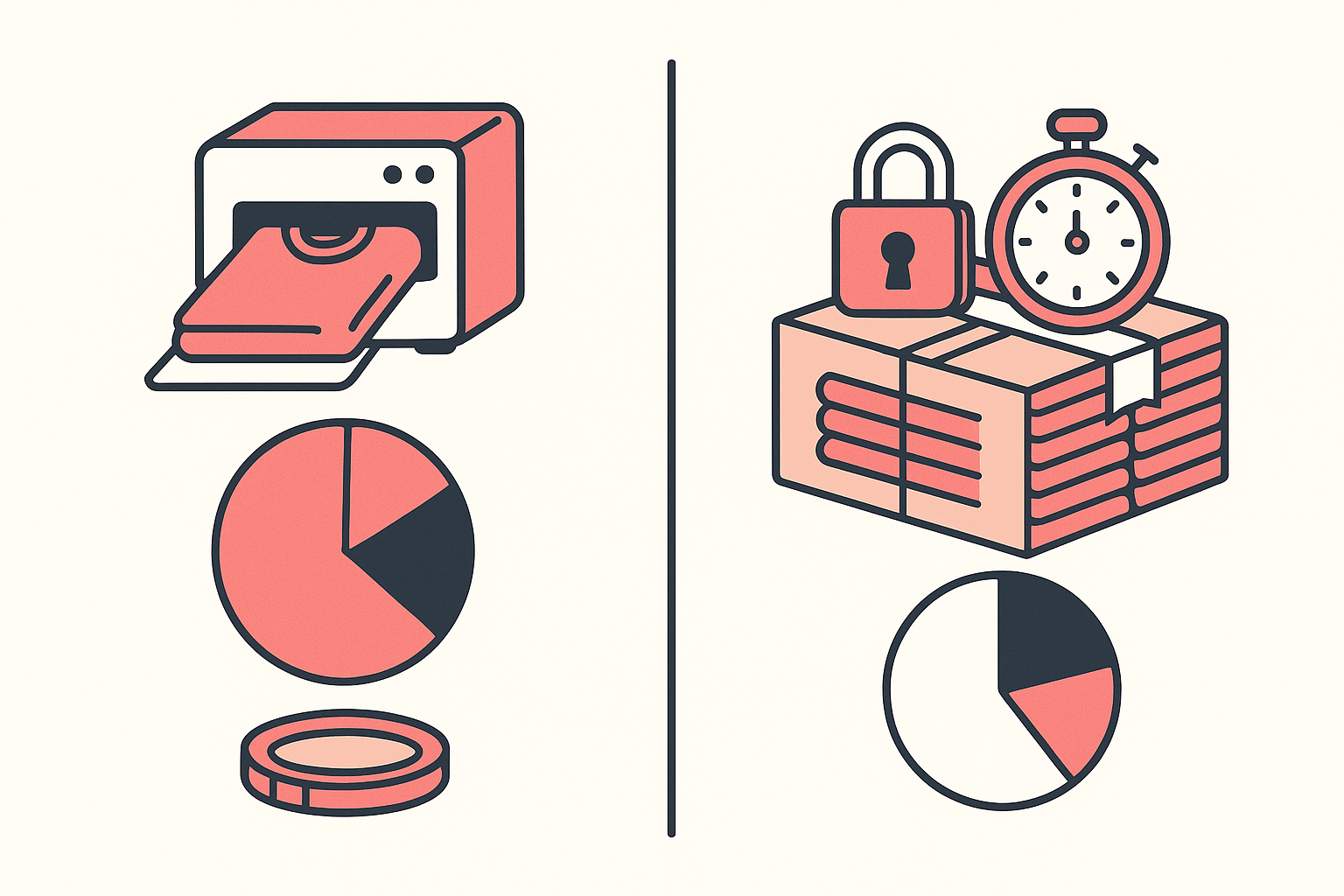
For apparel, accessories, homeware and anything printable, print on demand removes the inventory decision entirely. Printful states zero upfront costs, no bulk order minimums, and that each item is printed only when ordered, with most orders fulfilled in two to five business days from twelve facilities shipping to over 190 countries. Shopify makes the same point from the merchant side: you avoid large upfront investments in inventory, materials, and equipment.
That is a real answer to the fear this whole guide is about, and it is worth being equally clear about the price of it.
The margin is thinner, and the gap is the test fee. Shopify's own print-on-demand profit calculator defaults to a product cost of $23 against a $40 retail price, a margin of $17 per unit before shipping, taxes and anything you spend on acquisition, using the lowest cost across a sample of United States suppliers as of May 2025. Order the same garment in bulk and the unit cost falls, which is exactly why the volume route exists. What you are buying with the difference is the right to be wrong for free.
Timelines move too. Shopify's guidance for print-on-demand items puts production at two to seven business days before shipping even starts. That is a delivery promise you have to make honestly on the product page, and it is one of the two things buyers complain about most.
It is a validation instrument first and a business model second. Run a design or a product through print on demand, measure what sells at the price you need, and only then decide whether volume is worth the cash and the storage. One seller putting merch in front of a 37-person running club framed the constraint perfectly: they did not want to front cash for inventory and then be stuck with a box of random sizes under the bed. For a run of thirty to sixty pieces, that is the entire argument.
Our print-on-demand product research method walks through picking what to print, and the Printify walkthrough covers the setup side.
A pre-order or a limited drop does similar work with your own supplier: you sell first, then order against real demand. Be straight about the dates on the product page, because a missed window on a pre-order costs more trust than it saves cash.
The checklist to run before you place the order
Print this and work down it. Every line is answerable without spending money.
- Three or more independent stores already sell it, with at least two of them looking like real brands rather than a single-product template.
- It sits near the top of at least one of those catalogues, not buried in the long tail of all of them.
- You have read its position twice, at least two weeks apart, and it held or improved.
- The trend read is flat or rising, both in the trending-products view and in the twelve-month Google Trends line for your country.
- A tracked competitor kept it in stock across the weeks you watched, without a slide toward clearance pricing.
- The best retail price in the market leaves room for your landed cost, payment processing and the cost of acquiring one buyer, with margin left over.
- You have divided the supplier's minimum order by that margin and you can live with the break-even unit count.
- You have one sample in your hands, and the spec sheet, certificates and labelling rules for every country you will ship to.
- A stranger can tell what it is in five seconds from one image and the product name.
- You have written down the number that kills it before the first unit lands.
Anything you cannot tick is not a reason to abandon the product. It is a reason to shrink the first order, or to run the print-on-demand version first.
Make the research the cheap part

The reason most people validate badly is that they try to answer these questions from a supplier catalogue, where every listing looks equally promising and nothing records whether anyone bought it. Open a store that already sells it and the same questions take minutes.
Koala Inspector runs on any Shopify storefront you visit. The catalogue, the best-seller filter, prices and variations, the installed apps, the theme and the store's own dates are free, with 15 tokens a month on the free plan and no card. Product Trends is the piece that answers the question this guide exists for: whether demand for your candidate is building or fading, read live rather than from a snapshot you took once. Shop Tracking is what turns a three-week wait into evidence, by recording what your closest competitor adds, drops and reprices while you decide.
It has a 4.72 star average from 744 ratings on the Chrome Web Store, and competitor research is the use case reviewers name most often. Install it free, open the three best stores in your category, and run step one today.
For the wider picture, our product research walkthrough covers how to build the shortlist, vetting a supplier covers the documents to demand before an order, and the risks of dropshipping covers what still goes wrong after a product passes.
What sellers say about the research step
Reviews from the Chrome Web Store.
“great app for ecommerce, there are a lot of useful information. Friendly customer service!”
 Lavender Yuzu
“Excellent tool for Shopify research! simple, accurate, and packed with insights. Highly recommend it.”
 Data Analysis
“The service has been great, very responsive and the most comprehensive spying of global markets Ive seen!”
 Adrienne Greenwood
Questions sellers ask before they order stock
Validating a product before you buy inventory: FAQ
The questions that come up between picking a product and signing off a purchase order.
did you seriously go through every ingredient in every product and check it?+
Not on every candidate, and nobody should. Component-level checking is the last gate rather than the first, because it is slow and it only pays off on the one product you are about to order. The demand work in this guide runs on a shortlist of ten or twenty items and costs nothing. Once one of them survives, the ingredient or component audit becomes worth an afternoon: request the supplier's spec sheet and any test or compliance certificates, check the labelling rules for every country you plan to ship to, read the listing for brand logos or patented designs, and order one sample and open it yourself. Skincare, supplements, food contact items, children's products and anything electrical are where this bites hardest, because a compliance problem there is a destroyed shipment rather than a slow month. Our guide to vetting a supplier walks through the documents to ask for and what a real answer looks like.
What is the best Shopify product hunting tool?+
The one that reads a live store rather than a curated database. Every paid product list draws from a similar pool, so a featured item is already being tested by everyone holding the same subscription. A live storefront answers the questions a list cannot: what this seller actually charges, where the item sits in their own best-seller ordering, how long it has been in the catalogue, and whether it is still there next month. Koala Inspector is a free Chrome extension that reads any Shopify store you open, and the catalogue, the best-seller filter, prices, the installed apps and the theme are free features with no card required. Product Trends adds a live read of what is gaining momentum, and Shop Tracking records what a competitor changes while you are deciding.
did you have to do anything else before you started selling?+
Yes, and most of it is cheap compared to the inventory. Before the first order goes live you need a product page that states honest delivery windows, a returns policy you can actually operate, working payments with the processing fee modelled into your price, tax registration where your sales require it, and a support address somebody reads. On the product side you need one real sample in your hands, photography you have the right to use, and a landed cost that includes shipping and duty rather than the supplier's unit price. The sequence matters: settle the demand question first, because the store is the cheap part and the stock is the expensive one. Everything on this list can be built in a weekend. A wrong inventory order cannot be unbuilt.
how do i find winning dropshipping products?+
Start from stores that are already selling rather than from a supplier catalogue, because a catalogue listing tells you nothing about whether anyone bought it. Pick a category you can speak about credibly, open three or four live Shopify stores in it, and read what sits at the top of their best-seller ordering. Then check whether momentum is building with a trending-products read and a Google Trends curve for the generic search term in your target country. A product with a handful of serious sellers and a rising line is in its window. A product with no sellers usually failed for a reason somebody already discovered, and a product on every storefront you recognise is proof of competition. Our winning-products guide covers the sourcing side and the product-research walkthrough covers the reading side.
how can i make content if i don't have the product?+
Three routes work before a sample arrives, and one does not. Ask the supplier for their photography and video and get written permission to use it, which most will grant because your sales are their sales. Use print-on-demand mockups for apparel and accessories, since the mockup is generated from the same file the printer uses. Build demand-led content that does not need the object at all: the problem it solves, the comparison a buyer is weighing, the question people keep asking in your category. Inventing claims or reusing another brand's creative both fail, the first as a legal problem and the second because it trains your audience on a competitor. Shoot your own material the week the sample lands, and treat the borrowed assets as a bridge.
is it immediately clear what the product is and why someone would want it?+
Test it in five seconds, before you order anything. Show one person outside your category a single image and the product name, then ask what it is and who it is for. If they hesitate, you are buying stock that needs an explanation, and explanation is the most expensive thing to pay for in a feed. Products that validate well are recognisable at a glance, demonstrable in a few seconds of video, and solve something the buyer can feel. This is also a useful filter against a product that is interesting to you and invisible to everyone else. Run the same test on your three closest competitors' hero products and the pattern usually shows up straight away.
Sources
- Printful, how Printful works - zero upfront costs, no bulk order minimums, printing only on order, fulfilment in two to five business days across twelve facilities shipping to over 190 countries.
- Shopify, print on demand - avoiding large upfront investments in inventory, materials and equipment.
- Shopify, print-on-demand Hawaiian shirts - the profit calculator's $23 product cost against a $40 retail price, and production of two to seven business days before shipping.
- Reddit, a first product line and the fear of upfront expense.
- Reddit, validating demand on a custom product with an MOQ.
- Reddit, improving shipping and quality control without buying inventory upfront.
- Reddit, print on demand for a 37-person running club.
- Chrome Web Store, Koala Inspector ratings and reviews.
- Koala store data, trending products across fourteen readings between 1 September and 5 October 2026, and the tracked-store leaderboard of 5 October 2026.
Written by
Ana Gelevska
eCommerce Content Writer
Ana Gelevska is a content writer with more than five years of experience creating content for eCommerce brands and global clients. She digs into each topic and the people it is for, then turns it into clear, useful articles that Shopify sellers and dropshippers can act on.
Connect on LinkedIn