
How to Test a Dropshipping Product: 5 Free Checks First
 By Ana GelevskaSeptember 22, 2026
Testing a dropshipping product should cost you nothing until the last step. Five checks answer whether an item deserves an ad budget, and every one of them runs on stores that are already live: how many stores sell it, where it sits in their best-seller ordering, what they charge, whether interest is climbing, and how long it has been in their catalogs. Products that fail two or more of those checks are the ones that eat a first budget and teach you nothing.
This guide is about that decision. If you are still choosing between categories, start with how to find winning products and our product research walkthrough; if your worry is that the item is already everywhere, read is a dropshipping product saturated. What follows assumes you have picked something and want to know whether to spend on it.
The scorecard
Run all five before you write an ad. Score each one honestly and count the fails.
| # | Check | Pass | Stop |
|---|---|---|---|
| 1 | Stores already selling it | 3 to 15 independent stores | 0, or so many you lose count |
| 2 | Rank inside those catalogs | Top 10 of at least one store's best-sellers | Buried on page four everywhere |
| 3 | Price against landed cost | Retail is 3x landed cost or better | Under 2.5x once shipping is in |
| 4 | Direction of interest | Trend line flat-to-rising over 12 months | Peak more than 6 months behind you |
| 5 | Time in catalog | Live 2 to 9 months in at least one store | Live 3 years, or added last week only |
Two fails is a pass with a caveat. Three is a different product.
The rule that catches most first tests
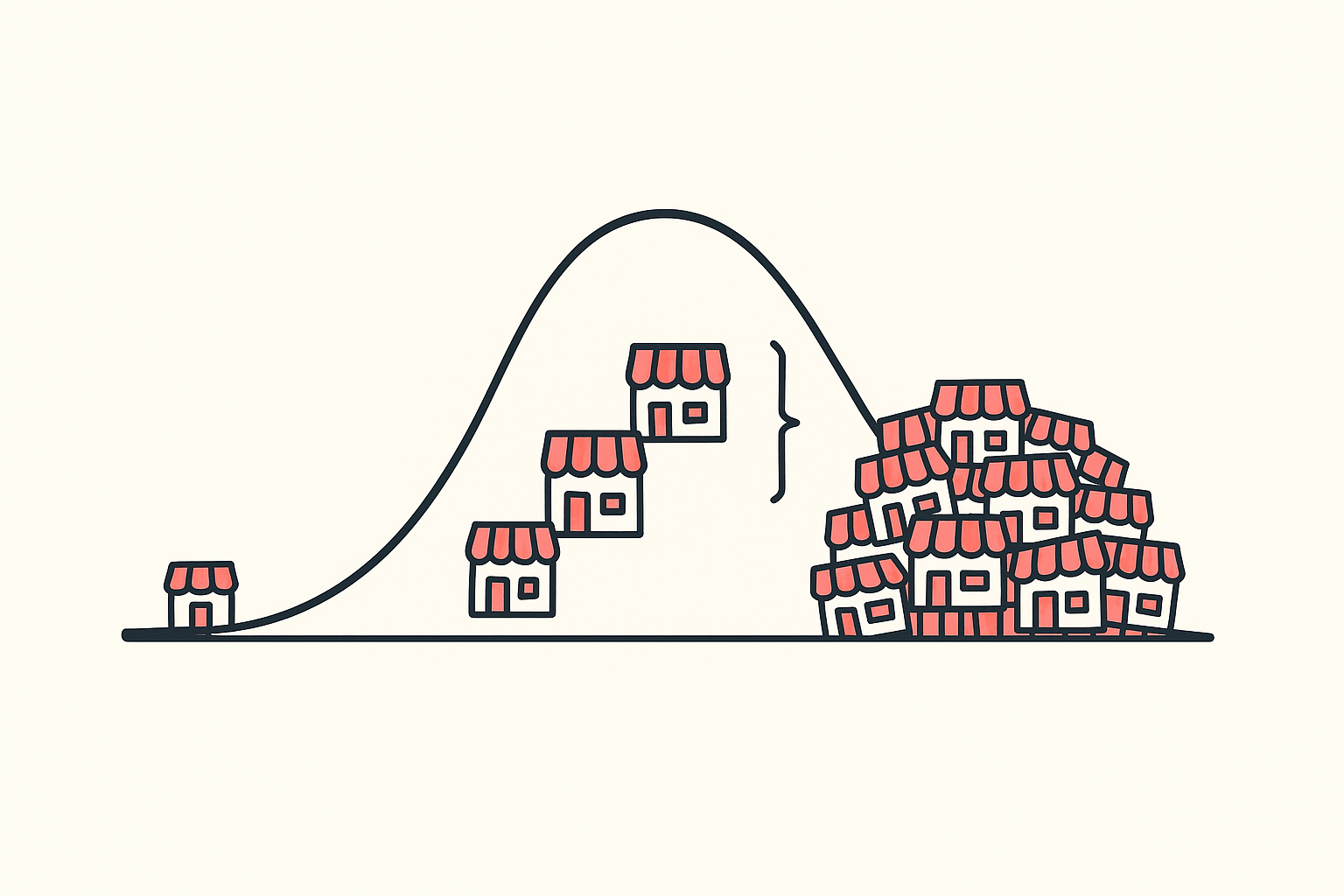
A product nobody is selling is usually a warning. Ecommerce is crowded enough that an item with genuine margin and genuine demand gets found, so an empty search result normally means somebody already tried it and it did not convert, the shipping is unworkable, or the audience is too small to buy at a price that covers ads.
A product every store is selling is usually late. By the time an item is on ten storefronts you recognise, the cheap clicks have been bought, the best creative angles are taken, and you are competing on price with sellers who negotiated a better unit cost months ago.
The window you want sits between those two: a handful of stores selling it, at least one of them treating it as a main product, and the trend line still pointing up. That is the gap the five checks are designed to find.
One caution about the research itself. The most common beginner failure on the demand side is not moving too fast, it is never finishing. A widely upvoted thread on r/dropshipping lists the real pattern: spending excessive time on product research, waiting for a guaranteed winner, jumping between products without commitment, and overthinking product selection. Another seller described spending 13 months learning, accumulating roughly 5,000 euros for testing, and never launching a single ad campaign. The five checks below take an afternoon per product on purpose.
Check 1: How many stores already sell it
Open Google and search the exact product name in quotes, then search the descriptive phrase a buyer would use. Count independent Shopify storefronts, ignoring marketplaces and the supplier's own listing. Then open two or three of the stores you find and look at them properly.
Pass: between 3 and 15 independent stores, with at least two of them looking like real brands rather than a single-product template with stock photos.
Stop: zero stores. Treat this as a reason to go and find out why before you spend, rather than as an untapped niche. Also stop if you cannot count them, because at that point your competitive advantage has to come from creative and offer rather than from the product.
Koala's own store data spans 2,329 storefronts across 246 product categories in its tracked-store leaderboard as of September 2026, which is a useful reminder of how granular the category map has become. Almost whatever you have picked, somebody nearby is already selling it, and that store is your cheapest source of truth.
Check 2: Where it sits in their best-seller ordering
Finding a store that sells your product tells you very little on its own. Stores carry items that never move. What matters is position: whether this item is one the store pushes, or one of two hundred it happens to list.
Open the store's catalog and sort to best-sellers. A product sitting in the top handful is earning its place. A product you have to hunt for is being carried, not sold.
Pass: top 10 of at least one store's best-sellers, or a main product on a store built around that category.
Stop: you check three stores and it is deep in the long tail on all three. Somebody stocked it hopefully and the orders never arrived.
Check 3: What they charge, and what is left
Write down the highest retail price you can find among those stores, not the lowest. The top of the range tells you what the market will bear when the offer is good; the bottom tells you what a price-cutter is willing to accept.
Then subtract, in order: your landed unit cost including shipping, payment processing, and your expected cost per purchase from ads. Payment processing alone runs around 2.9 percent plus 30 cents per transaction on standard card rates in 2026, and one seller's audit of a $10,000 month found roughly $900 of it disappearing into processing, international order costs and platform fees before any ad spend.
Pass: the best retail price in the market is at least 3x your landed cost. That multiple is what absorbs ads, returns and the discount you will eventually offer.
Stop: under 2.5x. At that point one bad week of ad costs puts the product underwater and there is no room to bid against anybody.
A worked version: landed cost $9, best market retail $34.95. Gross margin is $25.95, so a $20 cost per purchase still leaves you roughly $6 and a reason to keep testing. Change the retail price to $22 and the same $20 cost per purchase leaves you losing money on every order while the dashboard shows sales.
Check 4: Whether interest is climbing or fading
Put the product's generic search term into Google Trends and set the window to 12 months, then to 5 years, in the country you plan to sell in. You are reading direction, not volume.
Pass: the 12-month line is flat or rising, and the 5-year view does not show an obvious spike that has already come and gone.
Stop: the peak is more than six months behind you and the line has been falling since. Late entry into a declining trend is the most expensive mistake on this list, because the ads work just well enough to keep you spending.
Seasonal products are a special case worth understanding rather than avoiding. The seller who took $51,043 in five days at 23.88x ROAS during a UK heatwave was not early on a trend, they were early on a season, and the underlying fact they built the angle on was that only about 5 percent of UK households have air conditioning. For seasonal items, judge the curve against the same month in previous years. Our guide to using Google Trends for product research covers the comparison properly.
Check 5: How long it has been live in those stores
Catalog age is the check almost nobody runs, and it separates a product in its window from one in its tail. Sort a store's catalog by date added and you can see roughly when the item arrived; the catalog's stats header also gives the store's own first-published date, which tells you whether you are looking at an established seller or a shop that opened this quarter.
Pass: the item has been live in at least one store for 2 to 9 months. That is long enough to prove it survived its first ad cycle and short enough that the market is not finished.
Stop: the same item has been in the same catalogs for three years with no new entrants. The demand is real and the margin has already been competed away. Also be careful if every store added it in the last fortnight, because you are all buying the same clicks at the same time with the same creative.
One thread worth reading before you get attached to any winner: a seller six weeks into a store with two products converting well, asking how long a winner lasts before it dies. The honest answer across those replies is that nobody plans for a product to run forever, which is the reason to keep the research cheap and repeatable.
What a meaningful test actually costs
Five passed checks buy you the right to spend money, and the amount you spend should be set by how many visitors it takes to read a result rather than by what feels affordable.
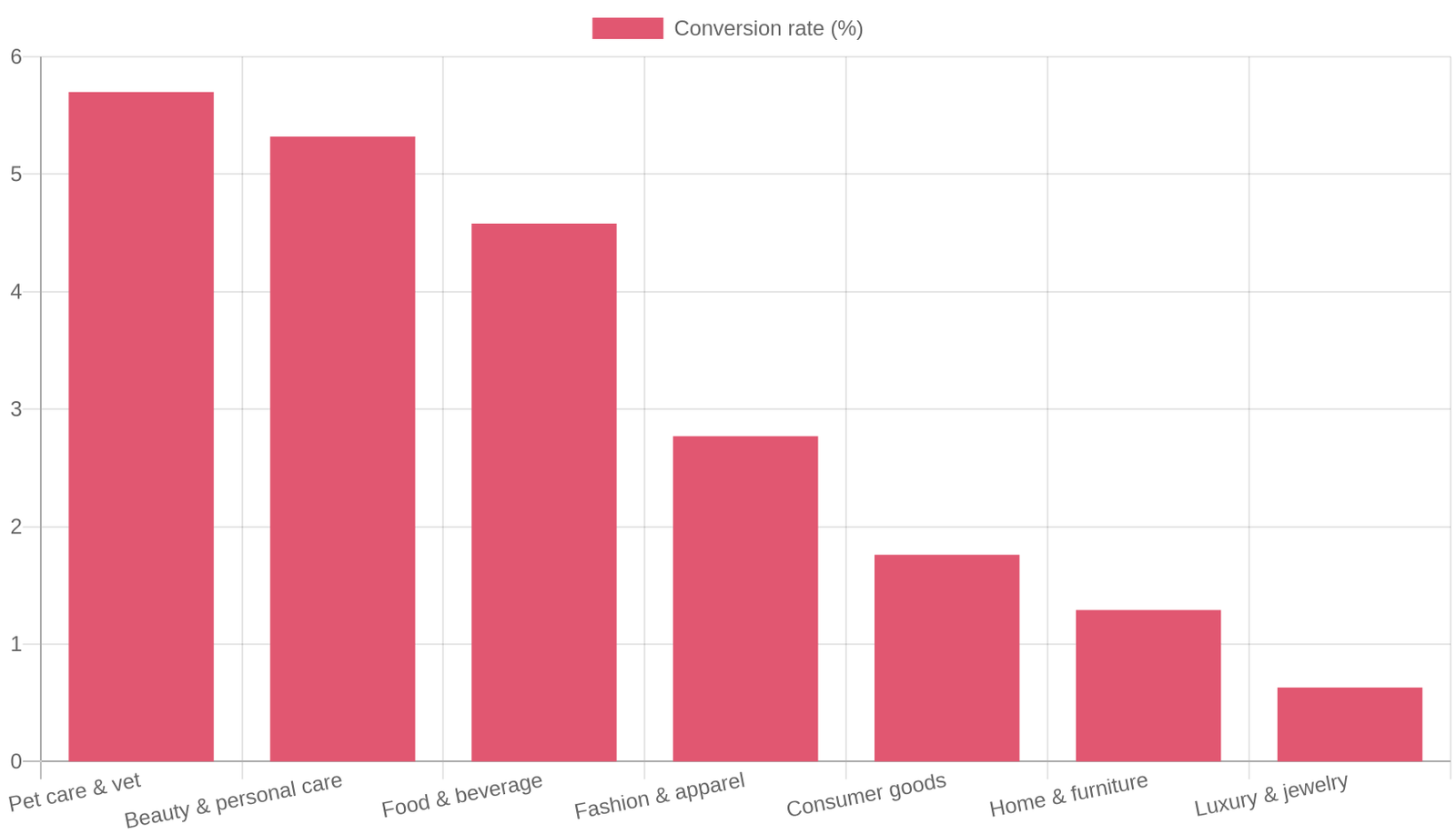
Start from the conversion rate you are entitled to expect. Shopify's own benchmark roundup puts the global average at 1.4 percent of ecommerce visits converting into purchases in Q1 2026, with a 2.66 percent average across the 400-plus brands Dynamic Yield measures. By category, as of June 2026: pet care and vet services 5.7 percent, beauty and personal care 5.32 percent, food and beverage 4.58 percent, fashion and apparel 2.77 percent, consumer goods 1.76 percent, home and furniture 1.29 percent, and luxury and jewelry 0.63 percent.
Read those numbers as a sample-size calculator. At 2 percent, 100 visitors buys you two expected orders, which is indistinguishable from zero. At 500 visitors you expect ten, and one order means something is wrong. That is why the experienced answers converge on the same range.
Moderators and sellers answering the "when do you stop testing a product" thread on the Shopify Community gave the clearest version of it. One recommends stopping if you have driven 500 to 1,000 or more targeted visitors and still see under a 1 percent conversion rate with low engagement. Another gives two earlier gates: 100 to 200 clicks with no add-to-carts points at poor product or audience fit, and 1,000 or more visitors with zero conversions through a clean funnel is the end of the line. On the ad side, Meta click-through rates below 0.5 percent or poor watch time on Facebook and TikTok are the signal that the creative is failing to interest anybody.
So the kill numbers, written down before you launch:
- 200 clicks, zero add-to-carts. Kill. Nobody wants it at your price and presentation.
- 1,000 visitors, zero orders, clean checkout. Kill. This is not a funnel problem.
- 500 to 1,000 visitors, conversion under 1 percent. Kill, unless the ad click-through rate is strong and the drop-off is on the product page, which is a page problem worth one fix.
- Meta click-through under 0.5 percent. Do not kill the product yet; the creative never got a hearing. Change the angle once, then apply the rules above.
Set that number in writing before the campaign goes live, because the decision is far harder to make at day four with money already spent. One seller cut their cost per product test from about $300 to under $80 simply by making the creative from supplier photos before ordering a sample, killing products in four days or less, and testing six products in two months without buying a single sample. Another had tested 20-plus products at $35 to $60 a day with click-through rates above 6 percent and conversion above 4 percent, and still had no sustainable winner, which is what happens when the checks above are skipped and the testing does the filtering.
How to read a store that already sells it

Every check above except the Google Trends one is answered by opening a store that already sells the product. The reason product research eats so much time is that most people try to answer them from a supplier catalogue, where every listing looks equally promising and nothing tells you whether anybody actually bought it.
Koala Inspector is a free Chrome extension that reads the store you are already looking at. On any Shopify storefront it gives you, at no cost:
- The full catalog with a best-sellers filter, so check 2 takes seconds instead of guesswork. You can sort by date added, price or name, and the stats header shows the product count, the price range and the store's first-published date.
- Prices and variations for every product, which is check 3 without a spreadsheet.
- Date added and last update for the store, which is where check 5 starts.
- Favorites, so you can heart the products worth watching across several stores and come back to the shortlist later.
Product Trends is the piece that shortens the whole loop. It gives you a live trending-products read with sales signals and trend indicators, so instead of scrolling a supplier catalogue hoping to recognise a winner, you start from what is gaining momentum and then run the five checks on it. All of the estimates you see are modeled from public signals any visitor's browser can already see, sampled over time, so read them as direction and scale rather than as a store's private numbers.
Two habits make it compound. Shop tracking, one of the token-gated features, monitors the three best stores in your category and records when they add or remove a product, change a price or swap an app, which is a running log of the tests they are paying to run. And check the ads a competitor is running before you write yours, so you know which angle already has traction and which one has been tried.
For the mechanics of reading a catalog's best-sellers, we walk through it in detail in how to find a Shopify store's best sellers.
What sellers say about the research step
Reviews from the Chrome Web Store.
“Great tool for competitor research and customer support is really quick!”
 Aiswarya S
“great app for ecommerce, there are a lot of useful information. Friendly customer service!”
 Lavender Yuzu
“Excellent tool for Shopify research! simple, accurate, and packed with insights. Highly recommend it.”
 Data Analysis
Questions sellers ask before their first test
Testing a dropshipping product: FAQ
The questions that come up between picking a product and paying for a click.
should i find a chinese dropshipping agent for my ebay store?+
Read eBay's policy before you read any agent's pitch. eBay says dropshipping, where you fulfill orders directly from a wholesale supplier, is allowed, and that listing an item on eBay and then purchasing it from another retailer or marketplace that ships directly to your customer is not allowed. A sourcing agent in China is one way to move from the banned version to the allowed one, because you are buying wholesale rather than placing a consumer order somewhere else. The timing question is separate: an agent earns their cut once one product is producing steady repeat orders, because that is when faster shipping, custom packaging and a negotiated unit cost start compounding. Before that point you are paying for coordination on volume that does not exist yet. Run the five checks on this page first, prove the product sells at all, then bring in an agent to make the winner cheaper and faster.
how do i get started with dropshipping?+
Pick one product, prove demand for it without paying for traffic, then build the store around the answer. The order matters because the store is the cheap part and the product decision is the expensive one. A practical first week: choose a category you can speak about credibly, find three live Shopify stores already selling in it, read what is actually moving in their catalogs, then run the five checks in this guide on the product that keeps appearing near the top. If it passes, set up a single product page with honest shipping times and one clear offer. If it fails, you have spent nothing and you still have a shortlist. Our full walkthrough of the setup side is in how to start dropshipping, and the sourcing side is in finding suppliers.
What is the best Shopify product hunting tool?+
The one that shows you a real store rather than a curated list. Curated product databases all draw from the same pool, so by the time an item is featured it is being tested by everybody paying for the same subscription. Reading a live store answers the questions a list cannot: what this seller charges, where the item sits in their own best-seller ordering, and how long it has been in the catalog. Koala Inspector is a free Chrome extension that does exactly that on any Shopify store you open, and product research, best-sellers, prices, the app list and the theme are all free features. Product Trends adds a live view of what is gaining momentum. Pair it with Google Trends for the demand curve and you have covered the research that matters before an ad budget.
what types of products are you seeing get a lot of orders right now?+
Across the 293 distinct trending products in Koala's own store data on 20 September 2026, three clusters stood out: 21 were body-shaping, recovery or home-fitness items such as shapewear, grip trainers, massagers, red-light belts and sauna blankets; 19 were beauty and skincare, mostly serums, creams and at-home devices; and 15 were home lighting, including projector lamps, rechargeable wall lights and solar deck lights. That covers the stores Koala tracks rather than all of Shopify, so treat it as a strong hint about where momentum sits rather than a global ranking. The pattern behind it is the more useful takeaway: all three clusters are small, shippable, visually demonstrable and solve something the buyer can feel. Use the cluster to pick a neighborhood, then run the five checks on the specific item.
Is AliExpress dropshipping legal?+
Yes. Buying from a supplier who ships directly to your customer is a normal retail arrangement and no law bans it. The rules that do bite are platform policy and consumer law. eBay, for example, allows fulfillment from a wholesale supplier but prohibits sourcing an order from another retailer or marketplace, so an order-per-sale model on that platform breaks its terms even though it is lawful in itself. On your own Shopify store the constraints are honest delivery estimates, a working returns process, accurate product claims, and not selling counterfeit or trademarked goods, which is where a lot of marketplace listings quietly fail. Check the listing for brand logos and patented designs before you build a campaign around it.
what are the most important criteria you look for when testing a new cooling niche product?+
Seasonality first, then the five checks in this guide. A cooling product has a demand window measured in weeks, so the Google Trends curve is the gate: you want the search line climbing into the season in your target country rather than flattening out of it. Next comes the reason the spike exists, because that is what your creative says. One seller who took $51,043 in five days at 23.88x ROAS during a UK heatwave built the campaign on the fact that only about 5 percent of UK households have air conditioning, a structural shortage rather than a fad. Then the ordinary checks: several stores already selling it, the item ranking near the top of at least one of their catalogs, enough gap between landed cost and their retail price to absorb a cooling category's high summer ad costs, and a catalog age old enough to prove it survived a previous season. Fail the seasonality gate and nothing else matters, because you will be buying clicks on a falling curve.
Run the checks before the budget
You are about to spend money you cannot get back, on a product you have not yet proved anybody wants. An afternoon of reading live stores changes that, and it costs nothing. Count the stores, find the product's rank in their best-sellers, do the margin arithmetic against the highest price in the market, check the direction of the trend line, and look at how long the item has been sitting in those catalogs. Write your kill number down before the campaign starts.
Install Koala Inspector free and run the five checks on your product tonight, before the first click costs you anything.
Sources
- Shopify, ecommerce conversion rate benchmarks - the 1.4 percent global average for Q1 2026, the 2.66 percent Dynamic Yield average across 400-plus brands, and the June 2026 category figures charted above, read 22 September 2026.
- eBay, dropshipping and product sourcing policy - wholesale fulfillment allowed, sourcing from another retailer or marketplace prohibited, read 22 September 2026.
- Shopify Community, "When do you stop testing a product?" - the 500 to 1,000 visitor threshold, the 100 to 200 click add-to-cart gate, the 1,000-visitor zero-conversion rule and the 0.5 percent Meta click-through signal.
- r/dropshipping, "cut product testing from about $300 down to under $80" - the creative-before-sample workflow, four-day kills and six products tested in two months without samples.
- r/dropshipping, "20+ products deep and still no sustainable winner" - 20-plus products tested at $35 to $60 a day with above-6 percent click-through and above-4 percent conversion.
- r/dropshipping, "A mistake I see many beginners make with dropshipping" - excessive time on product research, waiting for a guaranteed winner and jumping between products.
- r/dropshipping, "I've spent 13 months learning dropshipping but haven't launched a single ad campaign" - the roughly 5,000 euro testing budget and 13 months without a launch.
- r/dropshipping, "I made $51,043 in 5 days with 23.88x ROAS" - the heatwave campaign figures and the 5 percent UK air-conditioning penetration the angle was built on.
- r/dropshipping, "How long do your winning products actually last before they die out?" - six weeks in with two converting products, asking when a winner dies.
- r/dropshipping, "My store did $10k last month and nearly $900 of it vanished" - the 2.9 percent plus 30 cent card rate and the fee breakdown on a $10,000 month.
- The 2,329 storefronts across 246 categories, and the 293 trending products tallied for 20 September 2026, come from Koala's own store data and cover the stores Koala tracks rather than all of Shopify.
Written by
Ana Gelevska
eCommerce Content Writer
Ana Gelevska is a content writer with more than five years of experience creating content for eCommerce brands and global clients. She digs into each topic and the people it is for, then turns it into clear, useful articles that Shopify sellers and dropshippers can act on.
Connect on LinkedIn