
How to Vet a Dropshipping Supplier Before Your First Order
 By Ana GelevskaSeptember 10, 2026
You found a supplier. The catalogue photos are clean, the quote leaves room for ads, and the person on the other end replies within the hour. And you have no way to tell whether the photos are theirs, whether the lead time they gave you is real, or whether the company exists at all.
That gap is where most first orders go wrong. This guide is the second half of sourcing. Our guide to finding dropshipping suppliers covers where to look; this one covers what to check once you have a name and a quote in front of you.
Table of contents
- The eight-point vetting checklist
- Price sanity, done properly
- The red flags that end the conversation
- A worked sequence for your first order
- FAQ
The eight-point vetting checklist
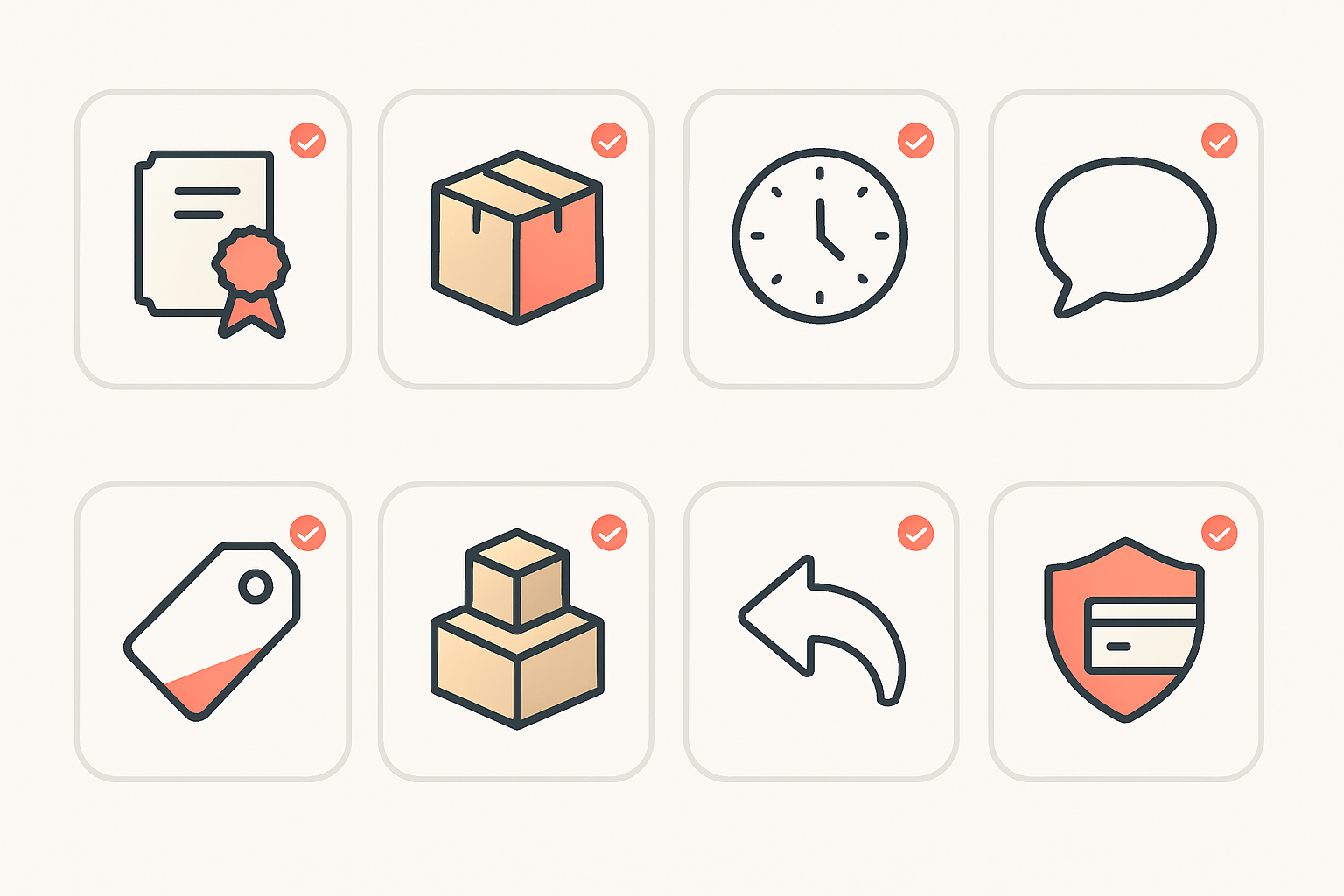
Run every candidate through the same eight checks in the same order. The order matters: the cheap desk checks come first, so you only spend money on samples for suppliers that have already survived the free filtering.
1. Company registration and a physical address
Ask for the business licence or registration number and the address of the premises, then verify both yourself rather than accepting the document at face value. Most countries publish a free company register: the UK's Companies House service lets anyone search by company name, number or officer name and view the filed documents, and the US, Australia and the EU member states all run an equivalent.
A seller on r/dropship who runs a ten-minute filter on every China-based supplier puts the address test first, on the reasoning that a genuine factory advertises its booth, showroom or plant location, while a middleman posing as a manufacturer has nothing to show. The same post flags a second free tell: cross-check the company name outside the platform you found them on. A real trading company leaves a consistent trail across search, business directories and social profiles. A name that produces nothing anywhere else is a name that was created for a listing.
Product depth is the third free signal in that filter. A factory specialises. A "manufacturer" whose catalogue spans yoga mats, dog leads and LED strips is reselling somebody else's production, which means an extra margin and an extra point of failure between you and the goods.
2. A sample order, before any volume
Buy one unit, at your own expense, as an ordinary customer would. Pay full price and do not announce that you are testing.
The sample answers questions no conversation can. Does the item in the box match the listing photos in material, weight and finish? Does the packaging survive the trip? Does the tracking number update in real time, or appear once and freeze? Does anything in the parcel carry the supplier's branding, invoices or promotional inserts that will land in your customer's hands with your name on the outside?
Refusing a sample is the end of the conversation, not a negotiating position. The r/dropship filter above says the same thing plainly: factories expect sample requests, and the operators who dodge, delay or send something visibly worse than the listing are the ones who cannot control production.
3. Real production lead times, in writing
Get two numbers separately and in writing: processing time (order received to parcel handed to a carrier) and transit time (carrier to doorstep). Suppliers who quote a single blended figure are usually hiding the first one, and the first one is where the delay lives.
Then verify the claim rather than filing it. A merchant on r/dropship who suspected a supplier's "US warehouse" claim ran a live test with a US recipient and found no package after two weeks and a tracking code that never worked, while the seller kept insisting the delay was normal. Your sample order is the same test, done cheaply. Time it yourself from click to doorstep and treat that measured number as the truth. It is the figure your customers will experience and the one your refund policy has to survive.
4. Communication, tested deliberately
Every supplier is responsive while they are winning your business. Test the version of them you will get after the money has moved.
Send a pre-sale question that requires actual work: a specific tolerance, a variant that is not in the catalogue, a request for a photo of the item in current production. Note the reply time and the reply quality. Then send a harder message: what happens if a customer receives a broken unit, and who pays for the replacement. Sellers in a Shopify Community thread on tracking supplier reliability keep coming back to the same point, which is that the problem supplier is rarely the one who never replies. It is the one who replies fast and vaguely, so nothing is ever written down and nothing is ever their fault.
Time-zone reality belongs in this check too. If your supplier answers in a nine-hour window that does not overlap your working day, a stock error discovered on Friday afternoon is a Monday problem.
5. Price sanity against the open market
Before you accept a quote, find out what the same item already sells for elsewhere. This is the check that catches both a supplier charging you a middleman markup and a product that is already resold so widely there is no margin left in it. It gets its own section below, because doing it properly is what separates a real sourcing decision from a hopeful one.
6. Minimum order quantities, and what happens if you miss them
Get the MOQ in units and in money, per variant and per order, and ask three follow-up questions in writing. What is the price if I order below the MOQ? Does the MOQ apply per colour or per style? What happens on a reorder that comes in under it?
MOQ terms are where first orders quietly become inventory problems. Merchants planning a first run routinely find a supplier quoting 100 units per colour across five colours, which is 2,000 units of cash and storage before a single sale. In the r/dropship filter, MOQ logic also works as an authenticity test in the other direction: a real factory has minimums that reflect a production run, so an outfit offering two pieces at "factory price" is a reseller with a website.
For a dropshipping store the honest position is that any MOQ at all changes your model, because you are now buying inventory. Price that decision before you agree to it.
7. Returns and defect handling
Establish, in writing and before the first order: the defect rate they will accept responsibility for, who pays return shipping, whether replacements are sent free, how long a claim takes to resolve, and what evidence they require from you. Photo evidence with a deadline is normal. A blanket "all sales final" from a supplier who has never shipped you anything is not.
Ask specifically what happens when a customer reports a fault three weeks after delivery, since that is when most complaints actually arrive. A supplier whose warranty window closes before the goods reasonably reach your customer has written a policy that can never pay out.
8. Payment terms, and what protection you actually have
Read this as a question about reversibility. The FTC's guidance on what to do if you were scammed is blunt about the ranking: federal law protects you from unauthorised use of a credit card, wire transfer companies and payment apps can be asked to reverse a payment, and cryptocurrency "doesn't have the same legal protections as credit and debit cards do, so it can be hard to get your money back".
Platform escrow sits between those poles. Alibaba's Trade Assurance states that refunds are available if orders are not shipped, go missing, or arrive with defects, incorrect items or damage, and that buyers can expect delivery by the scheduled date or receive delay compensation. Read the eligibility language carefully, because several of those protections are limited to eligible countries, products and buyers. Any offer to move the transaction off the platform to "save fees" is an offer to remove the only recourse you have.
Price sanity, done properly
A supplier's quote is a number with no context. It only becomes information once you know what the same product sells for elsewhere, at both wholesale and retail.
Two failures hide in a quote you accept without checking. The first is the middleman markup: the "factory" is a trading company adding a layer you are paying for. The second is worse for your ad budget, because a product already listed by dozens of sellers has a retail price the market has already driven down, and no amount of good copy recovers a margin that was never there.
So build the picture before you commit:
- Find the same item at other sellers. Not similar items. The same one, so the comparison is real.
- Read the retail spread. The lowest and highest prices in that set tell you what customers already expect to pay and how much room you have above your landed cost.
- Count the sellers. A handful means an opportunity. Pages of them means a price war you would be joining late.
- Check the ratings on those listings. A product resold widely and rated badly everywhere is a returns problem with a marketing budget.
- Work backwards to your real margin. Retail price minus product cost, shipping, platform and payment fees. Our dropshipping profit margin guide walks through the arithmetic.
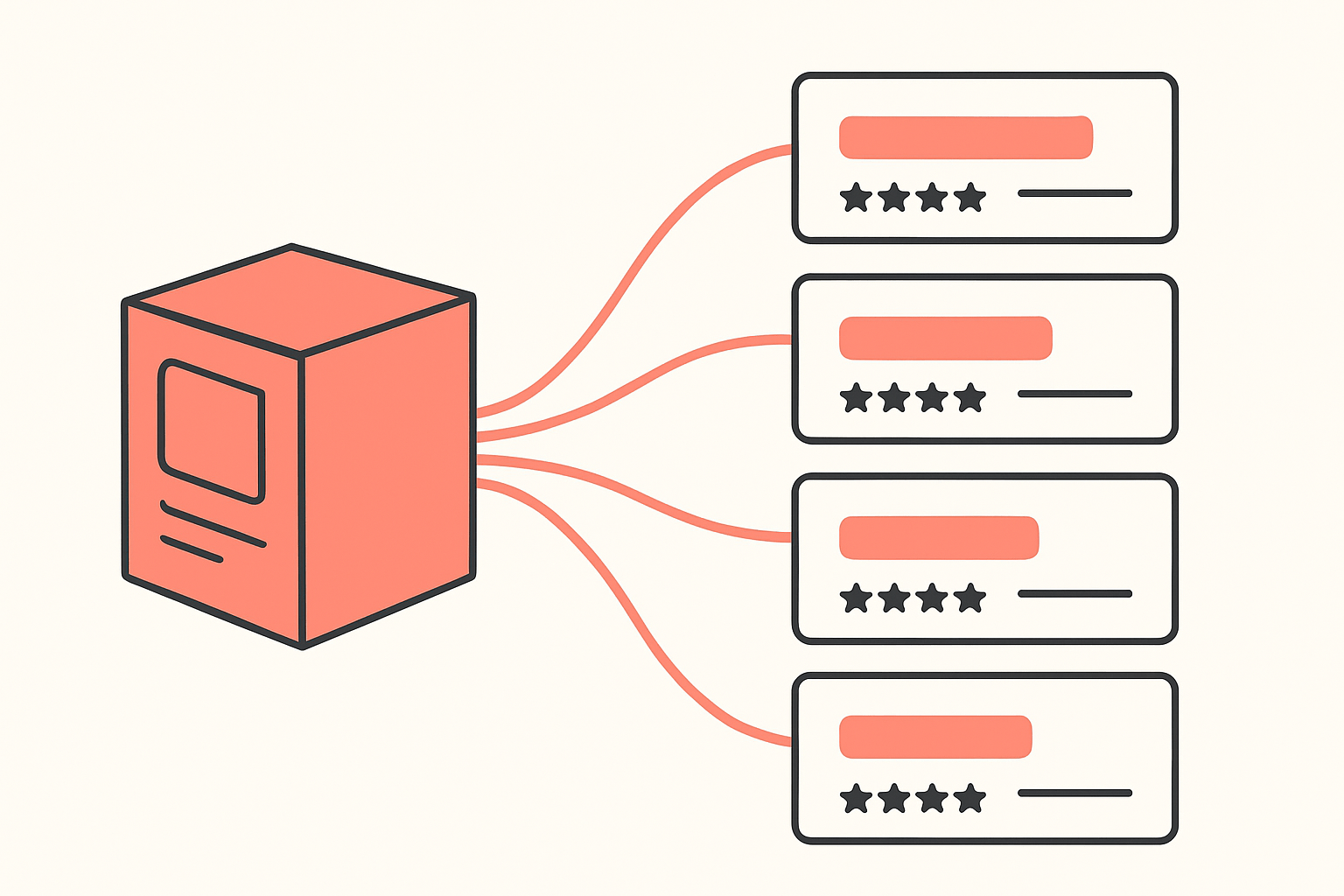
Doing this by hand means opening a lot of tabs, which is exactly why most sellers skip it and accept the quote. Koala Inspector has a feature built for this step. Find Suppliers takes a product and returns the suppliers selling that same item, from Alibaba, AliExpress and CJ Dropshipping to Amazon, Walmart, eBay and Etsy, split into exact matches and similar products so your comparison stays like for like. Each supplier card shows a match score, the rating and review count where available, an estimated delivery time, and the landed cost per unit (item price plus a shipping estimate plus import duty) delivered to the country you pick from 29. A selling-price slider starts at the market average of the exact matches' delivered costs, and as you move it every card shows your estimated profit per unit and margin. It sits as a button on each product in the extension's product view, and you can also right-click any product image on any website and choose "Find suppliers for product" straight from the context menu. It costs 2 tokens, and changing the country, price, filters or sort afterwards is free.
That single action answers both questions at once. It shows you the delivered price your quote has to beat, and it shows you how many exact matches are already on sale and how tightly their prices bunch, which is the fastest reality check available on a "winning product" someone recommended to you. Reading a supplier quote next to that list is a different decision from reading it alone. The profit figure is before ad spend, payment and platform fees and returns, and the import duty is an estimate that leaves out import VAT and sales tax, so use it to screen the quote, then confirm the real numbers with the supplier.
The rest of the extension is free and worth using in the same sitting. Open any Shopify store selling in your category and you can read its full catalogue and likely best-sellers, the apps it runs and the theme it uses, without spending a token. Stores that already sell your product at a healthy price are the strongest evidence that the price exists. For the wider version of that workflow, see product research and how to find winning products.
What sellers say about Koala Inspector
Verified reviews from the Chrome Web Store.
“Awesome customer support. Insights into store AOV, products, traffic and campaign tracking is extremely helpful!”
 Gabe Abramovich
“Invaluable for competitive insights, Koala Inspector is easy to navigate and helps stay ahead in the Shopify marketplace.”
 Merico Monaldo
“Very easy to use and install. Helps with identifying Shopify stores quickly and saves time by listing best sellers. Also has handy feature of the traffic which I found very valuable.”
 Ali Baloch
The red flags that end the conversation
Some findings are worth a follow-up question. These four are worth walking away over, because each one removes your ability to verify anything else.
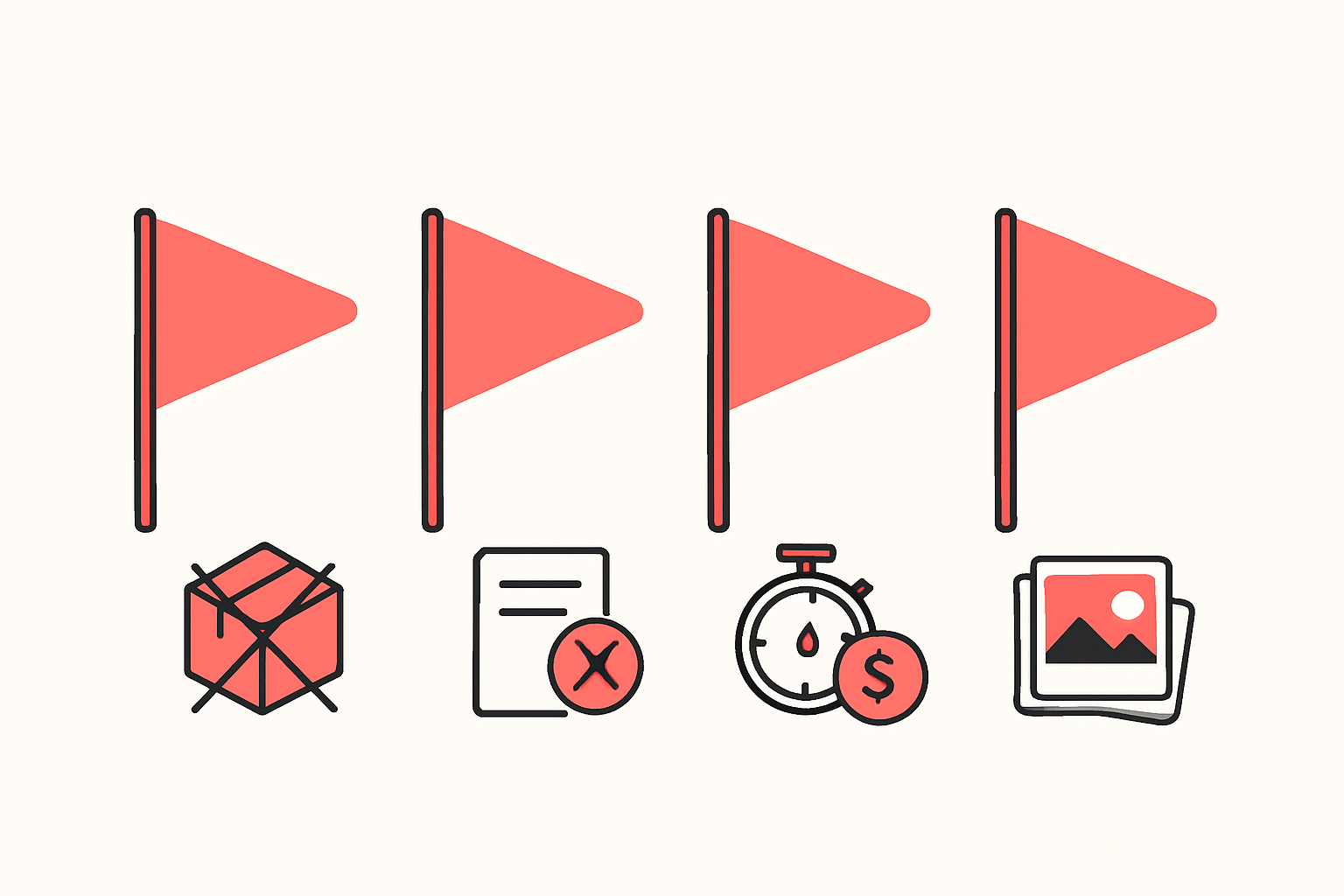
No sample. A supplier who will not sell you one unit is telling you the unit will not survive inspection. There is no volume discount that compensates for shipping a product you have never held.
No written lead time. A verbal or blended estimate that never becomes two written numbers means nobody is accountable when the parcel is late. You cannot set a delivery promise on your product page from a figure the supplier refuses to put in a message.
Pressure to pay outside normal terms. Urgency plus an unusual payment method is the oldest pattern there is: a price that expires today, a request to move off-platform, an insistence on wire transfer or crypto for a first order with a company you have never dealt with. Match this against the FTC's reversibility ranking above and the answer is already written.
Photos that appear on twenty other listings. Run the supplier's product images through a reverse image search before you believe them. In Chrome you can right-click an image and pick Search with Google Lens, which returns websites containing the same or comparable images. Catalogue photos circulating across many unrelated sellers mean the supplier probably does not produce the item and may never have photographed it. It is also a straightforward warning that the product is widely resold, which loops straight back to the price check above. The same instinct applies when you are shown revenue as proof, which our guide to spotting fake Shopify sales covers in detail.
A worked sequence for your first order
Here is the whole thing as a sequence, with the free steps first and the money committed as late as possible.
- Day 1, desk checks. Verify registration and address on a public register. Cross-check the company name outside the platform. Look at catalogue depth for signs of a reseller. Reverse image search two product photos.
- Day 1, price check. Run Find Suppliers on the product. Note the spread of delivered costs, the number of exact matches and their ratings, then read your estimated profit per unit and margin at the price you plan to charge. If the margin is not there, stop. Nothing later in this list fixes it.
- Day 2, the written questions. In one message ask for processing time and transit time separately, MOQ in units and money per variant, the below-MOQ price, defect and return terms, and accepted payment methods. Ask for it in writing, and note how long the reply takes.
- Day 3 to 5, the sample. Order one unit at full price through the platform, paying by a reversible method. Do not flag it as a test.
- On arrival, the audit. Compare the item to the listing photos. Check packaging, inserts and branding. Record the real order-to-doorstep time and compare it to the quote.
- Then, the small first order. Order the smallest quantity the terms allow, run it through your actual store with real customers, and measure the defect and complaint rate before you scale spend behind it. Our guide to fulfilling Shopify dropshipping orders covers the operational side of that first live run.
A supplier that clears all six stages has given you evidence at every step. A supplier that fails one has told you something for free, which is the entire point of doing this before the money moves.
Start with the price check
The step most sellers skip is step two, because opening twenty tabs to price one product is genuinely tedious. It is also the step that saves the most money, since a quote you cannot beat at retail makes every other check irrelevant.
Install Koala Inspector free and run Find Suppliers on the product you are about to source. The free plan gives you 15 tokens a month with no card, which covers seven price checks at 2 tokens each, and the catalogue, best-seller, app and theme reads stay free forever. Premium is $22 a month with 220 renewing tokens if you are sourcing at volume. Plans and token costs are current as of September 2026; the pricing page has the live figures.
Price the product first. Vet the supplier second. Order the sample third.
Supplier vetting: FAQ
What sellers ask before they place a first order with a new supplier.
Does anyone know of good books about dropshipping, the more recent the better?+
The best-known title, The Ultimate Guide to Dropshipping by Mark Hayes and Andrew Youderian, dates from 2013, and every book in this category ages badly because supplier platforms, ad costs and shipping rules move faster than a print run. Read a book for the business model and read something current for the tactics. Shopify's own dropshipping documentation is updated continuously and covers supplier selection, and live merchant threads on r/dropship and the Shopify Community will tell you which suppliers are failing people this month. That combination beats any single recent book.
Does dropshipping still work in 2026?+
Yes, and the constraint has moved. Finding a product is close to solved, since anyone can browse the same trending lists you can. Supplier quality is where stores now win or die: a seller on r/dropship describes contacting 10 to 15 suppliers per product, getting roughly 8 replies, finding about 4 with photos that match reality, and ending with 1 or 2 that can meet MOQ, price and lead time together. If you treat vetting as the real work rather than a formality, dropshipping still works in 2026.
How are you handling supplier lead times and reorder triggers post-Stocky?+
Stocky is Shopify's own inventory app for purchase orders, forecasting and stock replenishment, and its App Store listing states it requires a Shopify POS Pro subscription, so most dropshipping stores never had access to it. Handling lead times and reorder triggers without it comes down to one measured number per supplier: the real order-to-doorstep time from your own sample and your first live orders, not the quoted window. Set your reorder point at that measured lead time plus a buffer of roughly half of it again, log every actual delivery date, and re-measure after any supplier change.
How does dropshipping work?+
You list a product on your store without holding stock. When a customer orders, you pay your supplier, and the supplier picks, packs and ships the item straight to that customer. Shopify describes it as selling products without handling inventory or shipping. Your margin is the gap between your retail price and the full landed cost of product plus shipping plus fees. Because the supplier controls quality, packaging and delivery speed, the supplier controls your refund rate and your reviews.
How do I find reliable suppliers?+
Reliability is proven, not advertised. Shorten the list with Shopify's own criteria, which favour suppliers with proven expertise in their product category, a real support team and centralised warehousing for faster shipping, then run each candidate through the eight checks in this guide: registration and address, a paid sample, written lead times, a deliberate responsiveness test, price sanity against the open market, MOQ terms, defect handling and payment protection. A supplier that clears all eight has given you evidence rather than promises.
How do I find suppliers for dropshipping in New Zealand and Australia?+
Filter a supplier marketplace by warehouse location so you are only shown stock that already sits in the region. Syncee's Shopify App Store listing names Australia and New Zealand among its sourcing locations alongside the United States, Canada, the EU and the UK, which makes it a practical starting point for local delivery times. Beyond a marketplace, look at wholesale trade directories in each country and at brands already selling your category locally. Whichever route you take, the eight checks in this guide still apply, because a local address does not make a supplier reliable.
Sources
- Reddit, r/dropship: how one seller verifies a China-based supplier in under ten minutes - the address, cross-platform, product-depth, licence, MOQ and sample tests this checklist builds on.
- Reddit, r/dropship: testing a supplier's "US warehouse" claim - what happens when a quoted shipping origin is verified instead of believed.
- Shopify Community: how sellers track which suppliers actually cause delays and refunds.
- FTC: what to do if you were scammed - which payment methods can be reversed.
- Alibaba: Trade Assurance - the stated refund, delivery-date and dispute protections, and their eligibility limits.
- Companies House - free public search of UK company records by name, number or officer.
- Google Search Help: search with an image - right-click Search with Google Lens returns websites containing the same or comparable images.
- Shopify App Store: Syncee - supplier sourcing locations including Australia and New Zealand, and Stocky - purchase orders, forecasting and replenishment, requiring Shopify POS Pro.
- Koala Inspector feature and token details are from the product's current plans and pricing, September 2026.
Written by
Ana Gelevska
eCommerce Content Writer
Ana Gelevska is a content writer with more than five years of experience creating content for eCommerce brands and global clients. She digs into each topic and the people it is for, then turns it into clear, useful articles that Shopify sellers and dropshippers can act on.
Connect on LinkedIn