Best Pipiads Alternatives
 By Assaf ShalinOctober 14, 2025 · Updated July 10, 2026
The best PiPiADS alternatives at a glance
The best PiPiADS alternative for Shopify sellers is Koala Inspector, because it researches the store behind an ad instead of the ad alone: the theme, the apps, the best-selling products, pricing, and estimated traffic. If you want a bigger multi-platform ad database, BigSpy is the cheapest broad option; Dropship.io bundles ad spy with product research and supplier sourcing; and Anstrex covers native and push traffic that most tools ignore.
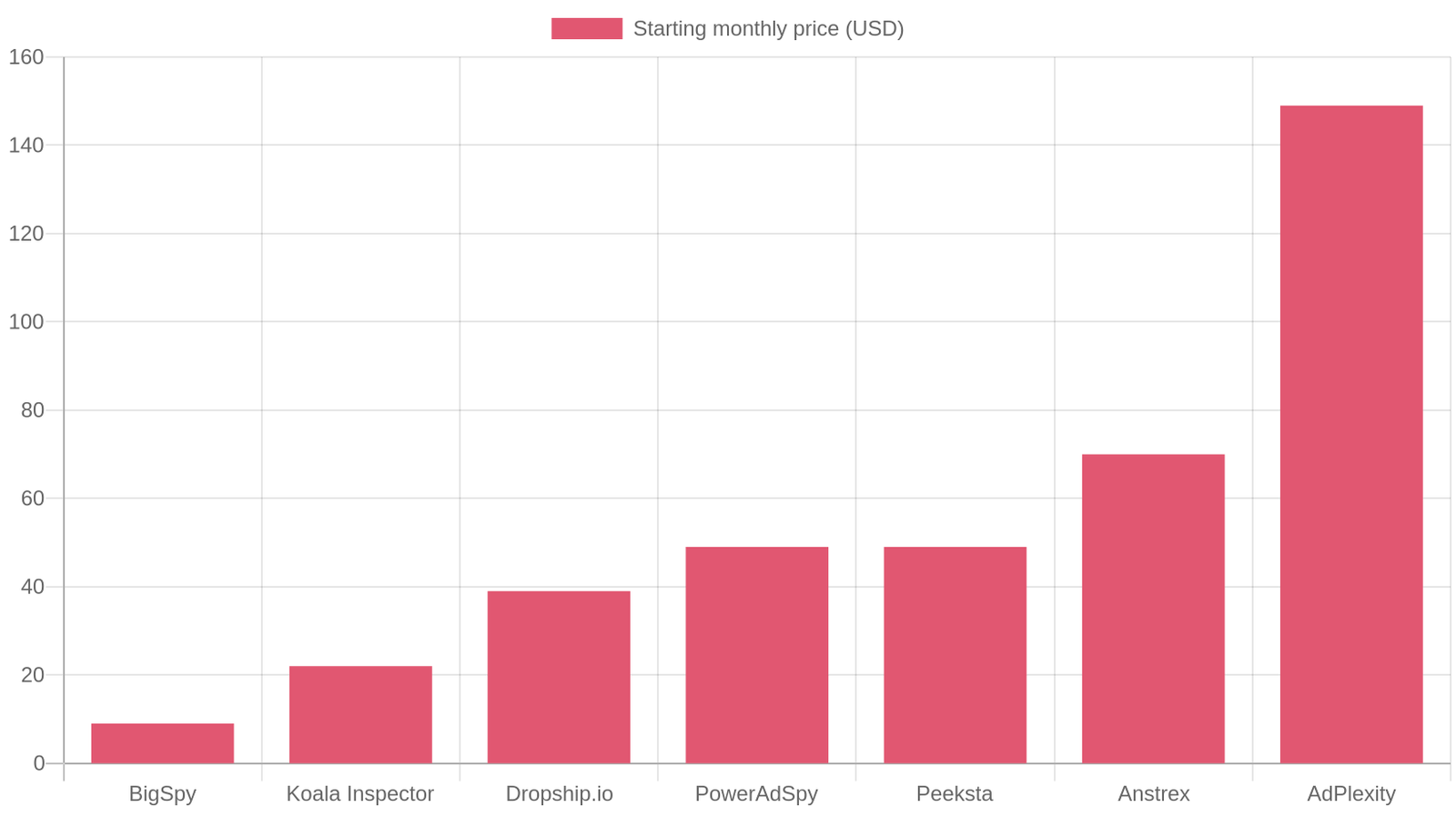
Here is how the seven alternatives compare on price, free option, and what each is best at.
| Tool | Starts at | Free option | Best for |
|---|---|---|---|
| Koala Inspector | Free, then $22/mo | Free plan (15 tokens/mo) | Shopify store + competitor research |
| BigSpy | $9/mo | Free tier (limited) | Large multi-platform ad database |
| Dropship.io | $39/mo | 7-day trial | Product research + ad spy + suppliers |
| PowerAdSpy | $49/mo | Paid only | Cross-platform ad tracking |
| Peeksta | $49/mo | 7-day trial | Influencer campaign intelligence |
| Anstrex | $69.99/mo | $4 2-day trial | Native + push ad tracking |
| AdPlexity | $149/mo | Free trial | E-commerce campaign analysis |
PiPiADS built a following among dropshippers because it surfaces TikTok ad creatives early. The friction: it is credit-based with no free plan, TikTok is the main strength while Facebook and native networks are thinner, and there is no way to tie an ad back to the actual store running it. Paid tiers start around $49 to $69 a month depending on billing, with only a low-cost 3-day trial instead of a free plan, so busy research months burn credits fast. That combination sends plenty of sellers looking for something broader, cheaper, or tied to real store performance.
This guide ranks seven alternatives. Some replace PiPiADS with a broader ad database. Others take a different angle: Shopify store intelligence that ad spy tools cannot match.
Why look beyond PiPiADS?
The complaints cluster around three things: credit limits burn fast on busy research days, coverage leans heavily on TikTok and thins out on Facebook and native ad networks, and there is no way to connect ad performance to the underlying Shopify store behind a campaign.
If your sourcing is Shopify-centric, that last gap matters most. Knowing an ad ran is useful. Knowing the store behind it, what else they sell, which apps they use, and whether traffic is growing, is what you actually act on. This is a recurring theme among sellers: one r/shopify thread on tracking competitor prices drew dozens of replies from store owners weighing how closely to watch rivals, which is a store-level question an ad database cannot answer.
A few specific scenarios where switching makes sense:
- Your niche runs more on Facebook or Google than TikTok
- You want Shopify store intelligence alongside ad data, not just ad creatives
- You research in bursts and a credit-based subscription wastes money during slow months
- You are expanding into native or push traffic and need coverage PipiAds does not offer
Is there a free PiPiADS alternative?
Yes. The best free PiPiADS alternative is Koala Inspector. PiPiADS is subscription-only with no free plan, so the honest starting point for a budget-conscious seller is a tool that gives you real data at $0.
Koala Inspector's free plan includes 15 tokens a month with no credit card, and its core research is free of tokens entirely: store analysis, app detection, theme detection, and product browsing on any Shopify store you open. That is enough to validate a niche and study competitors before you spend a cent on ad spy subscriptions. BigSpy also has a free tier, though it is capped to a handful of daily searches. Most of the other tools on this list are trial-only, so if "free" is the requirement rather than "cheap," Koala Inspector and BigSpy are the two real options.
7 Best Pipiads Alternatives
The seven best PiPiADS alternatives are Koala Inspector for Shopify-specific competitive intelligence, BigSpy for multi-platform ad databases, Anstrex for native and push ad tracking, AdPlexity for e-commerce campaign analysis, PowerAdSpy for cross-platform tracking with engagement data, Dropship.io for integrated product research and supplier sourcing, and Peeksta for influencer campaign intelligence.
1. Koala Inspector
Koala Inspector is a Chrome extension that analyzes any Shopify store you visit. It is not an ad spy tool in the traditional sense; it gives you store-level intelligence that ad spy tools cannot reach.
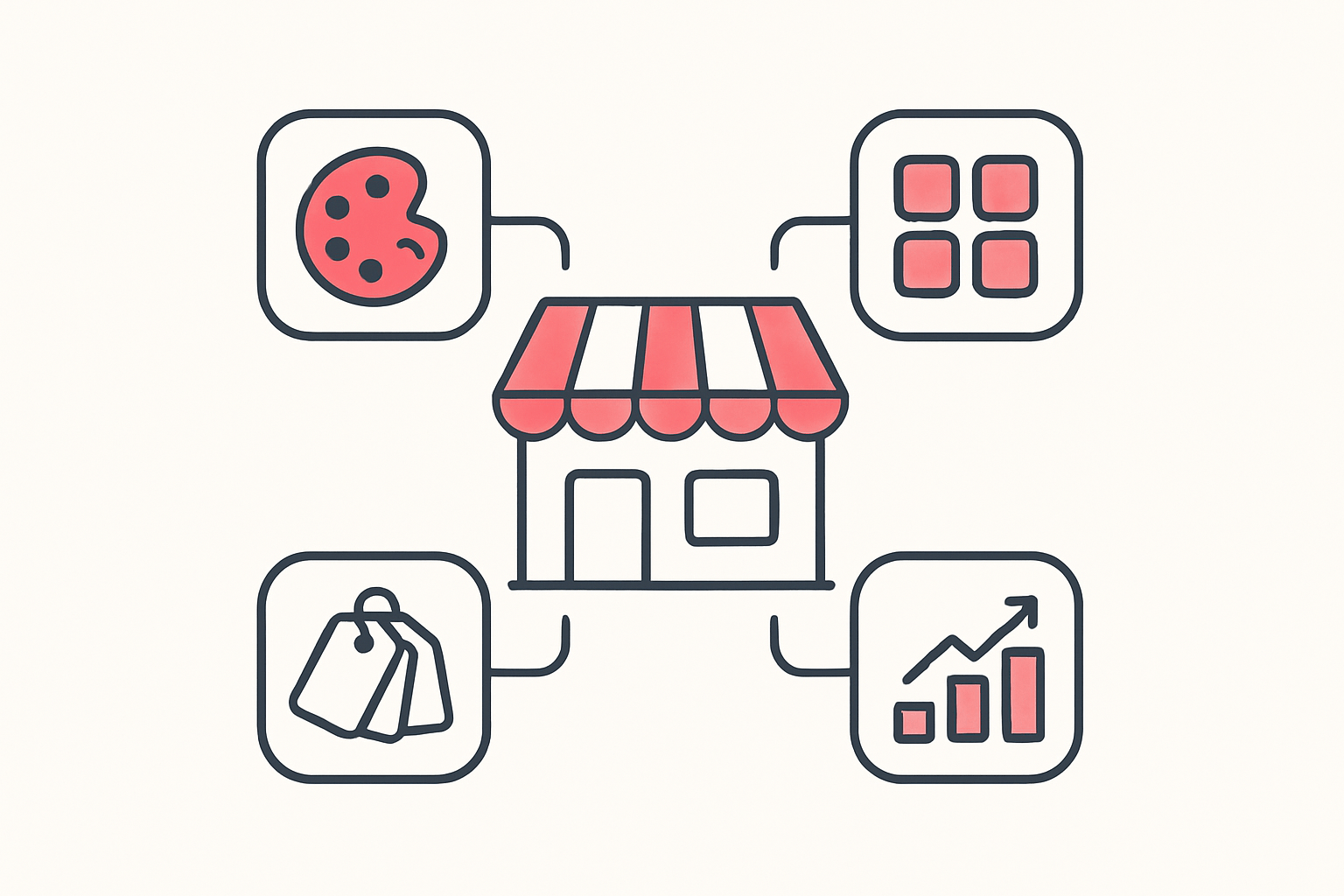
When you land on a competitor's store, you see which Shopify theme they use, every app in their tech stack, their best-selling products, pricing across the catalog, and estimated monthly traffic with a source breakdown. You can also track a store over time, which means you catch new product additions and price changes as they happen rather than weeks later.
This matters for dropshippers because the question is not just "which ads are running?" It is "what store is behind this ad, how is it set up, and is it actually growing?" Koala Inspector answers the second set of questions. The free tier is functional for getting started; the paid plan adds store tracking and deeper exports.
Pricing
- Free: store analysis plus 15 tokens monthly, no credit card
- Premium: $22/month (220 tokens, track up to 50 shops, priority support)
- Token packs (one-time, never expire): 10 tokens for $3.99, 25 for $6.99, 100 for $11.99
Features
Theme detection shows which Shopify themes convert well in your niche, based on what stores already making sales have chosen. Copying a proven layout is faster than A/B testing from scratch.
App stack analysis reveals the upsell tools, email platforms, review apps, and shipping solutions that successful stores rely on. You discover software you might not have found otherwise.
Product and pricing data shows best-sellers, price ranges, and recent additions, which shapes sourcing decisions before you spend anything on ads. A Find Retailers button on each product locates other stores and suppliers selling the same item.
Traffic estimates include monthly visits, bounce rate, pages per session, and a source breakdown by channel and geography, so you can see where a competitor finds customers.
Ad monitoring surfaces the Google and Facebook/Instagram campaigns tied to a store, connecting advertising activity to store-level performance.
Best for
Shopify dropshippers who want to understand the stores behind competitor ads, not just the ad creatives. Especially useful for new sellers who need a cost-effective way to validate niches before committing to ad spend. See how it stacks up head to head in Koala Inspector vs BigSpy.
2. BigSpy
BigSpy's main strength is database size. The platform indexes millions of ads across Facebook, Instagram, Twitter, Pinterest, and Yahoo, and historical data goes back several years on some formats. That breadth means you will find examples of almost any product angle, including obscure niches where only a handful of advertisers are active.
The practical value shows up during niche exploration. Sorting by engagement shows which creatives resonated rather than just ran, and landing page capture lets you study the full funnel, not just the ad.
The free tier is limited to a handful of daily searches. The basic paid plan at $9/month opens more searches but still applies limits. Serious research requires the Standard plan or above.
Pricing
- Free: basic search with limited daily searches
- Basic: $9/month
- Standard: $99/month
- Enterprise: custom pricing
Features
Multi-platform coverage across major social networks and display advertising. Useful if your campaigns span more than one channel and you want to see how competitors coordinate messaging.
Engagement sorting by likes, shares, and comments. Sorting by engagement rate rather than raw numbers helps identify ads that worked with their target audience, not just ads with large spend behind them.
Landing page capture stores destination pages for many ads. Studying the full funnel matters because a strong ad driving to a weak page still fails.
Historical depth lets you track how specific advertisers evolved their creative approach over months or years. Patterns that persist signal real product-market fit.
Best for
Researchers exploring new niches who want to see every angle competitors have tested, and teams running multi-platform campaigns who want a unified view across channels.
3. Anstrex
Anstrex covers territory most ad spy tools ignore: native advertising and push notifications. These are the content recommendation placements on Taboola, Outbrain, and MGID, plus the browser push campaigns that run on dedicated push traffic networks.
The database covers over 10 million ads across more than 150,000 advertisers in 80 countries, spanning 27 advertising networks. That is a meaningful pool for anyone expanding beyond Facebook and TikTok.
Landing page analysis goes deep. You see not just the creative but the conversion mechanics: countdown timers, social proof elements, guarantee structures, and CTA phrasing, and you can download pages to study offline.
Push notification tracking is a distinct module. You analyze what made specific notifications drive clicks, including messaging patterns, timing, and offer structures, which differ significantly from social ad formats.
Pricing
- Native: $69.99/month
- Push: $79.99/month
- Bundle: $124.99/month
- 2-day trial: $4
Features
Native ad tracking across major recommendation networks surfaces campaigns that social-only tools miss. Products that perform on native traffic often differ from what works on Facebook.
Push notification intelligence covers what drives engagement in direct-to-browser format. Push traffic converts on different psychology than social ads; real examples shorten the learning curve.
Landing page download lets you analyze successful funnels offline and understand the conversion triggers being used.
Affiliate campaign identification flags ads likely from performance marketers rather than brands. Affiliates typically optimize harder, so their pages show more advanced conversion testing.
Best for
Marketers ready to expand beyond social advertising. If Facebook and Instagram costs have climbed or audiences have fatigued, native and push traffic offer genuine alternatives. Affiliate marketers in particular find value in seeing what is actively working on these channels.
4. AdPlexity
AdPlexity sells separate products for different ad channels: desktop display, mobile, native, and an e-commerce-specific product. The modular structure lets you pay for exactly the intelligence you need rather than a bundle where half the features are irrelevant.
AdPlexity Ecommerce focuses on product-based campaigns, filtering out app installs and service promotions so research time goes toward relevant examples. Real-time monitoring keeps the database current, which matters in fast-moving niches where opportunities close quickly.
The mobile product covers over 100 countries with carrier-level targeting data, including in-app placements most competitors cannot track. For international campaigns, that geographic depth is hard to find elsewhere.
Pricing
- Desktop: $149/month
- Mobile: $199/month
- Native: $169/month
- Ecommerce: $149/month
- Free trial available
Features
E-commerce campaign filtering removes irrelevant ad types from results. Every ad you see is selling a physical product, which keeps research efficient.
Landing page history shows how advertisers evolve pages over time. You see what they test, keep, and cut, which reveals their optimization process.
Affiliate network data shows commission structures and payout levels. Understanding what margins make a campaign profitable helps you price products and structure offers.
Mobile and in-app coverage across 100+ countries with carrier targeting detail, relevant for sellers targeting mobile-first markets.
Best for
Established sellers with enough ad spend to justify the pricing. Performance marketers and media buyers who want to see affiliate campaign structures find the affiliate-specific data particularly valuable.
5. PowerAdSpy
PowerAdSpy tracks advertising across Facebook, Instagram, YouTube, Google Display Network, and several native platforms. The multi-platform approach is the core proposition: one tool rather than separate subscriptions for each channel.
The engagement analytics go beyond counting likes and shares. You can see how interaction trended over a campaign's lifespan, which helps distinguish ads that had a strong launch from ads that held audience interest. Sorting by engagement rate per impression highlights efficient creative rather than just high-spend campaigns.
Advertiser profile pages aggregate all campaigns from a specific company across platforms, so you study a competitor's complete media mix rather than isolated snapshots.
Pricing
- Basic: $49/month
- Standard: $99/month
- Premium: $149/month
- Platinum: $249/month
Features
Cross-platform tracking across social and display gives a consolidated view of competitor campaigns, which saves time when you are managing across channels.
Engagement trend data shows how audience interaction evolved over a campaign's run, not just the totals at a single point in time.
Advertiser profiles aggregate all campaigns from a specific brand or seller, useful for understanding how a competitor allocates budget across products and platforms.
Demographic targeting data shows the audience segments competitors are addressing. Spotting underserved segments is easier when you can see who established players are, and are not, targeting.
Best for
Sellers running campaigns across multiple platforms who want consolidated competitor intelligence in one place. The lower tiers are accessible for sellers not yet at scale who still want professional-grade data.
6. Dropship.io
Dropship.io combines ad intelligence with a product database and direct supplier connections. The platform is built around the full workflow: find a product with real demand evidence, confirm it is working for other advertisers, then source and launch it, all in one place.
The product database supports filtering by category, price range, supplier, and performance metrics. The Facebook ad spy component focuses on e-commerce campaigns with verifiable sales activity, not just ads that ran. That distinction matters because an ad running does not mean the product behind it is profitable.
Supplier integration built into the platform means you move from research to sourcing without switching tools. Order fulfillment automation handles logistics once products go live.
Pricing
- Basic: $39/month
- Advanced: $69/month
- Professional: $99/month
- 7-day trial available
Features
Product database with performance metrics shows what is trending, what is converting in paid advertising, and which niches are still accessible. Filtering by real sales data reduces time spent on products that look interesting but are not moving.
Facebook ad spy with sales verification focuses on campaigns with evidence of real purchase activity, not just high creative engagement.
Supplier integration shortens the path from research to live listing. Once you identify a winning product, supplier outreach and import happen inside the same platform.
Portfolio tracking organizes multiple product lines and their advertising performance, useful once you run more than a handful of products at once.
Best for
Dropshipping operations that want integrated product research, supplier sourcing, and order management rather than a standalone ad spy tool. If you are weighing it against a Shopify-first approach, read Dropship.io vs Koala Inspector.
7. Peeksta
Peeksta focuses on influencer marketing intelligence across Instagram and TikTok. It bridges ad spy and influencer campaign analysis, covering sponsored content alongside organic posts.
Influencer discovery identifies creators promoting specific products or brands. Engagement authenticity analysis helps flag accounts with inflated follower counts before you commit to a partnership. Campaign performance tracking connects influencer activity to measurable outcomes.
Story and ephemeral content tracking captures promotions that disappear within 24 hours, which traditional ad spy tools miss entirely. That is relevant for dropshippers running flash sales or testing short-window promotions through creators.
Pricing
- Starter: $49/month
- Professional: $99/month
- Enterprise: custom pricing
- 7-day trial: $7
Features
Influencer discovery identifies creators by product category and engagement quality, not just follower count.
Engagement authenticity scoring filters out accounts with fake or low-quality followers before you spend on a partnership.
Story and ephemeral content tracking captures time-limited promotions that most tools miss.
Hashtag and audio trend monitoring surfaces what is gaining traction on TikTok before it saturates, useful for timing product launches and creative angles.
Competitor influencer mapping shows which creators your competitors work with, and which ones they do not, revealing partnership gaps.
Best for
Brands and sellers using influencer marketing as a primary acquisition channel, or those testing it. Stores that rely heavily on TikTok creator partnerships get the most from Peeksta's depth there.
How to choose
For most Shopify dropshippers, the first question is whether you primarily need ad creative intelligence or store-level competitive data. Ad spy tools show you what is running and where. Store intelligence tools like Koala Inspector show you what is actually working for the stores behind those ads.
If your budget is limited, start with Koala Inspector's free tier. The store analysis works immediately without a credit system, and the paid plan at $22/month is considerably cheaper than most alternatives while covering the Shopify-specific angle ad spy tools miss.
If you are actively scaling paid ads across Facebook and TikTok and need a large creative database, BigSpy's Standard plan or Dropship.io's product-plus-ads approach are the most cost-effective in that range. For native and push traffic, Anstrex has no direct competitor on this list; the $4 two-day trial is worth running before committing.
Whichever ad tool you pick, pairing it with Koala Inspector closes the gap PiPiADS leaves open: once an ad points you at a promising store, you can see the theme, apps, products, pricing, and traffic behind it, and track that store as it changes. Looking at other tools too? We also cover Minea alternatives and AdSpy alternatives.
Written by
Assaf Shalin
Co-founder & Developer, Koala Apps
Assaf Shalin is a co-founder of Koala Apps and one of the developers behind Koala Inspector. He builds the tools that let Shopify sellers see what is actually working in other stores, from installed apps and themes to best-selling products. On the blog he covers the technical side of store research: how competitor research really works, what public store signals can and cannot tell you, and how to turn them into decisions.
Connect on LinkedIn