Best PPSpy Alternatives in 2026 (Free and Paid Tools Compared)
 By Ana GelevskaJuly 13, 2026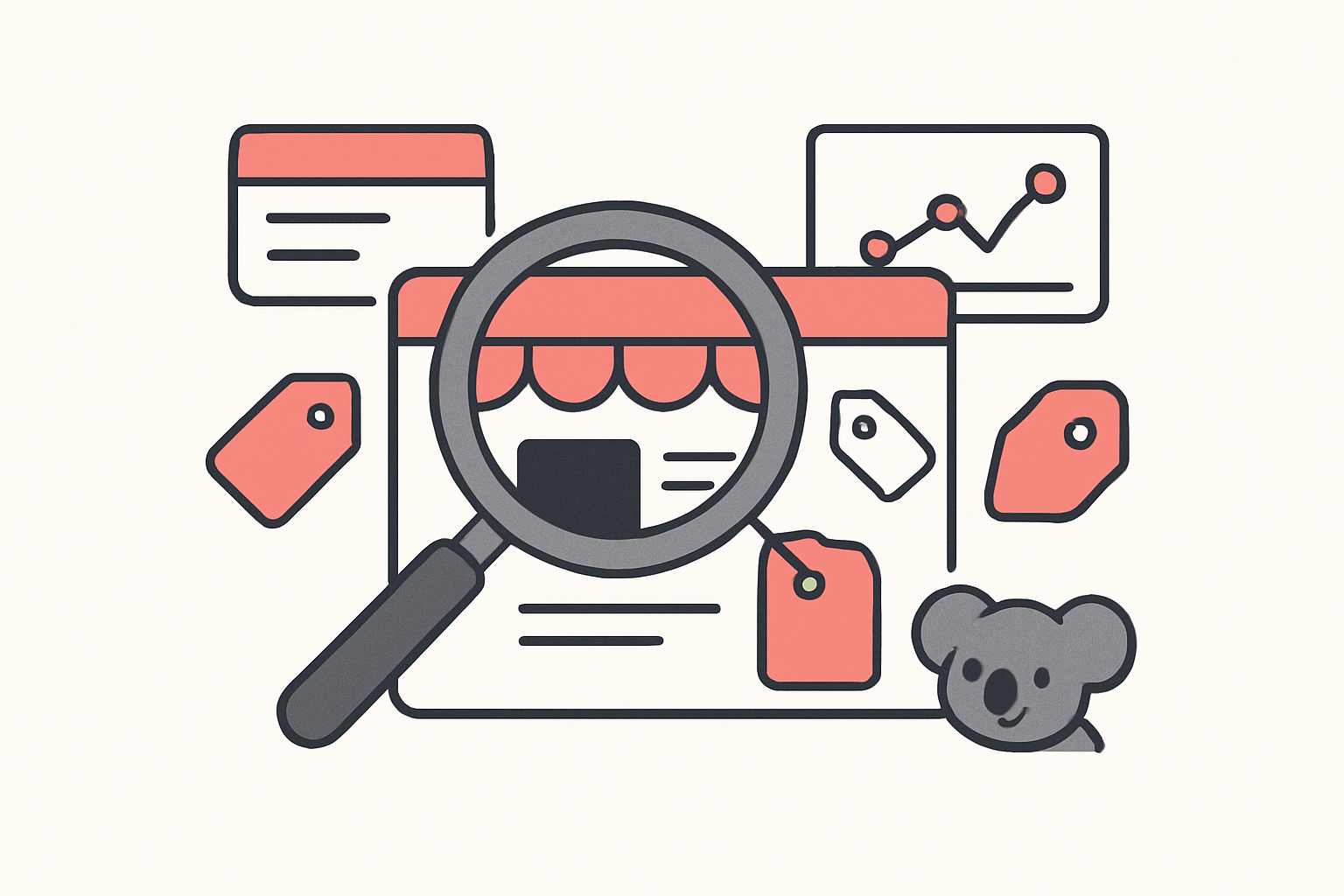
The best PPSpy alternative for most Shopify sellers is Koala Inspector, a free Chrome extension that shows a competitor's products, likely best-sellers, installed apps, and active theme in one click. PPSpy is a capable sales-estimate and product-research tool, but it is subscription-only and it does not tell you which apps or theme a store runs. If you want the full picture of how a winning store is built, without a monthly bill, an alternative that covers the store's tech stack matters.
This guide compares six product-research tools by the thing that actually decides which one you install: what each one lets you see about a live store, what it costs, and how quickly you can get an answer. Every tool here is legitimate and useful for something. The goal is to match the right one to how you research.
Quick answer: the top PPSpy alternatives
If you want the short version:
- Best free pick: Koala Inspector. Store analysis, app detection, theme detection, and best-seller browsing cost nothing.
- Best for sales and revenue tracking: ShopHunter, if daily revenue estimates for specific stores are your main need.
- Best product database: Dropship.io, for browsing millions of products with sales metrics attached.
- Best all-in-one research suite: Sell The Trend, if you want product discovery, sourcing, and store automation in one dashboard.
The rest of this post explains why a store owner switches away from PPSpy, then breaks down each tool.
Why sellers look for a PPSpy alternative
The most common reason is the one nobody advertises: traffic without sales. You have visitors landing on your store and almost none of them buy. Product research tools help, but a lot of them stop at "here is a product that is selling somewhere." That answers what to sell. It does not answer why the store selling it converts and yours does not.
The other reasons come up constantly in seller communities:
- Price. PPSpy is subscription-only, with plans that start at $39 per month and climb to $299 per month for the Business tier. For someone still validating their first product, that is a real commitment before a single sale. (source)
- No tech-stack view. PPSpy shows you products and sales signals, not the apps or theme a store runs. Half of what makes a competitor convert lives in that stack: their upsell app, their review widget, their bundling, the theme they sell on.
- You want a one-click check, not a research session. Sometimes you just want to open a store you found in an ad and instantly see what it is running.
None of these make PPSpy a bad tool. They just mean it is not the right fit for every job.
The angle that changes your research: reverse-engineer the winners
Here is the shift that helps a struggling store more than any single "winning product" list. Stop hunting for products in the abstract and start reverse-engineering stores that already sell them well.
When you can open a live competitor and see their full catalog, their likely best-sellers, their price points, the apps handling their upsells and reviews, and the theme they convert on, you are no longer guessing. You are copying a working blueprint. A struggling seller with traffic but no sales usually does not have a product problem. They have a setup problem: the wrong offer structure, no urgency or social proof, a checkout that leaks. Studying the stack of a store that converts the same traffic is how you find and fix that.
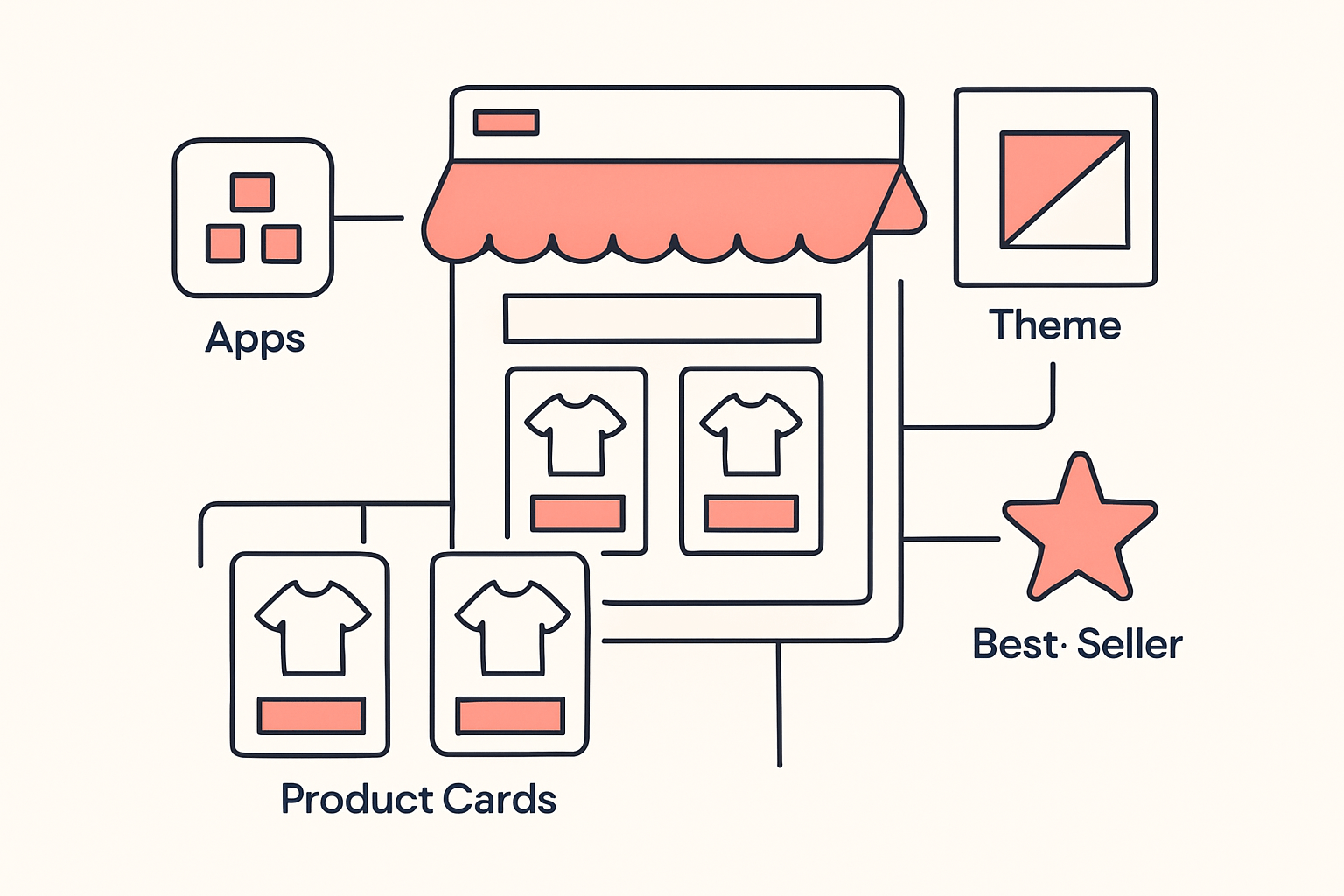
That is why the tool you pick should show you more than a sales number. The sales number tells you a product moves. The store's apps and theme tell you how it moves.
The best PPSpy alternatives compared
1. Koala Inspector (best free alternative)
Koala Inspector is a free Chrome extension for Shopify research. You install it once, land on any Shopify store, and its dashboard loads automatically. In that one click you get the store's active theme, its category, product count, and localization, plus previews of its apps, traffic, best-sellers, and ad campaigns.
What sets it apart from PPSpy is coverage of the store's build. Its Shopify app detector lists every app a store has installed, grouped by type, and its theme detector names the active theme with a link to it. Both are free. You can also browse the full catalog, filter to likely best-sellers, sort by date or price, and favorite products to save them. Deeper features (site traffic, ad campaigns, product trends, AI shop chat, CSV export, and multi-store tracking) run on a token system, with 15 free tokens a month on the free plan and 220 tokens on Premium at $22 per month.
- What you see about a store: products, likely best-sellers, price range, installed apps, active theme, traffic and ad previews.
- Pricing: Free forever tier, no card. Premium $22 per month.
- Ease of use: one-click, beginner-friendly, works directly on the store you are viewing.
Best for: anyone who wants the fullest free picture of how a competitor's store is actually put together.
2. ShopHunter (best for revenue tracking)
ShopHunter is a product-exploration tool built around sales and revenue estimates for any Shopify store. It reports estimated daily revenue and order volume, best-selling products, average pricing, and ad activity, with hourly updates and historical trend lines to spot seasonality. (source)
If your research is mostly "how much is this specific store making, and is it trending up," ShopHunter is focused squarely on that. It runs on a paid subscription rather than a free tier.
- What you see about a store: estimated revenue and orders, best-sellers, average price, ad activity, historical trends.
- Pricing: paid subscription (no free tier).
- Ease of use: clean, single-purpose, tracking-oriented.
Best for: sellers who want daily revenue estimates on a shortlist of competitor stores.
3. Dropship.io (best product database)
Dropship.io pairs a large searchable product database with sales tracking and competitor research. You can browse millions of Shopify and TikTok Shop items with sales and revenue metrics attached, track shop and product performance over time, and explore Facebook ad campaigns with spend and reach signals. Paid plans run from $39 per month (Basic) up to $99 per month (Premium) on monthly billing, with a free trial. (source)
Where a store-by-store extension shows you one competitor at a time, Dropship.io is built for browsing across a whole database to surface products before you go looking for the stores selling them.
- What you see about a store: product-level sales and revenue metrics, shop performance history, ad campaign data.
- Pricing: $39 to $99 per month, free trial.
- Ease of use: dashboard-based; a bit more to learn than a single-click extension.
Best for: researchers who want to search a broad product database with sales data attached.
4. Sell The Trend (best all-in-one suite)
Sell The Trend is a wider dropshipping platform: AI-assisted product discovery, competitor and Facebook-ad research, one-click order fulfillment, product importing, and a video-ad creator, all in one place. Plans start at $29.97 per month (Lite) and go up to $99.97 per month (Pro) on monthly billing, with a free trial. (source)
It reaches beyond pure competitor spying into the full run-a-store workflow. That makes it heavier than PPSpy, and heavier than you need if research is all you want, but strong if you want research plus sourcing and automation together.
- What you see about a store: trending products, competitor best-sellers, and Facebook ad research, alongside sourcing and automation tools.
- Pricing: $29.97 to $99.97 per month, free trial.
- Ease of use: feature-rich, so a steeper learning curve.
Best for: sellers who want product research and store operations in a single subscription.
5. PPSpy (the tool you are comparing against)
Worth keeping PPSpy on the list, because for some people it stays the right answer. It is a Chrome extension and web app centered on AI-powered sales estimates, product research (best-sellers by monthly sales and revenue), store filtering by revenue and traffic, one-product-store discovery, and design inspiration. Plans are Standard at $39 per month, Pro at $99 per month, and Business at $299 per month, with a no-card free trial. (source)
If sales prediction and store-strategy analysis are the core of your workflow and budget is not the constraint, PPSpy does that job. Its gap, again, is the store's app and theme stack, which it does not surface.
- What you see about a store: sales estimates, product research, store filtering, design inspiration.
- Pricing: $39 to $299 per month, free trial.
- Ease of use: capable but pricier and more strategy-heavy than a quick check.
Best for: sellers who prioritize sales-prediction and store-strategy analysis.
6. Commerce Inspector (the original spy tool)
Commerce Inspector was one of the first Shopify spy tools, built around product research and traffic signals for competitor stores. It is still around and still used, though its higher tiers get expensive fast and its interface shows its age next to newer extensions. Consider it if you specifically want a long-established name; most sellers today reach for one of the tools above first.
- What you see about a store: products and traffic signals.
- Pricing: varies, with premium tiers running high.
- Ease of use: functional but dated.
Best for: researchers who want a legacy, established option.
How the starting prices compare
Price is often the deciding factor when you are early. Here is where each tool's entry point sits per month, which is the number that matters most before you are profitable.
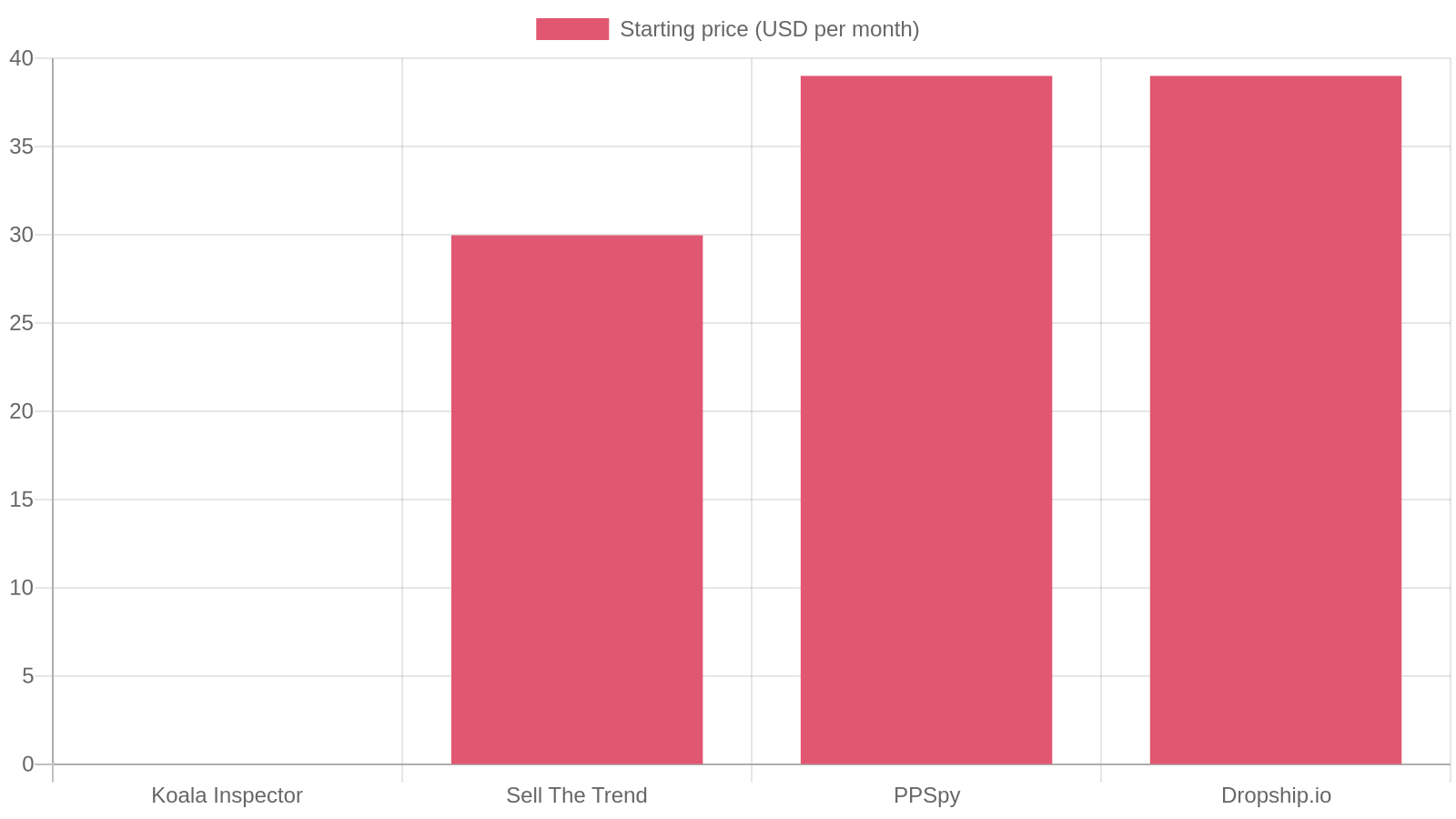
Koala Inspector is the only option with a real free tier that includes core store, app, theme, and product research. Everything else starts at a monthly subscription or a trial that asks for a card, and PPSpy's ceiling of $299 per month is the highest on the list.
Which PPSpy alternative should you pick?
Match the tool to the job:
- You want the full picture of how a store is built, for free. Install Koala Inspector. Its app and theme detection is the piece PPSpy leaves out, and it costs nothing to start.
- You track revenue on specific competitors. ShopHunter is built for that.
- You browse a big product database first, then find the stores. Dropship.io.
- You want research plus sourcing and automation in one place. Sell The Trend.
- You live in sales-prediction and store strategy and budget is fine. PPSpy itself.
For the seller with traffic but no sales, the fastest win is usually the free route: open the stores converting your kind of visitor, find their best-sellers, see which apps they run, note the theme, and rebuild your offer around what already works. That is reverse-engineering the winners, and it is exactly what Koala Inspector is built to do in one click. If you want the deeper PPSpy breakdown first, read PPSpy: what it tracks and what it misses or the head-to-head in Koala Inspector vs PPSpy.
How to use a research tool on a store today
Turning research into sales is a repeatable loop. Do it on three or four competitors and patterns jump out fast.
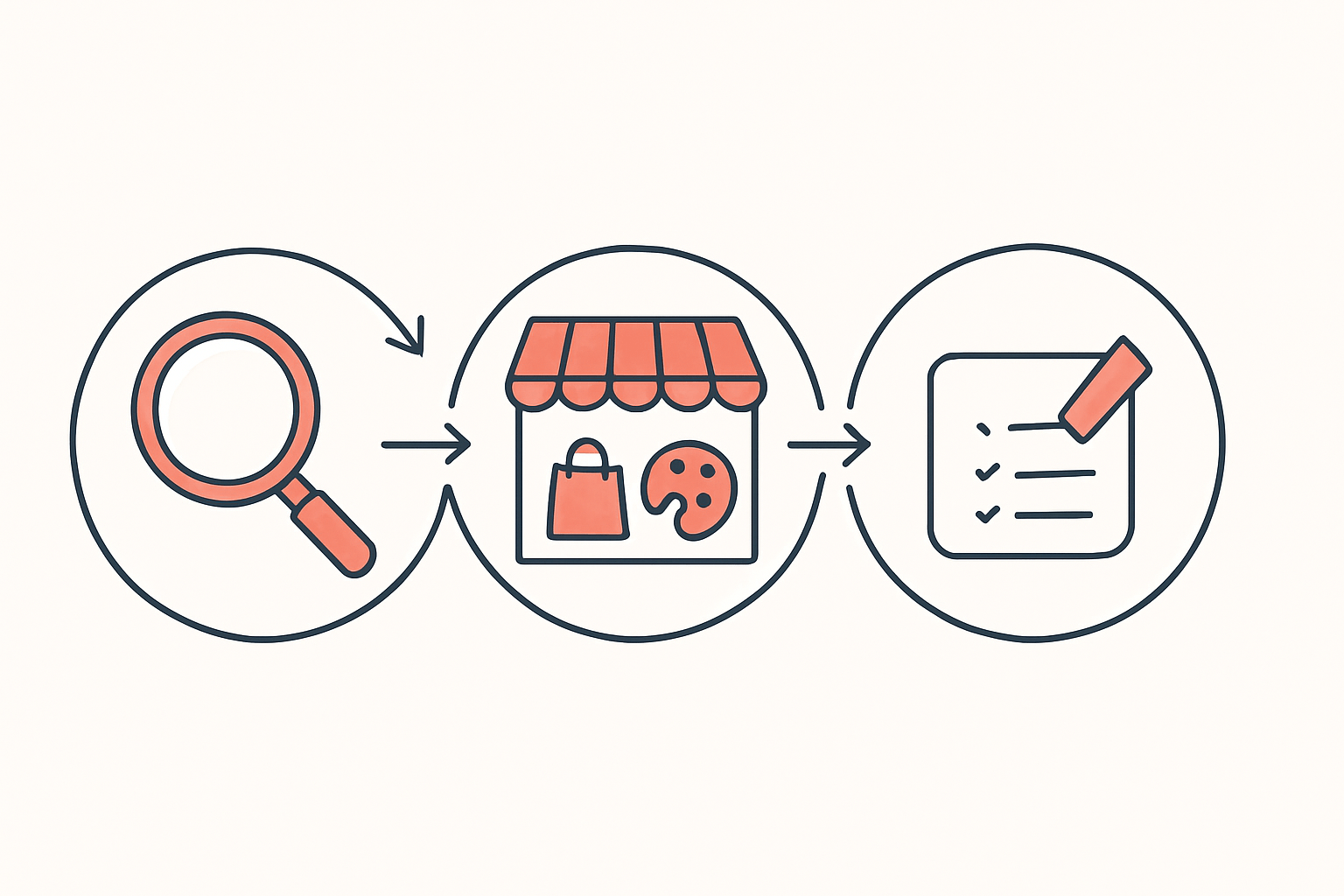
- Find a store already selling your product. Pull it from an ad you saw, a marketplace listing, or a search.
- Open it and read the setup. With Koala Inspector loaded, one click shows the theme, the installed apps, the catalog, and the likely best-sellers.
- Note what converts. Which upsell app, which review widget, which price points, which product is doing the heavy lifting.
- Rebuild your offer around it. Match the proven structure instead of guessing, then test.
You start free. The core research (store analysis, app detection, theme detection, best-sellers) never costs a token, so you can run this loop as many times as you want before deciding whether you need anything paid.
Frequently asked questions
What is the best free PPSpy alternative?
Koala Inspector. It is a free Chrome extension you install once and run on any Shopify store in one click. Store analysis, installed-app detection, active-theme detection, and best-seller browsing are all free with no credit card, so you can research a competitor's full setup without a subscription.
Does PPSpy show which apps and theme a Shopify store uses?
No. PPSpy centers on sales estimates, product research, and store strategy. It does not report the specific apps a store has installed or its active theme. To see a competitor's app stack and theme, Koala Inspector detects both for free.
How do you find winning products without guessing?
Study stores that already sell the product well. A research tool lets you open a live competitor store and see its full catalog, likely best-sellers, and price range. With Koala Inspector you also see the apps and theme powering the storefront, which turns product picking into copying a proven setup rather than betting on a hunch.
Are PPSpy alternatives free to use?
Some are. Koala Inspector has a genuinely free tier with core store, app, theme, and product research included and no card required. Most other tools here run on paid subscriptions or a time-limited free trial that asks for a payment method up front.
Is a Chrome extension enough, or do I need a full web app?
For most competitor research, a Chrome extension is faster because it works directly on the store you are looking at. You get an answer without leaving the page or logging into a separate dashboard. Heavier database browsing or large-scale sales tracking is where a full web app earns its place.
Written by
Ana Gelevska
eCommerce Content Writer
Ana Gelevska is a content writer with more than five years of experience creating content for eCommerce brands and global clients. She digs into each topic and the people it is for, then turns it into clear, useful articles that Shopify sellers and dropshippers can act on.
Connect on LinkedIn