10 Highest Converting Shopify Themes for 2026
 By Koala TeamDecember 16, 2024 · Updated October 13, 2026
Shopify's theme store lists well over a hundred paid options, and it sorts them into conversion-focused collections for a reason: the gap between a well-built theme and a mediocre one shows up directly in sales. Top-performing Shopify stores load in under 2.5 seconds, while many themes drag along far slower, and visitors form an opinion about a site in roughly 50 milliseconds. A slow or cluttered design starts losing customers before a product is even seen.
The ten picks below are the themes we see come up most often on stores that convert above their category average, refreshed for 2026 with each theme's current price and Shopify Theme Store rating re-verified this month. Every price and rating in this guide was checked against the live Shopify Theme Store in July 2026.
Why these themes convert (the criteria we used)
"High-converting" is not a vibe, it is a short list of things a theme does to move a visitor from browsing to buying. We ranked on four:
- Speed, especially on mobile. Over half of store traffic is on phones, and every second of load delay bleeds visitors before they reach a product. The fastest themes here stay light out of the box instead of relying on you to strip weight later.
- Built-in conversion features. Trust badges, low-stock counters, quick-buy, upsell and cross-sell blocks, and product reviews baked into the theme mean fewer paid apps stacked on top, which keeps the store fast and the monthly bill lower.
- Design that fits the product. A luxury jewelry brand and a budget gadget store need different looks. A theme that reads "wrong" for your category makes people bounce even when the price and product are right, so we note who each theme suits.
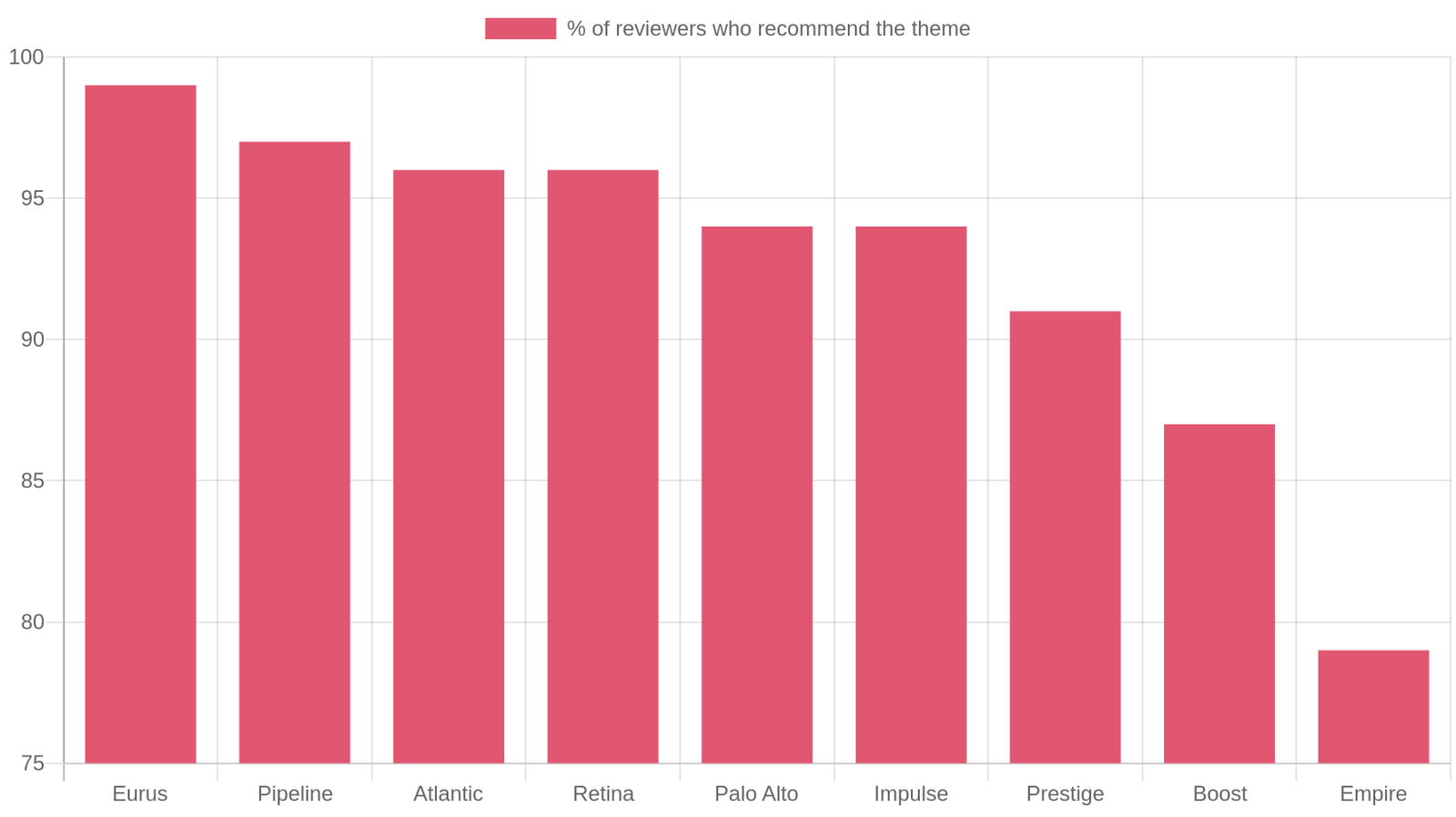
- A real track record. We weight themes by how many merchants recommend them on the Shopify Theme Store, not by marketing copy. The chart below shows the current recommend rating for the Theme Store picks in this list.
Before you buy: check the theme a rival store already runs
A review score tells you merchants like a theme. It does not tell you the theme works for your niche. The faster signal is a store that already converts in your category: what is it running?
You can read that in seconds. Open any Shopify store with the free Koala Inspector Chrome extension and it names the store's active theme, with a link straight to that theme in the Shopify Theme Store. It works the same way on the app side, listing the apps a store has installed, so you can see whether a rival's high-converting product page comes from the theme itself or from a review, upsell, or urgency app layered on top. Want to size up the store first? Its Site Traffic view estimates monthly visits, sources, and top countries, all modeled from public signals any visitor's browser can already see, never from the store's private dashboard. Check three or four winners in your niche before you commit, and you replace a guess with a pattern.
The ten themes below are the ones that pattern keeps surfacing.
What is a good conversion rate on Shopify?
The average Shopify store converts between 1% and 3% of visitors. Hitting 3.3% or above puts you in the top 20% of all Shopify stores. At 4.8% or higher, you're in the top 10%.
Price point matters a lot here. Stores selling products under $100 typically see conversion rates between 2% and 6%. For products over $100, the range drops to around 1% to 2%. That's not a flaw in your store, it's buyer behavior: higher-ticket purchases involve more deliberation.
You can calculate your rate by dividing conversions by total visitors and multiplying by 100, or just read it directly in your Shopify admin dashboard under Analytics. With those benchmarks in mind, here are the ten themes most commonly found on stores that punch above their category average.
The 10 highest converting Shopify themes for 2026 at a glance
Prices and ratings below were re-verified on the live Shopify Theme Store in July 2026. Prices are the one-time Theme Store price in USD; the rating is the share of reviewers who recommend the theme, with the review count in parentheses. Mobile page-speed scores are indicative and shift with your content, apps, and images.
| Rank | Theme | Developer | Price (2026) | Shopify 2.0 | Theme Styles | Customization | Mobile Speed | Recommend Rating |
|---|---|---|---|---|---|---|---|---|
| 1 | Eurus | BSS Commerce | $360 | Yes | 5 styles (Puff, Breeze, Breath, Swirl, Whiff) | High | 58/100 | 99% (564 reviews) |
| 2 | Atlantic | Pixel Union | $300 | Yes | 5 styles (Plush, Chic, Light, Modern, Organic) | High | 55/100 | 96% (226 reviews) |
| 3 | Retina | Out of the Sandbox | $220 | Yes | 4 styles (Amsterdam, Austin, Montreal, Melbourne) | Med | 30/100 | 96% (295 reviews) |
| 4 | Impulse | Archetype Themes | $500 | Yes | 3 styles (Modern, Clean, Bold) | Med | 52/100 | 94% (1,291 reviews) |
| 5 | Pipeline | Groupthought | $360 | Yes | 4 styles (Clean, Bright, Dark, Light) | High | 52/100 | 97% (209 reviews) |
| 6 | Boost | Clean Canvas | $380 | Yes | 4 styles (Spark, Flourish, Bloom, Inspire) | Medium | 44/100 | 87% (82 reviews) |
| 7 | Palo Alto | Presidio Creative | $420 | Yes | 4 styles (Vibrant, Dynamo, Luxe, Phenomena) | High | 60/100 | 94% (311 reviews) |
| 8 | Empire | Pixel Union | $360 | Yes | 4 styles (Supply, Industrial, Depot, Graphic) | High | 60/100 | 79% (479 reviews) |
| 9 | Prestige | Maestrooo | $400 | Yes | 3 styles (Vogue, Couture, Allure) | High | 53/100 | 91% (859 reviews) |
| 10 | Debutify | Debutify | Free + paid plans | Yes | Niche templates | High | 55/100 | Standalone builder |
1. Pipeline
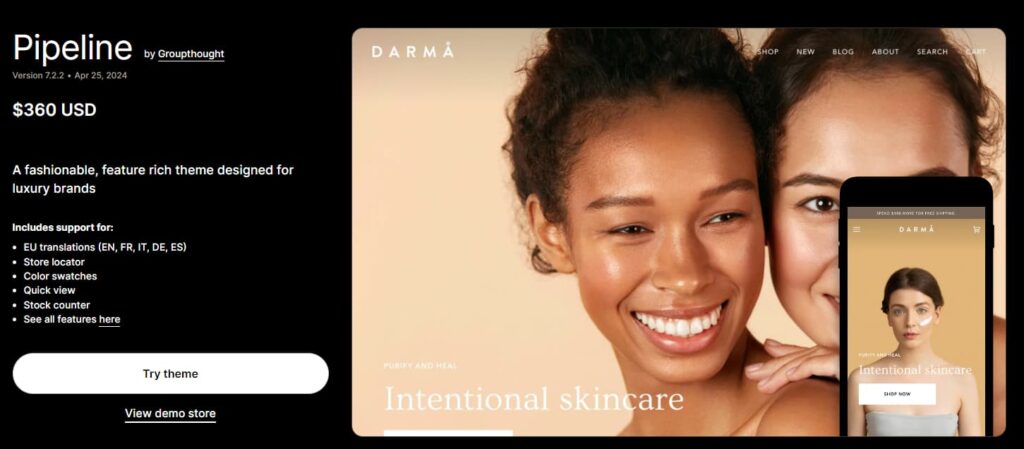
Price: $360 one-time · Recommend rating: 97% (209 reviews) · Best for: luxury and high-end product-led stores.
Theme Features
- Subcollections and filters to organize your catalog
- Drag and drop builder to adjust the store's look
- Mobile responsive and neat design
- Pre-order and quick-buy features
- Blogs, testimonials section, and FAQ pages
- Product reviews for each product available
- Translations to English, French, Italian, German, and Spanish
- Product filtering and sorting
- Recently viewed and recommended products
- Usage information and video presentations
Pros
- Image zoom for each product
- Detailed product descriptions
- Enhanced search option
- User-friendly interface
- Elegant design for luxury brands
Cons
- Limited language options
- Higher upfront cost
- Less flexibility for heavily customized layouts
Who Is The Theme For
Pipeline works best for stores where the visual presentation of the product is half the sale. It's a strong fit for:
- High-end fashion brands
- Luxury jewelry designers
- Interior design services
- Organic and handmade cosmetics
- Artisan bakery shops
2. Atlantic
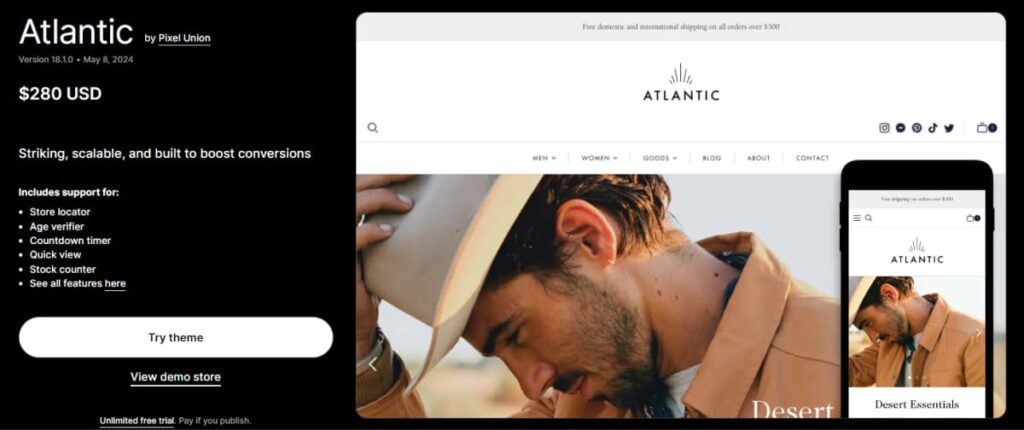
Price: $300 one-time · Recommend rating: 96% (226 reviews) · Best for: omnichannel retailers with in-store pickup.
Theme Features
- Suitable for large stores
- Can be integrated with a physical store
- Online orders and in-store pickups
- Countdown timer for limited offers
- Stock counter
- Store locator
- FAQ page and blog
- Testimonials and product reviews
- Recommended and similar products
Pros
- Works well for both small businesses and established brands
- User-friendly design and navigation
- Sticky header for easy navigation
- High-resolution images
- Scalable for growing businesses
Cons
- Little design flexibility once the template is set
- Script weight can slow down the mobile version
Who Is The Theme For
Atlantic handles multi-location, omnichannel retailers well because of its built-in store locator and pickup support. Good for:
- Jewelry designers
- Luxury DIY craft
- Elegant clothing stores
- Artistic projects
3. Retina
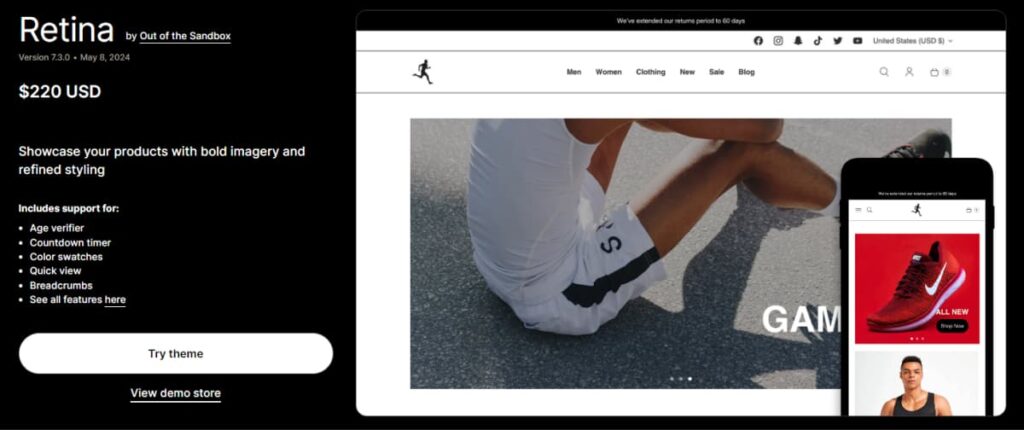
Price: $220 one-time · Recommend rating: 96% (295 reviews) · Best for: image-heavy boutiques on the lowest budget here.
Theme Features
- Built for high-volume stores
- Designed with physical store integration in mind
- Cart notes
- Recommended and similar products
- Promo banners and pop-ups
- FAQ page
- Animation and image slider
- High-res images
- Collection page navigation
Pros of Retina theme
- Sharp visuals and polished styling
- Testimonial section
- Straightforward navigation
- Free trial before publishing
Cons of Retina theme
- Less room for customization than some competitors
- Can be complex to configure for beginners
Who Is The Theme For
Retina earns its name by showcasing product images at their sharpest. It suits:
- Modern boutiques
- Sportswear stores
- Luxury cosmetic brands
- DIY and custom crafts
4. Impulse
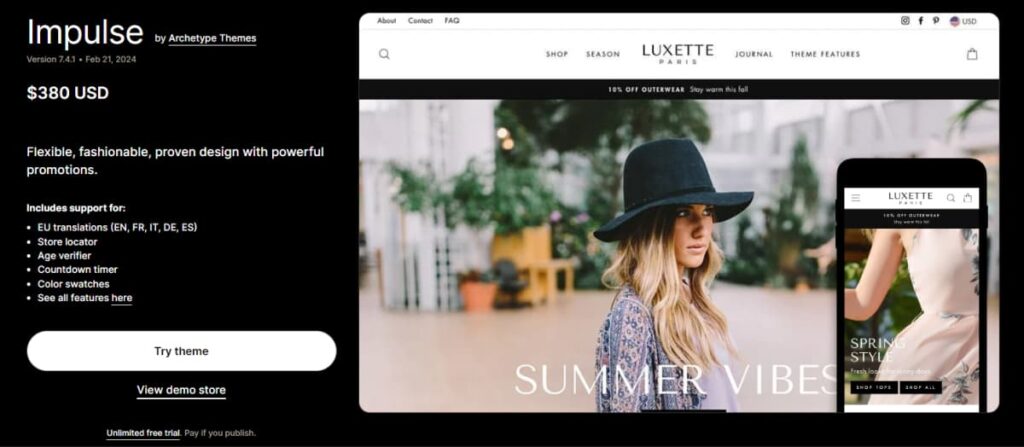
Price: $500 one-time · Recommend rating: 94% (1,291 reviews) · Best for: larger catalogs needing mega-menu navigation.
Theme Features
- Built-in promotion tools
- In-store pickups
- Product reviews and testimonials
- Product images and videos
- Before-and-after image slider
- Mega menu navigation
- Customizable contact form
Pros
- Advanced, modern design
- Vibrant visuals
- Product filtering
- Extended customization options
Cons
- Expensive for newer businesses
- Support response times can be slow
Who Is The Theme For
Impulse is a solid pick for brands that also operate physical locations and need a theme that bridges both. It fits:
- Brands with online and physical stores
- Home decor manufacturers
- Fashion and cosmetics brands
5. Eurus
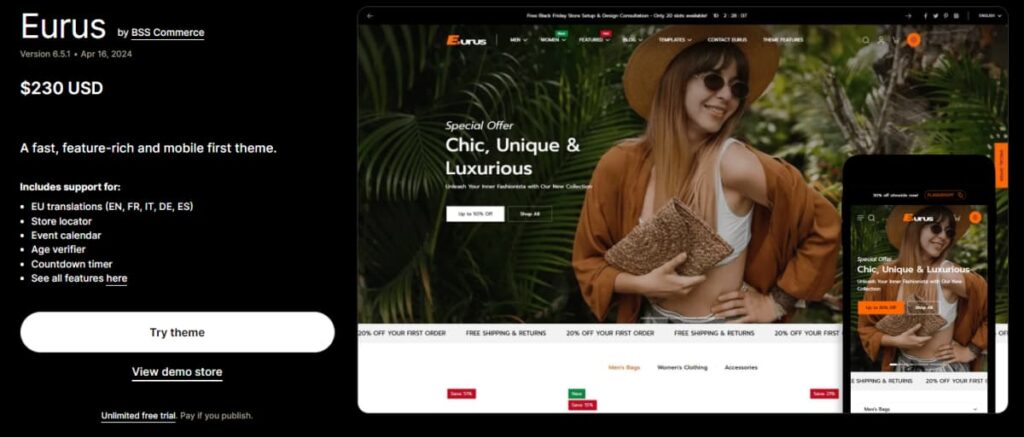
Price: $360 one-time · Recommend rating: 99% (564 reviews) · Best for: dropshippers who want to launch fast on a clean, light theme.
Theme Features
- Quick buy and in-store pickups
- Promo features including banners and pop-ups
- Stock counter
- Trust badges
- Customizable contact form
- Cross-selling options
- Image galleries and slideshows
Pros
- Responsive customer support
- Fast store setup
- Customizable to match brand identity
- Professional-looking out of the box
- Well-suited for dropshippers
Cons
- Layout can feel restrictive for stores that need unusual page structures
- Stores with very large catalogs may find the filtering less flexible
Who Is The Theme For
Eurus is our pick for stores that want to go live fast without sacrificing a clean design. Its Breeze style in particular keeps pages light. Best for:
- Dropshippers
- Brands with limited promotions
- Fashion and luxury stores
6. Boost
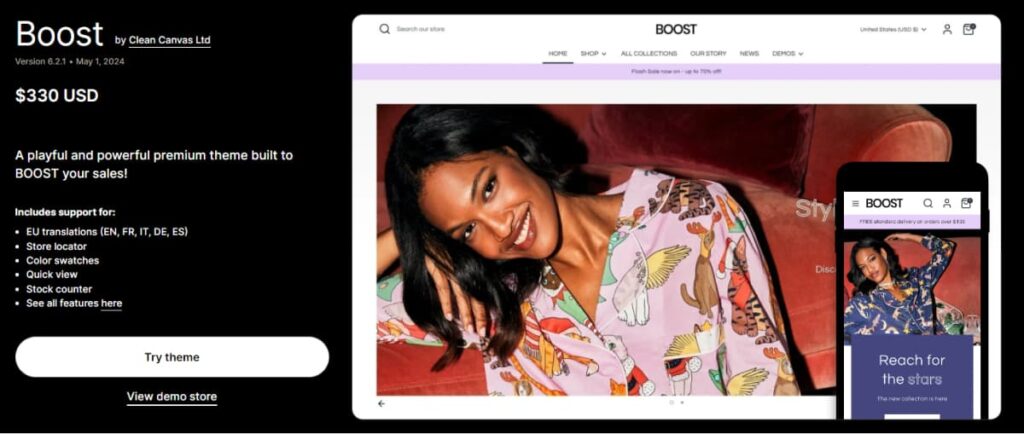
Price: $380 one-time · Recommend rating: 87% (82 reviews) · Best for: high-volume stores that want conversion apps built in.
Theme Features
- High-resolution visuals
- Customizable contact form
- Promo features (coupons, vouchers, and pop-ups)
- Store Locator
- Reviews and testimonials
- Product image zoom
Pros
- Built-in apps reduce need for external installs
- Fast and responsive
- Customizable appearance
- SEO features baked in
- Good value for the feature set
Cons
- May be expensive for small businesses
- License covers only one store
- Heavy app layer can crowd the design on smaller screens
Who Is The Theme For
Boost works well for stores that want conversion features without stacking a dozen third-party apps. A good fit for:
- High-volume stores
- Clothing stores
- Accessories brands
7. Palo Alto
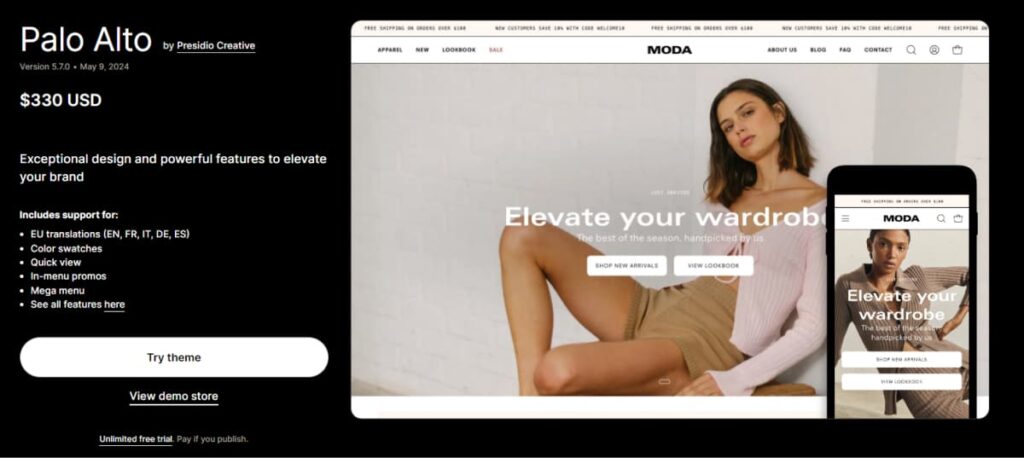
Price: $420 one-time · Recommend rating: 94% (311 reviews) · Best for: editorial, story-led brands with strong photography.
Theme Features
- Engaging layout with editorial sections
- Easy navigation
- Flexible section layouts
- Cross-selling
- Infinite scroll
- Product filtering and sorting
Pros
- Good documentation and support
- Unlimited free trial (until publishing)
- Functional mobile design
- Wishlist features
- Strong visual presentation
Cons
- Requires high-resolution images to look its best
- Minimalist design may not suit all product types
- Higher cost relative to some alternatives
Who Is The Theme For
Palo Alto's Vibrant and Luxe styles work particularly well for brands with a story to tell alongside their products:
- High-end brands
- Modern and sophisticated businesses
- Personal brands
- Skincare and cosmetics brands
- Clothing stores
8. Empire
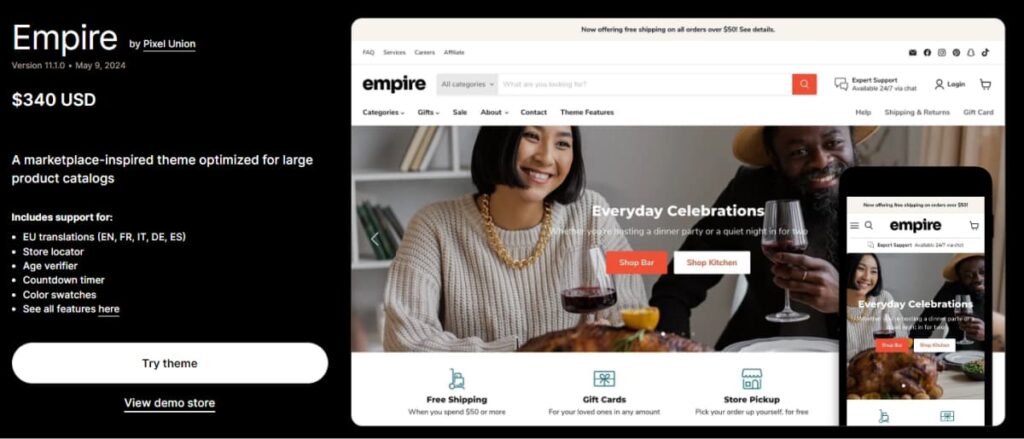
Price: $360 one-time · Recommend rating: 79% (479 reviews) · Best for: catalog-heavy stores modeled on a marketplace layout.
Theme Features
- Product discovery tools
- Product comparison
- Merchandising tools
- Upselling and cross-selling
- Dropshipping-friendly layout
Pros
- Supports large product catalogs
- Cost-saving features built in
- Third-party app integration
- Product-focused layout
- Dropshipping features
Cons
- One of the pricier options in this list
- Mobile page speed (80/100) is the lowest here and needs monitoring
- Not ideal for small stores with narrow catalogs
Who Is The Theme For
Empire is modeled after Amazon's catalog-heavy layout, so it suits stores where product depth and easy browsing matter more than editorial storytelling:
- High-growth online stores
- Home decor sellers
- High-end fashion stores
9. Prestige
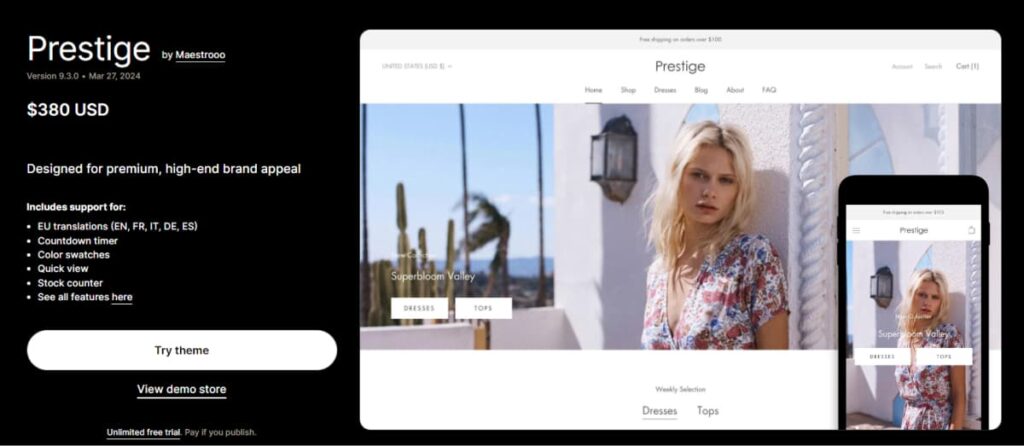
Price: $400 one-time · Recommend rating: 91% (859 reviews) · Best for: luxury brands where the experience signals quality.
Theme Features
- Luxury aesthetics
- Elegant design
- Configurable sections
- Advanced store creation tools
Pros
- Convenient for physical store integration
- Visual storytelling capabilities
- High-resolution visuals
- Fast and easy to use once set up
Cons
- Customer support response times can lag
- Some stores report loading issues when running many apps alongside the theme
- Speed can degrade on app-heavy setups
Who Is The Theme For
Prestige is the go-to for brands where the shopping experience itself needs to communicate quality. Best for:
- Luxury brands
- High-stock online stores
- Jewelry brands
- Natural cosmetics shops
10. Debutify
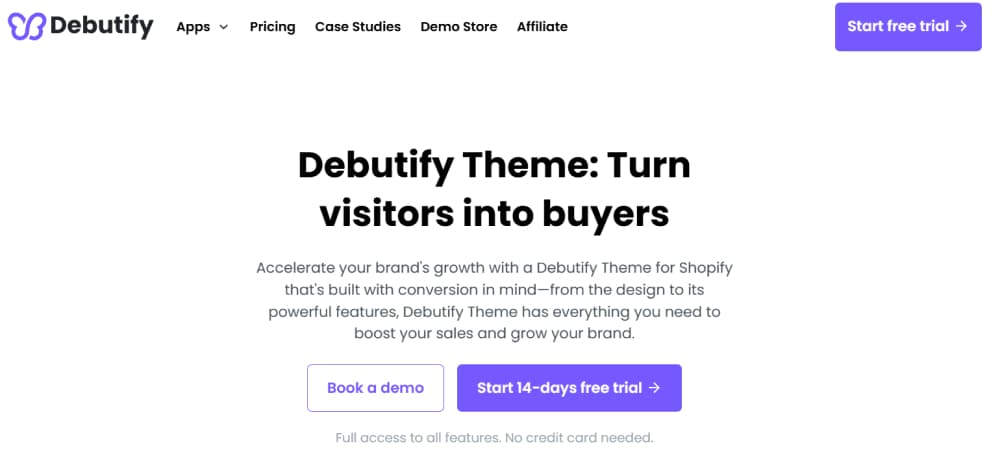
Price: free tier plus paid plans · Where to get it: debutify.com, not the Shopify Theme Store · Best for: dropshippers who want a conversion-widget library on day one.
Debutify is the one pick here that lives outside the Shopify Theme Store, so it has no Theme Store rating. It installs from debutify.com as an AI-powered, conversion-focused Shopify theme with a free tier and paid plans for the advanced widgets.
Theme Features
- AI-powered store builder
- 100+ conversion-boosting widgets
- Fully customizable
- Drag-and-drop builder
- No coding needed
- Mobile-responsive design
- Multilingual support
- Multi-store license
- Pre-built theme templates
Pros
- Beginner-friendly
- Fast store setup
- Conversion-focused features
- Works across different industries
- Fast page load speeds
- Includes premium course access and e-commerce mentorship
Cons
- Advanced widgets require a paid subscription
- Some features are only available on premium plans
Who Is The Theme For
Debutify's widget library covers most conversion tactics (countdown timers, upsell blocks, trust badges) without needing separate apps, which keeps costs predictable. Good for:
- Dropshipping businesses
- Niche online stores
- Beauty and skincare brands
- Pet supplies and accessories stores
- Health and wellness product sellers
- Fashion boutiques
- Home decor and furniture stores
What to look for in a high-converting Shopify theme
Load speed
Page speed directly affects whether visitors buy. Top-performing Shopify stores load in under 2.5 seconds, while a slow, heavy theme can take several times that. Every second of delay loses visitors before they've seen a product, and Baymard Institute research puts the average documented online-shopping cart abandonment rate around 70%, much of it driven by friction and slow, clumsy checkouts. Fast loading also helps search rankings, so a slow theme hurts twice.
Mobile deserves special attention. More than half of e-commerce traffic comes from phones, and the mobile page speed scores in our table above range from 30/100 (Retina) to 60/100 (Palo Alto and Empire). Higher is better, but a score above 50 on mobile is a reasonable bar.
Design that matches your products
Visitors decide in under a second whether a site feels right. A theme that looks out of place for your product category makes people bounce even if the price and product are perfect. High-end jewelry and budget accessories need different visual treatments. Match the theme's default style to your brand's price point and aesthetic, not just its feature list.
Conversion features built into the theme
Four features in particular separate higher-converting themes from decorative ones:
- Upsell and cross-sell sections: Themes that surface related products or bundle deals directly on product pages increase average order value without requiring extra apps.
- Urgency signals: Low-stock counters and countdown timers create purchase pressure without being deceptive, as long as the signals are real. Empire, Eurus, and Atlantic all include these natively.
- Social proof display: A visible review count and rating on product pages reduces friction for first-time buyers. Stores using review apps saw conversion rates jump from 2.43% to over 10% in documented cases when reviews were shown prominently.
- Friction-free checkout paths: The global cart abandonment rate is around 70%. Themes that support quick-buy, sticky add-to-cart buttons, and guest checkout reduce the drop-off between intent and purchase. If your theme doesn't include a direct checkout path, you can add one with our Skip to Checkout app.
What is the best converting Shopify theme?
Eurus is the one we see most often on stores with strong conversion metrics, and its 99% recommend rating on the Shopify Theme Store backs that up. Its Breeze style keeps page weight low, the layout puts product images and add-to-cart above the fold, and the built-in trust badge and stock counter features do real conversion work without extra apps.
That said, "best" depends on your catalog size and price point. Empire suits large catalogs, Prestige suits luxury brands, and Debutify suits first-time store owners who want a feature-complete setup from day one. The reliable way to decide is to see which theme a store already winning in your niche runs, then match it against your budget and product type.
Either way the decision lands on the same short checklist: mobile load speed, a layout that keeps the product image and the add-to-cart button above the fold, navigation a first-time visitor can follow without thinking, and conversion blocks built into the theme instead of bolted on as paid apps. Debutify's guide on how to build a high-converting online store on Shopify in 2026 carries that checklist past the theme itself and into product pages, collections, checkout and store speed, which is the useful order to work in when you are building a store from scratch rather than re-skinning one that already takes orders.
Frequently asked questions
High-converting Shopify themes: FAQ
Straight answers to the questions store owners ask before buying a theme and picking a platform in 2026.
How to check someone's Shopify revenue?+
You cannot see a rival store's real books, but you can build a solid estimate from public signals any visitor's browser already sees. Open the store with the free Koala Inspector Chrome extension and check its Site Traffic profile for average monthly visits, month-over-month trend, traffic sources, and top countries, then read the product catalog for price points and likely best-sellers. Traffic multiplied by a realistic conversion rate and average order value gives a revenue range. It is a modeled estimate sampled over time from public signals, never a figure pulled from the store's private dashboard, so treat it as a directional read rather than an exact number.
Shopify vs TikTok Shop vs Etsy: which platform should you sell on?+
Pick by where your buyers already are and how much control you want. Shopify is the choice when you want to own a branded store, your own checkout, your data, and full control of the theme and conversion experience, which is exactly what this roundup is about. TikTok Shop suits impulse-driven, video-native products sold to a scrolling audience, but you rent the audience and the storefront. Etsy fits handmade, vintage, and craft-supply goods where its built-in search demand does the discovery for you, at the cost of fees and a marketplace look you cannot fully brand. Many sellers run Shopify as the owned home base and use TikTok Shop or Etsy as extra channels that funnel back to it.
Which paid Shopify theme is actually worth the money?+
A paid theme earns its one-time price when its built-in conversion features replace apps you would otherwise pay for every month, and when it stays fast on mobile. From this list, Eurus is the safest all-round buy at $360 with a 99% recommend rating and native trust badges and stock counters. Impulse is worth it for larger catalogs that need mega-menu navigation and quick-buy, and Prestige is worth it for luxury brands where the look itself sells. Before you buy, check which theme a store you admire actually runs, because a proven theme in your niche is a stronger signal than a review score alone.
Is Shopify suitable for beginners?+
Yes. Shopify is one of the most beginner-friendly ways to launch an online store because hosting, checkout, payments, and security are handled for you, and every theme in this list installs and customizes through a visual editor with no code. A first-time owner can pick a theme, add products, and take a real order the same day. The learning curve is in the marketing and product research, not the store setup, which is why beginners lean on a free tool like Koala Inspector to study what already-successful stores are doing.
Which Shopify plan should I choose?+
Start on the Basic plan. It gives you the full storefront, unlimited products, and every theme in this roundup, which is all a new or early-stage store needs, and you can pay monthly or save with annual billing. Step up to the mid-tier plan when lower card-processing rates and extra staff accounts start saving you more than the price difference, usually once you are doing steady monthly volume. The Advanced plan is for higher-volume stores that want the lowest transaction rates and advanced reporting. Your theme choice does not depend on your plan, so you can upgrade later without changing your design.
Which dropshipping platform should I use for a US Shopify store in 2026?+
For a US-focused Shopify store, choose a supplier app with genuine US or nearby warehousing so delivery times stay competitive, since slow shipping is the fastest way to lose a US buyer. DSers is the standard fit if you source from AliExpress and want bulk order processing into Shopify, while Zendrop and CJdropshipping add US warehouse options and faster fulfillment for winning products. Pair whichever you pick with a fast, conversion-focused theme from this list and a quick-buy or skip-to-checkout path so the speed you gain on shipping is not lost at checkout.
How do I make my Shopify store convert better?+
Start with the basics before touching the theme: make sure your product photos show the item in use, your descriptions answer the questions a buyer would actually ask, and your return policy is visible without hunting for it. On the theme side, pick one from this list that matches your product category, keep the add-to-cart button visible without scrolling on desktop and mobile, and then use your Shopify analytics to find the exact step where visitors drop off before changing anything else.
Written by
Koala Team
Koala Apps Editorial Team
The Koala Team is the crew behind Koala Inspector. We test tools, track what is selling across Shopify, and turn it into practical roundups and reference guides for store owners and dropshippers.