Guide to Finding Profitable Dropshipping Niches in 2026
 By Ana GelevskaJanuary 13, 2025 · Updated June 5, 2026
Dropshipping is a real business model with a global market valued at $365.67 billion in 2024 and projected to reach $1.25 trillion by 2030, a CAGR of about 22%. The barrier to entry is low: no inventory, minimal upfront capital, and you can operate from anywhere. But low barriers cut both ways. The industry has become more saturated, and stores without a focused niche rarely last. Only about 10-20% of dropshipping businesses reach lasting profitability, and most of the failures trace back to the same root cause: picking products nobody has a specific reason to buy from you.
Choosing the right niche changes that math. This guide covers the 20 most profitable dropshipping niches for 2026, five to avoid, and the practical steps to validate whichever direction you choose.
What is a Dropshipping Niche?
A dropshipping niche is the segment of the market you focus on when choosing products. Instead of listing a random assortment of items, you build a store around a defined category: pet supplies, kitchen gadgets, hiking gear, whatever fits a specific buyer.
A tight niche lets you:
- Write marketing copy that speaks to one audience rather than nobody in particular
- Build a customer base that actually comes back
- Stand out against stores that sell everything and feel like they sell nothing
The range of possible niches is genuinely broad, from men's fitness gear to consumer electronics to hobby supplies. That variety is one of the few structural advantages dropshipping still has over other business models.
The 20 Most Popular Dropshipping Niches in 2026
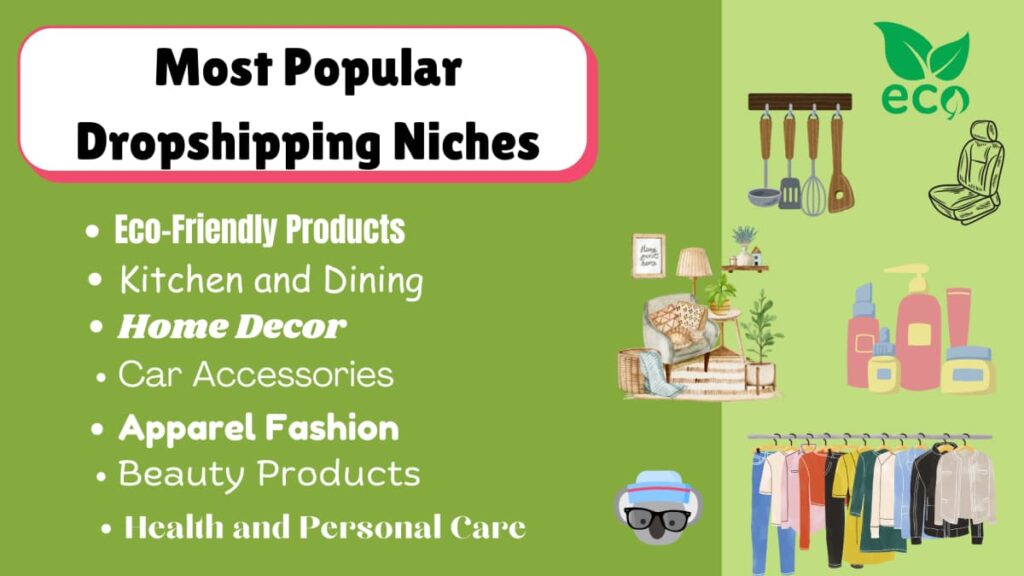
A few forces have reshaped which niches actually perform in 2026:
- Sustainability expectations: Consumer preference for eco-friendly products has moved from niche to mainstream over the past decade, and it keeps shifting the product mix.
- Post-pandemic lifestyle changes: Remote work, home fitness, and home cooking all saw permanent upticks in adoption, not just pandemic spikes.
- Social commerce: A large share of consumers now discover new products through short-form video on TikTok, Instagram Reels, and YouTube Shorts. Products that photograph and demo well have a built-in distribution edge.
- Personalization demand: Buyers increasingly want something made for them, not something off a shelf. Custom and personalized products carry higher margins and lower price sensitivity.
Here are 20 of the most profitable and trending dropshipping niches for 2026:
1. Sustainable and Eco-Friendly Products
What used to be a niche is now a default expectation for a lot of buyers. Reusable items, biodegradable packaging alternatives, and eco-conscious personal care all fall here, and the category punishes vague claims: shoppers who care about this also check whether you can back it up. The wider green-products market is expected to reach $134.9 billion in 2025.
2. Kitchen and Dining
Home cooking never really goes out of style, which makes this one of the more durable niches on the list. Air fryers, smart appliances, and good-looking tableware sell steadily, pushed along by the food-content culture on social media. The products that beat the average are the ones that solve a real kitchen annoyance or photograph well in a flat-lay.
- Market Value: $86.73 billion in 2024.
3. Home Decor
The reason home decor works is repeat purchases. Someone who buys a throw pillow comes back for a wall print, then a lamp, then a candle holder. Minimalist furniture, smart lighting, and personalized decor stay in demand year-round. Statista puts the global market at $161 billion by 2029.
4. Car Accessories
Two very different buyers shop this niche: enthusiasts upgrading for performance or looks, and ordinary drivers who just want something more convenient. Seat covers, organizers, phone mounts, dash cams. Every new wave of car tech creates demand for fresh compatible accessories, which is part of why the market was already $500 billion in 2022.
5. Special Clothing and Apparel Fashion
Fashion is the largest single category in dropshipping, over 34% of revenue in 2024, and also the easiest to get wrong. Broad "fashion stores" compete against giants and lose. The stores that win pick a sub-genre and own it: athleisure, sustainable streetwear, anime-inspired pieces, a specific subculture. The global apparel market is forecast at $2 trillion by 2028, but you are only ever fighting for one slice of it.
6. Beauty Products
Beauty is one of the few dropshipping categories with stable, year-round demand; Google Trends shows it barely dips seasonally. Organic and cruelty-free lines carry a premium and haircare is growing fast. The catch is regulation: compliance rules differ a lot by country, and some sub-niches need certification before you can legally sell. Market size sits around $758.4 billion by 2025.
7. Fitness and Sports Products
The home-workout shift that started post-2020 didn't reverse. Resistance bands, yoga mats, adjustable dumbbells, fitness trackers, all staples, and none of them need a fitting room, which suits dropshipping well. New training trends keep opening fresh product angles.
- Market Value: $324 billion by 2028.
8. Health and Personal Care
Wellness supplements, organic personal care, and health-monitoring products are all on the rise, and the personalization angle is the interesting part: DNA-based supplements and custom skincare are shifting from novelty to expectation for some buyers. Sourcing quality matters more here than almost anywhere else, because people put these products on or in their bodies. Statista projects $186 billion by 2029.
9. Jewelry
Few niches span this wide a price range, from sub-$10 fashion pieces to high-ticket custom work. Personalized and customizable jewelry does especially well around gifting peaks; December, Valentine's Day, and Mother's Day together drive a large chunk of annual revenue. At the upper end, ethical and sustainable sourcing is turning into a real selling point. The market is forecast at $357 billion by 2028.
10. Child and Baby Products
Parents pay up for anything they believe is safe, educational, or genuinely well made, and the demand never dries up because new parents keep arriving. Eco-friendly baby clothing, Montessori-style toys, and minimalist nursery items are the strongest sub-areas. The thing to watch is regulation: children's products face stricter safety requirements in most markets, so the $226 billion market comes with compliance homework.
11. Pet Supplies
Pet owners spend on their animals through good times and bad, and the spending keeps climbing. Grooming supplies, specialty food, interactive toys, and pet tech (GPS trackers, auto-feeders) are all active. The $147 billion pet food market alone shows how deep the wallets go. For sourcing, see our pet supplies supplier guide.
- Market Value: $133 billion in 2023.
12. Remote Work Essentials
Remote work settled into a permanent reality for a large share of knowledge workers, which turned ergonomic chairs, monitor stands, desk organizers, and noise-canceling peripherals from a fad into a baseline need. The appeal for dropshippers is the repeat demand: people upgrade home offices over time instead of buying once and stopping. Forecast at $58 billion by 2027.
13. Fitness and Exercise Equipment
Worth separating from the broader fitness niche because the economics differ. Connected bikes, programmable treadmills, and recovery tools like massage guns sell at much higher price points than band-and-mat accessories, so average order value, and margin, runs well above the dropshipping norm. The exercise-equipment segment is expected to reach $46 billion in 2025.
14. Arts and Crafts Supplies
DIY has a small but loyal, repeat-buying audience. Craft subscription boxes, upcycling materials, and specialty tools all move well, and because the audience is so engaged it does a lot of your marketing for you through community sharing. Picking a tight sub-niche, resin crafts, leatherworking, a specific embroidery style, beats running a generic art-supply store. The materials market is expected to surpass $30 billion by 2030.
15. Mobile Phone Accessories
High volume, low average order value, and constant churn as people upgrade phones. Customizable cases, wireless charging pads, lens add-ons, screen protectors. Everything sells, but everything is also commoditized, so differentiation through design and presentation is the whole game.
- Market Value: $84 billion in 2023.
16. Gaming Accessories
Gaming went mainstream, and the audience spends. Specialized controllers, headsets, gaming chairs, capture cards. The bonus is discovery: the Twitch and YouTube gaming ecosystem surfaces products without you paying for ads. VR peripherals are early-stage with strong growth projections. The accessories market is expected to reach $26 billion by 2026.
17. Hobby Items
Birdwatching, model building, scrapbooking, puzzle collecting; narrow hobbies with devoted audiences that pay for quality. The advantage is that most general dropshippers ignore them, so competition stays thin. Mindfulness-leaning hobbies like gardening, journaling, and jigsaw puzzles have grown steadily since 2020.
- Market Value: $115 billion in 2024.
18. Travel Accessories
Travel is fully back past its pandemic lows. Luggage organizers, packing cubes, travel-size toiletry containers, and eco-friendly gear are all active categories, and the sustainable corner (reusable containers, eco-friendly luggage) pulls a buyer who spends above average. Market forecast: $147 billion by 2028.
19. Gardening and Home Farming Supplies
Home gardening spiked in 2020-2021 and kept most of the gain. Hydroponic kits, balcony-garden products, and urban-farming gear cater to apartment dwellers with no yard, while organic seeds, composting tools, and raised-bed kits sell to buyers motivated by sustainability and the plain satisfaction of growing something. Forecast at $128 billion by 2033.
20. Personalized Items
Custom mugs, engraved jewelry, monogrammed bags, print-on-demand gifts: all carry higher perceived value than the off-the-shelf version, and returns run lower because the item was made for one specific person. It also pairs cleanly with Shopify's print-on-demand integrations, so the operations stay simple. The personalized-gifts market is expected to reach $142 billion by 2032.
5 Dropshipping Niches to Avoid
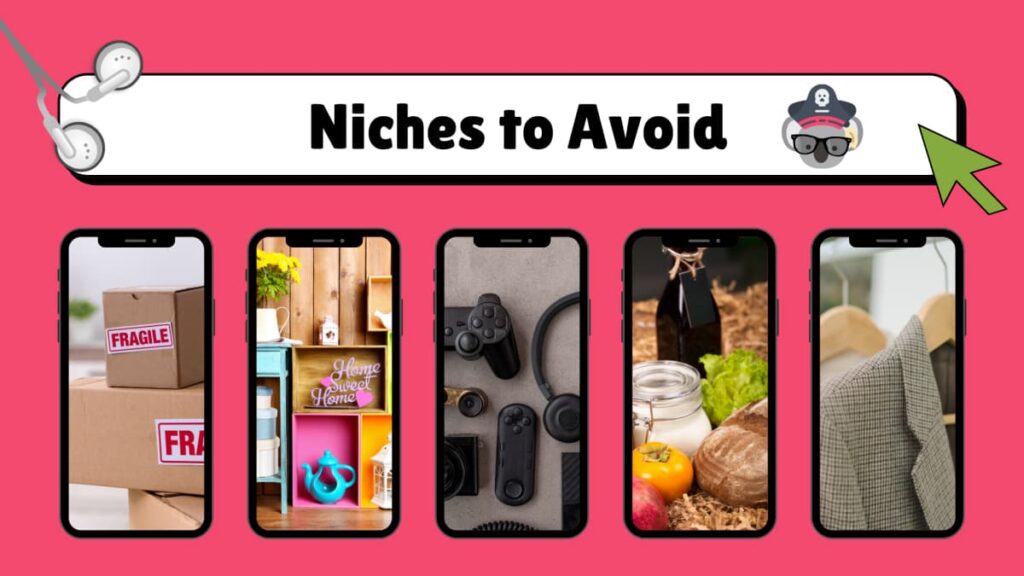
Some categories are structurally hard for dropshippers regardless of how well you execute. These five appear frequently in failure stories.
1. Basic Clothing and Apparel
Generic clothing stores are one of the most competitive and margin-thin categories in all of e-commerce. Without a specific angle, whether that is a defined sub-culture, a sustainable material focus, or a niche fit (plus-size athletic wear, for example), there is no reason for a buyer to choose you over a better-known alternative. The plus-size fashion market alone has demand that most retailers underserve, but that requires genuine positioning, not a general store.
2. Fragile Items
Glassware, ceramics, and anything else that breaks in transit creates a customer service problem that scales badly. Dropshipping suppliers in China (the most cost-effective sourcing option for most Western stores) ship products 6,000 to 9,000 miles. Unless your supplier uses genuinely good packaging and has a reliable track record, breakage rates eat into your margins and your reviews.
3. Furniture Items
Oversized, heavy items are expensive to ship in every direction, including returns. A $200 sofa might cost $80 to ship and $80 to return, leaving you with almost nothing. Furniture can be a viable niche if you find products with real differentiation and healthy margins, but the economics are punishing for anyone who does not price carefully.
4. Electronics
Thin margins, fast product cycles, and high return rates make electronics a difficult niche for new dropshippers. A new phone model or laptop refresh can make an entire product line obsolete in months. Quality control is also harder to manage at a distance, and customers have high expectations for technical products. That said, niche electronics accessories (gaming peripherals, specific audio gear) can work if you find a product with real demand and a reliable supplier.
5. Seasonal Items
Holiday decorations, summer-specific products, and other seasonal items can generate strong short-term revenue but leave you with marketing infrastructure and supplier relationships that sit idle most of the year. If a seasonal product line flops, you have almost no recovery window before the season ends.
Which Dropshipping Niche is Most Profitable?
Profitability depends on three things in combination: demand, competition, and your ability to market to a specific audience. No niche is universally most profitable.
That said, some categories currently offer the best combination of growing demand and manageable competition: sustainable products, personalized items, fitness equipment, and pet supplies all appear in this position. High-ticket niches, covered in detail in our high-ticket dropshipping guide, offer better per-order margins but require more patient sales cycles.
You can use tools like Google Ads, Google Trends, and Koala Inspector to test demand and spot what competitors are already selling before you commit.
How Can You Find the Most Profitable Dropshipping Niches?

Finding a good niche requires actual product research, not just browsing a list. Here is how to approach it systematically.
Use Research Tools to Know Your Audience & Competition
1. Koala Inspector
Koala Inspector is a Chrome extension for analyzing Shopify stores. It shows what products competitors sell, what apps they run, and which products are trending within a store. If you are considering a niche, you can use Koala Inspector to see which stores are already operating in it, how they position themselves, and what their product catalog looks like. That competitive picture shapes whether a niche is worth entering and what angle to take.
2. Google Trends
Google Trends shows how search interest for a product or category has moved over time. It is useful for distinguishing genuine sustained demand from a short-term spike. A niche that has been steadily growing over three to five years is more reliable than one that peaked six months ago.
3. Google Keyword Planner
Keyword Planner gives you search volume estimates for specific terms. High search volume for a keyword tells you buyers are actively looking. Related keyword suggestions can point toward sub-niches with less competition than the main category.
4. Ahrefs or Semrush
Both tools show search volume, keyword difficulty, and what competitors rank for. They can identify gaps, meaning product categories or buyer questions that competitors are not covering well. This is particularly useful for finding positioning angles in otherwise crowded niches.
Look for Trending Products on Social Media or Online Marketplaces
TikTok, Instagram, and Pinterest surface products before they show up in search data. A product going viral on TikTok today may not appear in Google Trends for another three months. Checking Amazon bestseller lists and Etsy trending items is also a practical signal. The goal is to find growing demand before the ad costs spike.
Passion and Expertise
Selling in a niche you understand gives you a real edge in content and marketing. If you know the product, you write better descriptions, spot bad suppliers faster, and understand what actually matters to your buyers. That knowledge shows up in customer trust and repeat purchases.
Calculating Potential Profit Margins
Before entering any niche, calculate your realistic margins. Include product cost, shipping, transaction fees, returns, and ad spend. A product that costs $10, sells for $35, and costs $8 in ads with a 3% conversion rate may look profitable in theory but lose money when returns are factored in. High-ticket niches often have better margin math even accounting for lower conversion rates.
Testing and Validating Your Niche

The right approach before building out a full store: validate with small tests before committing significant time or money.
1. Running Test Campaigns
Launch Small-Scale Ad Campaigns
Start with modest budgets on Facebook Ads or Google Ads, targeting the specific demographics most likely to buy in your niche. Watch click-through rates and conversion rates closely. A CTR below industry average for your ad format tells you the product or the angle is not resonating before you have spent much.
A/B Testing
Run variations of your ads to test different headlines, images, and calls-to-action. Two ads for the same product can have very different results based on how the offer is framed. Test one variable at a time to know what actually moved the needle.
Evaluate Conversion Rates
Track how well traffic converts to purchases. Industry benchmarks for dropshipping stores average around 1-3%. Below 0.4% consistently usually means either the product, the price, or the targeting is off. High click-through but low conversion often points to a product page problem rather than a traffic problem.
2. Gathering Customer Feedback
Surveys and Polls
Short surveys to early customers, asking what brought them to the store and what made them buy (or almost not buy), give you data that ad dashboards cannot. Specific product questions are more useful than general satisfaction scores.
Customer Reviews and Testimonials
Reviews identify patterns. Consistent complaints about shipping time, product quality, or sizing point to supplier or positioning issues that need fixing before you scale ad spend. Consistent praise about a specific product feature tells you what to emphasize.
Focus Groups
A small group of target customers reviewing your product selection and store experience can surface problems before they affect real sales. Qualitative feedback from five specific buyers often reveals more than a survey of fifty generic respondents.
3. Analyzing Sales Data
Track Sales Performance
Once orders are coming in, monitor which products sell and which do not. Look at sales volume, average order value, and whether customers are buying once or returning. Products with strong repeat purchase rates are worth investing more in; products that sell once and see no returns may indicate lower satisfaction.
Assess Profit Margins
Calculate actual margins from real orders, not projections. Include chargeback costs, return shipping, and supplier price changes. If margins are lower than expected, look at sourcing alternatives before changing your prices.
Monitor Inventory Levels
Even as a dropshipper, you need visibility into your suppliers' stock. Running out-of-stock ads is one of the most avoidable ways to burn ad budget. Keep supplier stock levels visible and pause products that are low on inventory before customers buy something that cannot ship.
4. Refining Your Niche Selection
Adjust Based on Data
Your first niche hypothesis will probably need adjustment. Use the data from test campaigns, early sales, and customer feedback to sharpen your focus. Sometimes this means narrowing (from "fitness equipment" to "home yoga gear"), sometimes expanding, and sometimes pivoting to a different product line entirely.
Expand or Pivot
If a niche shows real traction, scale the marketing and expand the product range deliberately. If it does not perform after a genuine test with real budget and real traffic, cut your losses and move to the next hypothesis. Most successful dropshippers tested multiple niches before finding one that worked.
Continuous Improvement
The niche you pick is not a permanent decision. Demand moves, and the open lane you found this year can fill up fast once other sellers notice it. Keep an eye on Google Trends and on what competitors are adding, refresh your product mix when the numbers move, and watch for sub-niches splitting off inside your category.
Where to start
If you only do one thing before committing, validate demand with real spend on a handful of products rather than trusting a list, this one included. Pick a category you actually understand, run a small test, and let the conversion and margin numbers decide.
Koala Inspector shortens the research half of that. You can look at what successful Shopify stores in a niche are already selling and how they position it, so you walk into a test knowing what is working instead of guessing.
Written by
Ana Gelevska
eCommerce Content Writer
Ana Gelevska is a content writer with more than five years of experience creating content for eCommerce brands and global clients. She digs into each topic and the people it is for, then turns it into clear, useful articles that Shopify sellers and dropshippers can act on.
Connect on LinkedIn