What Apps Do the Top Shopify Stores Actually Run? Here's How to Check Any Store
 By Assaf ShalinJune 9, 2026 · Updated June 11, 2026
Top Shopify stores do not run hundreds of apps. They run a handful, usually one from each of a few categories: reviews, upsell and cross-sell, email and SMS, and a page builder. The fastest way to see the exact apps any store runs is to open it in Chrome with the Koala Inspector extension and check the Apps tab. This post covers which categories matter, why piling on apps backfires, and the step-by-step for checking any store.
If you have ever opened a store doing real numbers and wondered what is powering it, you are asking the right question. The apps a store chooses tell you how it collects social proof, how it raises order value, and how it brings people back. But the answer is not "install the same 30 apps." It is narrower than that, and it is checkable.
The app categories top stores actually rely on
Browse enough successful Shopify stores and the same four jobs keep showing up. The brand names differ, the categories rarely do.
- Reviews and social proof. Star ratings, photo reviews, and review widgets on the product page. A store with real momentum almost always has a review system collecting and displaying customer feedback, because proof on the page is what turns a cold visitor into a buyer.
- Upsell and cross-sell. Post-purchase offers, bundles, "frequently bought together" blocks, and cart add-ons. These exist to lift average order value, which is one of the cheapest ways to grow revenue without buying more traffic.
- Email and SMS. A capture popup plus a flow tool that sends abandoned-cart, welcome, and win-back messages. Repeat sales are where margin lives, so stores that are scaling almost always have an owned-audience channel running.
- Page builders. Custom landing pages and product pages that go beyond the default theme. Stores testing offers hard tend to use a builder so they can ship new page variants quickly.
Those four cover most of what you will see on a store that converts. The useful question is not "do they have a reviews app" but "which one, and how have they set it up." That is where checking a specific store beats reading a best-of list.

The real question: which apps actually pay for themselves
Here is the part most app roundups skip. Every app you add is a monthly bill and, often, a small tax on your store's speed. The honest version of "what apps should I run" is "which apps actually pay for themselves," and the answer is not the same for every store.
When store owners ask which apps are genuinely must-have, the thread fills with dozens of competing suggestions, which is exactly the trap: it is easy to end up installing far more than you need. The apps that matter are the ones that earn their keep, and stacking too many of them starts to drag the store down rather than help it. App bloat slows the storefront, and a slower store loses sales it would otherwise close. That is the trade-off behind every install: the feature has to add more than the cost and the loading time it brings with it.
This is why copying a competitor's whole app stack is a bad idea. A store doing eight figures can absorb apps you cannot. What you want is to see what category of tool a store leans on, then pick the lean version that fits your stage. Watching what a winning store runs is research, not a shopping list.

Why choosing apps is so hard in the first place
If picking the right apps feels harder than it should, that is not you. The Shopify App Store holds thousands of apps, and sorting through them to find ones that are compatible, well-built, and worth the price is a genuine pain point for sellers. Two apps can promise the same thing and behave nothing alike. One conflicts with your theme, one slows your checkout, one quietly charges per order.
Given that, "what is the top store in my niche running" is one of the most efficient research questions you can ask. Instead of testing hundreds of options yourself, you look at the handful a store that already works has settled on, after it did the testing. You still pick the version that fits your budget and stage, but you start from a short list someone successful has already validated.
How to check the exact apps any Shopify store runs
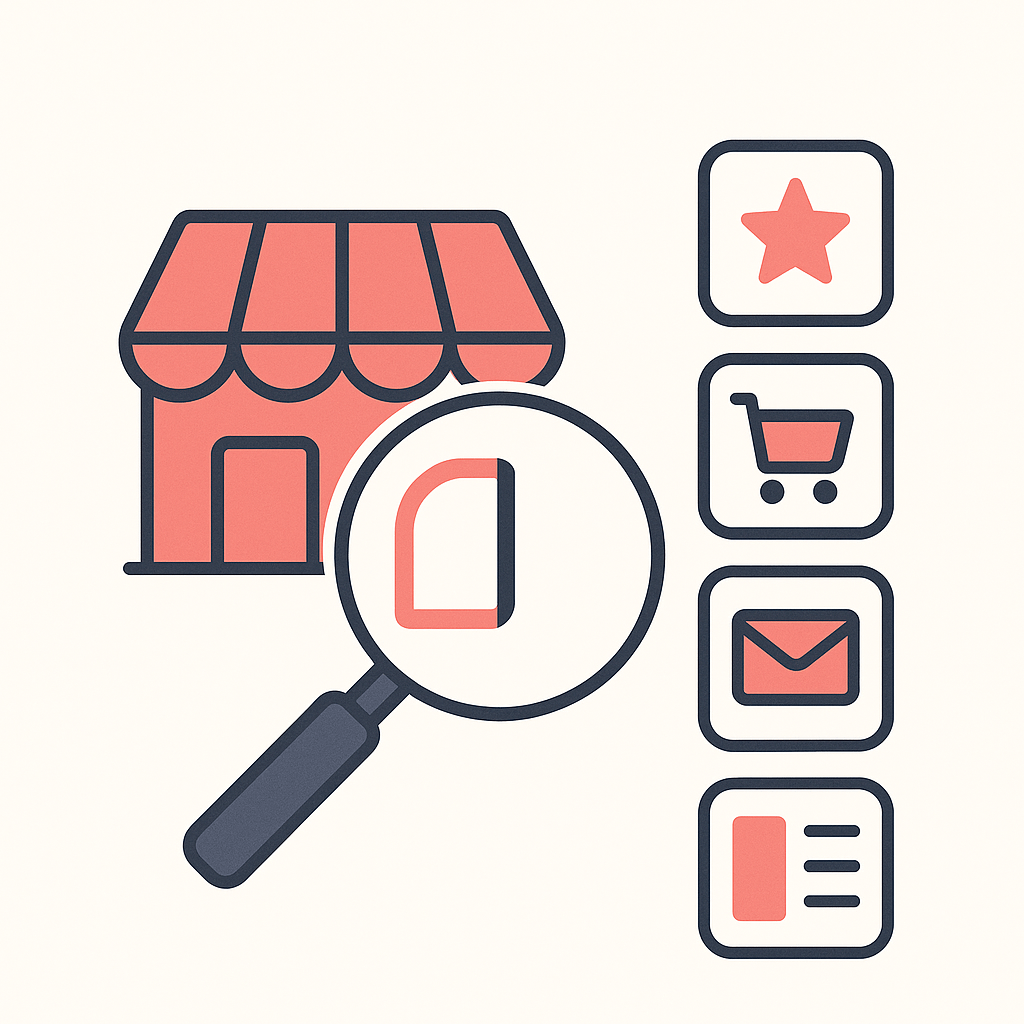
This is the actionable part. Koala Inspector is a free-to-start Chrome extension with a built-in Shopify app detector. Open any Shopify store and it reads what the store already loads in your browser to list the apps that store actually runs, so you are reading facts instead of guessing. Here is the step-by-step.
-
Install Koala Inspector. Add it to Chrome from the Chrome Web Store. It runs in your browser, so there is nothing else to set up.
-
Open the store you want to check. Go to any Shopify store you are curious about: a competitor, a brand you admire, or a store you found while researching. The extension works while you browse the live site.
-
Click the Koala Inspector icon. The panel loads the store's full breakdown, including its theme, estimated traffic, running ads, product list, and installed apps.
-
Open the Apps tab. This is the list you came for. It shows the Shopify apps the store has installed, so you can see which review tool, upsell app, email platform, and page builder it relies on.
-
Read the stack by category. Group what you see into the four jobs above: reviews, upsell, email and SMS, page builder. Note which app fills each role. The categories tell you the store's strategy; the specific apps give you names to evaluate against your own budget.
-
Compare a few stores before you decide. Check three or four strong stores in the same niche. When the same app keeps showing up across stores that are clearly doing well, that is a stronger signal than any single store or any best-of article. Then choose the lean version that fits where you are now, and keep your own stack tight so you do not buy back the speed problem you were trying to avoid.
The whole process takes a couple of minutes per store and replaces a week of guesswork. You learn what category of tool winning stores invest in, you get real app names to research, and you avoid the bloat that comes from installing things just because a competitor has them.
What to do with what you find
Seeing a store's apps is the start. The payoff is matching the category to your own gap. If every strong store in your niche runs a reviews app and you do not, that is your first move. If they all use a page builder and you are stuck on the default theme, that tells you where they are testing. Use the app detector to map the pattern across several stores, pick the leanest tool that does the job, and add only what earns its place.
That is the difference between copying a stack and learning from one. The top stores got there by running a focused set of apps that pay for themselves, not by installing everything. Now you can see exactly what they chose, and decide for yourself.
For a wider look at reading a competitor's whole setup, see our guide on how to use Koala Inspector.
FAQ
How can I see what apps a Shopify store uses?
Open the store in Chrome with the Koala Inspector extension installed, click the extension icon, and open the Apps tab. It reads what the store already loads in your browser and lists the Shopify apps it runs, such as review widgets, upsell tools, email capture, and page builders, so you are reading facts instead of guessing.
Which apps do successful Shopify stores use?
Most high-performing stores cluster around a few categories rather than installing everything. The common set is a reviews app for social proof, an upsell or cross-sell app to raise average order value, an email and SMS tool for repeat sales, and a page builder for custom landing and product pages. The exact app in each category varies by store, which is why checking a specific competitor beats following a generic list.
Does running more Shopify apps hurt store performance?
It can. Every app adds code that runs on your storefront, and too many can slow the site down. A slower store loses sales, so the goal is to keep a focused stack where each app clearly earns more than it costs in money and load time.
Written by
Assaf Shalin
Co-founder & Developer, Koala Apps
Assaf Shalin is a co-founder of Koala Apps and one of the developers behind Koala Inspector. He builds the tools that let Shopify sellers see what is actually working in other stores, from installed apps and themes to best-selling products. On the blog he covers the technical side of store research: how competitor research really works, what public store signals can and cannot tell you, and how to turn them into decisions.
Connect on LinkedIn