How to Upsell on Shopify
 By Ana GelevskaNovember 3, 2022 · Updated June 4, 2026
How do you upsell on Shopify, with and without apps? If you want to lift your store's AOV and give customers a reason to spend more, upselling and cross-selling are two of the most direct levers you have. One real-world case tracked $8,873.16 in additional sales from upsell funnels alone, with AOV climbing roughly 15% (from $176.40 to $203.00). Putting together relevant additional offers is a good way to sell more without necessarily spending more on acquisition. Here's how the mechanics work and how to approach it practically.
What is upselling, and how does it differ from cross-selling?
Upselling is offering a customer a better or higher-priced version of what they're considering. Cross-selling means recommending something different but related to what they're already buying. In practice, "upselling" often covers both techniques, plus bundling.
Why bother?
If your store has no upsell offers at all, you're leaving value on the table. The main reasons to add them:
- AOV lift. When a customer accepts an upsell, that order gets bigger. Sustained over time, that compounds into a meaningfully higher average order value, one of the key numbers for assessing store health.
- Better unit economics. More items in the same order means the same fulfillment and delivery costs spread across more revenue. Add up marketing costs per order and the math gets more interesting each time an upsell lands.
- Repeat business. Relevant, well-timed offers signal that you understand what the customer actually needs. That builds more trust than pushing unrelated products just to pad the cart.
What you can do on Shopify without apps
There are a couple of upsell-adjacent moves you can make on Shopify without installing anything:
- Product recommendation blocks. You can add a section on product pages (below the description), collection pages, or the homepage that surfaces related products or bestsellers. Shopify lets you choose specific products manually or pull from the most popular ones.
- Bundles (manual). If a few products naturally belong together, you can group them and present them as a bundle. Without a dedicated app it takes some setup work, but it's doable by listing the bundle as a standalone product or variant.
These are useful starting points, but they don't give you targeting, timing control, or conversion tracking. For that you need a dedicated upsell app.
Upsell strategies with a dedicated Shopify app
The real flexibility comes from apps that let you control when an offer appears, what triggers it, and how it looks. Here are the main strategies and where they fit in the buying journey:
Pre-purchase upsells on product and collection pages
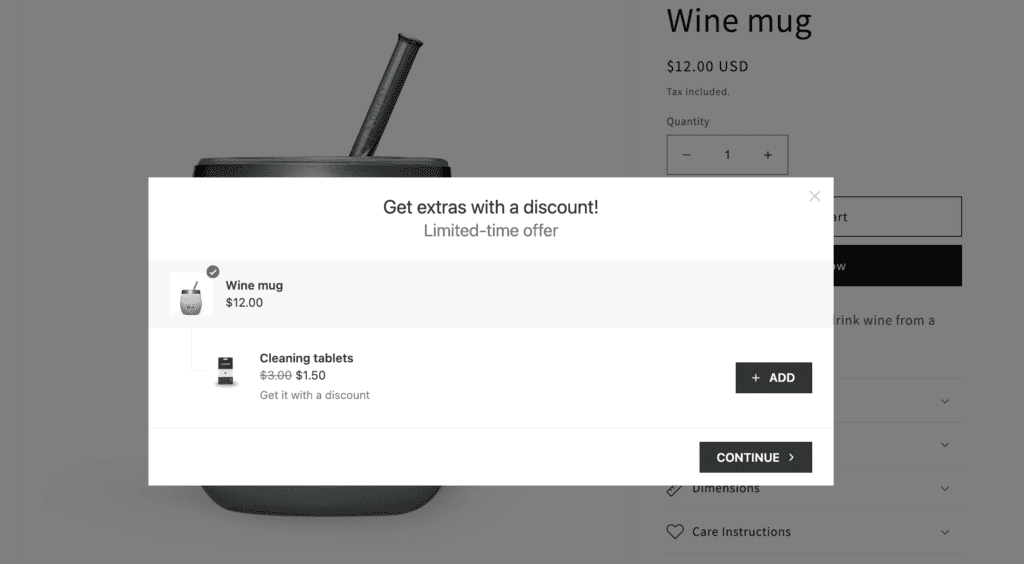
Some offers convert best before the customer has committed to buying. When someone adds an item to their cart, you can show them a relevant upgrade or a companion product. For example: if a customer adds an e-reader, you might show a version with a longer battery, or offer a protective case as a cross-sell. A good upsell app lets you stack multiple offers and set the order they appear.
Service add-ons
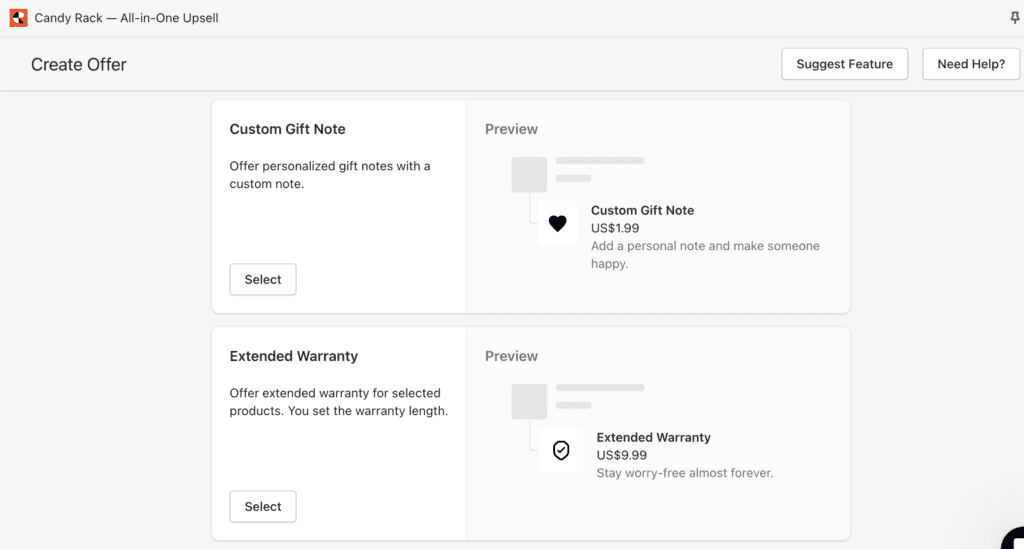
Several ready-made templates cover service-type upsells: extended warranties, gift wrapping, priority support, or a custom engraving option. These are often high-margin since they don't require additional inventory, and they're easy to configure once and leave running.
Post-purchase upsells on the thank-you page
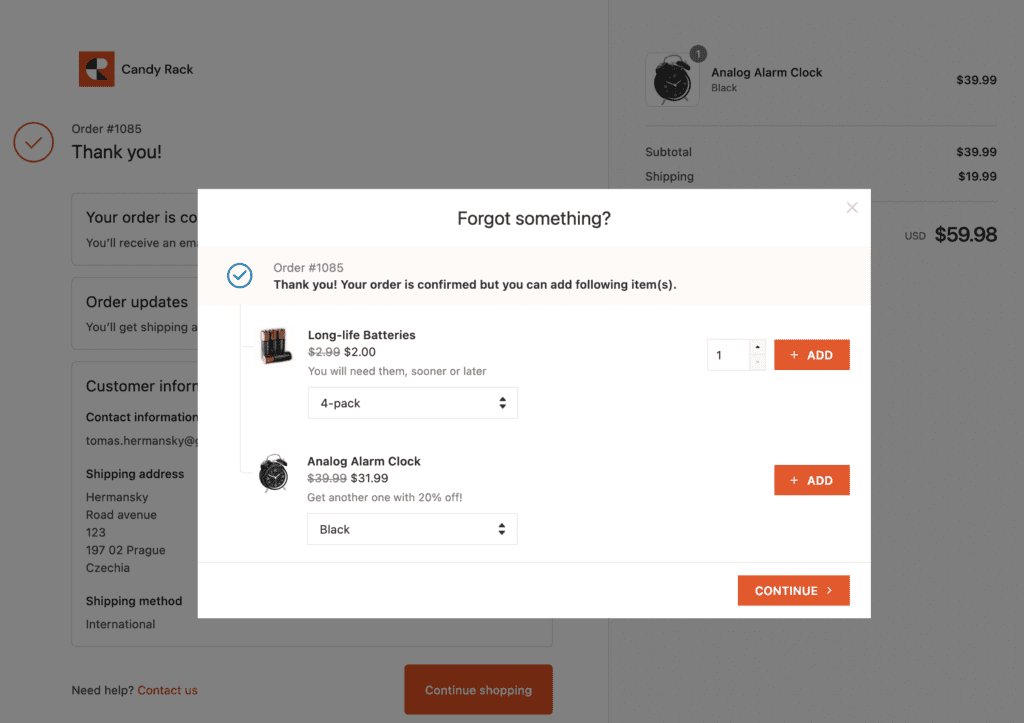
Post-purchase is where many merchants see the highest conversion rates on upsell offers. The customer has already committed, so there's no risk of the offer causing them to abandon the original purchase. Native post-purchase upsells (displayed after checkout completes) extend the existing order rather than creating a new one, which keeps fulfillment clean. Real data puts the AOV boost from post-purchase offers at up to 10%, and some operators report offering 15-20% discounts at this stage to drive acceptance.
AI-recommended cross-sells
If you're not sure which products to pair, most upsell apps can pull from Shopify's product recommendation algorithm to make the call automatically. This works well for stores with broad catalogs where manual pairing isn't practical.
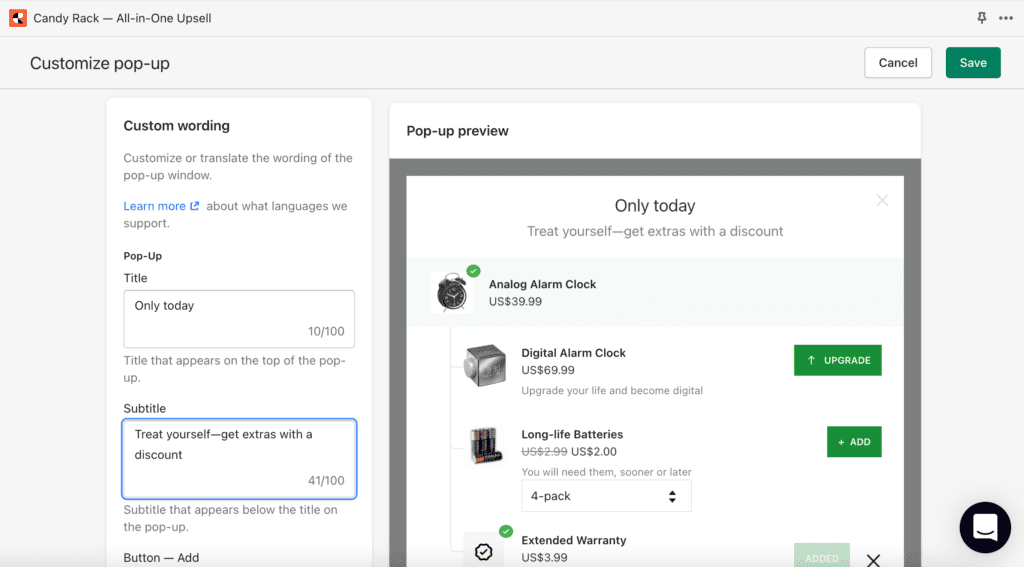
You can also customize how offers look, track which ones convert, and adjust offers over time without touching your theme code.
One more lever: sending customers straight to checkout
Our skip-to-checkout app removes the cart page entirely, taking customers directly to Shopify's checkout after they add a product. That cuts a friction point and opens up checkout-native upsell placements at a stage where intent is already high.
Picking the right upsell app
When evaluating upsell apps, the main things to check:
- Which stages they support (pre-purchase, cart, post-purchase, thank-you page)
- Whether you can stack multiple offers and control the display order
- How pop-up styling and copy can be customized
- Whether offers extend the existing order (post-purchase) or create a new one
- What analytics are available so you can see which offers are actually converting
Start with one or two offer types, measure them for a few weeks, and then expand. An upsell that looks good in theory but doesn't convert for your audience is just noise for the customer.
Upselling and cross-selling work because they reach people already in a buying mindset. You don't need a complex setup to get started. Begin with a simple post-purchase offer or a product recommendation block on your highest-traffic product pages, track what happens, and build from there.
Written by
Ana Gelevska
eCommerce Content Writer
Ana Gelevska is a content writer with more than five years of experience creating content for eCommerce brands and global clients. She digs into each topic and the people it is for, then turns it into clear, useful articles that Shopify sellers and dropshippers can act on.
Connect on LinkedIn