Shopify Headless Stores
 By Ana GelevskaAugust 17, 2022 · Updated June 4, 2026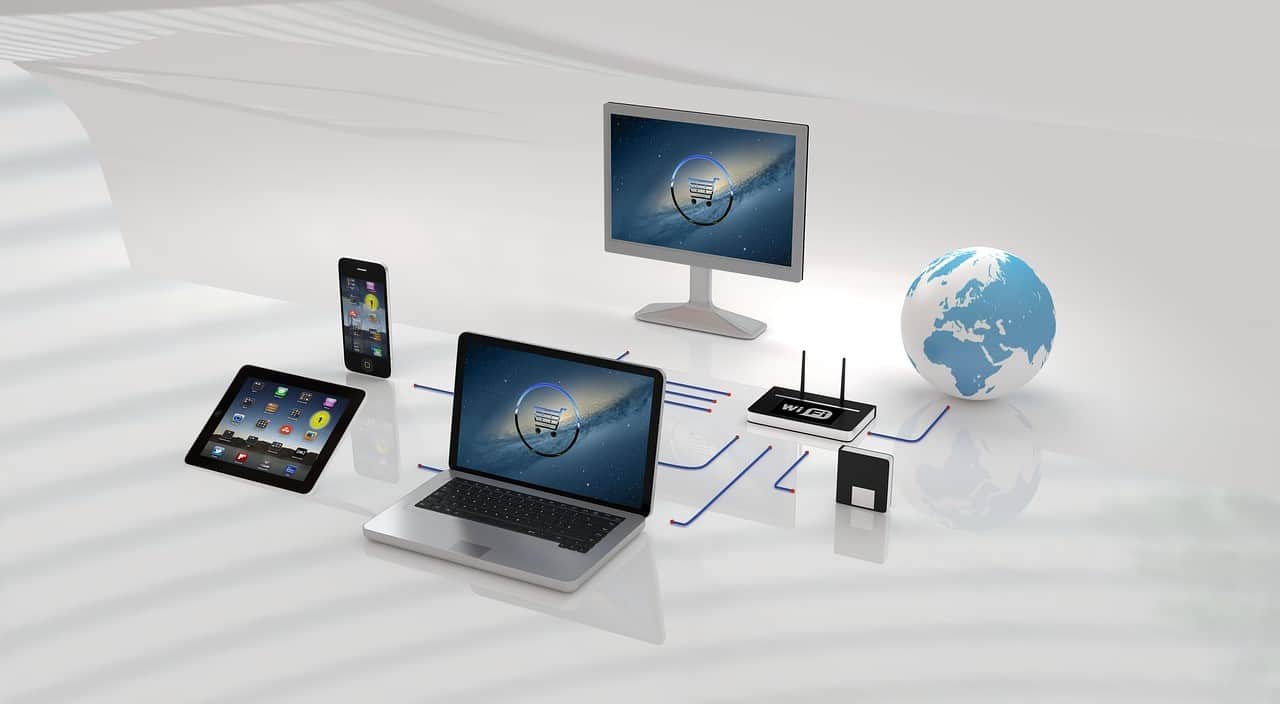
All about Shopify headless stores. Shopify powers millions of stores across more than 175 countries, and it's become the default mental model for what an e-commerce store looks like. That familiarity can be misleading. Some stores look like any other Shopify storefront but run on a completely different technical setup under the hood. These are Shopify headless stores, and understanding how they differ from conventional Shopify stores matters whether you're building one, evaluating one, or considering buying a store that might be one.

Headless Commerce on Shopify: Shopify Headless
In a standard Shopify store, the front end (what customers see) and the back end (the commerce engine handling orders, inventory, and checkout) are bundled together inside the Shopify platform. Headless commerce on Shopify separates those two layers. The back end stays on Shopify, handling product data, pricing, payments, and order management. The front end is built independently and connected to Shopify through the Storefront API.
This architecture gives teams full control over what the customer-facing experience looks and feels like, without rebuilding the commerce infrastructure from scratch. Shopify was designed to support this model, particularly through Shopify Plus.
Why does this matter if you're not building a headless store yourself? If you're looking to buy an existing Shopify store, a headless store comes with a different set of constraints than a standard Shopify one. You'd be taking on a custom front-end codebase, possibly a separate CMS, and a dependency on developers to maintain it. The drag-and-drop Shopify admin and the familiar theme editor won't work the same way. Understanding the difference before you commit saves a lot of headaches.

What are front-end and back-end systems?
The front end is the layer customers interact with directly: the homepage, product pages, checkout, and any other interface they touch. In a conventional Shopify store, all of that is managed through the Shopify theme system. In a headless store, the front end is a separate application, often built with a JavaScript framework like React, Vue, or Next.js, that fetches data from Shopify's API and renders it however the development team sees fit.
The back end is Shopify itself: product catalog, pricing, inventory, checkout logic, order management, third-party app integrations. In a headless setup, this layer runs exactly as it does in a standard Shopify store. The difference is that instead of serving an HTML storefront directly, Shopify exposes its data through APIs that the custom front end consumes.
Developers sometimes refer to the full combination of front-end framework, CMS, and Shopify as the store's "stack." Each piece connects to the others through APIs, which is why changes to one layer don't necessarily require rebuilding the others.

Who is Shopify Headless commerce intended for?
Shopify's standard setup works well for most stores, especially those just getting started or running on standard catalog-and-checkout workflows. Headless becomes worth considering when a business has needs that the standard Shopify theme system genuinely can't meet.
Some concrete examples: a brand selling in multiple regions that needs a different storefront experience per market, a retailer that wants to sell through a mobile app, a kiosk, and a website from a single commerce back end, or a store with complex product configuration tools that require front-end logic Shopify's Liquid templating can't reasonably handle.
Research from Harvard Business Review covering 40,000 shoppers found that 73 percent relied on multiple shopping channels, not just a single website. That kind of omnichannel expectation pushes larger brands toward architectures that can serve consistent commerce experiences across touchpoints.
That said, headless is not a shortcut. It requires experienced developers, a longer build timeline, and ongoing maintenance across multiple systems. For most early-stage stores, the standard Shopify setup plus a good theme will outperform a headless build simply because it ships faster and has fewer moving parts.

What can you use Shopify back-end systems for?
With Shopify as the commerce back end in a headless setup, you get all the standard Shopify capabilities: product and inventory management, checkout, Shopify Payments, order processing, and the Shopify app ecosystem for things like CRM, email, and fulfillment integrations. Content management, navigation, and page rendering are handled by whatever CMS or front-end framework you put in front of it.
Why do businesses run Shopify Headless commerce stores?
The main reasons come down to control and flexibility. Specifically:
- Innovation
Standard Shopify themes constrain what's possible on the front end. Headless removes those constraints, letting development teams build product experiences that simply aren't possible within the Liquid theme system. A store selling skincare with a custom skin-matching tool, or a clothing retailer with a virtual try-on feature, may reach the limits of standard Shopify fairly quickly.
- Greater control over how your interface looks with Shopify Headless
With a custom front end, every visual detail is in the development team's hands. That includes page layout, animation, image loading strategies, and checkout flow design. Changes to the storefront don't require working within theme constraints.
- Greater control over how the store is developed and coded
Experienced front-end developers can build to current web standards without the restrictions Shopify's theme system imposes. Frameworks like Next.js, Hydrogen (Shopify's own React-based framework), and Remix are common choices.
- Split the work with Shopify Headless
Decoupling front end and back end lets the two teams work independently. A content or design change on the front end doesn't need to touch the Shopify admin configuration, and a back-end change to product data or checkout flow doesn't require a front-end deploy.
- Scalability
A headless tech stack can be replicated across multiple storefronts. If you run several brands or regional sites, each can have a distinct front-end experience while sharing the same Shopify commerce infrastructure, or different infrastructure per brand.
- Improved customer loyalty
Stores with faster page loads and more personalized shopping experiences tend to retain customers better. According to Shopify, cart abandonment rates hover near 70 percent industry-wide, and over a quarter of abandoners cite a complicated checkout as the reason. A headless setup gives teams more control over exactly how checkout behaves.

Things to consider with Shopify Headless commerce stores
Before moving to a headless setup, there are real trade-offs to weigh.
- Compromising Shopify functionality
Decoupling the front end means losing some built-in Shopify features. The theme editor, page builder, live preview, and many Shopify-native apps depend on the standard Liquid rendering pipeline. In a headless setup, some of these tools either don't work at all or require custom workarounds. Any app that modifies the storefront at the theme level will need to be replaced or rebuilt.
- The need to manage and learn two platforms
Running a headless store means maintaining a front-end codebase and the Shopify back end as separate systems. Updates, bugs, and performance issues in either layer need separate attention. Two systems also mean two places for things to go wrong.
- Incurs cost and time
Building a headless store is significantly more expensive than buying a Shopify theme. Development time is longer, and you'll typically need developers with React or similar front-end experience in addition to Shopify knowledge. Ongoing maintenance costs more too. The upside only materializes if the flexibility is actually used.
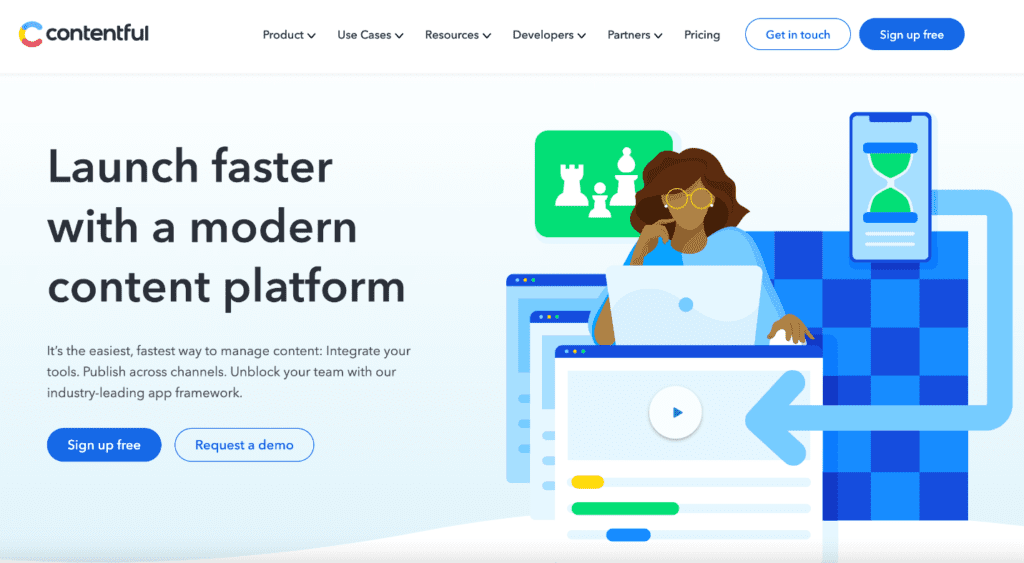
CMS options to drive your Shopify Headless commerce store
Looking for a CMS to pair with a headless Shopify back end? Common options include Contentful, Prismic, and Gatsby.
- Contentful
Used by enterprise brands including Equinox, Danone, and Shiseido, Contentful is a headless CMS that separates content creation from content delivery. Content editors get a web-based admin, while developers pull content through the API into any front-end framework. It has a structured content model that works well for brands managing large, complex catalogs.
- Prismic
Prismic counts McDonald's, Spotify, and The New York Times among its clients. Like Contentful, it decouples content management from the front-end presentation layer. Its Slice Machine tooling is popular with Next.js projects and gives marketers the ability to build and preview page sections without developer involvement on every update.
- Gatsby
Gatsby is a React-based static site generator that compiles content at build time. It claims 50% faster page load speeds compared to server-rendered equivalents and supports a range of data sources through its plugin ecosystem. Gatsby also offers Cloud Functions, server-side rendering (SSR), and Deferred Static Generation (DSG) for content that needs to be fresh without a full rebuild.
Examples of Shopify Headless Commerce Stores
Here are eight real Shopify headless stores and what drove the decision to go headless.
Kotn - Shopify Headless

Kotn, a clothing retailer, was running two separate Shopify sites that were duplicating content and creating maintenance overhead. They consolidated using the Shopify Storefront API, merging both stores into a single headless setup. The result was a faster site with content that's easier to keep up to date.
Seedlip - Shopify Headless

Seedlip sells non-alcoholic spirits and built a custom Vue.js front end on top of Shopify's back end. The headless approach gave their development team the flexibility to build the browsing and product experience they wanted without being constrained by available Shopify themes.
Complex Networks - Shopify Headless

Complex Networks houses brands like Complex, First We Feast, and Sole Collector. When pandemic lockdowns cancelled ComplexCon, the company needed to build a virtual shopping experience fast. Working with a Shopify Plus Agency Partner, they built an immersive augmented reality store using a custom headless front end on top of Shopify Plus.
Verishop
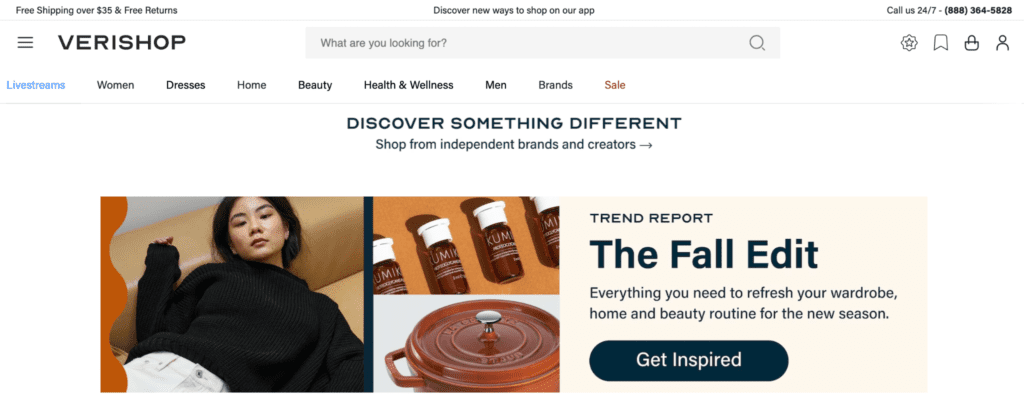
Verishop is a multi-brand marketplace covering categories from women's clothing to home goods and pet products. To deliver a consistent, fast experience across a wide catalog, they paired Shopify Plus with Contentful CMS. The result is a clean, fast-loading storefront built for discovery across diverse product categories.
Hodinkee

Hodinkee serves watch collectors and built its own custom CMS to support the editorial and commerce content it publishes. The headless setup lets their team publish long-form watch coverage and commerce listings from the same infrastructure, with full control over how each content type looks and behaves.
ILIA
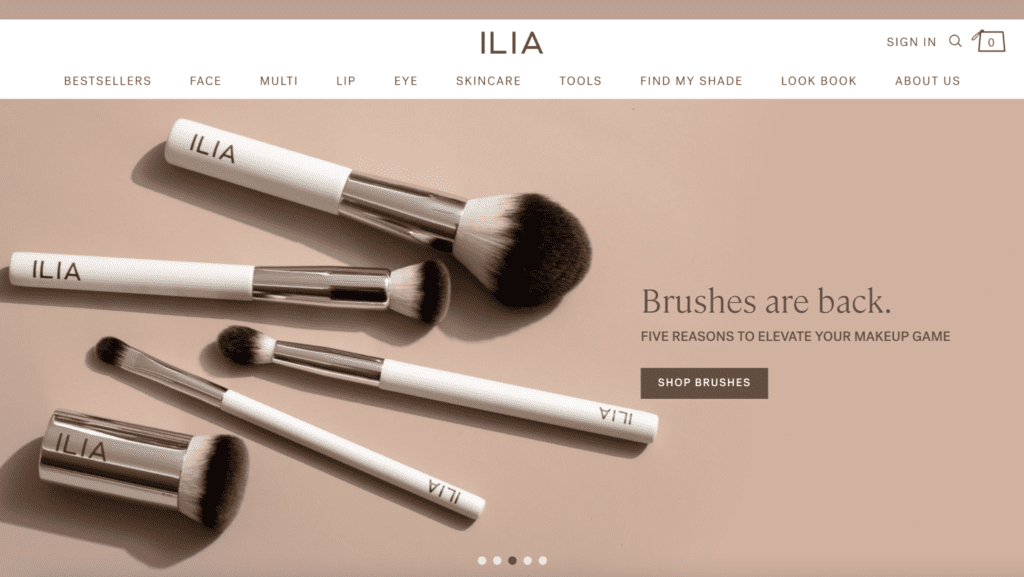
ILIA's beauty store needed custom tools to let customers compare shades and find accurate color matches. Third-party apps were slowing page performance. Moving to a headless Shopify setup with Shopify Plus as the back end let them build those tools in-house and improve site metrics across the board.
StriVectin - Shopify Headless
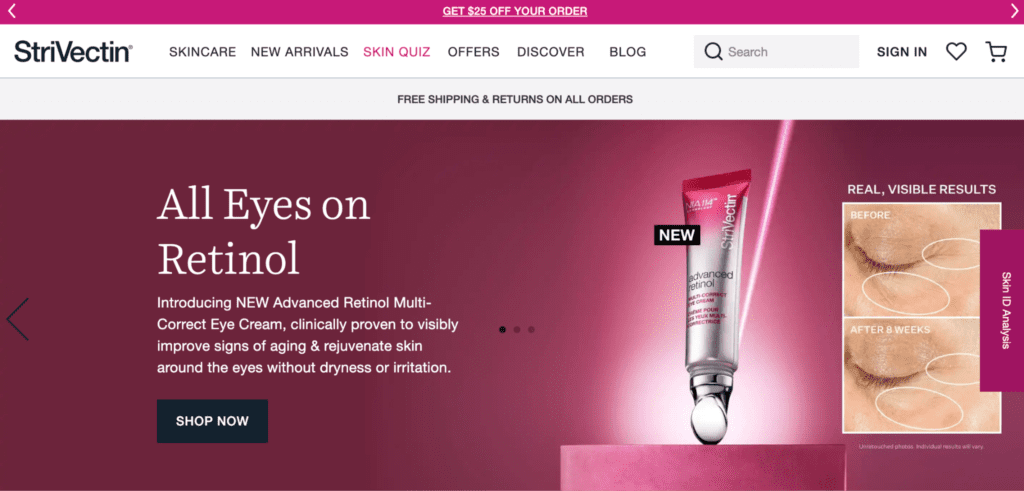
StriVectin was on a different e-commerce platform that couldn't handle the content management demands of an anti-aging skincare brand. After migrating to Shopify as the back end and implementing Prismic CMS for content management, they saw a notable increase in site traffic shortly after launch.
JB Hi-Fi
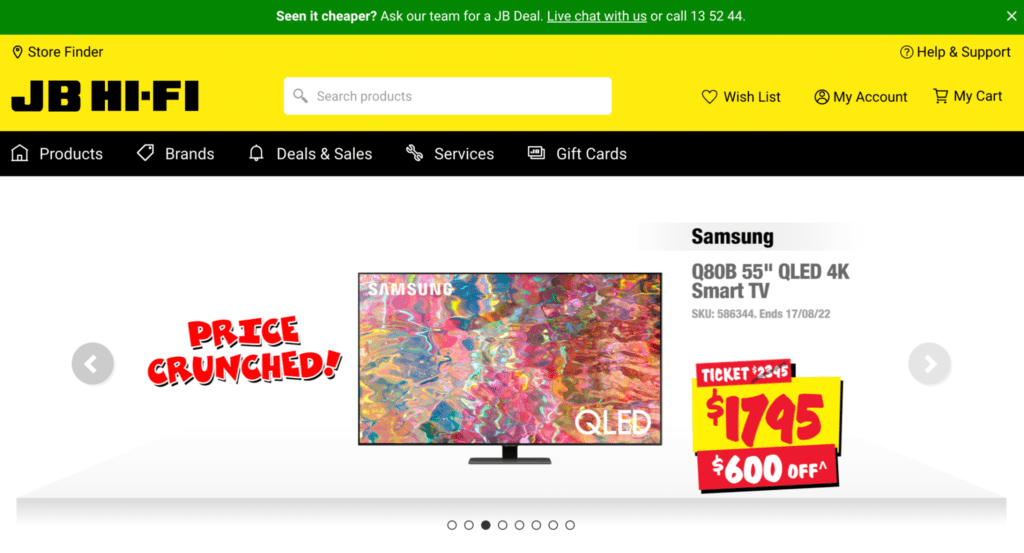
JB Hi-Fi is one of Australia's largest electronics retailers. Given the scale and complexity of their catalog, they use Shopify's Storefront API to keep the front end fast and flexible while Shopify handles the commerce operations underneath.
Rachio - Shopify Headless
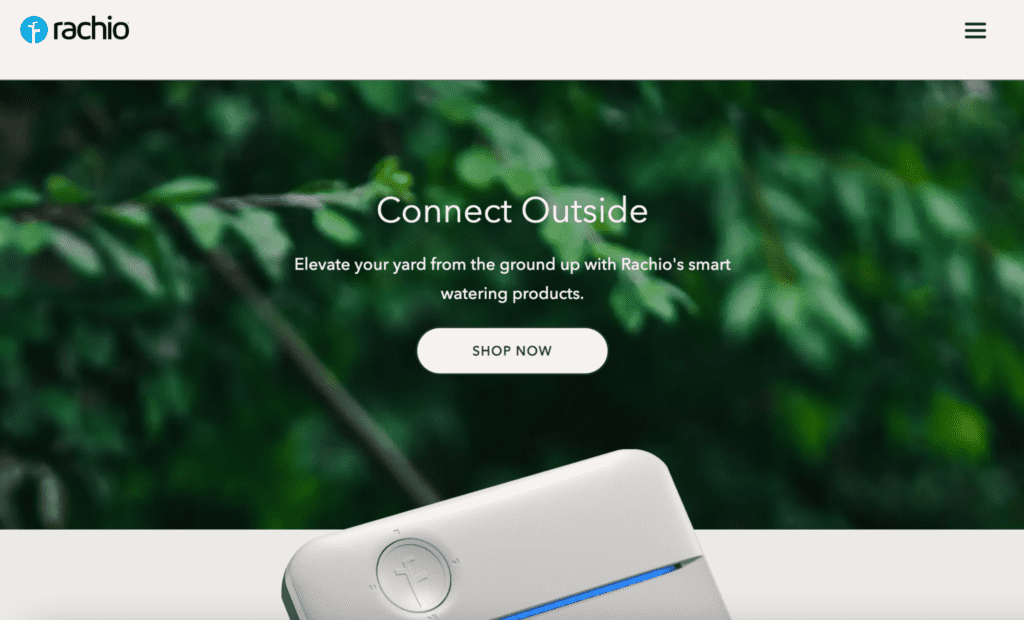
Rachio sells smart sprinkler controllers and related outdoor products. Their headless store runs on GatsbyJS and Shopify, and is the highest-rated product in its category with a 4.9-star rating on the app store. The GatsbyJS front end contributes to the fast, smooth load times customers cite as a reason they like shopping there.
Detecting genuine Shopify Headless stores using Koala Inspector
A headless store can look identical to a standard Shopify store from the outside. If you're evaluating a store to buy, it matters to know what you're actually purchasing. A headless store comes with a custom codebase, not a standard Shopify theme, which changes what you can do with it as a new owner.
Koala Inspector, Koala Apps' Chrome extension, can help you identify how a store is actually built. When you run it on any Shopify store, it shows you the Shopify theme (or lack of one, in a headless case), the apps the store is using, any Google Ads campaigns, and other structural details. The information surfaces quickly without any technical knowledge required on your end.
Koala Inspector's features include: revealing the Shopify theme the store uses, identifying the apps driving store functions, showing active Google Ads campaigns, and letting you track stores you're watching in one list.
Download Koala Inspector for Shopify Headless!

Ready to use Koala Inspector to identify headless stores and understand how any Shopify store is built? The extension has over 90,000 users and starts with a free plan. Paid plans unlock additional features including deeper competitive data. Download Koala Inspector to get started.
Written by
Ana Gelevska
eCommerce Content Writer
Ana Gelevska is a content writer with more than five years of experience creating content for eCommerce brands and global clients. She digs into each topic and the people it is for, then turns it into clear, useful articles that Shopify sellers and dropshippers can act on.
Connect on LinkedIn