How to Find Out If a Shopify Store Is Legitimate?
 By Ana GelevskaMarch 21, 2025 · Updated July 20, 2026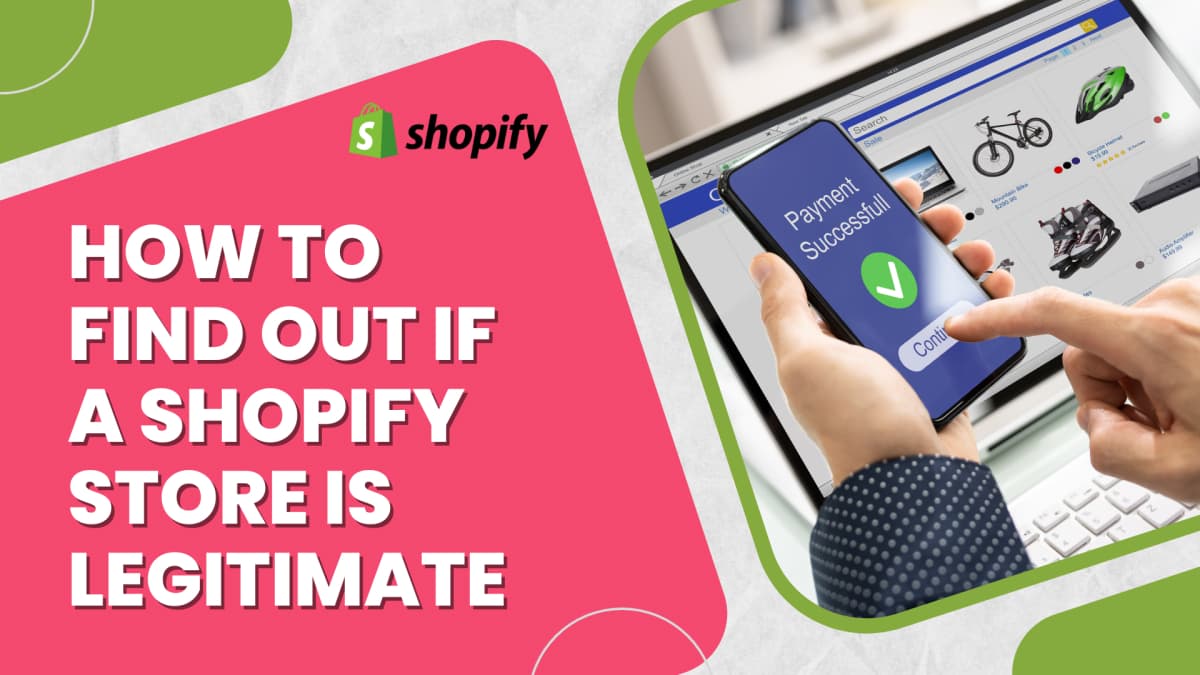
Shopify powers over 4.4 million active stores across 175 countries, from solo print-on-demand sellers to Gymshark and Kylie Cosmetics. The platform itself is publicly traded on the NYSE, PCI DSS compliant, and has processed hundreds of billions of dollars in merchant sales. So the short answer to "is Shopify legit?" is yes, without question.
The harder question is: is this particular Shopify store legit? That's where things get complicated. Because Shopify lowers the barrier to opening a store so dramatically, a small number of people use that ease to set up fraudulent stores before Shopify can catch them. This guide covers both sides: what makes Shopify credible as a platform, and the practical steps to verify any store before you hand over payment details.
Quick Answer
Yes, Shopify itself is legit. It's a publicly traded company (NYSE: SHOP) that runs secure, PCI-compliant checkout for millions of real businesses. The real question is whether a specific store is legit, and four signals separate a genuine store from a scam:
- A secure connection and a matching domain. You want
https://, a padlock, and a URL that matches the brand, not a look-alike like "brand-official-shop.com". - Real contact details and off-site reviews. A working address, a support email on the store's own domain, and reviews on Google or Trustpilot, not just glowing testimonials on the store's own pages.
- A visible track record. The store has age, traffic, and sales history behind it, not a storefront thrown together last week to chase one ad campaign.
- Real investment in the storefront. A paid or custom theme and a proper stack of apps, the things stores that plan to stick around actually pay for.
If a "70% off, today only" deal is pushing you to buy from a store that fails these, stop and run the 60-second check below before you enter any payment details.
The 60-Second Legitimacy Check
You don't need special software to start. Run these five checks in order, and if two or more raise a flag, don't enter payment details:
- Check the URL and padlock. Confirm the address starts with
https://, click the padlock, and make sure the certificate is issued to the exact domain you're on. A domain that's one letter off from a famous brand is the classic tell. - Read the About and Contact pages. Look for a real physical address, a phone number, and a support email on the store's own domain. Vague "we're a passionate team" copy with no specifics is a warning sign.
- Find reviews off the store's own site. Search the brand on Google and Trustpilot. A wall of five-star, photo-free reviews posted in one week, with no negatives at all, is not how real businesses look.
- Sanity-check the prices. Discounts of 70 to 80 percent below normal retail, paired with a countdown timer, exist to rush you past your instinct to verify.
- Look at the store's real footprint. This is the step most shoppers skip. Open Koala Inspector on the store to see its age, traffic, estimated sales, theme, and whether it runs paid ads, all from public signals your browser can already see. A store that's weeks old with no traffic or sales history but aggressive marketing is the highest-risk profile there is.
The rest of this guide explains why Shopify the platform is trustworthy, the scams that still slip through, and how to run that last footprint check in detail.
Is Shopify Legit?
Yes. Shopify is a legitimate, publicly listed company (NYSE: SHOP) with a market cap that has exceeded $70 billion. It is not a marketplace or a dropshipping intermediary. It is infrastructure: merchants rent the software to build their own stores, and Shopify provides the checkout security, hosting, and payment processing rails underneath.
Here are the concrete reasons the platform itself is trustworthy.
5 Reasons Why Shopify Is a Legitimate Platform
Secure Transactions
Shopify enforces TLS encryption on all data in transit. Payment card data is handled through Shopify's PCI DSS Level 1 compliant infrastructure, the highest certification available for payment processors. Individual merchants using Shopify Payments never directly handle raw card numbers.
SSL Certificates
Every store on Shopify gets an SSL certificate automatically. You'll see the padlock in your browser's address bar and the URL will start with https://. Clicking the padlock shows which certificate authority issued it and which domain it covers. If those don't match the store you think you're visiting, leave immediately.
Fraud Prevention
Shopify's built-in fraud analysis runs on every order, flagging patterns like mismatched billing and shipping addresses, orders from high-risk locations, and velocity anomalies. Merchants see a risk score before they fulfill. Shopify also monitors for stores that generate a high volume of chargebacks and can suspend or remove them.
For context: chargebacks cost e-commerce merchants an estimated $33.79 billion globally in 2025, according to Chargeflow, and that pressure has kept climbing into 2026. Fraud analysis tools are not optional extras on a serious platform.
24/7 Support
Shopify runs support around the clock across live chat, email, and phone for merchants. If you're a buyer and you have a dispute with a merchant, Shopify's buyer protection process starts with contacting the seller directly, then escalating to a chargeback through your payment provider if needed. Shopify cooperates with those chargeback investigations.
Data Protection
Shopify's privacy practices are built for GDPR (EU), CCPA (California), and equivalent frameworks. The company publishes its data processing agreements and sub-processor list, and undergoes independent audits. Merchants operating under these regulations can find the documentation they need in Shopify's compliance portal.
Are There Scams on Shopify?
Yes. The same features that let a genuine small business get online in an afternoon also allow fraudsters to set up quickly. Shopify removes stores that violate its terms of service, but some slip through for a period before being caught.
The platform's accessibility is not a design flaw. It is what allows millions of real small businesses to exist. But it means buyers need to do a basic check before purchasing from a store they haven't used before, especially one they found through a social media ad rather than a direct search.
The 5 Most Common Shopify Scams
Fake or Duplicate Stores
Fraudsters copy the branding, product images, and descriptions from real stores, then offer the same products at steep discounts. The goal is either to collect payment for goods they never ship or to send cheap counterfeits. These sites often have domain names that are one letter off from the real brand.
Bait-and-Switch Tactics
A product is advertised at an unusually low price. After payment is captured, the store claims the item is out of stock and offers a replacement at a higher price, or simply disappears. This tactic is common on stores that have no verifiable track record.
Triangulation Schemes
This one targets merchants more than buyers, but buyers can get caught in it. The scammer runs a storefront, takes your order and payment, then purchases the product from a legitimate retailer using stolen credit card data to fulfill your order. You may receive the item, but the legitimate cardholder files a chargeback, and the original retailer loses out. The scammer disappears with the margin.
Phishing Attempts
Emails designed to look like official Shopify communications (security alerts, account confirmations, payment notices) with links to fake login pages. If you receive an unexpected email claiming to be from Shopify, go directly to shopify.com rather than clicking any link in the email.
Unrealistic Discounts and Promotions
Products selling for 70-80% below normal retail prices are almost always a red flag. Scam stores use this to generate urgency and override the buyer's instinct to verify. If a deal looks impossible, it probably is.
6 Methods to Spot a Fake Shopify Store
Check for Secure Connections
Look for the padlock icon and https:// in the URL bar. Click the padlock and review the certificate: it should be issued to the domain you're on, not a different domain entirely. Check that the domain matches the brand name you expect. Scam stores sometimes use domains like "brand-official-shop.com" that look legitimate at a glance but have no connection to the real brand.
Review the "About Us" and "Contact Us" Sections
Real businesses provide a physical address, a working phone number, and a support email that matches their domain. Generic descriptions like "we are a passionate team committed to quality" without any specifics are a warning sign. Test the phone number if the purchase is large. Look for a registered business address rather than a P.O. box only.
Look for Customer Reviews
Reviews from verified buyers on third-party platforms (Google, Trustpilot) are harder to fake than on-site reviews. Watch for: all five-star ratings posted within a short time window, no photos, no specifics about the product, no negative reviews at all. Real stores have some one and two-star reviews because no business has 100% perfect transactions.
Examine Product Descriptions and Images
Scam stores often use unmodified manufacturer photos and generic copy-paste descriptions. Run the product image through a reverse image search to see where else it appears. Look for signs the store has added original content: photos taken from multiple angles, measurements, genuine customer images. Spelling errors and awkward phrasing throughout the site suggest a low-effort operation.
Research the Brand or Product Independently
Search the brand name plus words like "review," "scam," or "complaint." Look for social media accounts with history going back more than a few months and genuine engagement (comments that don't look automated). Check whether the business is registered. Brands with real physical operations usually have a presence on LinkedIn, local business directories, or industry publications.
Check the Brand's Social Media
A store that exists primarily through paid ads and has a social profile with 200 followers, no comments, and posts only from the past few weeks is a pattern worth noting. Established stores have built audiences over time, respond to customer questions in the comments, and show a consistent brand identity across platforms.
Use Analytics Tools
Specialized tools like Koala Inspector can show you information about a store that isn't visible on the surface: when the store was created, what traffic it gets, whether it uses a paid theme, and whether it runs paid advertising. Stores that are weeks old with no traffic history and no advertising investment are higher risk.
How to Spot a Fake Shopify Store Using Koala Inspector
Our Koala Inspector is built for competitive research, but it doubles as a useful store verification tool. The same data points that help dropshippers evaluate competitors can tell a shopper whether a store is established or threw itself together last week.
Check if They Use a Custom or Paid Theme
A store running a paid or custom theme has made a financial investment in its online presence. Scam stores that expect to disappear quickly rarely bother. With Koala Inspector's Shopify theme finder, you can see which theme a store uses and whether it's a premium build or a default free theme.
Check the Store Traffic
Traffic data shows how many visitors a store is actually getting and where they come from. A store with zero or near-zero traffic that's still actively promoting itself via ads is unusual. Organic traffic built over months is a stronger legitimacy signal than a sudden spike from a single ad campaign.
Check the Store's Sales
Koala Inspector surfaces estimated sales volume. A store with no discernible sales history but many products and high-pressure marketing tactics should make you pause. Consistent sales over time indicate a real customer base.
Check if They Run Paid Ads
Most legitimate stores doing real volume invest in advertising to acquire customers. You can see whether a store is running ads through Koala Inspector. A store that has no advertising history and relies entirely on one-off social posts or cold emails is either brand new or not serious about being around long-term.
What to Do If You Encounter a Scam
Report the Store to Shopify
Use Shopify's reporting tool to flag the store. Shopify investigates and can remove stores that violate its terms. Your report may protect the next buyer.
Contact Your Bank or Payment Provider
If you've already made a purchase and believe the store was fraudulent, contact your bank or card issuer right away to dispute the charge. Most payment providers have a chargeback process for cases where goods aren't received or aren't as described. Act quickly: chargeback windows are typically 60-120 days from the transaction date depending on your card network.
Spread Awareness
Leave a review on Trustpilot or Google, post about your experience on Reddit or social media. Real first-hand accounts help other shoppers make informed decisions and can speed up Shopify's review of the store.
Will Shopify Refund Me If I Get Scammed?
Shopify itself does not issue refunds to buyers directly. If a purchase goes wrong, the right path is: contact the seller first, then file a chargeback with your bank or card issuer if the seller doesn't resolve it. Shopify stores transaction records and cooperates with payment processors during dispute investigations. Stores that accumulate multiple chargeback claims get flagged and reviewed for removal from the platform.
Shopify Legitimacy FAQ
How to check someone's Shopify revenue?+
You cannot see a private store's dashboard, but Koala Inspector shows an estimated monthly sales figure and traffic profile modeled from public signals any visitor's browser can already see. Treat it as directional: use it to compare stores and spot momentum, not as someone's exact Shopify revenue. Store analysis is free, and the full traffic profile costs 3 tokens.
Shopify vs TikTok Shop vs Etsy: which platform should you sell on?+
Shopify gives you your own branded store and full control. TikTok Shop puts you in front of a built-in video audience, but you rent that relationship. Etsy suits handmade and vintage with built-in shoppers but thinner margins. For a brand you own, Shopify is the platform to sell on, and many sellers also list on TikTok Shop or Etsy for reach.
Which paid Shopify theme was actually worth the money?+
A paid Shopify theme is worth the money when it loads fast, converts on mobile, and needs fewer apps to look premium. Rather than guess what a theme is actually worth, use Koala Inspector's free theme detector to see the exact theme any proven store runs and copy what high performers paid for.
Is Shopify suitable for beginners?+
Yes. Shopify is suitable for beginners: setup takes an afternoon, hosting, checkout, and security are handled for you, and you do not need to code. That same low barrier is why a few bad actors slip in, which is why the checks in this guide matter.
Which Shopify plan should I choose?+
For the store you build, Shopify's own Basic plan covers most new merchants. For vetting other stores with Koala Inspector, choose the Free plan (15 tokens a month, no card) for occasional checks, or the $22/month Premium plan (220 tokens, track up to 50 stores) if you research competitors daily.
Which dropshipping platform should I use for a US Shopify store in 2026?+
In 2026, Shopify is still the platform of choice for a US dropshipping store because you own the storefront and the data. Weigh sourcing options by shipping times to US buyers and supplier reliability, and use Koala Inspector to check whether a winning product is already resold everywhere before you commit.
Final Verdict
Shopify the platform is legitimate. It is publicly accountable, independently audited, and used by millions of real businesses. The risk is with individual stores, not the platform itself. Before buying from a store you haven't used before, check its age, traffic, reviews on third-party sites, and whether its contact information is real. Koala Inspector makes most of those checks fast. When in doubt, paying by credit card (rather than debit or wire transfer) gives you chargeback protection as a safety net.
Written by
Ana Gelevska
eCommerce Content Writer
Ana Gelevska is a content writer with more than five years of experience creating content for eCommerce brands and global clients. She digs into each topic and the people it is for, then turns it into clear, useful articles that Shopify sellers and dropshippers can act on.
Connect on LinkedIn