DSers Chrome Extension: What It Does, What It Costs, and What It Misses
 By Ana GelevskaJanuary 8, 2025 · Updated July 28, 2026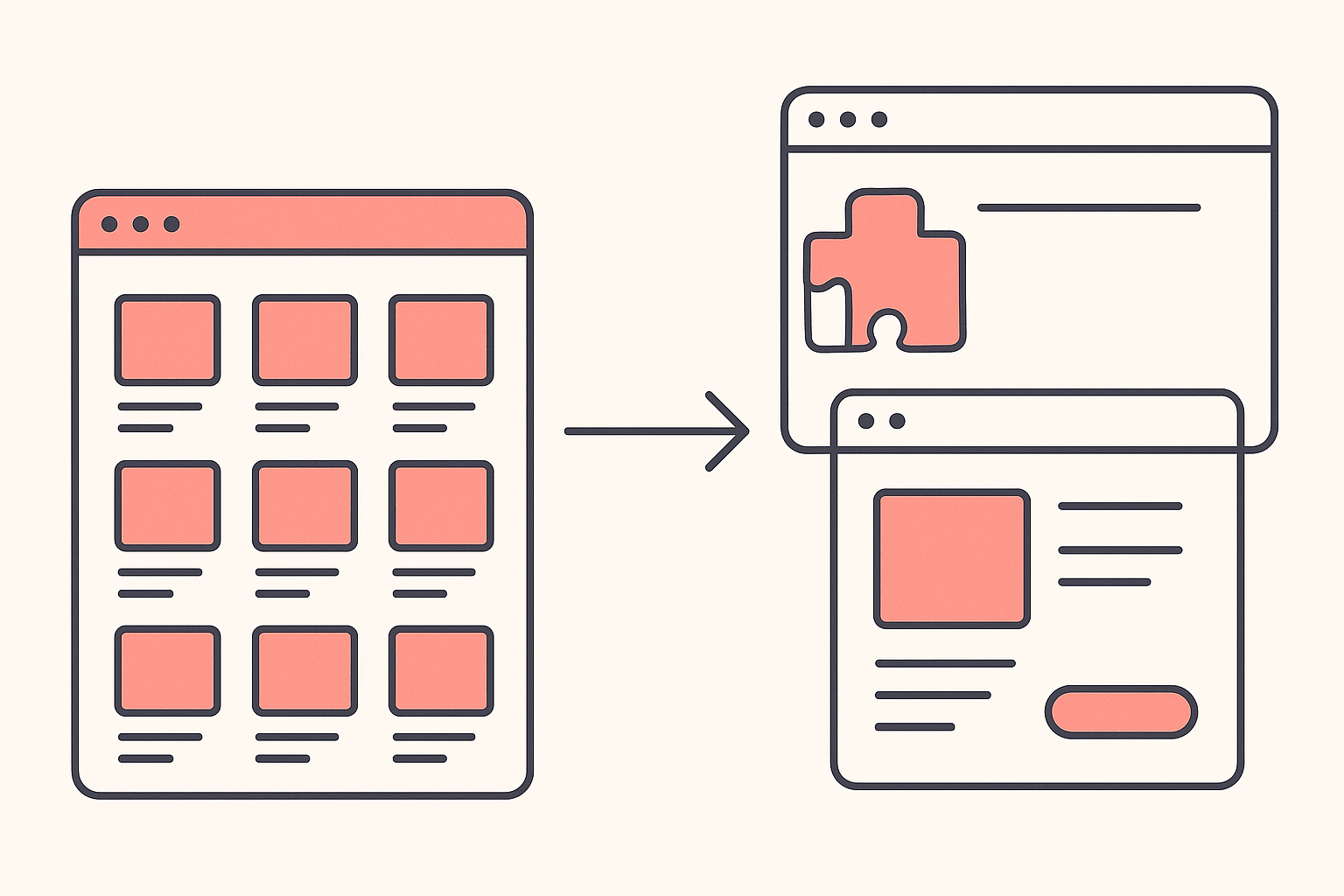
The DSers Chrome extension is a free Google Chrome add-on that imports AliExpress products into your DSers account, adds an import button to AliExpress product pages, and syncs order status and tracking numbers back to your Shopify, WooCommerce, or Wix store. It handles sourcing and fulfilment, not competitor research.
The specs, in short:
- Runs on: Google Chrome, paired with a DSers account connected to a Shopify, WooCommerce, or Wix store. There is no Firefox, Safari, or Edge build.
- Imports from: AliExpress, Alibaba, and 1688, one product at a time or in bulk, including search by image. DSers markets it as the migration path off Oberlo and Dropified.
- Costs: free to install from the Chrome Web Store. DSers' own pricing page lists Basic at $0 for 3 stores and 3,000 products, Advanced at $19.90 a month for 10 stores and 20,000 products, Pro at $49.90 for 25 stores and 75,000 products, and Enterprise at $499.90.
- Does not do: competitor research. It will not tell you a rival store's sales, traffic, theme, or installed apps. That is a different tool, and we cover it below.
The extension listing on the Chrome Web Store, "DSers-Dropshipping+AliExpress Importer", reports 400,000 users and a 5.0 rating from 8.3K ratings, which makes it one of the most widely installed sourcing add-ons in Shopify dropshipping.
How do you install the DSers Chrome extension?

The extension is the browser half of DSers. The account has to exist first, or there is nowhere for your imports to land.
- Install the DSers app on your store from the Shopify App Store (or the WooCommerce or Wix equivalent) and finish the connection.
- Log in to your DSers account.
- Open the DSers Chrome extension page and click Install Now, which sends you to the Chrome Web Store listing.
- Click Add to Chrome and confirm.
- Reload any open AliExpress tab. DSers describes the extension as adding an "importing button to AliExpress", so the button appears on product pages once the extension is active.
If the import button never shows up, the usual cause is being logged out of DSers in that browser profile. Log back in and refresh.
How do you import a product with the DSers Chrome extension?
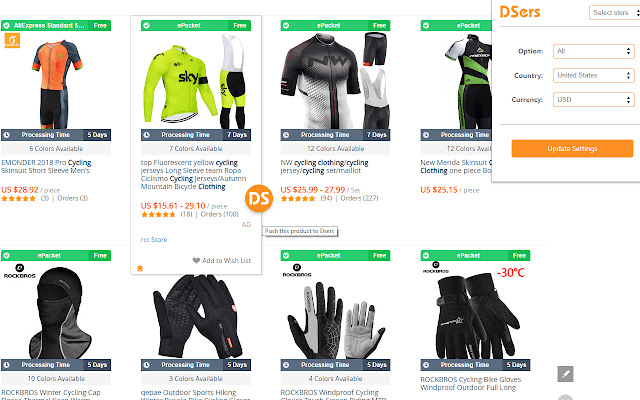
There are three routes in, and they all end in the same place, your DSers import list.
- From the product page. Browsing AliExpress, hit the DSers import button on the listing. DSers' own extension page describes this as importing "Products From AliExpress in one click".
- By search inside the extension. Search by keyword, or by uploading an image, which the Chrome Web Store listing describes as "searching images&importing products from AliExpress/Alibaba/1688 in bulk to store". Useful when you have a screenshot of a product from a competitor or a social feed and no supplier link.
- In bulk. Queue a batch and push them together instead of one at a time.
Nothing goes live automatically. Products sit in the import list so you can rewrite the title, trim the supplier's description, set your price, and pick which variants to keep before pushing to your store. Do that work here. Supplier titles are written for AliExpress search, not for your customers.
The step people skip is supplier mapping, and DSers is blunt about the consequences. Its documentation defines mapping as connecting "your store product variants to supplier product variants", and warns that "if mapping is wrong, DSers will order the wrong item", producing wrong size, wrong colour, price mismatch, or outright order failure. Map every variant before you send traffic to the product.
How does order fulfilment work in DSers?
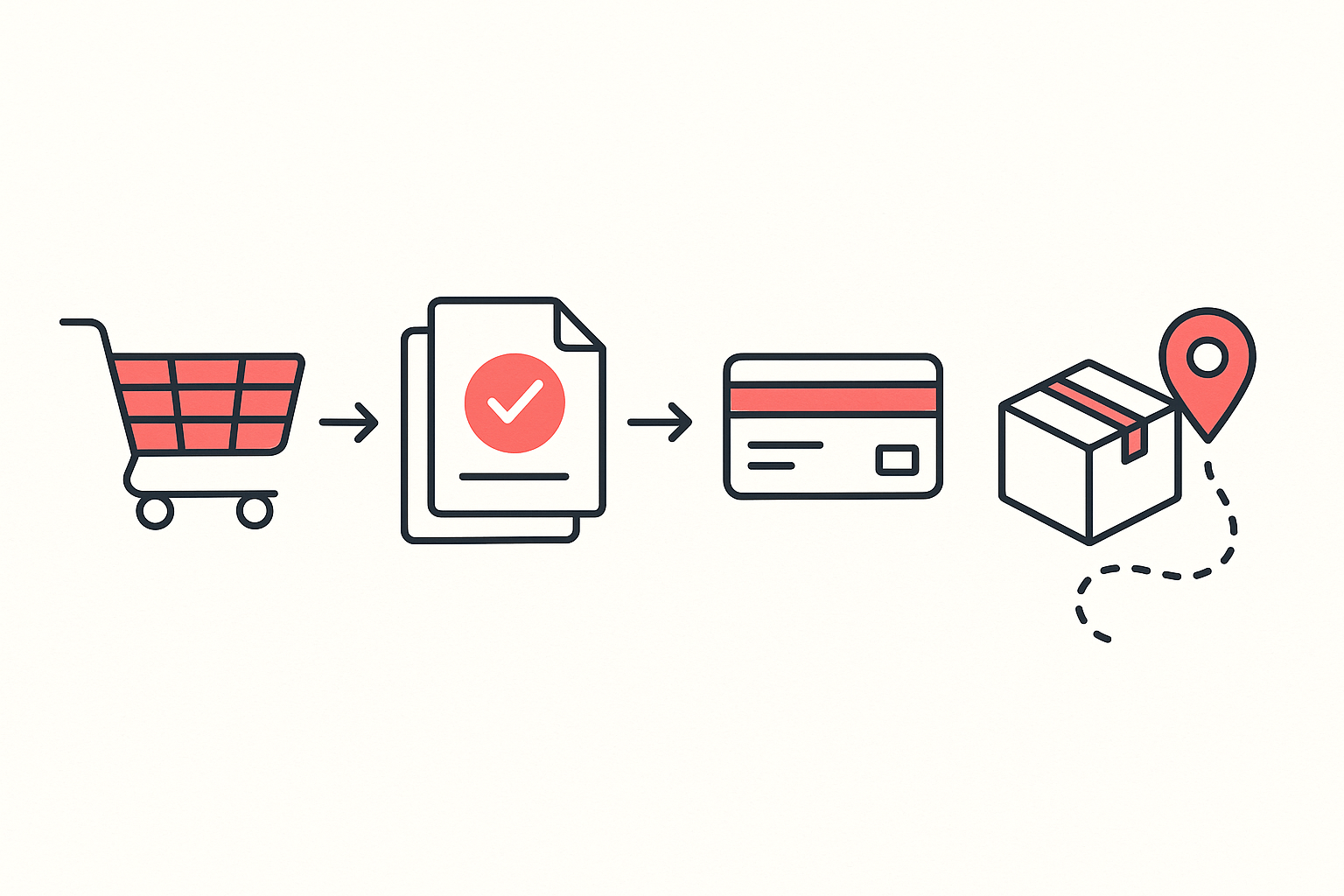
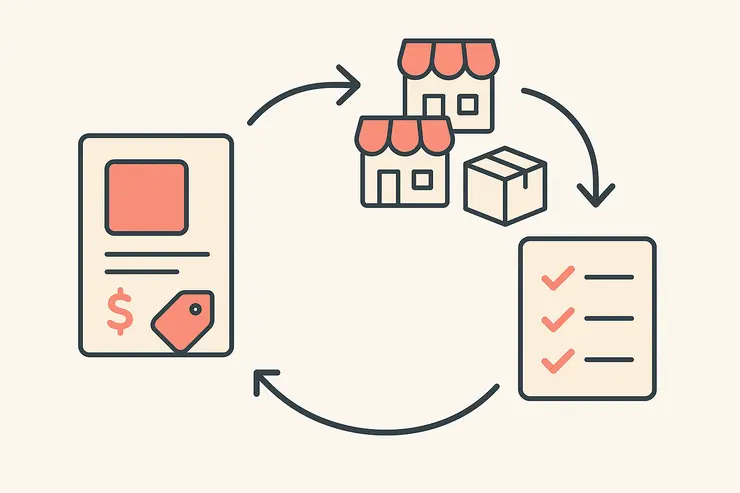
DSers documents a four-step loop, and the extension keeps the tracking half of it in sync with your browser session.
- Sync. A customer pays on your store and DSers syncs the order in real time into its Open Orders tab.
- Order. You select the unprocessed orders and click Order. DSers auto-matches your store product to the mapped supplier product. Its Bulk Order feature is built for volume: DSers says you can "select up to 100 orders and place them all, together, in just a few seconds to AliExpress".
- Pay. In the Awaiting Payment section you click Make Payment and DSers sends you to the supplier's platform with the order pre-filled.
- Ship. The supplier packs, ships, and generates a tracking number, which DSers pulls back with live shipping statuses into its tracking view.
Orders move through Awaiting Payment, then Awaiting Shipment, then Fulfilled. DSers recommends beginners process single orders before switching on bulk, which is sound: one bad mapping repeated across 100 orders is 100 refunds.
What does the DSers Chrome extension not do?
This is the part most guides leave out, and it is the reason a lot of DSers users still lose money.
The extension answers "how do I get this product into my store and this order out the door". It does not answer "should I sell this product at all". Specifically, it will not show you:
- Which products a competing Shopify store actually sells, or which of them move
- What theme a store runs, or which apps power its checkout, reviews, and upsells
- Where a store's traffic comes from, or roughly how much of it there is
- Which ads a store is running right now
- Whether the product you just imported is already sold by fifty other stores
Import is the cheap half of dropshipping. Choosing correctly is the expensive half.
Where does fulfilment end and competitor research begin?
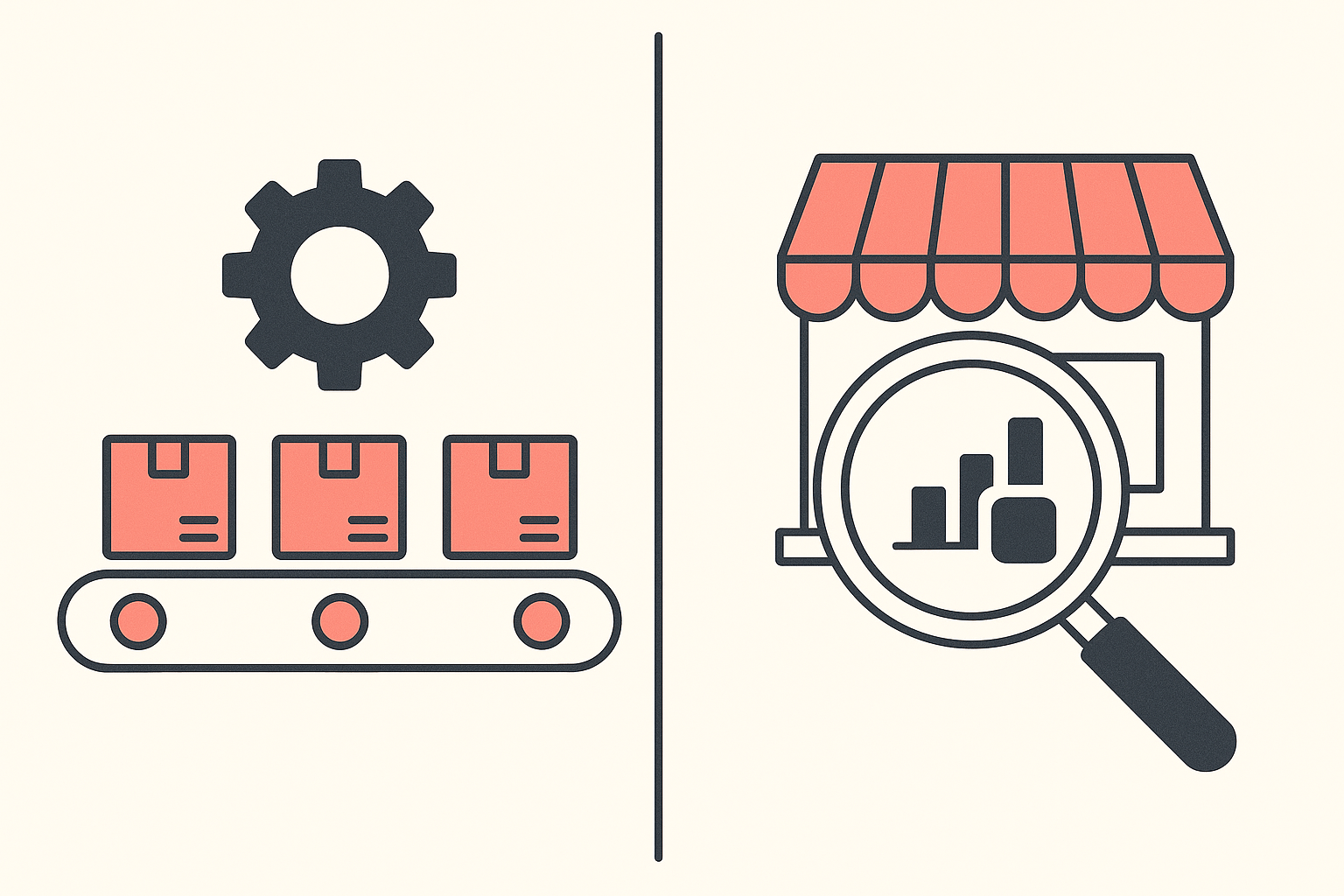
Two different extension categories get confused constantly, so here is the line.
| Fulfilment extension (DSers) | Research extension (Koala Inspector) | |
|---|---|---|
| The question it answers | How do I import this product and ship this order? | What is this store selling, and is it working? |
| Where you use it | On AliExpress, Alibaba, 1688 | On any Shopify storefront |
| What it returns | Import list, supplier mapping, bulk orders, tracking | Theme, installed apps, full catalogue, likely best sellers, traffic, ad campaigns |
| Free tier | Basic: 3 stores, 3,000 products | Free forever: 15 tokens a month, no card |
Competing research extensions frame it the same way. Dropship.io's Chrome extension page pitches "Themes, product counts, best sellers, and traffic signals at a glance" plus which apps stores "rely on to run and grow", on a free trial.
Koala Inspector does that half of the job for free. Open any Shopify store, click the icon, and you get the store's active theme, every installed app grouped by type, the full product catalogue with likely best sellers, price ranges, and store metadata, all on the free plan with no credit card. The free plan gives you 15 tokens a month for the deeper reads: 3 tokens for a store's traffic profile, 2 for its live Google and Facebook ad campaigns, 2 to find other retailers selling the same product, 2 for trending products, 1 for a CSV export. Premium is $22 a month for 220 tokens and tracking on up to 50 competitor stores, which flags apps added, theme changes, new products, and price moves as they happen.
Run them together. Research with Koala Inspector, import and fulfil with DSers. That is the whole workflow.

Which sourcing apps do Shopify stores actually run?
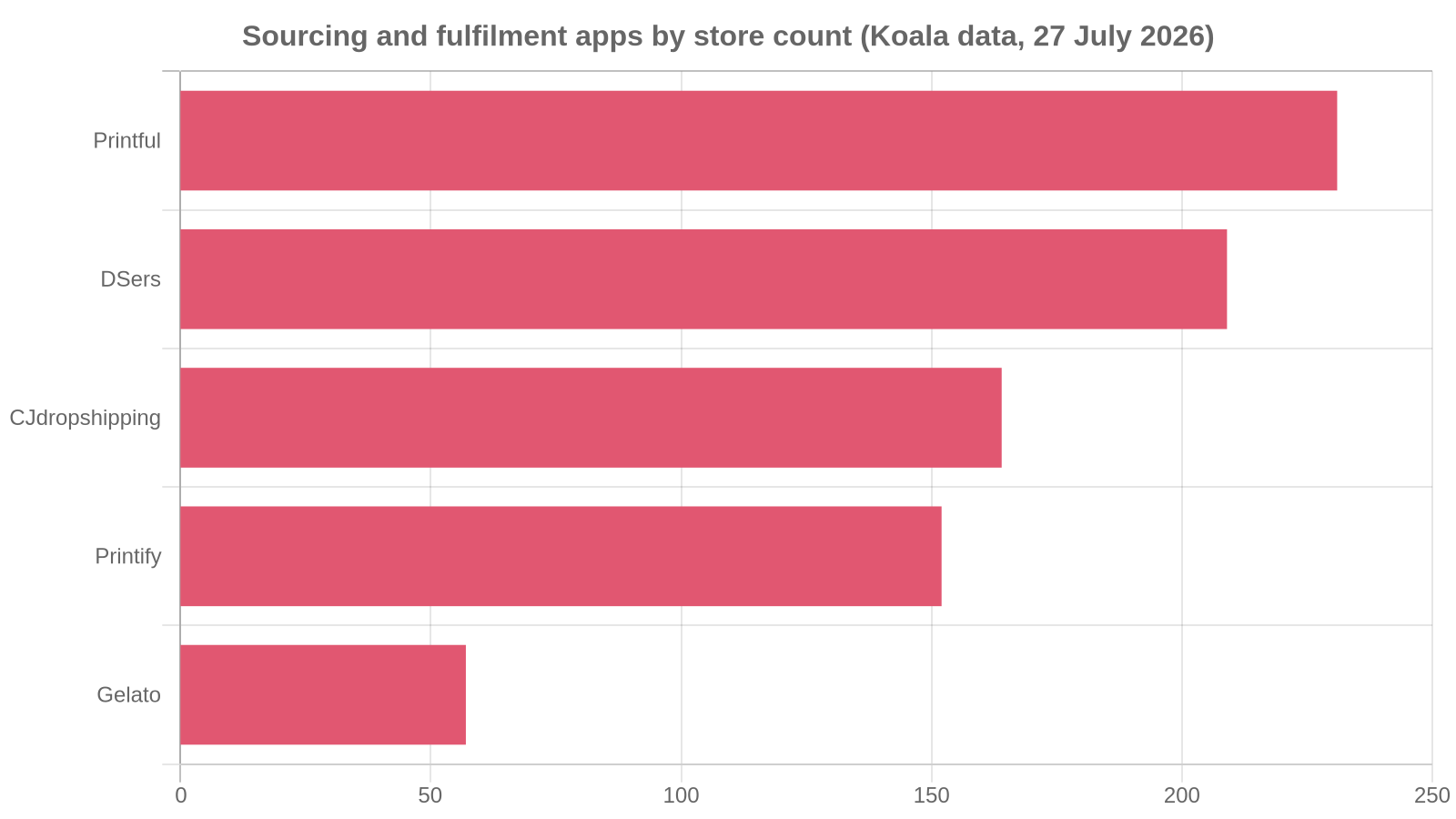
Koala tracks a large sample of live Shopify stores and records the apps each one has installed. This is our own data, and it covers the stores Koala tracks rather than all of Shopify, so read it as a strong sample and not a global census.
In the 27 July 2026 snapshot, the sourcing and fulfilment apps break down like this:
| App | Stores running it |
|---|---|
| Printful: Print on Demand | 231 |
| DSers: Dropship+AliExpress+AI | 209 |
| CJdropshipping: Much Faster | 164 |
| Printify: Print on Demand | 152 |
| Gelato: Print on Demand | 57 |
Two things worth pulling out. DSers is the most-installed pure dropshipping app in the sample, ahead of CJdropshipping by a comfortable margin, so the extension you are reading about is genuinely the category default. And print on demand is right there beside it, which tells you how many merchants have moved to branded, made-to-order products instead of generic catalogue items.
For the wider picture of what a Shopify stack looks like, see our breakdown of the most popular Shopify apps.
DSers alternatives worth knowing
You would swap tools for one of three reasons: you want faster delivery, you want branded product, or you want a different supplier network.
- CJdropshipping advertises 10+ global warehouses, 120+ partner couriers, and print on demand, so delivery times and packaging are more controllable than open AliExpress. You trade catalogue breadth for logistics.
- Print on demand (Printful, Printify, Gelato) removes sourcing entirely. You upload a design, they make and ship the item. Koala's snapshot above shows this is where a lot of stores have landed.
- Research-first tools are not alternatives at all, they sit on the other side of the workflow. If you are comparing store-spy extensions, our Dropship.io vs Koala Inspector comparison covers what each one returns and what it costs.
Whichever supplier route you take, the sourcing question stays the same, and finding a competitor's supplier is usually faster than hunting the catalogue blind.
The short version
DSers' Chrome extension is very good at one half of dropshipping. It pulls products in, maps them to suppliers, places orders in batches, and keeps tracking numbers flowing back to your customers, all for nothing on the Basic plan. Install it.
Then close the other half of the gap. Install Koala Inspector free and, before you import your next product, open the stores already selling it. You will see their theme, their app stack, their catalogue, and their best sellers in the time it takes to click one icon. Guessing is the most expensive thing a new store does.
DSers Chrome extension FAQ
The questions people actually ask about DSers, Shopify dropshipping, and store research.
Can you make 10k a month on Shopify?+
Yes, but the arithmetic is unforgiving. At a $40 average order value, $10,000 a month means 250 paid orders, roughly 8 to 9 orders every single day, and that is revenue rather than profit. After product cost, shipping, and ad spend, a store working on a 30% margin keeps about $3,000 of it. Stores that get there almost always got the product choice right first, which is why competitor research pays before ad spend does. Koala Inspector is a free Chrome extension that shows you the products, apps, and theme behind any Shopify store you open, so you can pick from what is already selling instead of guessing.
Is Shopify still worth it in 2026?+
Yes, if you treat it as a real storefront rather than a catalogue dump. Across the Shopify stores Koala tracks, the ecosystem is plainly active: as of 27 July 2026 the single most-installed app in Koala's data is Judge.me Product Reviews, found on 2,824 of those stores, with Klaviyo email and SMS on 2,165. That is a market where merchants are still investing in reviews, email, and retention. The platform is worth it when you compete on brand, offer, and speed. Koala Inspector, free from the Chrome Web Store, shows you exactly which apps and theme a competing store runs so you can match the stack that is working.
Is Dropship.io trustworthy?+
Dropship.io is a real, established product-research platform with a Chrome extension. Its own product page describes one-click product import, Facebook Ad Library spend data, store analysis covering themes, product counts and best sellers, app-stack discovery, and sales data for Shopify stores, offered on a free trial rather than a free plan. It is a legitimate paid tool. Whether it is the right one depends on budget: Koala Inspector covers store analysis, app detection, theme detection, and best-seller research on a genuinely free plan with 15 tokens a month and no credit card, then $22 a month for Premium if you want traffic, ads, and tracking.
What is MyShopify.com site?+
A myshopify.com site is the default URL Shopify gives every store when it signs up, in the form yourstore.myshopify.com. It stays as the store's Shopify address even after a custom domain is added, and Shopify's own documentation notes you can change the myshopify.com domain name only one time. If you see a myshopify.com URL in the wild, you are looking at a Shopify store that has not attached a custom domain yet, or at the backend address of one that has. Koala Inspector works on either form: open the store, click the icon, and you get its theme, apps, product catalogue, and likely best sellers.
What is the ECOM inspector Chrome extension?+
Ecom inspector is the informal name shoppers and sellers use for a browser extension that inspects an ecommerce store while you browse it, rather than a single branded product. The category does one job: you open a storefront, click the toolbar icon, and the extension reports what the store is built on and what it sells. Koala Inspector is the Shopify-focused version of that idea. It detects the store's theme and every installed app, lists the full product catalogue with likely best sellers, and adds traffic, ad campaigns, and competitor tracking on top. Install it free and it works on the first store you open.
CJdropshipping vs. DSers: which one is better for you?+
DSers is the AliExpress route and CJdropshipping is the warehouse route. DSers imports AliExpress, Alibaba and 1688 products, maps them to suppliers, and places up to 100 orders at a time, with a free Basic plan covering 3 stores and 3,000 products. CJdropshipping sources from its own network, advertising 10+ global warehouses, 120+ partner couriers, and print on demand, so shipping times and branding are more controllable but you are tied to its stock. Koala's own store data shows both in real use: on 27 July 2026, DSers appeared on 209 of the Shopify stores Koala tracks and CJdropshipping on 164. Pick DSers for catalogue breadth and pick CJdropshipping for faster, more branded delivery.
Sources
- DSers Chrome extension for the extension's stated features and supported platforms
- DSers pricing for plan names, prices, store and product limits
- DSers bulk order for the 100-orders-at-a-time claim
- DSers order processing and tracking guide for the fulfilment flow and order statuses
- DSers on supplier mapping for what mapping is and what breaks without it
- DSers-Dropshipping+AliExpress Importer on the Chrome Web Store for install and rating counts
- Dropship.io Chrome extension for how a research extension describes itself
- CJdropshipping for its warehouse, courier, and print-on-demand claims
- Shopify domains documentation for the myshopify.com domain rules
Written by
Ana Gelevska
eCommerce Content Writer
Ana Gelevska is a content writer with more than five years of experience creating content for eCommerce brands and global clients. She digs into each topic and the people it is for, then turns it into clear, useful articles that Shopify sellers and dropshippers can act on.
Connect on LinkedIn