How To Find Dropshipping Products: 11 Tried & Tested Methods
January 13, 2025 · Updated June 4, 2026
Most dropshipping stores fail on product selection, not on store design or ad spend. The global dropshipping market was valued at $365.67 billion in 2024 and is projected to reach $1.25 trillion by 2030, a CAGR of about 22%, yet the estimated success rate sits at just 10-20%. The difference between stores that make it and stores that fold usually comes down to how they pick products. Trend-chasing without data, copying the first thing you see on AliExpress, picking something because you like it: these are the patterns that drain ad budgets without return.
This guide covers 11 specific methods for finding products that actually have demand. Some are free and manual, some require tools. None of them work if you skip the validation step at the end.
Questions to Ask Yourself When Trying to Find a Dropshipping Product
 Before you commit to any product, three questions will save you a lot of wasted time.
Does this product solve a specific problem? Problem-solving products sell more consistently than trend-driven ones. A back brace for people who sit at desks all day has a permanent audience. A novelty item that went viral on TikTok this month may have no audience by next month. Products that solve clear, recurring pain points are far more defensible.
What is the actual unique selling point? "Best quality" and "lowest price" are not selling points, because every store claims them. A real USP is something arguable: the only posture corrector with FDA Class II clearance, or a portable blender that fits in a standard cup holder. The tighter and more specific your USP, the easier it is to write ads that convert.
Does the product communicate its value before a visitor reads a word? In dropshipping, you rarely have brand recognition working in your favor. Your product image, video, or thumbnail has to do that work. If someone looking at your product page can't immediately grasp what the product does and why they want it, you will lose that visitor.
These three filters will cut your product shortlist significantly before you spend a cent testing.
11 Ways To Find Dropshipping Products
 Before we get into the details, we've created a snapshot of your path to creating a great dropshipping business that follows 3 simple principles:
 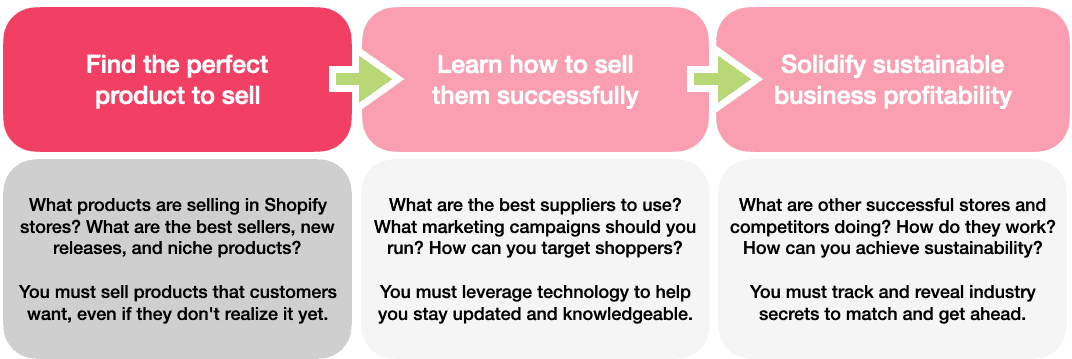 This guide is going to help you perfect the first principle: "Find the perfect product to sell". The methods below each have different strengths. A spy tool gives you competitor intelligence. Google Trends shows demand trajectory. Supplier directories confirm you can actually source the product at a margin that works. Using two or three of these together is more reliable than betting everything on a single method.
1. Use A Dropshipping Spy Tool
We developed the Koala Inspector spy tool to help you find the best products to sell in your chosen market or industry. With just one tap, it'll give comprehensive data that helps you answer: 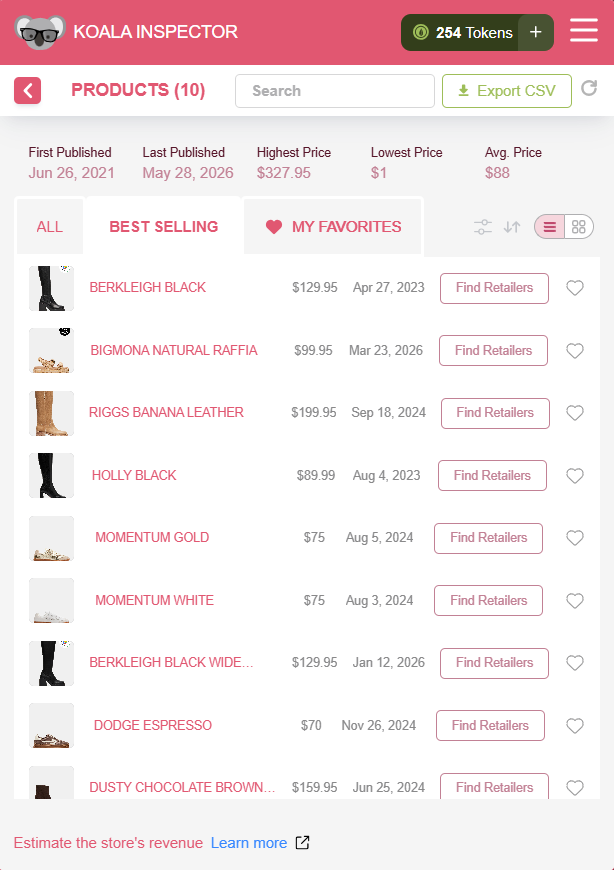 What stores are selling well? Koala Inspector shows you a list of active stores so you can identify which categories and niches have real traction, not just theoretical demand.
What are their hottest dropshipping products? Once you find a store worth studying, you can dig into which specific products are performing. This tells you what customers in that market are actually buying, not what a product database thinks they might buy.
Why are those products selling? Looking at reviews and feedback through Koala Inspector lets you understand the real reasons people are buying: the problem they are solving, the benefit they are chasing, or the occasion they are buying for. This shapes how you write your own listings.
How can you act on trend shifts before they peak? Koala Inspector flags changes in competitor product lineups and pricing. Getting there before saturation is the difference between healthy margins and racing to the bottom.
How can you stay competitive over time? The store that wins long-term is not the one that found one good product, but the one that keeps its finger on what the market is doing. Koala Inspector keeps that competitive picture current.
2. Market Research & Trend Analysis
Trend analysis works best when you separate short-term spikes from genuine sustained demand. A product that trends for three weeks and then collapses will leave you with ad creative you cannot use and a supplier relationship you cannot scale. The goal is to find products where demand is either growing steadily or staying consistent across seasons.
Social listening is a practical starting point. Search key terms related to your product on Facebook, Instagram, and Reddit. Look at what competitors are advertising. Pay attention to the language customers use in comments: specific complaints and specific desires are both product opportunities. A market gap is a place where demand exists but supply is thin or poor quality.
Tools like Koala Inspector can surface these shifts across many stores at once, which saves you the manual work of checking each competitor one by one.
3. Leveraging Online Marketplaces For Product Research
AliExpress is the most common starting point for dropshipping research, and the AliExpress Dropshipper Center organizes products by order volume, ratings, and category. One caution: ratings on AliExpress can be inflated through incentivized reviews. Focus on order count alongside rating, and look for products where a large number of orders and a solid rating both exist.
Amazon's Movers and Shakers section updates hourly and shows which products are climbing the bestseller charts fastest. This is a stronger signal than the main bestseller list because it tells you what is gaining momentum right now, not what has been selling well for years. The "Best Sellers" list skews toward established products that already have thousands of reviews and are hard to compete against.
eBay Watchcount tracks how many users are watching a product, which is a proxy for purchase intent without the same inflatability of review counts.
Using two or three of these marketplaces together to cross-reference demand gives you more confidence than relying on any single platform.
4. Product Research Tools
Dedicated product research tools give you filters and data that marketplace browsing cannot. The most useful ones organize products by trend velocity, competition level, and margin potential.
AliShark focuses specifically on AliExpress performance data. Its filter system lets you narrow by country, niche, and price range, which is useful when you are targeting a specific market rather than casting wide.
AMZScout is built for Amazon research and includes dropshipping-focused features. It is particularly useful for finding niche products with manageable competition. It also offers a lifetime purchase option rather than a monthly subscription, which affects the cost math for newer stores.
Terapeak is eBay's own research tool, available free to eBay sellers. It uses keyword and price data to show how products have performed over time, including seasonal trends. Because it is limited to eBay, it is most useful for confirming demand before you list there rather than as a primary discovery tool.
5. Social Media Listening & Community Discussions
Social platforms are where products get discovered before they reach any marketplace or trend database. A large share of consumers now discover new products through short-form video content on TikTok, Instagram Reels, and YouTube Shorts. This gives you an early signal if you know where to look.
On Facebook, search for phrases like "free shipping" or "where can I get this" and filter results to show only videos from the past month. Sort by engagement. The videos with high shares on product-focused content are often dropshipping stores testing ads. Clicking through shows you what they are selling.
On TikTok, hashtags like #tiktokmademebuyit and #viralproduct surface products that are genuinely converting. Look at views and, more importantly, comments. Comments asking "where can I buy this" are a direct signal of purchase intent.
Reddit and niche forums are underrated for product research. Communities like r/Frugal, r/HomeImprovement, or r/Fitness regularly discuss products they want but cannot find affordably. These threads show you real unmet demand in plain language.
Pinterest skews heavily female and is particularly strong for home decor, fashion, and lifestyle niches. It will not show you social engagement on specific products the way TikTok does, but it is a useful secondary signal for products in female-centric categories.
6. Influencer Marketing
Micro-influencers (typically 10,000 to 100,000 followers) who review products in a specific niche are a reliable leading indicator. They are often approached by brands before those products reach broader visibility. Finding an influencer who regularly features products in your target category and studying what they have promoted in the past 90 days will show you what suppliers are pushing to market right now.
The comment sections on these posts are particularly useful. When multiple people ask where to buy a product, you have both a demand signal and a potential audience to target.
7. Google Trends To Check Product Demand
With Google Trends, you can check how a product is doing with popularity growth. You can write your intended product, pick a target audience, and see instant results. You can further filter these results by region or category.
Google Trends is ideal for testing different products or deciding which is selling the best from several similar products from different stores. The key distinction to understand here: a product that shows a steady upward trend over two years is fundamentally different from one that spiked for a month and fell back. Both might show high absolute interest on a specific date, but their longevity is completely different.
Use Google Trends as a filter after you have found product candidates through other methods. It will confirm whether you are entering a growing market or trying to catch a wave that has already broken.
8. Dropshipping Supplier Directories
A dropshipping supplier is a company that delivers the product directly to the customer when an online retailer makes an order (as the middleman). This way, the online retailer saves significant money on a warehouse.
A dropshipping directory is an online site that categorizes and groups together pre-verified dropshipping suppliers. They offer contract terms and services for each supplier. The verification step matters because working with an unvetted supplier on a product with real demand can sink a store through poor quality, fake reviews, or fulfillment delays that you do not find out about until customers start complaining.
These are some of the most popular:
- SaleHoo: One of the pricier options, but their directory covers over 8,000 verified wholesale suppliers across categories including fashion, beauty, home, and electronics. Their Market Research Lab helps you estimate whether a specific product can be profitable before you commit to it.
- Wholesale2B: A catalog of over a million products with direct integrations for Shopify and Amazon. The order management system is one of the more detailed in this space.
- Worldwide Brands: Asia-based, lifetime subscription, over 16 million certified products. The educational materials are useful if you are new to evaluating supplier quality.
None of these directories replace your own due diligence. Order samples. Check lead times. Contact the supplier directly before you build a product page around them.
9. Patent & Trademark Databases
This step is skipped more than it should be. Selling a product that is protected by a patent or has a trademarked name is a legal liability that does not announce itself until a cease-and-desist arrives.
For products intended for the US market, search USPTO. For international coverage, the Global Brand Database covers trademarks across multiple jurisdictions. When you identify a product you want to sell, search both granted patents and pending applications. A pending patent can still result in a claim if it is eventually approved. Searching the trademark database tells you whether the product name itself is branded.
The practical check: if the product looks like a brand-specific item (a particular design, a specific name, a distinctive shape), run these searches before you build.
10. Offline Retail Stores & Local Communities
Physical retail research gets overlooked because most dropshipping communities are entirely online. But local stores are useful in two specific ways.
First, shelf placement and stock levels are a real demand signal. A product that is consistently sold out at local stores and not readily available online is a genuine opportunity. If customers can easily find it at the nearest mall, they have no reason to order it from your store.
Second, engaging with local retailers can surface supplier relationships that are not visible in the standard online directories. Small regional importers sometimes have access to products before they reach the major directories.
The regulatory angle is also worth considering: local community engagement can surface government regulations around specific product categories (cosmetics, supplements, electronics) in your target region that would otherwise catch you after launch.
11. Crowdfunding Platforms
Kickstarter and similar platforms show you products with demonstrated purchase intent before they reach mainstream retail. Backers are putting money behind products they want to exist, which is a stronger signal than a "like" or a wishlist add.
Look at projects that hit their funding goals quickly, particularly those in product categories where you already have supplier access. The comments and backer questions are research gold: they tell you exactly what buyers care about, what doubts they have, and what would make them buy faster.
Products that fund successfully on Kickstarter often take 12-18 months to reach retail. That is a window where demand has been validated but supply is not yet saturated.
Key Considerations When Selecting Products to Dropship
 Finding a product that people want is only half the work. The other half is finding one you can sell profitably.
The margin math needs to work before anything else. Your supplier cost plus shipping needs to leave enough room to cover advertising, transaction fees, and a return or two. A common working rule: source products you can sell for at least $10 more than your landed cost per unit. That floor covers basic expenses and leaves you some margin to advertise. Products below that threshold get squeezed very quickly when ad costs increase or you take a return.
Supplier reliability is a separate problem from supplier availability. You can find ten suppliers for the same product in an afternoon. Finding one who fulfills consistently, communicates clearly about stock, and ships within a timeframe that does not generate complaints takes actual testing. Order a sample. Check the packaging. Message their support with a question and see how long it takes.
Oversaturation is real but it is also addressable. A product that is saturated in the US market may have low competition in the UK or Australian market. A product sold in a broad category may have room if you niche down: instead of "phone cases", you sell "phone cases for outdoor workers" or "waterproof cases for fishing". The competition in a niche is almost always thinner than in the general category.
High-ticket products carry higher profit per order but require stronger trust signals, more detailed product pages, and often more back-and-forth with buyers before they convert. They are not automatically better than lower-ticket items; the advertising cost per conversion scales up with price, and return risk per order is higher.
Dropshipping Product Research Challenges
The dropshipping business model is straightforward in theory. You find something people want, sell it at retail price, buy it at wholesale from a supplier, and the supplier ships direct to your customer. The hard part is that finding the right product requires a combination of real data and judgment that takes time to develop.
Three challenges come up repeatedly for people starting out:
- Manual research burns a lot of time. Browsing marketplaces, scrolling social media, checking competitor stores one by one: you can spend 20 hours a week on this and still not have a reliable product candidate.
- It is genuinely difficult to know whether a niche has room for you. Volume alone does not tell you that. You need to know the competition level, the margin structure, and whether you have any angle that distinguishes you.
- Competitor data is hard to get accurately. Understanding what top stores in a niche are actually selling, not just what they are listing, requires tools that can surface real performance signals rather than just catalog data.
The stores that resolve these challenges fastest are the ones using tools built specifically for dropshipping intelligence: real-time data, not manual searches.
Top Industries Thriving in Dropshipping 2026
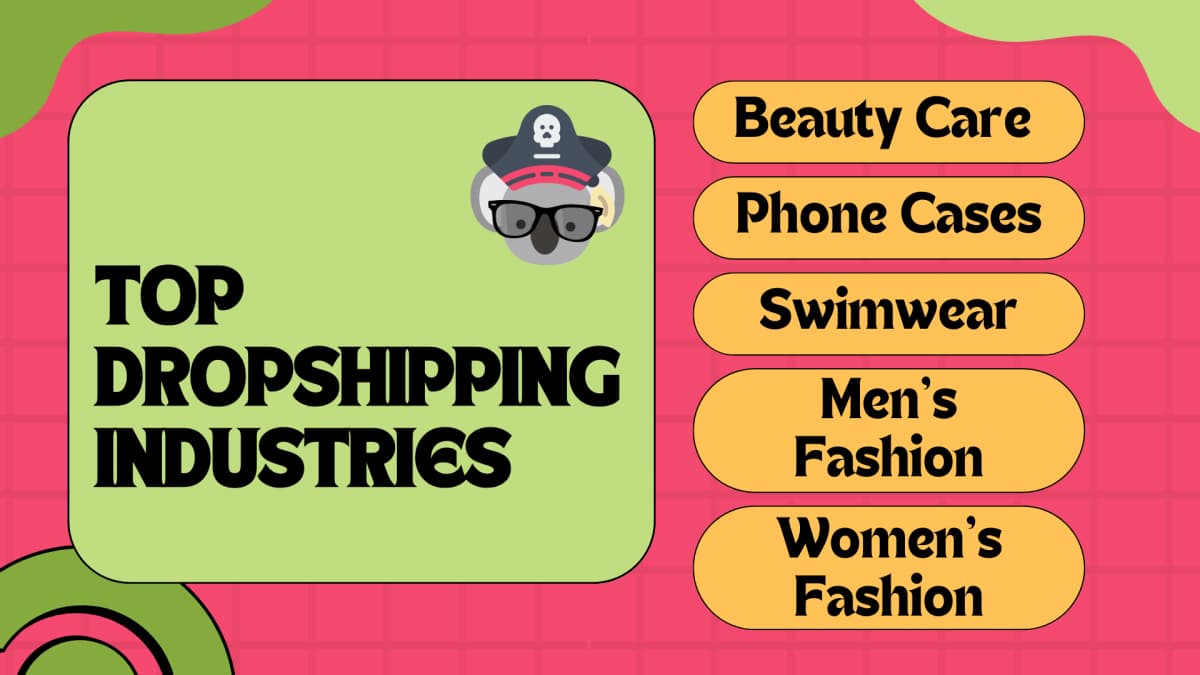 Here are some of the top dropshipping niches in 2026, and most of them will not even surprise you:
- Beauty Care - Beauty accounts for roughly 33% of US TikTok Shop GMV according to Spocket research, and the supplier base on AliExpress and CJDropshipping is deep. Facial rollers, blackhead removers, and LED skincare tools have been consistently strong.
- Phone Cases - Electronic device accessories follow short replacement cycles. Cases with multiple functions (card slots, battery packs, mirror inserts) perform better than plain protective cases because they have a clearer USP.
- Swimwear - Seasonal demand is predictable, which makes inventory planning easier even without holding stock. Differentiation through fit, fabric, or specific activity (lap swimming vs. leisure) helps cut through the noise.
- Men's Fashion - Men's fashion moves slowly compared to women's, which is actually an advantage in dropshipping: trends stay relevant longer. Functional items like utility pants and accessories with practical features have shown consistent demand.
- Women's Fashion - High turnover, which means constant opportunity but also constant research overhead. Staying current requires weekly review of what is moving on social platforms.
- Bonus Tip: Digital Products. While digital products are not yet the top-performing dropshipping niche, they are expected to make up 26% of all online sales by 2026. The margin structure is completely different: no supplier, no shipping cost, no return logistics.
Product Validation & Testing
 Before you build a full product page, run ads, or set up a supplier relationship, test the core assumption: do real buyers want this product at the price you are planning to sell it?
The cheapest validation method is a small paid engagement test. A $5-per-day Meta post engagement campaign run for 24-48 hours will tell you whether the product concept generates interest before you invest in conversion-optimized creative. You are not testing for sales at this stage; you are testing for attention. Comments, shares, and link clicks at this small scale are a meaningful early signal.
Comparative testing helps you choose between two similar product candidates. Put both in front of the same target audience with comparable creative. The one with better engagement metrics deserves your full build-out. The one that underperforms gets dropped before you have sunk real money into it.
Buy samples before you go live at scale. This sounds obvious but many sellers skip it. A sample tells you the packaging, the actual quality against the product photos, and the realistic lead time from order to your door. All three of those will affect your customer reviews.
Crowdfunding research is a lower-cost way to gauge interest before any ad spend: describe your product concept on a platform like Kickstarter and see whether backers show up.
Building a Sustainable Brand & Niche Focus
 The stores that achieve consistent revenue are not usually the ones that found one viral product. They are the ones that built a recognizable identity around a specific customer and problem.
Niche focus is the practical version of this. When your store clearly serves "outdoor workers who need durable phone accessories" or "home cooks who want restaurant-quality tools on a budget", every product decision becomes simpler. You know who you are buying for. Your marketing message stays consistent. Your returning customers know what to expect from you.
Brand personality goes beyond a logo. It is the tone of your product descriptions, the way you handle customer questions, the packaging inserts (if you use them), and what you actually stand for beyond just selling things. Customers who trust a brand come back and refer others. That compounds in a way that single-product viral stores generally do not.
Choose a niche you can go deep on. Pick products that serve that niche well. Build the store around the customer rather than around whichever product happened to trend this week.