Commerce Inspector Review & How To Use Guide 2026
 By Ana GelevskaJanuary 7, 2025 · Updated June 10, 2026
Most Shopify sellers lose a chunk of time every day manually checking what competitors are doing: opening tabs, scanning product pages, guessing at pricing strategy. Commerce Inspector (now rebranded as Shine Commerce) is built to cut that manual work by surfacing competitor data automatically, right inside your browser.
This review covers what Commerce Inspector actually does, where it falls short, and how it stacks up against free alternatives so you can decide if it belongs in your workflow.
What is Commerce Inspector?
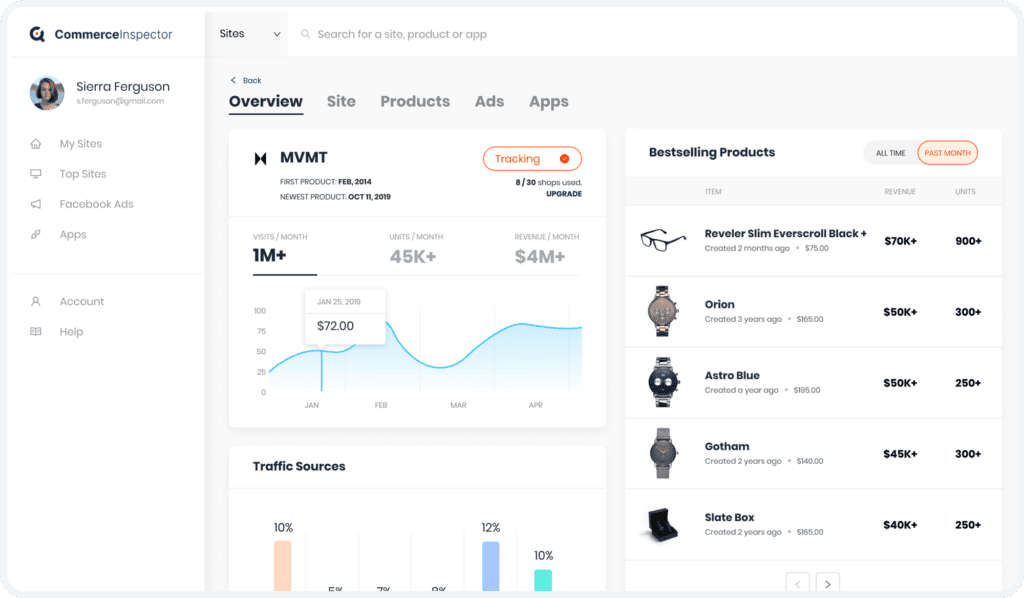
A commerce inspector is a browser tool that reads public data from a Shopify store and shows you a competitor's products, best-sellers, traffic sources, installed apps, and ad campaigns as you browse. Commerce Inspector, the tool by that name, is the best-known one: a Chrome extension for Shopify sellers and dropshippers that surfaces this competitor data automatically. It has since rebranded to Shine Commerce, though many sellers still search for it under the original name.
The tool positions itself around "must-have competitive insights" - the pitch is that you should know what your competitors are doing before you make product and marketing decisions, not after. It is not the only option, and as you will see below, several of the features it charges for are free in alternatives like Koala Inspector.
Commerce Inspector's Features
Track new products and bestsellers
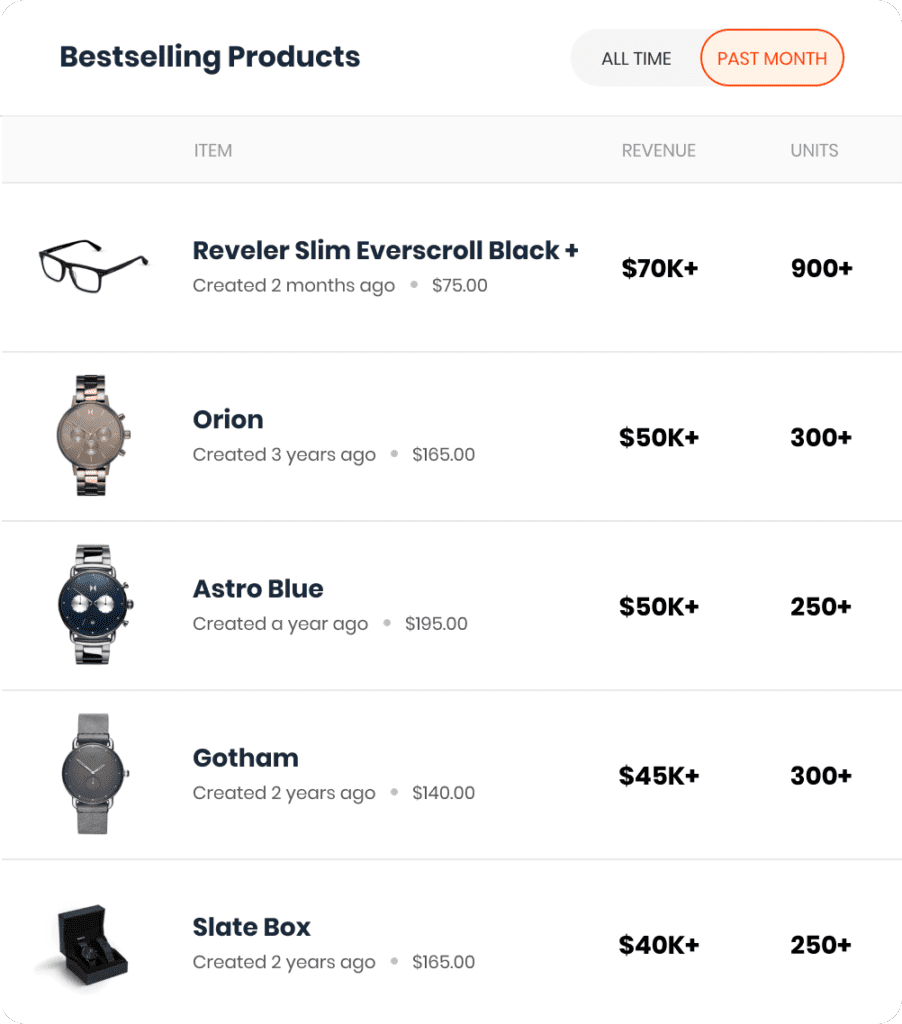
If you're deciding what to list next, Commerce Inspector shows you which products competitors added recently and which ones are actually selling. You can filter by day and tag, which makes it easier to spot what's moving right now rather than wading through a store's full catalog.
The free plan lets you see best-selling products of all time. Seeing what sold well last week requires the paid tier.
Reveal competitor sales data
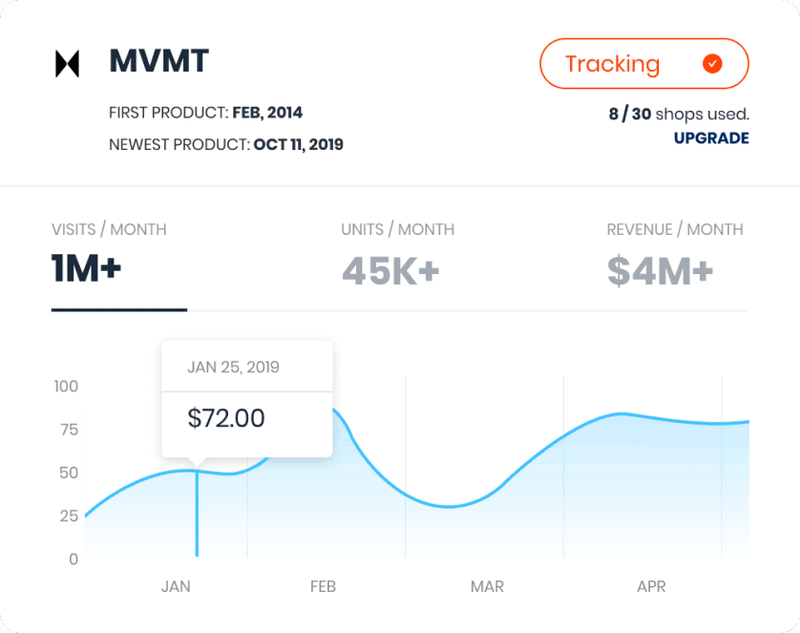
Commerce Inspector estimates monthly units sold and revenue for competitor stores. On the free plan you get a rough sense of monthly sales volume. On paid plans you get revenue broken down at the product level and the shop level - which is more useful when you're trying to decide whether a niche is worth entering.
One thing to know: Commerce Inspector's catalog covers over 21 million searchable products across Shopify stores, which means it has reasonable coverage even for smaller niches.
See which Shopify apps competitors use
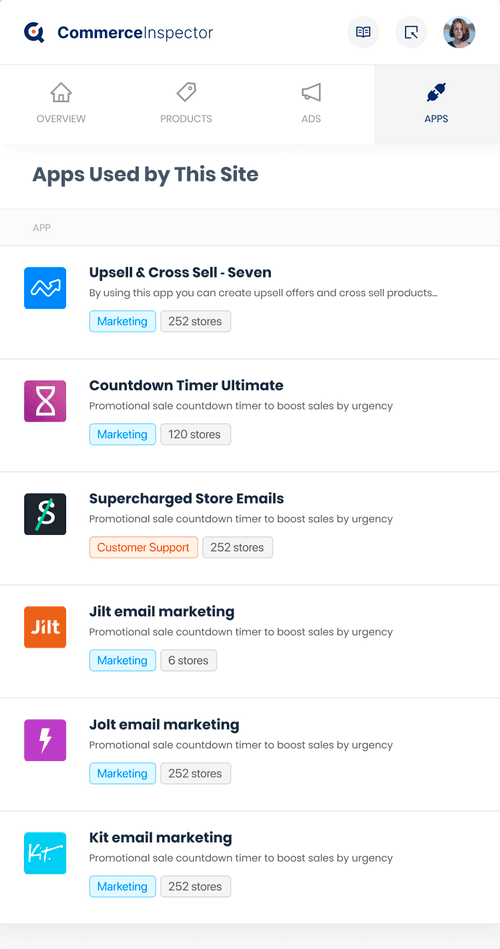
This is one of the more practical features. Commerce Inspector scans a competitor's store and lists the Shopify apps they've installed. That tells you which tools other sellers in your niche are paying for, which saves you from subscribing to something just because it sounds good in a marketing email.
If a competitor added a new upsell app last month and their sales went up, that's worth noticing. Commerce Inspector makes that kind of observation possible without digging through their source code.
Traffic source breakdown
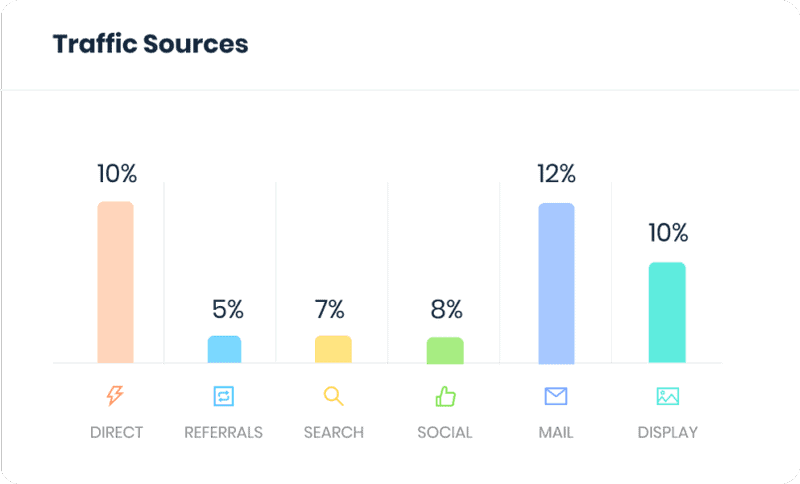
Commerce Inspector shows where a competitor's visitors come from: organic search, paid social, direct traffic, referrals. It also shows which social channels they maintain a presence on.
This matters if you're allocating a limited ad budget. Knowing that a competitor in your niche gets most of their traffic from Google organic rather than Facebook ads tells you something real about how that market works.
Facebook ad detection
Commerce Inspector can surface the Facebook ad campaigns a competitor is currently running. On the paid plan this expands to a searchable ad library across shops. For sellers trying to understand what creative angles competitors are testing, this is more efficient than manually searching the Meta Ad Library for each competitor one at a time.

Commerce Inspector - Pros and Cons
Pros
1. Activates automatically on Shopify stores
When you open any Shopify store in Chrome, Commerce Inspector pulls data for it automatically. You don't have to run a separate search or paste a URL anywhere. The sidebar appears and the insights are already there. For sellers who check competitor stores often, that frictionless workflow adds up.
2. Free plan covers the basics
The free plan is a real starting point, not a teaser. You get competitor app tracking, recent product launches with day/tag filters, and all-time bestsellers. If you're early in building your store and just want to validate that a niche has real traction, the free plan gives you enough to work with.
3. Product-level depth across a large catalog
Commerce Inspector's 21+ million product catalog means you can search for a product type and see which stores sell it, how those stores perform, and what else they stock. That's useful for both product research and understanding who your real competitors are (often not the stores you'd expect).
4. App stack intelligence
Knowing which apps your competitors use is something most tools don't cover at all. If you're deciding between two review apps or two upsell tools, checking what well-performing stores in your niche are running gives you a useful signal.

Cons
1. Free plan is more limited than most alternatives
While Commerce Inspector has a workable free tier, it's more restricted than most competing tools at the same price point (free). Koala Inspector, for example, includes Facebook ad detection and theme detection at no cost - features that require a paid Commerce Inspector subscription.
2. Paid plans are expensive
Commerce Inspector's paid tiers start at $29/month for data on up to 3 stores, $59/month for 10 stores, and $149/month for 30 stores. The top Conquer plan runs $499/month (or $299/month billed annually). For a seller tracking a handful of competitors, the entry plan is workable. But most active dropshippers track more than 3 stores, which means the $29 plan runs out fast.
3. Store slots are locked for 30 days
On the entry paid plan you get 3 store slots. If you want to swap in a different competitor before 30 days have passed, you can't - you have to upgrade to unlock more slots or wait out the lock period. This is a real annoyance for sellers who do regular competitor sweeps rather than tracking a fixed set of stores.
Free vs. Paid Plan - Which is a better choice?
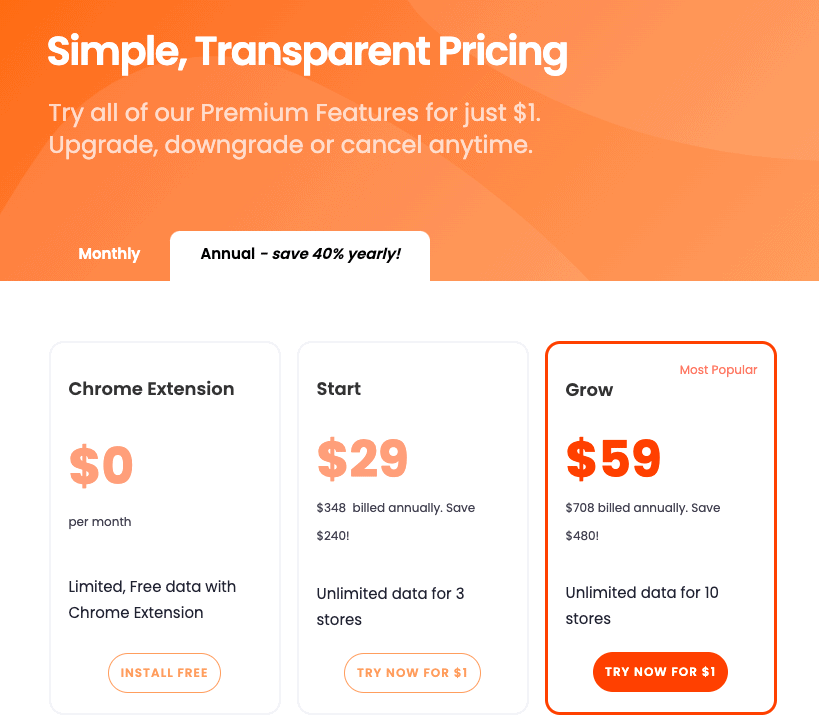
The right choice depends on where you are in your business. Here's a practical breakdown.
Commerce Inspector Free Plan
The free plan is a Chrome extension you can install and start using today with no payment details required. It covers:
- Competitor app tracking (what Shopify apps they've installed)
- Recent product launches, filterable by day and tag
- All-time bestselling products for any store you visit
If you're validating a new niche or just getting started, the free plan gives you real data. The gap between free and paid becomes noticeable once you want weekly bestseller data, revenue breakdowns, or ad detection.
Commerce Inspector Paid Plan
The paid plans add:
- Revenue tracking at both the shop level and product level
- Best-selling products from the prior week
- Cross-shop search for apps and products
- Trending and bestseller shop lists
- Facebook ad detection
For sellers running paid acquisition or managing multiple stores, these features have clear value. The weekly bestseller data alone is useful for spotting products before they get crowded.
Worth checking: Commerce Inspector occasionally runs limited-time free trials, so it's worth looking before committing to a monthly subscription.
Commerce Inspector vs. Koala Inspector
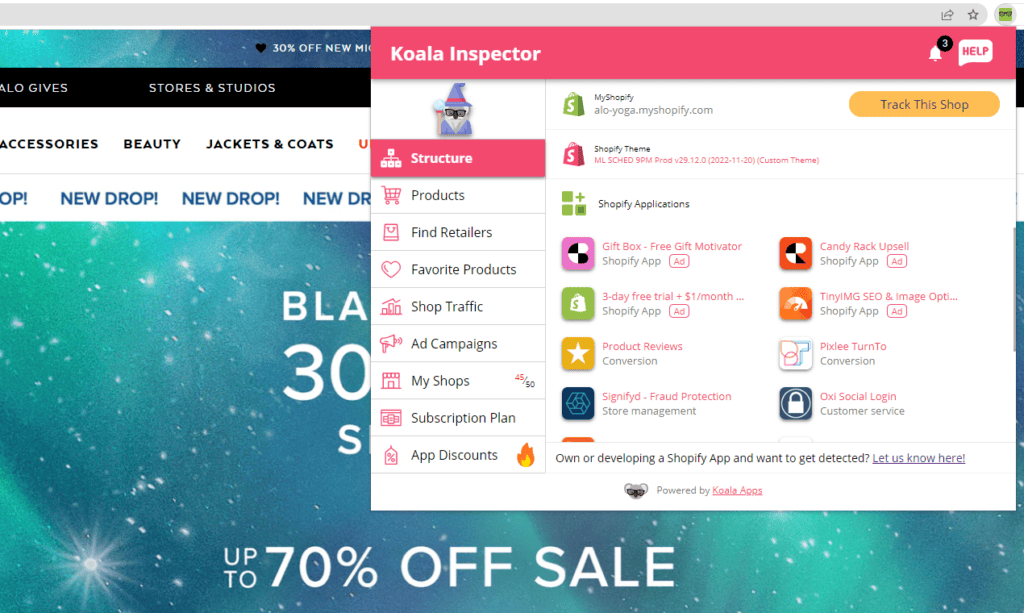
If you are weighing Commerce Inspector against the free options, this is the comparison that matters. Koala Inspector is the strongest free alternative, and the gap shows up exactly where Commerce Inspector asks you to pay.
Here is where Koala Inspector is stronger:
- Best-seller ranking is free. Koala Inspector ranks a store's best-selling products on its free plan. Commerce Inspector gives you all-time best-sellers for free but locks last week's best-sellers, the data you actually use to spot a trend early, behind a paid tier.
- Theme detection is free. Koala Inspector tells you which Shopify theme a competitor runs and which apps power it. Commerce Inspector covers apps but does not detect the theme, so you only get half of the build.
- Ad detection is free. Koala Inspector surfaces the Facebook ads and ad campaigns tied to a store at no cost. On Commerce Inspector, ad detection is a paid feature.
- Store tracking without a 30-day lock. Koala Inspector lets you follow the stores you care about without locking your slots for a month. Commerce Inspector's entry plan freezes your 3 store slots for 30 days, which gets in the way if you run regular competitor sweeps.
- One-click install, runs automatically. Both extensions activate on any Shopify store you open. Koala Inspector installs in one click from the Chrome Web Store and gives you this without a subscription.
To be fair to Commerce Inspector, its 21+ million product catalog and cross-shop search are deep, and its paid revenue breakdowns are detailed. If you already pay for the higher tiers and live in product research all day, that depth is real. But for the day-to-day work most Shopify sellers and dropshippers actually do, checking a rival's best-sellers, theme, apps, ads, and traffic, Koala Inspector covers it on the free plan.
Koala Inspector also has a Premium plan ($22/month for 220 renewing tokens, with one-time token packs from $3.99) that unlocks CSV export for product lists. Most sellers never need it; the free tier handles the research that matters.
Add Koala Inspector to Chrome for free and run it on the next competitor store you open. For a walk-through of what to look at first, see how to get the most out of Koala Inspector.

Summary
Commerce Inspector is a capable tool with a large product database and automatic insights when you open any Shopify store. The free plan works for basic competitor tracking, and the paid plans add meaningful depth around revenue and weekly trends.
The main downsides are cost and the 30-day store slot lock on entry plans. If you need data on more than 3-5 stores or want ad detection without paying, a free alternative like Koala Inspector covers more ground on the free tier.
For sellers already paying for Commerce Inspector's paid plan, the weekly bestseller data and cross-shop search justify the cost if you're actively doing product research. If you're just starting out or working with a tight budget, start with Koala Inspector's free plan - you can get the most out of it here before deciding whether to pay for anything else.
Comparing other tools too? We have hands-on reviews on the blog, including Dropship.io vs Koala Inspector and BuiltWith vs Koala Inspector.
Written by
Ana Gelevska
eCommerce Content Writer
Ana Gelevska is a content writer with more than five years of experience creating content for eCommerce brands and global clients. She digs into each topic and the people it is for, then turns it into clear, useful articles that Shopify sellers and dropshippers can act on.
Connect on LinkedIn