How to Sell NFT's on Shopify?
 By Ana GelevskaDecember 27, 2021 · Updated June 5, 2026
An NFT, a non-fungible token, is a unique entry on a blockchain that points to a specific digital file and records who owns it. The file itself, an image, a song, a video clip, can be copied endlessly. The token can't be. There is exactly one of it, the chain says who holds it, and that ownership record is public and can't be quietly edited. So when someone buys an NFT, what they're actually buying is that line in the ledger, not the pixels, which anyone can still right-click and save.
That distinction is the whole point. The first NFT was minted in 2014, but the format only reached most people in 2017 with CryptoKitties, a game where the collectibles were tokens. They're created and traded through crypto wallets on marketplaces, and the marketplace you pick shapes what you're selling into: OpenSea runs mostly on Ethereum and Polygon and lists almost anything, while Nifty Gateway curates drops from a smaller set of established artists.
Why a Shopify Seller Would Care
The part that matters commercially is the resale trail. Because every transfer is recorded on-chain, a creator can write a royalty rule into the token, so they collect a percentage each time the work resells on a supporting marketplace, not just on the first sale. 
For a digital artist, that's a genuine shift. A normal file sale ends the moment the buyer pays. If the work then gets passed around or flipped, the original creator sees none of it. Token-level royalties change that math: the income can keep arriving as long as the piece keeps changing hands.
Selling NFTs Where Your Customers Already Are
Underneath, selling an NFT isn't far off from selling anything else online. You list a product and someone pays for it; the product just happens to be digital rather than physical. The friction is the venue. A storefront on Shopify is built for a shopper who already knows how to check out. A marketplace like OpenSea assumes the buyer arrives with a funded crypto wallet and knows how to use it, which rules out most of the general public.
The appeal of combining both: you get the familiar checkout flow and customer trust that Shopify brings, without forcing your buyers to navigate crypto exchanges before they can make a purchase. 
How Shopify Handles NFTs
Shopify was among the first major e-commerce platforms to test NFT sales infrastructure. It works through partner apps rather than native minting built directly into the platform - you pick a Shopify-compatible NFT app, connect it to your store, and handle minting and listing from within that workflow.
Minting and Listing via Partner Apps
Instead of creating a separate account on an NFT marketplace and learning its particular interface, you can mint NFTs on supported blockchains directly through Shopify's partner apps. 
Keeping Control of the Transaction
Creators who set up independent minting through custom websites often face higher costs due to complexity and regulatory requirements. Selling on third-party NFT marketplaces means giving up control over checkout design, customer data, and analytics. Shopify's NFT tools let you handle sales through your own branded store while keeping the process straightforward.
Payment Options
Not every payment provider supports NFT sales, and many that do accept only cryptocurrency - which means your buyer has to own crypto before they can buy from you. With the Shopify NFT setup, payment can run through Shopify Payments, Shop Pay, crypto payment gateways, or standard credit and debit cards. Buyers can also claim NFTs via email and add them directly to a crypto wallet. That flexibility matters: it removes a real barrier for buyers who want the item but haven't touched crypto before.
The technical spec for building on this infrastructure is in Shopify's developer docs.
Use the Right Data to Compete
The NFT market exploded in 2021: Chainalysis found that buyers sent at least $44.2 billion worth of cryptocurrency to the Ethereum smart contracts behind NFT marketplaces and collections that year. That growth attracted a lot of sellers, which means competition is real. What separates stores that do well from ones that don't is often knowing what buyers are responding to, what price points move product, and what other sellers in the space are doing. 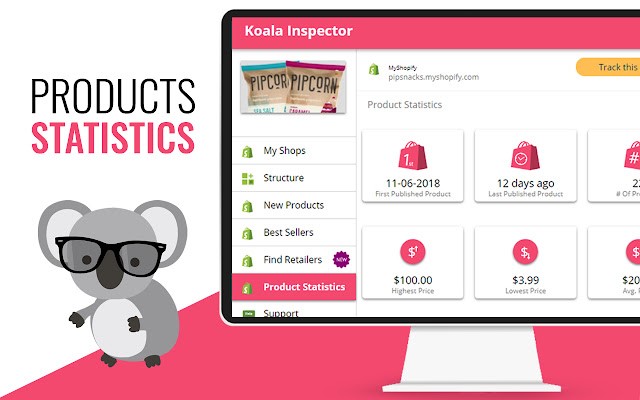
Koala Inspector - Competitive Intelligence for Shopify
Koala Inspector lets you see what's working in any Shopify store - price points, apps in use, traffic signals, and more. If you're positioning an NFT offering on Shopify, knowing what the competition looks like gives you a real advantage when setting prices and planning your marketing. 
Where to Start
If you already run a Shopify store and want to add NFTs to it, the partner-app route is the low-friction one: install a Shopify-compatible NFT app, connect a wallet, and you can mint and list without standing up a second presence on a marketplace your customers have never used. Selling NFTs next to your physical or digital products in the same catalog also keeps your orders, customer records, and branding in one place instead of split across systems. Before you set prices, it's worth seeing what comparable Shopify stores in your space already do, which is what Koala Inspector is for.
Written by
Ana Gelevska
eCommerce Content Writer
Ana Gelevska is a content writer with more than five years of experience creating content for eCommerce brands and global clients. She digs into each topic and the people it is for, then turns it into clear, useful articles that Shopify sellers and dropshippers can act on.
Connect on LinkedIn