Ecomhunt Extension: What It Does vs Koala Inspector
 By Ana GelevskaApril 18, 2023 · Updated June 15, 2026
The Ecomhunt extension is a Chrome add-on tied to the Ecomhunt product-research platform. As you browse AliExpress or Facebook, it overlays supplier order data, sales charts, and ad-targeting signals so dropshippers can spot items with buyer demand. What it does not do is research live Shopify stores. For that, Koala Inspector opens any Shopify store and shows its products, prices, installed apps, active theme, and modeled sales signals, so you study real competitors instead of a curated AliExpress feed.
Picking products to sell is harder than it looks. The global dropshipping market was valued at $365.67 billion in 2024 and is projected to reach $1.25 trillion by 2030, a CAGR of about 22%. The opportunity is real, but only a minority of dropshippers build something that lasts, and the gap usually comes down to research: studying what proven stores actually sell instead of guessing from a shared idea list. This guide explains what the Ecomhunt extension shows, where it stops, and how Koala Inspector covers the live-Shopify research Ecomhunt was never built for.
Table of Contents
- Ecomhunt extension vs Koala Inspector
- What the Ecomhunt extension shows you
- Ecomhunt features at a glance
- Free vs paid Ecomhunt
- Ecomhunt pros and cons
- Is the Ecomhunt extension worth using?
- FAQ
Ecomhunt extension vs Koala Inspector
These two tools get grouped together, but they answer different questions, and for Shopify research the stronger answer comes from Koala Inspector.
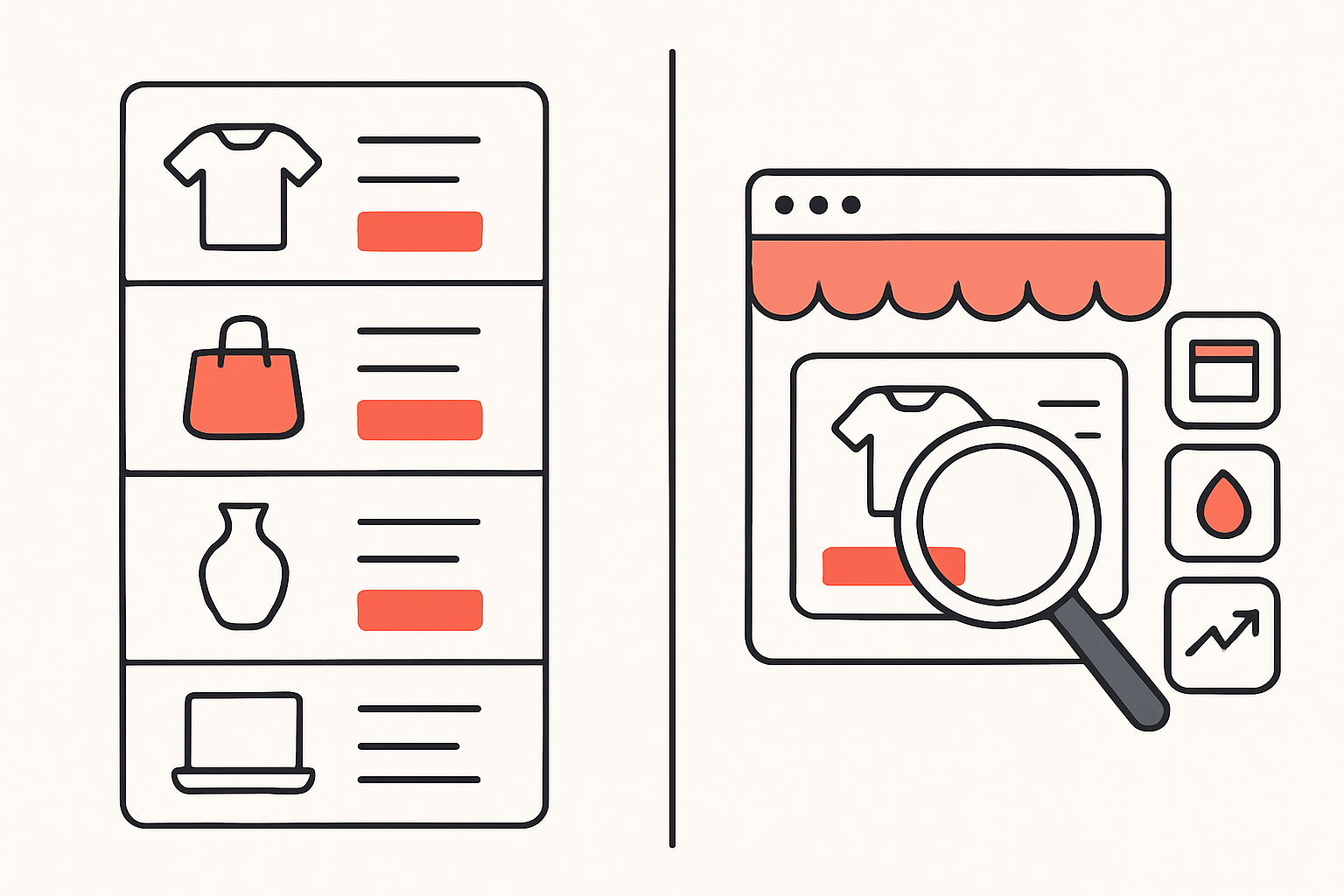
Koala Inspector researches real Shopify stores. Open any live Shopify store and Koala Inspector reads its full product catalog, prices, and variations, flags likely best-sellers, detects every installed app, and identifies the active theme, all on the free tier. Token-gated views add the store's ad campaigns, traffic profile, and live product trends, plus ongoing tracking that records when a competitor adds products, changes prices, or swaps apps. You are looking at what a specific business in your niche is actually doing, not a global suggestion. Sales and traffic numbers are estimates modeled from public signals any visitor's browser can already see, so you use them to compare stores and spot trends.
Ecomhunt is a curated AliExpress idea feed. Its value is the daily shortlist of supplier products with order growth and ad signals attached. That helps you browse ideas faster than scrolling AliExpress by hand, but the underlying number is AliExpress order volume across all buyers, not the revenue any Shopify store earns reselling the item. So Ecomhunt tells you a product has supplier demand somewhere; it cannot tell you which Shopify competitors sell it, at what price, with which apps and theme behind the storefront.
| Question you are asking | Ecomhunt extension | Koala Inspector |
|---|---|---|
| What is a specific Shopify competitor selling? | Not covered | Full catalog, prices, likely best-sellers |
| Which apps and theme power that store? | Not covered | App detector and theme detector, free |
| What does the data measure? | AliExpress order volume (all buyers) | Live Shopify store signals, modeled |
| Where do product ideas come from? | Curated AliExpress feed | Real stores you choose to inspect |
| Free tier | Yes, with 3-day delay and tight limits | Yes, 15 tokens a month, no card |
If your goal is to research proven Shopify competitors and the products already moving in their stores, Koala Inspector is the tool built for it. Add Koala Inspector to Chrome and inspect a store in your niche to see the difference.
What the Ecomhunt extension shows you
Ecomhunt is a product-research database. Its team curates a daily list of products pulled from AliExpress and other suppliers, then layers analytics on top: estimated margins, ad-targeting data, AliExpress sales graphs, and saturation scores. The extension surfaces those signals while you browse.
The pitch is replacing hours of manual AliExpress scrolling with a pre-filtered shortlist. That framing is the key thing to evaluate, because the shortlist is shared. The same curated products are visible to every other Ecomhunt subscriber at the same time, so a flagged "winner" can be a crowded market within days.
The other point to weigh before relying on it: Ecomhunt shows supplier sales data, not dropshipper revenue. When you see "X units sold," that is AliExpress order volume across all buyers, not earnings from anyone reselling the item on Shopify. A product with 10,000 AliExpress orders can still be a poor opportunity once margins and ad costs are real. This is exactly the blind spot Koala Inspector fills, since it reads what live Shopify stores are selling rather than what a supplier moved.
Ecomhunt features at a glance
Here is what the platform packs in, framed so you can judge whether it fits how you research.
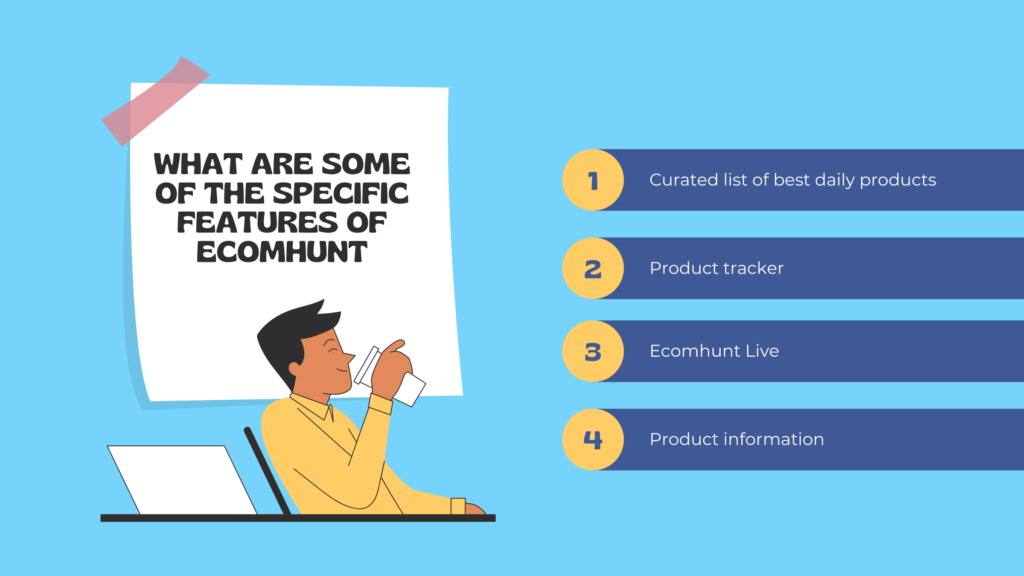
Daily curated product list. A team flags products showing AliExpress order growth, competitive margins, and emerging ad activity. Paid subscribers see new additions immediately; free accounts see them three days later. Because everyone sees the same list, treat it as a starting signal, not a moat.
Product tracker. Pulls AliExpress data for a product: total orders, wishlist count, and a sales chart over time. It tells you whether supplier demand is growing or has already flattened, not whether a Shopify store profits from it.
Ecomhunt Live. A feed of globally trending tracked products with country interest and 30-day buyer intent. Useful for a pulse on what is moving on AliExpress.
Saturation filter. Sorts the database by how many other stores are listing an item. The most practical filter, since it hints at how crowded an idea already is.
Margin and pricing data. An estimated profit per unit and a suggested selling price. These run optimistic, and real ad costs eat into the take-home, so read them as a hypothesis.
Facebook targeting and influencer suggestions. Audience breakdowns and niche influencers already promoting similar items. A starting point for testing, not a finished plan.
Product descriptions, images, and reviews. Copyable assets pulled from AliExpress listings. Usable, but every other subscriber has the same ones, so rewrite before publishing.
What none of these features do is open a live Shopify store and show you its catalog, apps, theme, or modeled sales. That is the research Koala Inspector is built around.
Free vs paid Ecomhunt
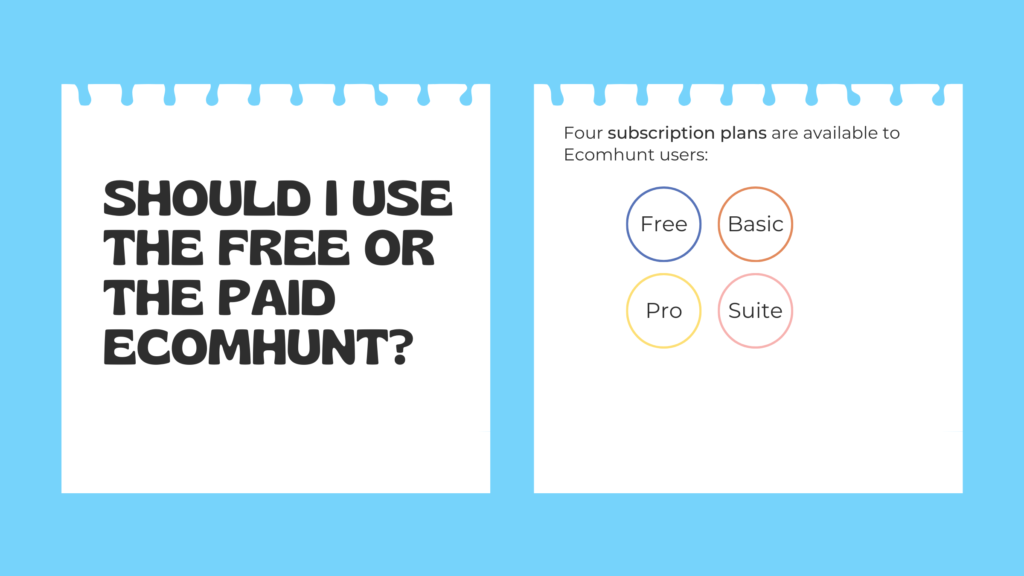
Ecomhunt has four tiers. Here is what actually differs, so you can size the cost against the value.
Free. Access to the product database, but newest additions unlock three days after publication and detailed analytics are capped at two products per day. Enough to test whether the platform fits, too restricted for active research.
Basic ($23/month). Removes the delay on new products, opens up to two years of database history, and tracks 10 products at once.
Pro ($39/month). Tracks 100 products and adds 1-on-1 coaching, which is the main reason to pick it over Basic.
Suite ($49/month). Tracks up to 500 products and bundles a sales course. Worth it only for larger catalogs or structured training.
One practical warning that shows up across forums and review sites: several users report difficulty canceling paid plans. Read the cancellation terms before entering card details. By contrast, Koala Inspector keeps store structure, app detection, theme detection, product research, and best-sellers free on a 15-token monthly plan with no card required.
Ecomhunt pros and cons
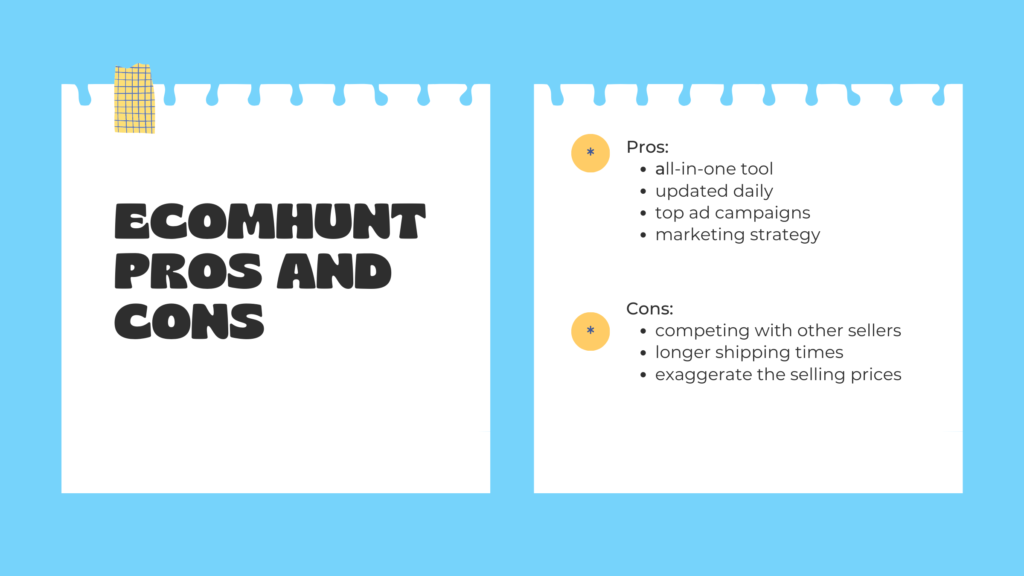
Pros
- The daily curated list trims time spent scrolling AliExpress by hand.
- Margin scores, saturation data, and ad targeting sit in one place.
- The extension adds context while you browse instead of a separate dashboard.
- Community content (podcasts, tutorials) includes real seller case studies.
Cons
- The shortlist is shared, so a flagged "winner" can saturate within days.
- Most products ship from AliExpress suppliers, meaning 2 to 4 week delivery (or longer) that hits satisfaction and returns.
- Suggested prices and margins run optimistic.
- The data measures supplier order volume, not dropshipper revenue, so it cannot tell you what real Shopify competitors are actually selling.
Is the Ecomhunt extension worth using?
For browsing AliExpress product ideas faster, the Ecomhunt extension does its job, and the free tier is enough to judge the fit. The limit is structural: a shared shortlist of supplier products saturates quickly, and supplier order volume is not the same as a Shopify store's results.
That is the gap to close with live-store research. Koala Inspector lets you open the Shopify competitors already winning in your niche and read their products, prices, likely best-sellers, installed apps, active theme, and modeled sales signals directly, with competitor tracking that flags changes over time. Where Ecomhunt hands everyone the same idea list, Koala Inspector shows you what specific stores are doing right now. Add it to Chrome free and start with one competitor store before you commit ad spend.
FAQ
What is the Ecomhunt extension? It is a Chrome add-on tied to the Ecomhunt product-research platform. As you browse AliExpress or Facebook, it overlays supplier order data, sales charts, and ad-targeting signals so dropshippers can spot products with buyer demand. It works from a curated AliExpress idea feed, not from live Shopify stores.
Is the Ecomhunt extension free? There is a free Ecomhunt tier, but it holds the newest products back by three days and limits detailed analytics to a couple of products a day. Removing those limits requires a paid plan starting at $23 per month. Koala Inspector also has a free tier (15 tokens a month, no card) that keeps store structure, app detection, theme detection, and product research free.
Ecomhunt vs Koala Inspector: which is better for Shopify research? Koala Inspector is built for Shopify research. It opens any live Shopify store and shows its products, prices, installed apps, active theme, and modeled sales signals, so you study real competitors. Ecomhunt is a curated AliExpress idea feed and reports supplier order volume across all buyers, not what a Shopify store is actually selling. For competitor and proven-product research, use Koala Inspector; for AliExpress idea browsing, Ecomhunt.
Does the Ecomhunt extension show real dropshipper revenue? No. Ecomhunt reports AliExpress order volume, which counts purchases from every buyer, not just dropshippers reselling the item. A product with thousands of orders can still be a weak dropshipping pick once margins and ad costs are factored in.
Can Koala Inspector see a competitor's apps and theme? Yes. Koala Inspector detects every Shopify app installed on a store and identifies its active theme for free, alongside the store's product catalog and likely best-sellers. Sales and traffic figures are estimates modeled from public signals any visitor's browser can already see, useful for comparing stores and spotting trends.
Written by
Ana Gelevska
eCommerce Content Writer
Ana Gelevska is a content writer with more than five years of experience creating content for eCommerce brands and global clients. She digs into each topic and the people it is for, then turns it into clear, useful articles that Shopify sellers and dropshippers can act on.
Connect on LinkedIn