2026 Holiday Marketing Trends: Strategies for Ecommerce Success
 By Ana GelevskaJanuary 1, 2025 · Updated June 5, 2026
The holiday season is the one period where preparation time directly determines profit. Stores that start planning in September consistently outperform those who scramble in November, not because they work harder but because they give themselves room to test what actually converts for their specific audience.
US online holiday spending reached $221.1 billion in 2023, up 4.9% from the year prior. The National Retail Federation reported that 2025 holiday sales in November and December exceeded $1 trillion for the first time. That growth is real, but so is the competition. Every Shopify store is fighting for attention during the same narrow window.
This guide covers the strategies that actually move the needle for ecommerce store owners: where to put your energy before BFCM, how to build a mobile checkout that doesn't leak sales, and how to use competitor research to find positioning gaps while everyone else is guessing.
Understanding the Holiday Ecommerce Landscape
A few numbers worth knowing before you build your calendar:
- 51.1% of online holiday sales in 2023 were made on smartphones, up from 47% the previous year (Adobe Analytics). Mobile is no longer a secondary channel. For most stores, it's the primary one.
- BNPL (Buy Now, Pay Later) contributed $16.6 billion in US holiday spending in 2023, up 14% year-over-year. Shoppers are using flexible payment options to buy at higher price points.
- A well-executed Q4 can add 40% to annual revenue for a store doing at least $25k/month. That figure comes from practitioners in the Shopify community, not a prediction, but a benchmark that shows how concentrated the opportunity is.
- Cart abandonment hits roughly 70% on desktop and 80% on mobile (Baymard Institute, aggregated from 50+ studies). Every percentage point you recover during peak season is amplified.
The practical implication: holiday success is not about running more promotions. It's about fixing the things that lose sales: slow mobile pages, friction at checkout, weak email segmentation, inconsistent messaging across channels.
Start Competitor Research Before the Season Opens
Before writing a single ad or discount, spend time understanding what your top competitors are doing. Which products are they promoting? What angles are they using? What's missing from their messaging that your audience actually cares about?
This is where Koala Inspector pays off. You can see a competitor Shopify store's apps, theme, traffic sources, and product structure without guessing. During holiday prep, that means you can spot if a competitor is leaning hard on a particular product category, identify which apps they're using for upsells or cart recovery, and find gaps in their positioning before you lock in your own.
Running competitor analysis in October rather than November gives you time to act on what you find.
Personalization: What It Actually Means for a Mid-Size Store
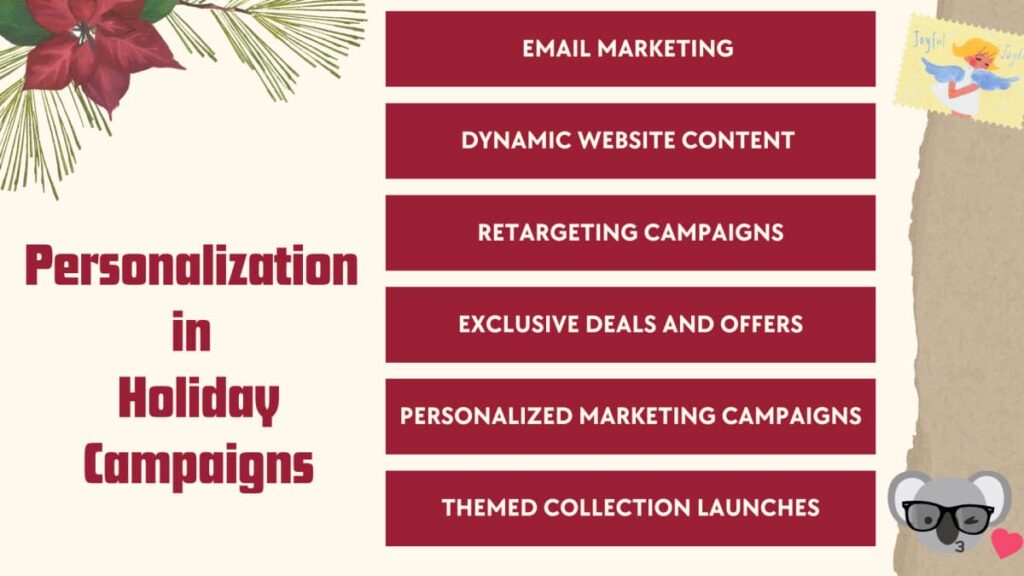
"Personalization" gets overused as a concept. For a Shopify store without a team of data scientists, here's what it realistically means:
Email segmentation by behavior. Your VIP customers (top 20% by spend) should get different messaging than someone who bought once six months ago. VIPs respond to early access and exclusive stock. Lapsed buyers respond to a compelling offer with a clear expiration. Sending the same campaign to both groups wastes both.
Abandoned cart sequences with real numbers behind them. Email marketing returns roughly $8.54 per $1 spent when properly set up. Abandoned cart emails specifically can hit 40% open rates with 3-4% order rates on the second follow-up. That's not theoretical. Those figures come from real Shopify stores running Klaviyo sequences. Set up at least two emails: one within an hour, one 24 hours later with a small incentive.
Retargeting campaigns for high-intent browsers. Most visitors browse and leave without buying. Retargeting ads showing the exact products they viewed, across Meta and Google, bring a significant portion back. The key during the holidays is to start building those audiences before BFCM so you have enough data to work with when CPMs spike.
Themed collections that solve a specific gifting problem. Generic "holiday gifts" pages perform poorly. "Gifts for home bakers under $50" or "last-minute gifts that ship in 2 days" answer an actual question a shopper has. Build your collections around the question, not around your product catalog structure.
Discount codes tied to specific holidays. A code like FALL20 that's always active feels cheap. A code called CYBER26 that expires Sunday creates urgency because it's specific. Name and time your promotions deliberately.
Video Marketing: What's Worth Your Time
Stores without video production budgets can still use video effectively. A smartphone and decent lighting produce content that converts. The question is where to point that effort.
Short-form product demos work better than polished brand films. A 30-second video showing your product being used, with a clear problem-solution frame, outperforms a 2-minute produced spot on most social platforms. TikTok, Instagram Reels, and YouTube Shorts favor this format because their algorithms reward watch time and completion rate, not production quality.
User-generated content (UGC) is the most cost-effective video you can get. Ask past buyers to send short clips of your product in use. Repost them with permission. Audiences read UGC as social proof in a way that studio content can't replicate.
For holiday campaigns specifically:
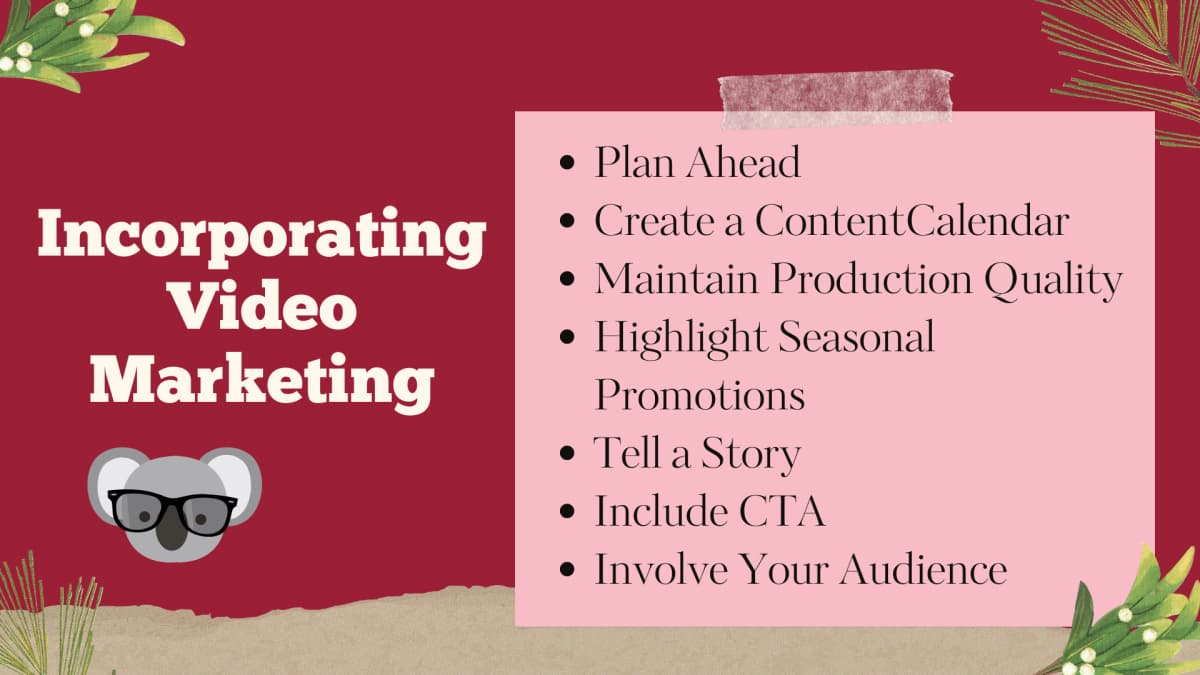
- Plan the calendar in September. Shooting, editing, and scheduling video takes longer than expected. Content for Black Friday should be ready by late October.
- Build sequences, not one-off posts. A single video does less than three videos that tell a connected story over two weeks.
- Put CTAs in the copy, not just the video. Many viewers watch without sound, especially on mobile. The caption or overlay text carries more of the conversion load than most store owners realize.
- Highlight shipping cutoffs directly. "Order by December 18 for Christmas delivery" in the video itself, not just the description, moves people off the fence.
Mobile Checkout: Where Sales Actually Disappear
Since 51% of holiday sales now happen on mobile, any friction in the mobile experience costs real money. The average mobile cart abandonment rate of 80% is not just a benchmark to aspire below. It's a sign that most stores have specific, fixable problems.
The most common culprits:
Page load time. Google's data consistently shows that conversions drop when mobile pages take more than 3 seconds to load. Compress images (especially hero images on product pages), minimize third-party scripts, and audit your app stack. Some Shopify apps add significant page weight without proportional value.
Checkout friction. Every step you can remove between "add to cart" and "order confirmed" raises conversion rate. Guest checkout, Shop Pay, Apple Pay, and Google Pay all reduce the fields a shopper has to fill in on a small screen. Enable them. The stores that require account creation before checkout lose a measurable portion of mobile buyers.
Push notification recovery. For browsers who have opted in, cart abandonment push notifications are faster than email. Send one within 20 minutes with a direct link back to the exact cart.
Visible trust signals. Mobile screens are small and scrolling is fast. Put security badges and return policy links close to the buy button, not buried in the footer.
A Note on Sustainability Claims

If your brand has a real sustainability story, the holidays are a good time to tell it, because gift buyers tend to weigh a brand's values more than they would buying for themselves. Around 66% of adults say they're more likely to buy a product that is sustainably made. But vague claims do more harm than good: "eco-friendly" and "green" read as greenwashing now and trigger skepticism. Say "our mailers are 100% recycled cardboard and returns go to a local donation program," not "we care about the planet." If you can't name the percentage, the material, or the program, leave it out.
Social Commerce: Platforms and Mechanics That Convert
Social commerce is worth taking seriously. 58% of US shoppers have decided to buy something after seeing it in a social post, and that number is higher for younger demographics. But most of that impact comes from a few specific mechanics, not from general social presence.
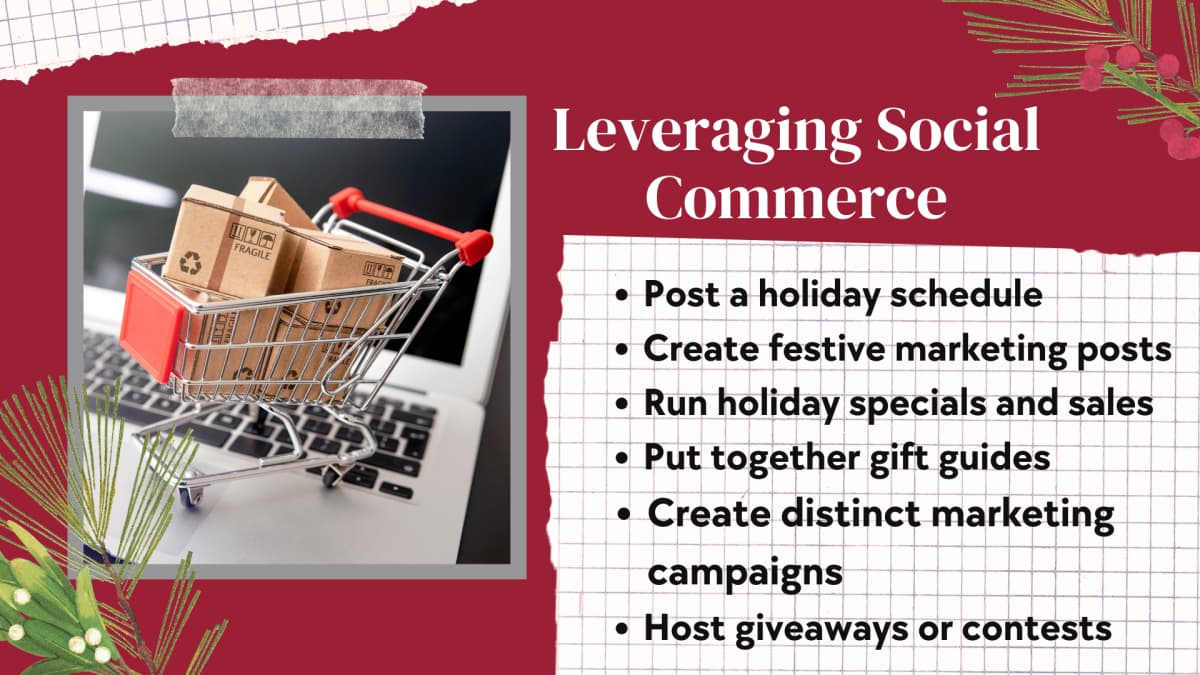
Shoppable posts and in-app checkout (Instagram Shopping, TikTok Shop) shorten the path from discovery to purchase. If you're not using these, you're adding friction: go to browser, search for the store, find the product. Each extra step loses buyers. Set these up before the holiday season opens.
Targeted gift guides by audience segment. Your email list demographics, your Instagram analytics, and your Shopify customer data all tell you who your buyers are. A gift guide for "outdoor enthusiasts" or "people who cook at home" beats a generic "holiday picks" page because it answers the gifter's question specifically.
Limited-time follower exclusives. A 10% discount available only to people who DM you or use a follower-specific code creates a reason to follow and a reason to buy. Keep the window short, 48-72 hours.
Giveaways with real mechanics. "Like and follow to win" produces low-quality followers. "Buy any item and get entered to win [relevant prize]" produces buyers. The prize should be something your actual customer would want, not a generic gift card.
Platform-specific targeting. Instagram's user base skews differently from TikTok's, and both differ from Pinterest's. An ad that works on one platform often needs adjusting for another: not just visual format but tone and the specific problem it's addressing.
Influencer Marketing: What Makes a Partnership Actually Work
Influencer marketing works when the creator's content and your product genuinely fit together, and it falls apart the moment the audience can tell someone's reading off a brief for a product they'd never touch otherwise.
On a tight budget, the smarter spend is micro-influencers in your niche, somewhere in the 10k to 100k follower range. Their audiences trust them more, their rates are lower, and you can usually reach them directly. When you're vetting one, ignore the follower count and look at engagement: a creator with 30k followers and 8% engagement beats one with 200k and 0.5%. Read their comments, too. People asking actual questions about products they've featured is intent, not passive scrolling. And check whether their sponsored posts perform anywhere near their organic ones, because if engagement craters on paid posts, the audience has already learned to tune them out.
Once you're working together, hand over talking points and your hard requirements (the shipping cutoff date is the one that matters most) and then get out of the way. The best holiday deals pair an honest review with a discount code and an affiliate link, so the creator has a real reason to keep pushing it after the first post goes up.
Omnichannel: Getting the Basics Right Before Adding Channels
An omnichannel approach means a customer can run into your brand on Instagram, click through to your site, get a retargeting ad on Google the next day, then open an email, and find the same offer and the same voice each time. That repetition is what builds recognition.
The common mistake is launching too many channels at once with no capacity to run any of them well. It's better to pick two or three you can actually execute and concentrate there, adding more only once the first set is performing. Whatever you run, the tone and the offer in an email need to match the Instagram caption and the ad copy, because inconsistency reads as a brand that isn't paying attention.
Before any of that, look at where buyers (not just browsers) actually come from. Your Shopify and Google Analytics reports will tell you, and that's where your holiday budget should go first. The harder thing to see is which touchpoint closed the sale, since a customer might see five ads before buying. You won't get a clean answer, but even a rough sense of which combinations recur helps you allocate for the next season.
Using Data Before and During the Season
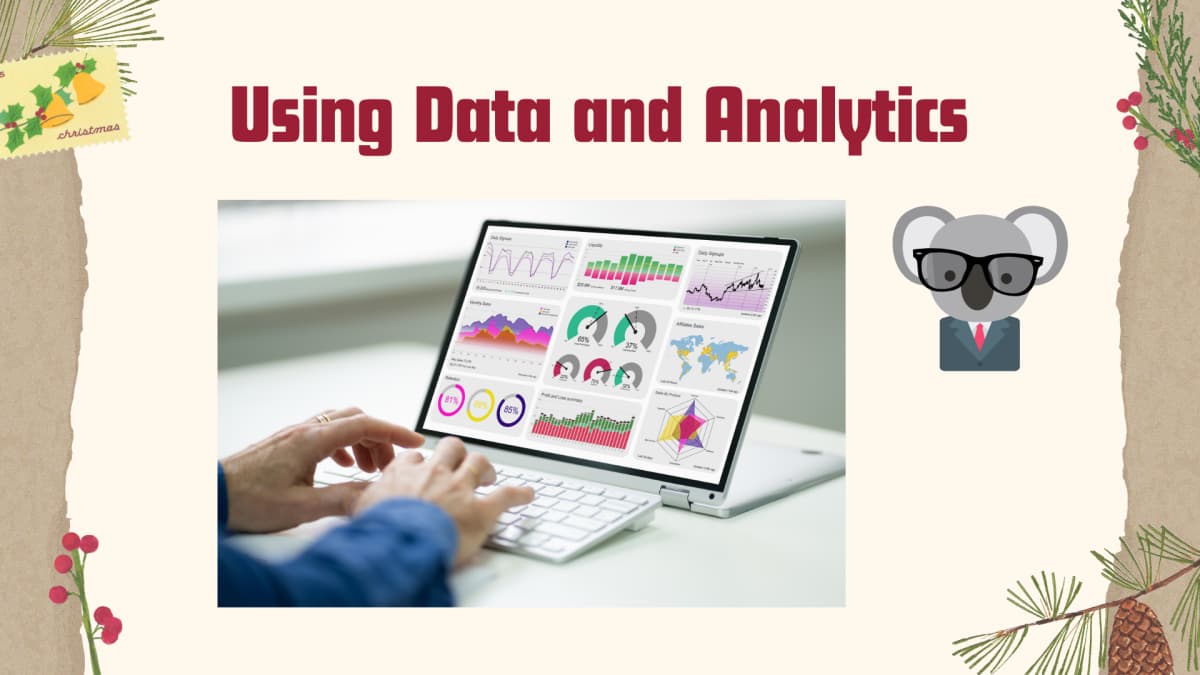
The holiday season generates more data faster than any other period. The stores that use it in real time (adjusting ad spend on what's converting, pulling back on what isn't) come out ahead of those who set a plan and run it unchanged through December.
What to watch:
- Conversion rate by traffic source. If email is converting at 3x the rate of paid social, shift budget. The holiday window is too short to carry underperforming channels.
- Cart abandonment rate by device. If mobile abandonment is significantly higher than desktop, there's a UX problem worth fixing immediately, not after the season.
- Return on ad spend (ROAS) by product. During peak CPM periods like BFCM, only your highest-margin products can sustain paid advertising profitably. Know the numbers before you launch.
- Email open and click rates by segment. If a segment isn't engaging, stop sending them the same message and try a different subject line or offer before concluding they're uninterested.
Tools that are already available in a standard Shopify setup: Shopify Analytics, Google Analytics 4, Klaviyo reports (for email), Meta Ads Manager (for paid social). You don't need additional tools to track the metrics above. You need to actually look at them weekly, or more often during peak weeks.
Where to Start This Week
If you only do one thing in the next few days, make it the competitor pass. Pull up the three or four stores you'll be up against in November and look at how they're already operating: which products they push, what their cart-recovery and upsell stack looks like, where their traffic comes from. Koala Inspector reads all of that off any Shopify store without the guesswork, and the gaps you find there are what you build your own September-to-November plan around.
Written by
Ana Gelevska
eCommerce Content Writer
Ana Gelevska is a content writer with more than five years of experience creating content for eCommerce brands and global clients. She digs into each topic and the people it is for, then turns it into clear, useful articles that Shopify sellers and dropshippers can act on.
Connect on LinkedIn