AI Dropshipping in 2026: How AI Finds Winning Products (and How to Validate Them)
 By Ana GelevskaApril 25, 2024 · Updated July 10, 2026
AI dropshipping is running a dropshipping store where artificial intelligence handles the repeatable work: finding products with real demand, writing product descriptions and store copy, generating ad creative, and adjusting prices against competitors. In 2026 it means using AI as a speed layer across research, content, and pricing while a human still decides what to actually sell. The tools surface candidates and draft the assets fast; you validate the winner and own the strategy.
That last part is where most guides go quiet. AI will happily hand you a "winning product" that is already saturated, out of season, or was never a winner at all. This guide covers what AI genuinely does well in dropshipping, where it still needs a person in the loop, and a concrete workflow to check an AI pick against real competitor signals before you spend a cent.
Why AI matters more in dropshipping this year
The market keeps pulling in new sellers. The global dropshipping market was worth about $464 billion in 2025 and is on track to more than quadruple to roughly $2.18 trillion by 2033, and around 27% of ecommerce stores now run dropshipping as their main model. More sellers means tighter margins and less room for slow, manual guesswork. Whoever handles research, copy, and pricing fastest gets the window before a product saturates.
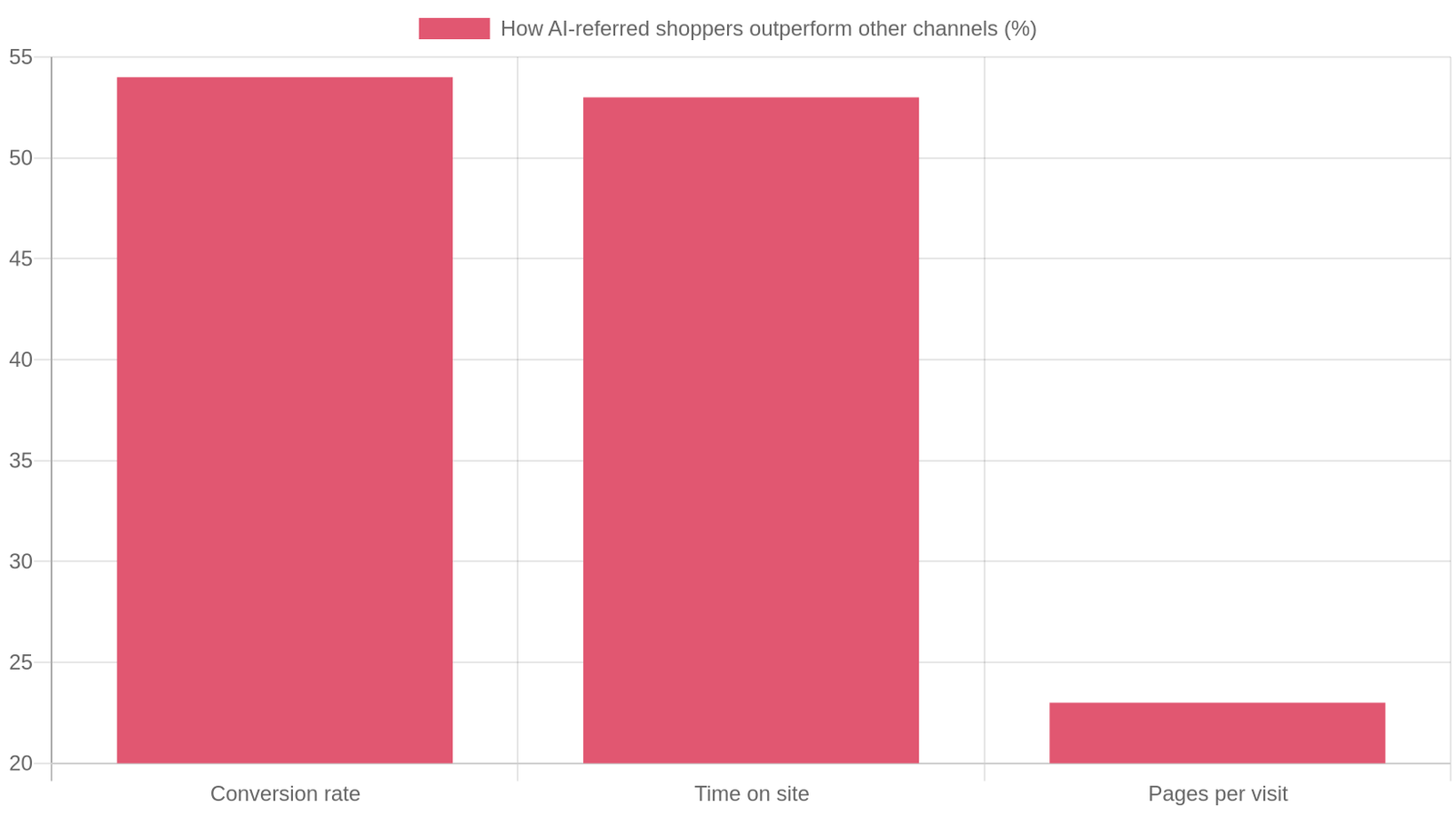
AI is also changing how shoppers reach stores, which is why it belongs in your workflow and not just your product research. AI-referred traffic to US retail sites grew 138% year over year in May 2026, according to Adobe Analytics, and those visitors converted 54% better than shoppers from other channels while spending 53% more time on site and browsing 23% more pages per visit.
So AI is no longer a novelty bolted onto the side of a store. It is a genuine speed layer, and the sellers building a workflow around it now get a structural head start. The catch is knowing exactly which jobs to hand it and which to keep for yourself.
How AI helps you find winning products
Finding demand before everyone else is the single hardest part of dropshipping, and it is exactly where AI earns its place. Instead of manually scrolling feeds and marketplaces, AI tools watch the same public signals at scale and flag products that are gaining traction.
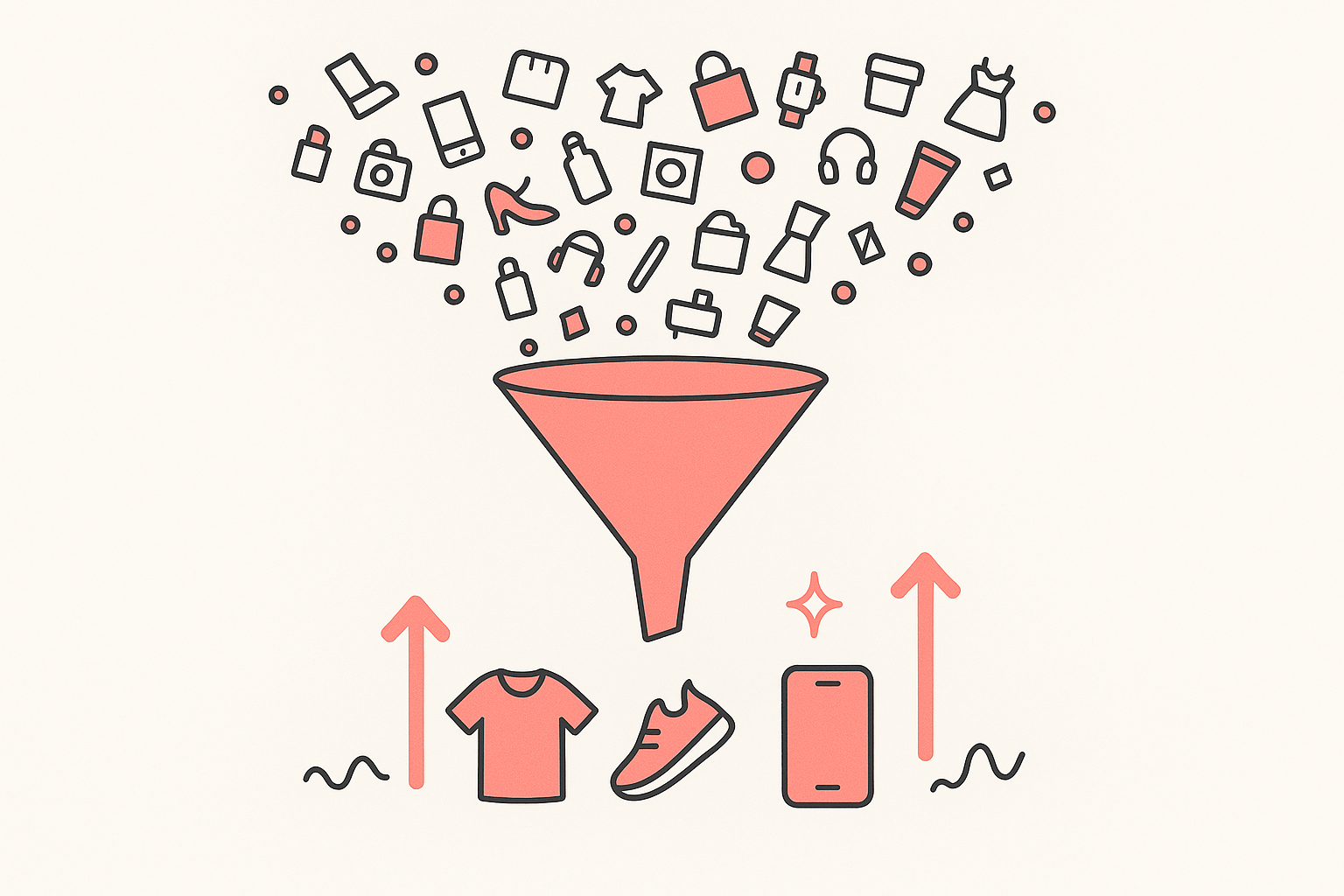
Here is what AI does well in the research phase:
- Trend detection. AI can scan social platforms and marketplaces for rising search and engagement, so you see a product climbing before it hits peak competition. That early window is where the margin lives.
- Demand forecasting. It can weigh historical sales patterns and seasonality to estimate whether interest is likely to hold or fade after a spike.
- Candidate shortlists. Point it at a niche and it will return a list of products to look at, which beats staring at a blank page.
- Fast first drafts. Once you have a product, AI drafts descriptions, ad angles, and store copy in minutes so you can test messaging instead of writing from scratch.
Treat all of this as a shortlist, not a shopping list. AI is fast at generating candidates and slow at being right about them. Every product it names is a starting point you still have to check, which brings us to the part the tools quietly skip.
Where AI still needs a human
AI does not know whether a product is actually selling right now. It works from patterns in its training data, so it can hand you something confidently that is already crowded, seasonal, or was never a real winner. That is a hallucination, and in dropshipping a hallucinated product costs you inventory and ad spend before you find out it was a guess.
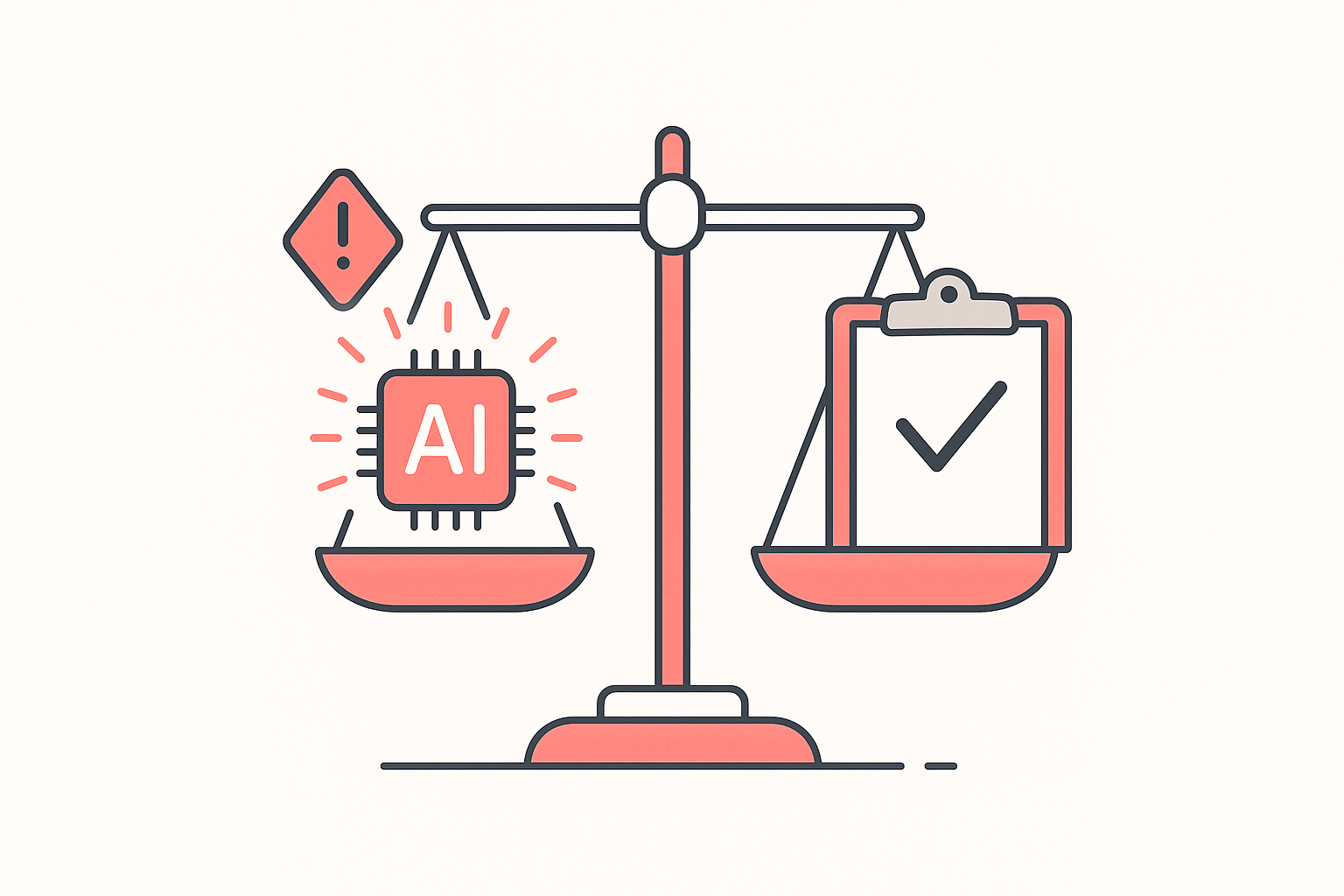
The stakes here are not small. Only around 10% of sellers succeed in their first year, and just 1.5% of stores clear $50,000 in monthly revenue, and the most common reason stores fail is weak product selection, not missing demand. In other words, the exact decision AI is worst at is the one that decides whether a store lives.
Keep these calls on the human side of the line:
- The final product decision. AI suggests; you confirm the product is live, selling, and not already saturated before committing budget.
- Brand voice and accuracy. AI copy is generic until you edit it. Anything going live on your store or in an ad needs a human read for tone and for claims that are actually true.
- Saturation judgment. A product being popular is not the same as it being sellable. If it is on hundreds of stores at rock-bottom prices, "trending" means "too late." Judging saturation is a call AI is not equipped to make for you.
- Margin and pricing strategy. AI can watch competitor prices, but deciding your position, your offer, and what margin you will defend is strategy, and strategy stays with you.
The pattern is simple: let AI cover the volume, keep the verdict. The reliable way to reach that verdict is to check the AI pick against a store that is already selling it.
Validate an AI product before you commit: the Koala Inspector workflow
This is the step that separates a real winner from an AI hallucination. Instead of trusting the suggestion, you turn it into a question and answer it with data from a live competitor. Koala Inspector is the validation layer here: it is a free Chrome extension that reads the public signals any visitor's browser already sees on a Shopify store and lays them out in one pass, so you can confirm or kill an AI pick in a few minutes.
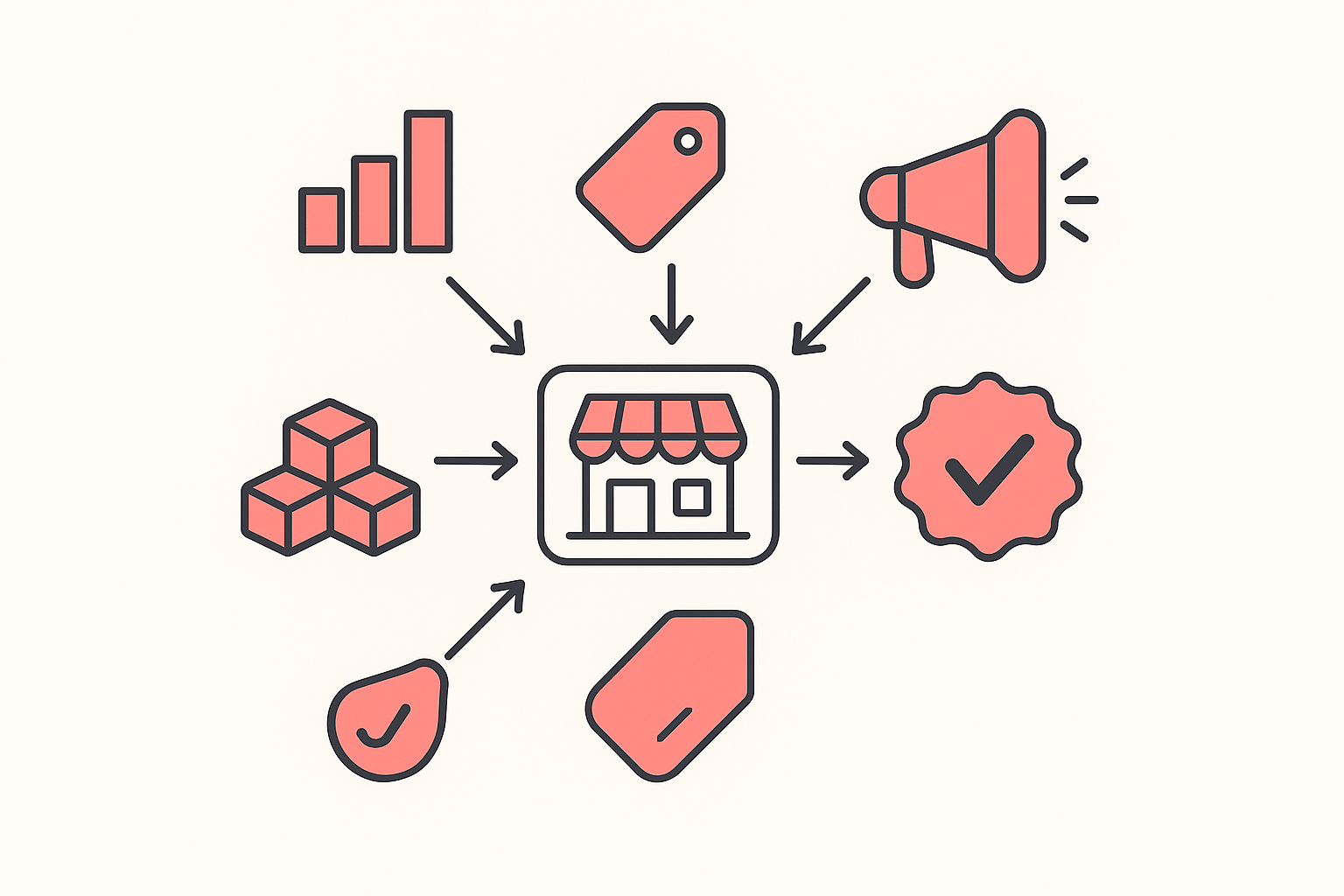
Take the product AI handed you and run it through this checklist:
- Find a store already selling it. Search for the product and open a Shopify store that stocks it, then run Koala Inspector. The free dashboard confirms you are looking at a real, active store and shows its product count, when it was created, and its likely best sellers. If your AI-suggested product is nowhere near that store's best sellers, that is your first warning.
- Check saturation with Find Suppliers. From the product, run Find Suppliers to see how many suppliers already sell the exact item, each with your landed cost and estimated profit per unit at your selling price. A handful of exact matches means room to compete. A long list of them at near-identical delivered prices means the window has closed. This is the fastest saturation read you can get, and it hands you the pricing math in the same pass.
- Confirm the demand is real. Open Site Traffic on the store for monthly visits, the traffic trend, where visitors come from, and the top keywords driving them. A "winner" sitting on a store with almost no traffic is a red flag that the hype is not translating into buyers.
- Follow the money. Open Ad Campaigns to see the Google and Facebook or Instagram ads the store is running, including the creatives and offers. Sustained ad spend behind a product is one of the strongest signals that a real seller is making money on it, because nobody keeps paying to advertise a loser.
- Watch it over time. Add the store to Shop Tracking and Koala re-scans it, logging product additions, price changes, and app swaps to a change feed. That tells you whether the product is a durable seller or a one-week spike, which no single snapshot can.
If a live store is moving the product, pulling real traffic, and paying to promote it, the AI pick holds up and you can commit with evidence behind you. If those signals are missing, you just saved yourself an expensive test. Want the deeper version of this? Here is the full method to reverse-engineer why a competitor's product is winning.
You can start every step above for free. Koala Inspector's store overview, app detector, theme detector, and best-seller research cost no tokens, and the plan comes with 15 tokens a month with no card required, which is enough to run Find Suppliers and traffic checks while you find your footing. Once research goes daily, Premium is $22 a month.
The takeaway
AI dropshipping in 2026 is a division of labor. AI covers the volume: it scans for rising products, drafts your copy and creative, and watches competitor prices so you move faster than the field. You cover the verdict: which product to actually sell, at what price, wrapped in what offer. The bridge between the two is validation, and that is the job Koala Inspector does. Let AI generate the shortlist, then confirm the winner against a real store before you spend. That is how you use AI to move quickly without letting it make expensive decisions for you.
New to the model itself? Start with how dropshipping works, then come back and put AI to work on the parts it is genuinely good at.
Frequently asked questions
What is AI dropshipping?
AI dropshipping is running a dropshipping store where AI handles the repeatable work: finding products with real demand, writing descriptions and store copy, generating ad creative, and adjusting prices against competitors. It uses AI as a speed layer across research, content, and pricing while a human still decides what to sell.
Can AI find winning products for you?
AI is good at surfacing candidates. It can flag products gaining traction before they saturate, which is a real edge. What it cannot do is confirm a suggested product is actually selling for a real store right now. That confirmation comes from checking a live competitor: its best sellers, how widely the product is resold, its traffic, and whether sellers are advertising it.
Can AI hallucinate a winning product?
Yes. A model can name a product confidently with no proof that it sells today. It can suggest something already saturated, out of season, or that was never a real winner. That is why an AI pick is a hypothesis, not a decision. Validate it against a live store with Koala Inspector before you spend on inventory or ads.
How do you validate an AI-suggested product?
Find a Shopify store already selling the product and run Koala Inspector on it. Confirm the product sits among the store's best sellers, use Find Suppliers to gauge saturation, check the store's traffic to confirm real demand, and open Ad Campaigns to see whether sellers are actively advertising it. If a live store is moving, getting traffic, and promoting the product, the pick holds up.
Is AI dropshipping still profitable in 2026?
It can be, but AI does not change the math. Most stores that fail do so because of weak product selection, not missing demand. AI speeds up the work around the decision so you move faster than competitors, but choosing the right product, protecting your margin, and delivering a good customer experience are still your calls.
Written by
Ana Gelevska
eCommerce Content Writer
Ana Gelevska is a content writer with more than five years of experience creating content for eCommerce brands and global clients. She digs into each topic and the people it is for, then turns it into clear, useful articles that Shopify sellers and dropshippers can act on.
Connect on LinkedIn